Imaginary interview with Victor Hugo
by Charactorium · Victor Hugo (1802 — 1885) · Literature · Politics · 5 min read
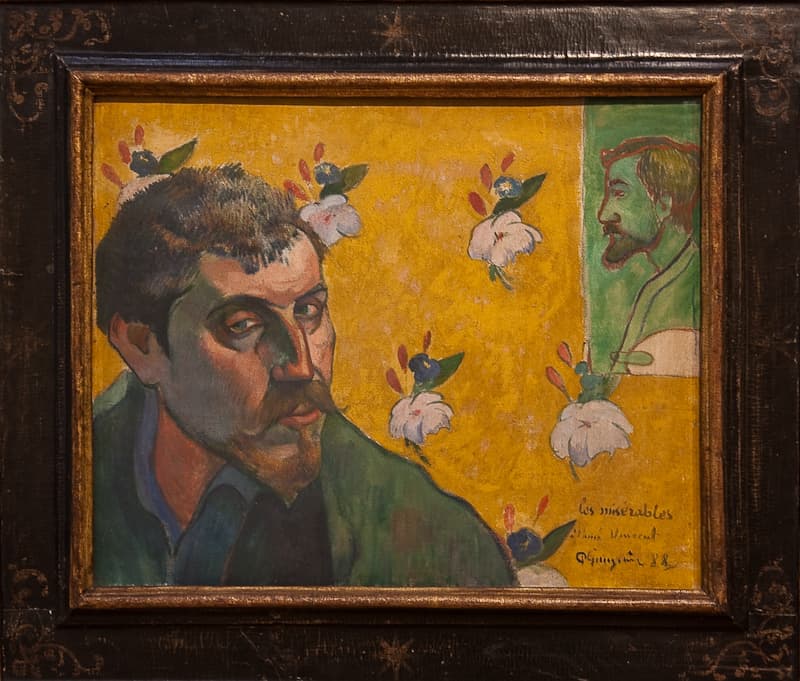
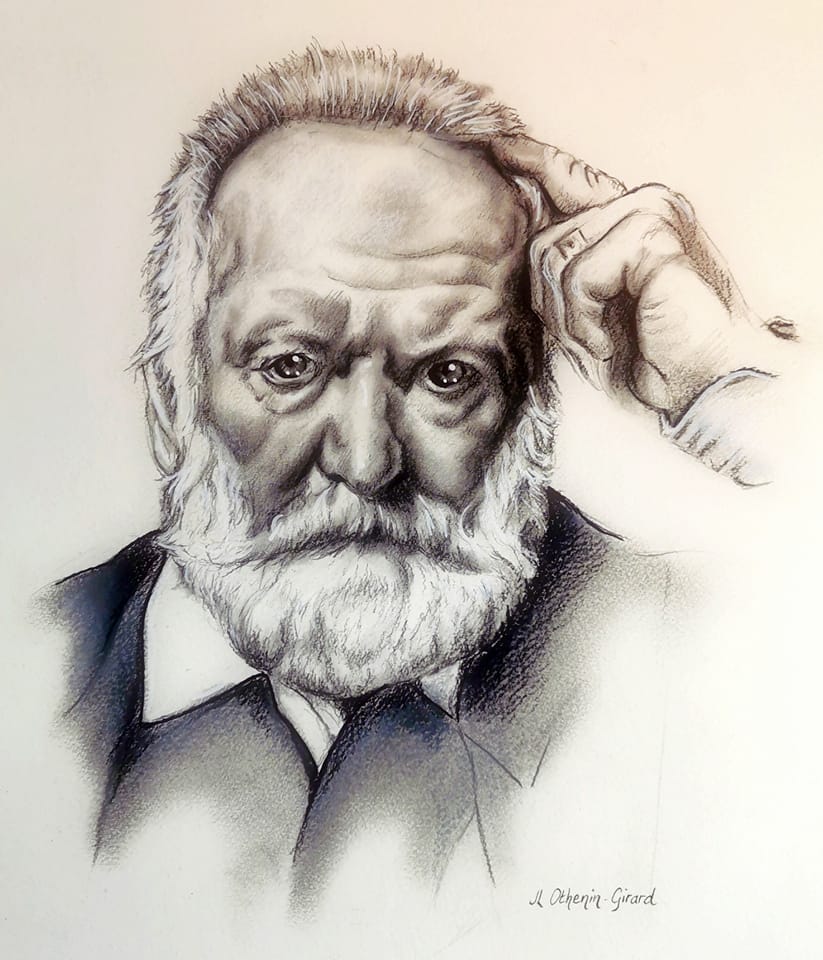
June 1883. In the drawing-room of the house on Avenue d'Eylau, the shutters are half-open to the noise of Paris. The old man with the white beard receives visitors, upright in his armchair, and his deep voice still seems to carry across a public square.
—People still talk about the "Battle of Hernani." What was really at stake that night on stage?
February 1830. The hall was split in two like a country at war: on one side, the powdered wigs of the old theater; on the other, my young men in red waistcoats, come to defend a free verse, a verse that dared to enjamb, to breathe, to bleed. Hernani was not just a play, it was a barricade raised against the corseted tragedy of the old world. They hissed, they howled, they almost fought between the seats. But I already knew that Romanticism did not ask permission: it took its place. The theater had to stop being a marble salon and become a crowd again, a passion, a storm. That night, drama ceased to obey the Ancients. It began to resemble men.
The theater had to stop being a marble salon and become a storm again.
—How did you experience your entry into the Académie française, you the leader of the insurgents of the word?
I was elected in 1841, and I admit the thing was not without irony: receiving the academician's crown when I had spent ten years breaking the rules this house revered. But I did not enter as a penitent. An institution is not a tomb, it is one more platform. I carried there the same ideas as in the theater: that language belongs to the people before it belongs to grammarians, that a low word can be noble if it says something true. The armchair did not tame me. It gave me a higher desk from which to shout the same truths, and they soon understood that the wolf, once inside the sheepfold of the Immortals, had not changed its teeth.
—Les Misérables seems born from the street itself. Do you remember what your eyes saw in Paris?
1832. The uprising on Rue Saint-Méry. I saw the torn-up cobblestones, the bodies, the smoke, and above all those faces of children and women whom hunger had already half-killed before the guns. One does not emerge unscathed from such a spectacle. That day I understood that crime is not always in the man who steals a loaf of bread, but in the society that forces him to. Jean Valjean was born from that mud and that anger. When I wrote that as long as there exists "a social damnation that artificially sinks a man below the level of man", my book would have its reason for being, I was not writing literature. I was drawing up an indictment of my century.
Crime is not always in the man who steals a loaf of bread, but in the society that forces him to.
—They say the manuscript of Les Misérables sold for a fortune. What did this novel represent for you, beyond the money?
Three hundred thousand gold francs, in 1862: there was much talk about that figure, as if I were selling a piece of furniture. But you don't buy twenty years of thought. This book, I carried it through everything: monarchy, Republic, exile. It was my ark, I had piled into it misery, love, the sewer and the sky, Cosette and the barricade. I wanted a worker to open it in the evening and recognize himself, a bourgeois to close it a little less at ease. The publisher's money was only the foam; the true price would be counted in stirred consciences. A novel is nothing if it only entertains; it must accuse, console, and sometimes lift up.
—Your fight against the death penalty began very early. Where does this obsession with the scaffold come from?
I was barely a young man when I wrote The Last Day of a Condemned Man, in 1829. I name neither the crime nor the name of the executed man, and that is deliberate: I wanted only the voice of a man about to be killed to be heard. "A man condemned to death is a man whose legs have been cut off and who is told: walk!" — that is the whole absurdity of the thing. The scaffold is not justice, it is revenge disguised as law, murder with formalities. I once saw the executioner grease his machine, calmly, as one oils a cart. That image never left me. You do not correct a man by eliminating him; you only admit that you have given up understanding him.
The scaffold is not justice, it is revenge disguised as law.
—At the Assembly, in 1848, you went to the rostrum to demand abolition. What did you want to make the deputies hear?
Before the Assembly, in 1848, I wanted to turn their logic against them. They spoke of example, security, order. I answered them that "the goal of society is the well-being of all; the death penalty is the well-being of no one", that a dead man is only half a man, and that death is not a punishment but a negation. To kill a guilty man is to deprive oneself forever of his repentance, of his possible redemption. A Republic that still erects scaffolds denies the word it has inscribed on its walls. I defended this cause all my life, from the benches of the Constituent Assembly to my last speeches, and if I was not listened to in my lifetime, I know I will be heard after.
—Exile kept you away from France for nearly twenty years. How did you live those years facing the sea?
When Napoleon III strangled the Republic in December 1851, I understood that there was no longer any place for me under his sky. I made for the islands, and it was on Guernsey that I dropped anchor, on that rock beaten by the English Channel. There, facing the ocean, I wrote every morning, my gaze turned toward the French coast I could no longer tread. To Juliette, I wrote that I was in exile but that my thoughts remained free, and that as long as I had a pen I would defend the people. The sea taught me patience and anger mixed. Later, I was offered amnesty; I refused it. You do not bargain your honor for a return ticket.
You do not bargain your honor for a return ticket.
—What would you say about your main weapon during those years of banishment?
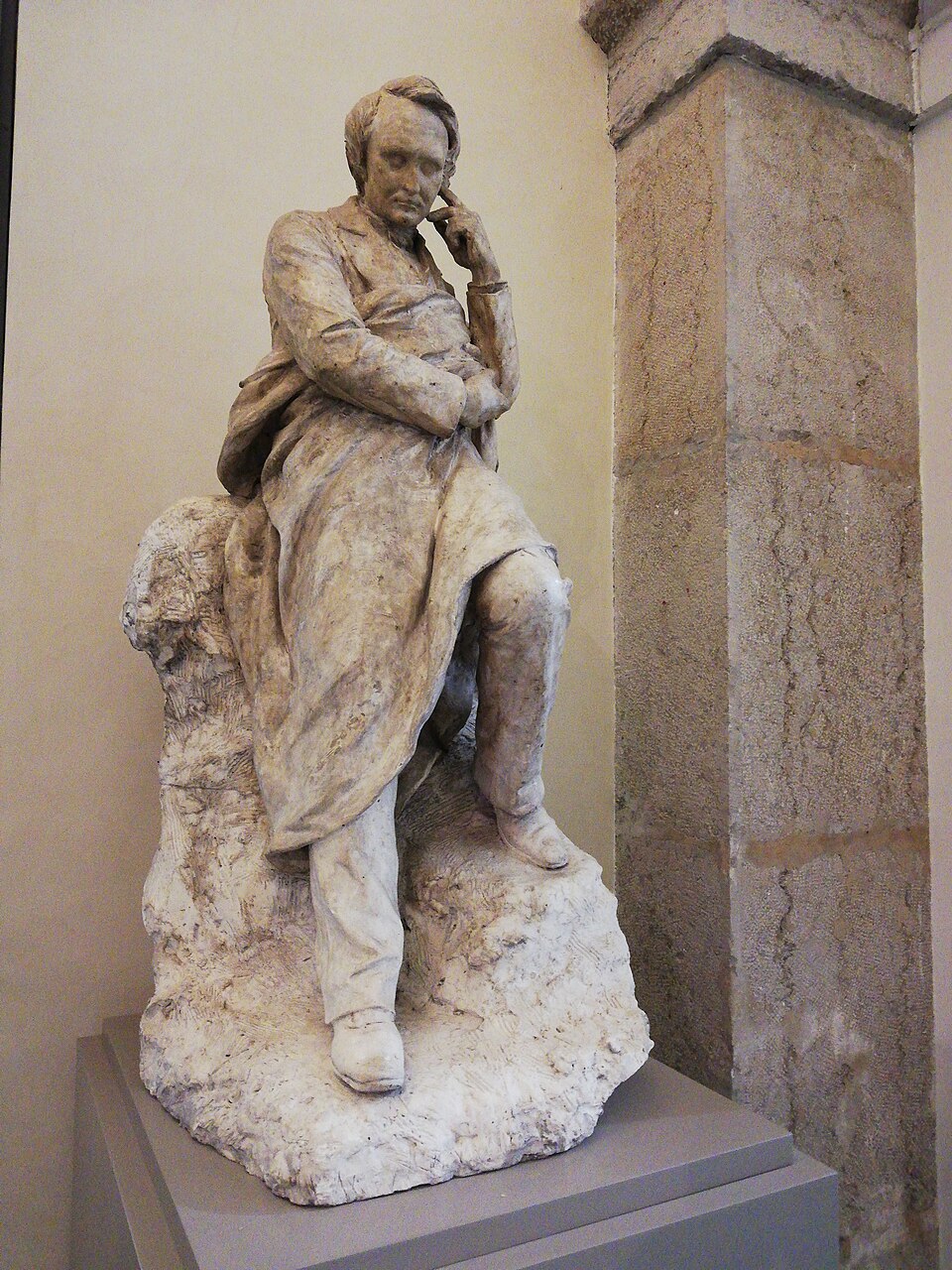
My only artillery was verse. The Punishments, in 1853, I forged them as one forges pikes: each poem targeted the man of the Second of December, that nephew who had stolen a throne and a name. They were smuggled into France, bound, hidden, disguised under other covers. A tyrant can imprison bodies, but he never seizes all books. And my house in Guernsey was not just a poet's study: I sheltered outlaws there, men hunted for loving liberty, at the risk of bringing worse upon myself. To fight with the pen and with hospitality was to refuse that exile reduce me to silence. The word, when it is just, pierces better than a bayonet.
—In 1877, hundreds of thousands of Parisians paraded under your windows. What did you feel that day?
I was seventy-five years old, and the whole street came to me. Six hundred thousand faces, they say, passing under my windows in a slow tide. I cannot tell you the strangeness of it: to see in one's lifetime what one thinks reserved for the dead. But I did not take this homage for myself alone. These people were not saluting an old man, they were saluting an idea — the Republic, liberty, the right of the poor to be heard. I was the sign, not the merchandise. I thought of all those battles, the scaffold, exile, the barricades, and I told myself that the crowd, sometimes, knows how to recognize those who have not betrayed it. It was less a glory than a reconciliation.
—Do you sometimes imagine the trace you will leave for generations who will not have known you?
A man should not speculate too much on his own ashes, but since you push me: if I could imagine being read a century from now, I would not hope that they remember my alexandrines by heart. I would like the fight to survive, not the poet. That the idea remain that misery is not inevitable, that the child has a right to light and the woman to bread. In Notre-Dame de Paris, I wrote that "this will kill that", that the book would kill the building — well, I want to believe that the idea, in turn, survives the book. That one day I be buried among the great men matters less to me than knowing whether the scaffold, itself, will have fallen. A useful posterity is worth more than a statue.

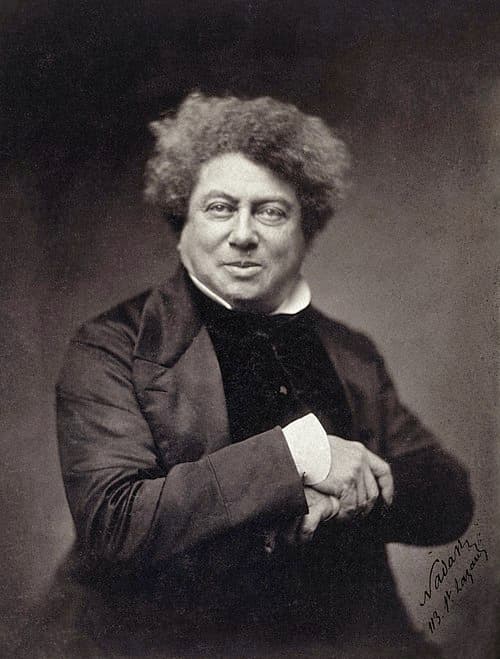
This imaginary interview was generated by artificial intelligence from sources documented in Victor Hugo's profile. It dramatises what the figure might have said based on what we know about them, but does not constitute attested historical testimony. For primary sources and factual documentation, refer to the full profile.