 flip
flipHoppin' John, Black-Eyed Peas and Rice
Hoppin' John, Black-Eyed Peas and Rice
Why this dish? The black-eyed pea crossed the Atlantic from West Africa in the holds of slave ships; it became the cornerstone of Southern cuisine. When Aaron Douglas's family and his entire community moved North during the Great Migration, this dish traveled with them, from Kansas to the modest kitchens of Harlem. It was eaten especially on New Year's Day, to attract luck and prosperity.
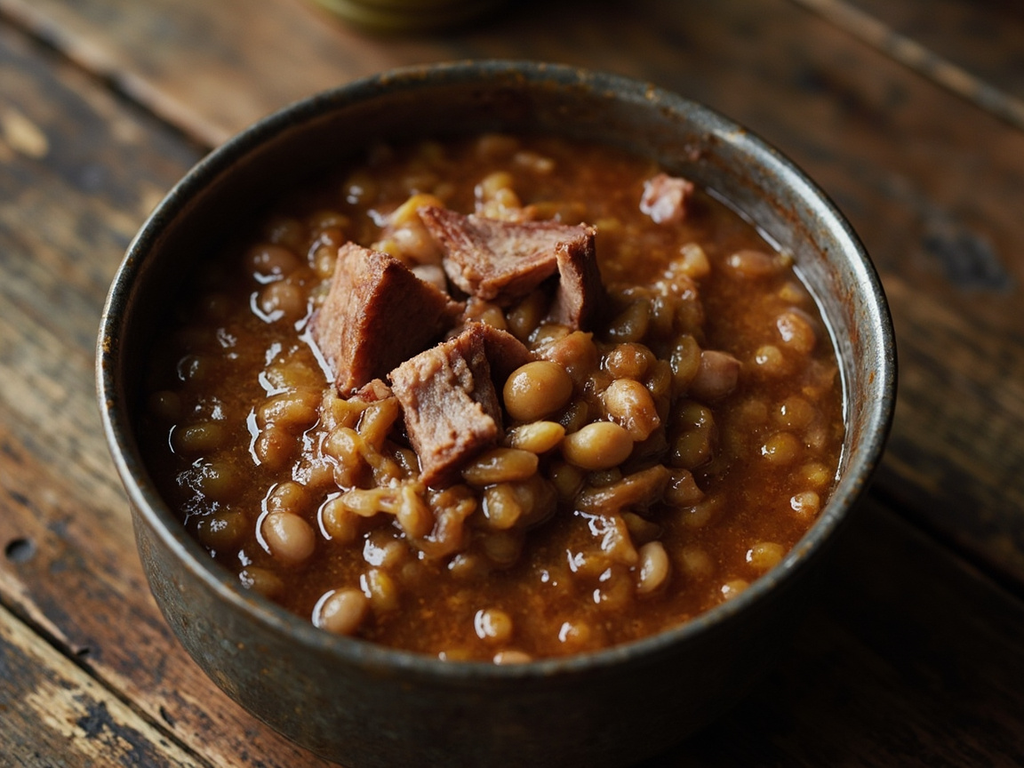
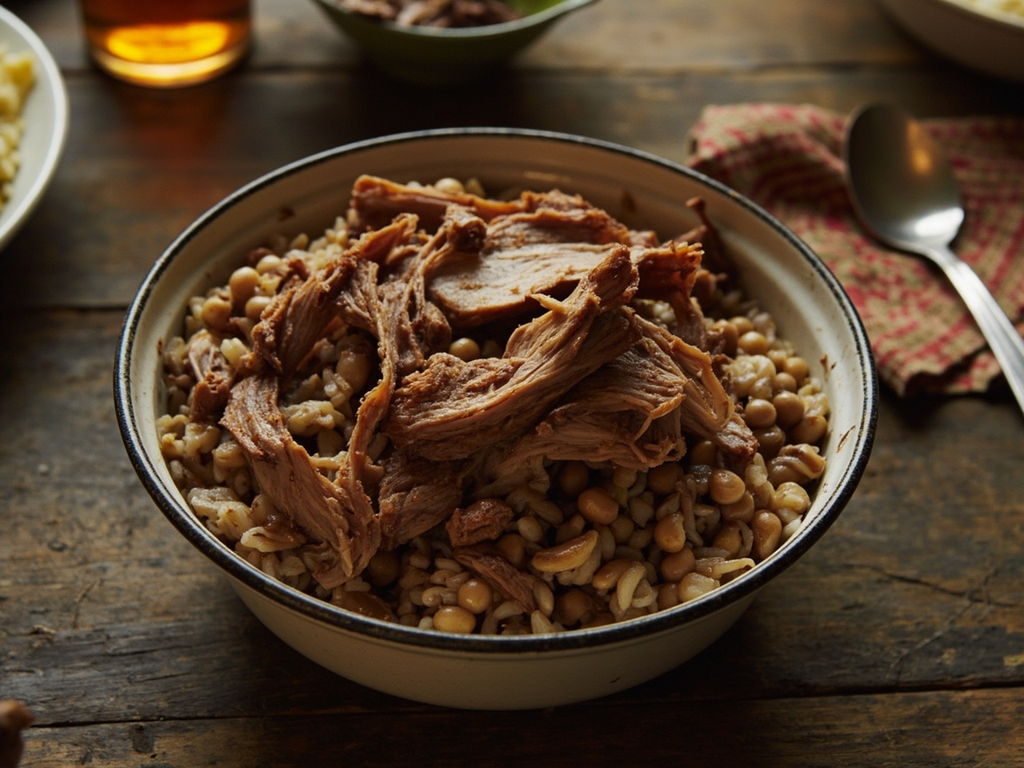
A simple stew of creamy black-eyed peas and rice, flavored with smoked pork and onion. Comforting, economical, made in one pot, it feeds a whole table.
In our house, that dish was more than a meal: it was the memory of Africa set on the plate. My mother would soak the peas the night before, then let the smoked hock sing softly in the pot all afternoon, until the whole house smelled good. The secret, you see, is to cook the rice at the very end, in that pea broth — never in plain water, that would waste the grace. On New Year's Day, we served it to everyone, so the new year would be generous to us. I painted my people's history by day; at night, I ate it.
- •Dried black-eyed peas — one large cup (base legume)
- •Smoked pork hock — one piece (umami and fat)
- •Long-grain rice — as needed (grain)
- •Onion — one (aromatic)
- •Bay leaf, salt, pepper — to taste (seasoning)
Hoppin' John, Black-Eyed Peas and Rice
A simple stew of creamy black-eyed peas and rice, flavored with smoked pork and onion. Comforting, economical, made in one pot, it feeds a whole table.
Why this dish? The black-eyed pea crossed the Atlantic from West Africa in the holds of slave ships; it became the cornerstone of Southern cuisine. When Aaron Douglas's family and his entire community moved North during the Great Migration, this dish traveled with them, from Kansas to the modest kitchens of Harlem. It was eaten especially on New Year's Day, to attract luck and prosperity.
In our house, that dish was more than a meal: it was the memory of Africa set on the plate. My mother would soak the peas the night before, then let the smoked hock sing softly in the pot all afternoon, until the whole house smelled good. The secret, you see, is to cook the rice at the very end, in that pea broth — never in plain water, that would waste the grace. On New Year's Day, we served it to everyone, so the new year would be generous to us. I painted my people's history by day; at night, I ate it.
Ingredients (period version)
- Dried black-eyed peas — one large cup (base legume)
- Smoked pork hock — one piece (umami and fat)
- Long-grain rice — as needed (grain)
- Onion — one (aromatic)
- Bay leaf, salt, pepper — to taste (seasoning)
Ingredients
- Dried black-eyed peas — 250 g (soaked overnight) (base legume)
- Smoked pork hock or belly — 200 g (umami and fat)
- Long-grain rice — 200 g (grain)
- Onion — 1 large, chopped (aromatic)
- Bay leaf — 1 leaf (aromatic)
- Salt, black pepper — to taste (seasoning)
Method
- The night before, soak the black-eyed peas in a large volume of cold water.
- The next day, drain and place in a pot with the smoked pork, onion, bay leaf, and water to cover.
- Bring to a simmer and cook covered for 45 minutes to 1 hour, until the peas are tender but whole.
- Remove the pork piece, shred it, and return to the pot.
- Add the raw rice directly to the flavored broth, add a little more water if needed, cover, and cook on low heat for 18 minutes.
- Let rest off the heat for 5 minutes, season with salt and pepper, and fluff gently with a fork.
How it was made : Originally, everything cooked together in a single cast-iron pot on a wood or coal stove, for hours. They used the cheapest pork cuts — skin, tail, feet — which gave maximum flavor for minimum money, a survival logic of Black Southern kitchens.
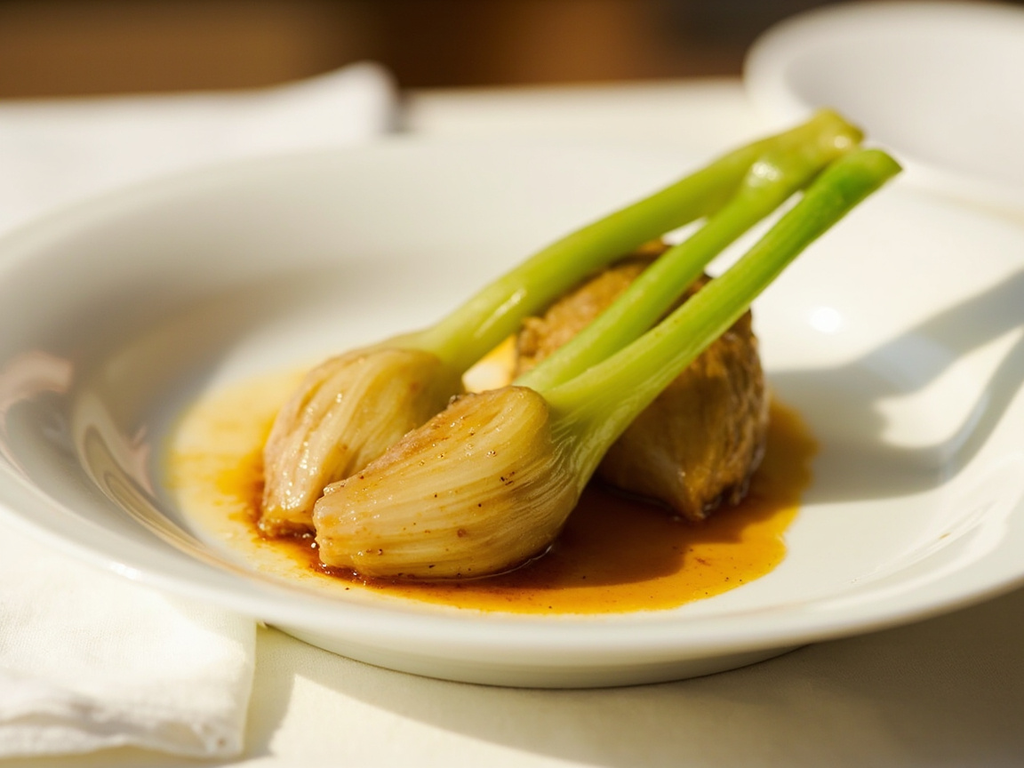
The contemporary twist : Serve the Hoppin' John as a dome molded with a ring, topped with a drizzle of reduced pot likker and thin slices of spring onion — a graphic nod to the geometric silhouettes of Douglas's murals.
Sources : Jessica B. Harris, High on the Hog: A Culinary Journey from Africa to America (2011) · Adrian Miller, Soul Food: The Surprising Story of an American Cuisine (2013)
Aaron Douglas · Charactorium