 flip
flipQishr — Coffee Husk Infusion with Ginger
Qishr — Coffee Husk Infusion with Ginger
Why this dish? For a Sufi sheikh of medieval Yemen, coffee is not a pleasure but a tool of devotion: it sustains the long nights of dhikr and recitation. Chronicles indeed attribute the spread of this drink to Yemeni Sufis. Qishr, made from the dried husks of the cherry rather than the expensive bean, was the sober and accessible version—exactly in the spirit of frugality of the character.
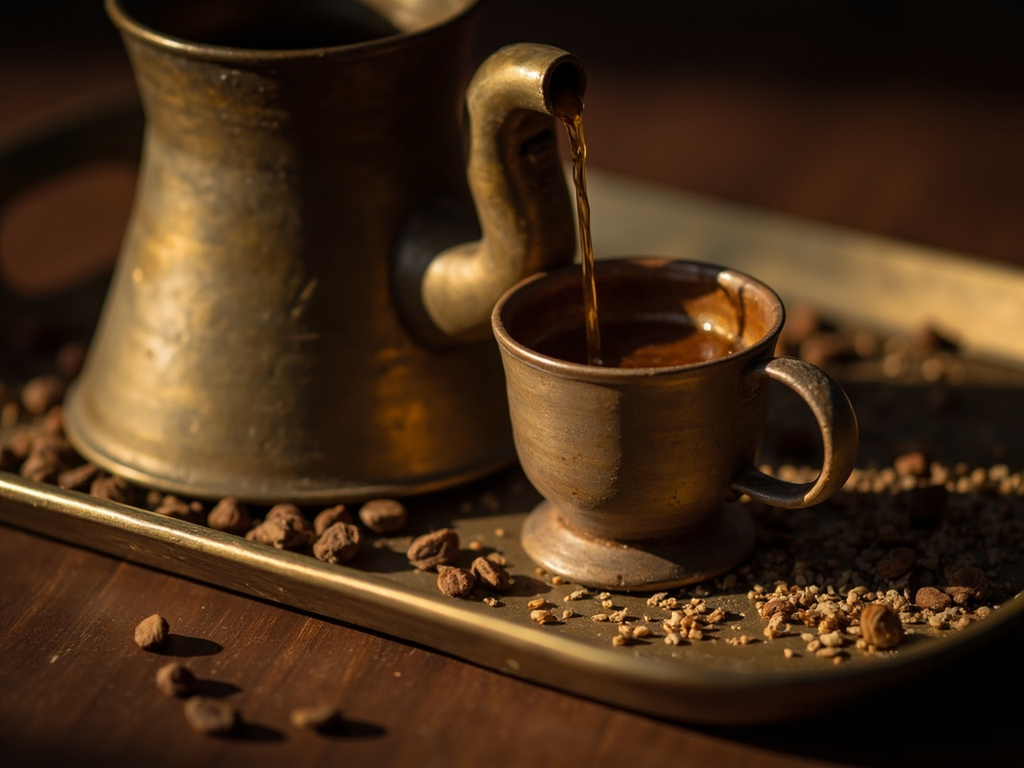
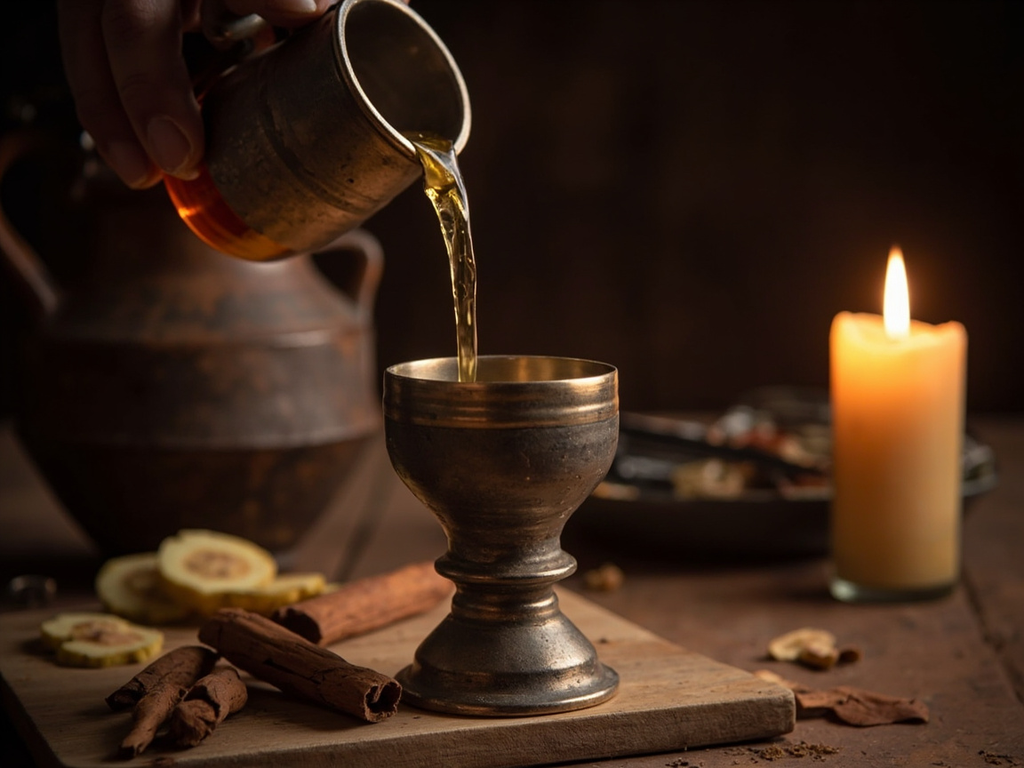
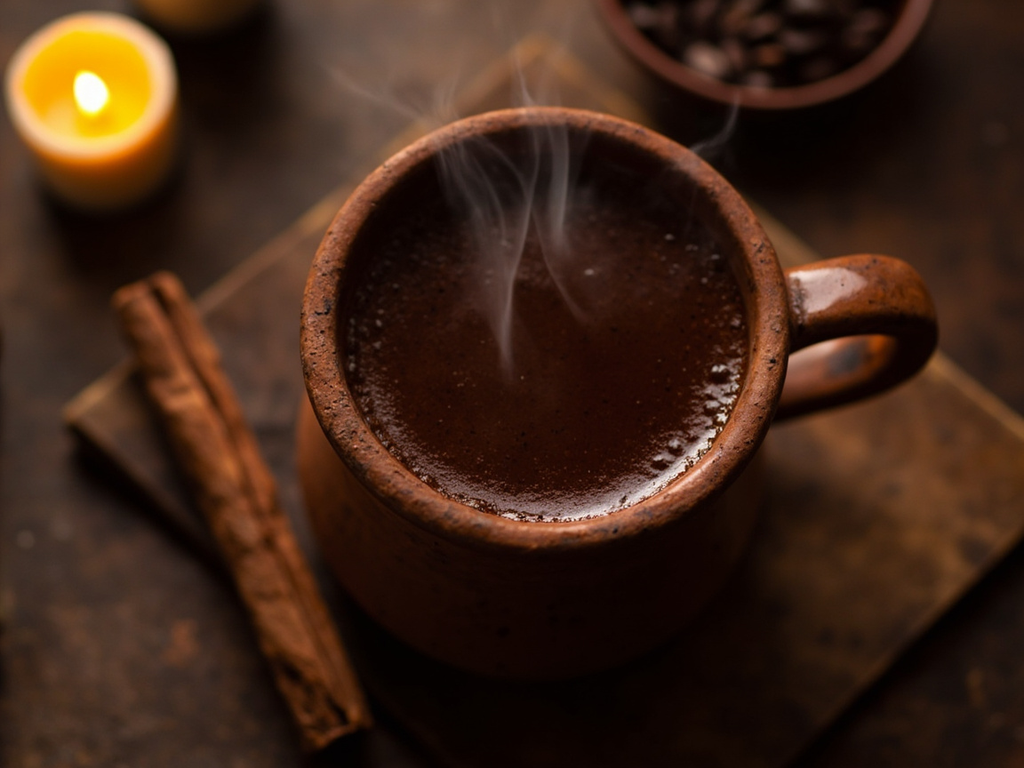
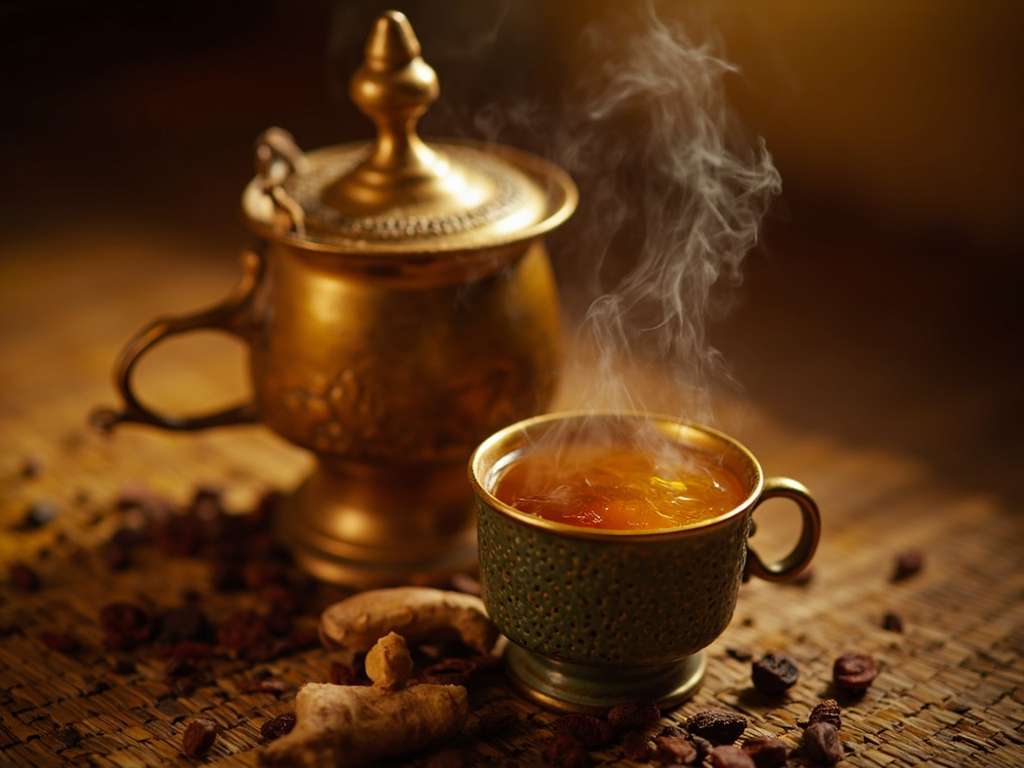
A golden, light infusion made not from the bean but from the dried husks of the coffee cherry, spiced with ginger and sometimes a hint of cinnamon. Less strong than bean coffee, more aromatic, it is the drink that accompanies night prayer and the welcoming of guests.
In the name of the All-Merciful, draw near, O seeker, and sit on the mat. When the night thickens and eyelids grow heavy, it is not sleep that God expects from us, but the remembrance of His name. So I pour water over the cherry husks, throw in a little pounded ginger to warm the chest, and we drink in small burning sips between praises. Believe me, this cup has kept vigil with me more nights than I can count.
- •Dried coffee cherry husks (qishr) — a good handful (bitter and fruity aromatic base)
- •Fresh ginger — a piece (spicy warmth)
- •Cinnamon (bark) — a small shard (optional fragrance)
- •Spring water — enough for the jar (infusion)
Qishr — Coffee Husk Infusion with Ginger
A golden, light infusion made not from the bean but from the dried husks of the coffee cherry, spiced with ginger and sometimes a hint of cinnamon. Less strong than bean coffee, more aromatic, it is the drink that accompanies night prayer and the welcoming of guests.
Why this dish? For a Sufi sheikh of medieval Yemen, coffee is not a pleasure but a tool of devotion: it sustains the long nights of dhikr and recitation. Chronicles indeed attribute the spread of this drink to Yemeni Sufis. Qishr, made from the dried husks of the cherry rather than the expensive bean, was the sober and accessible version—exactly in the spirit of frugality of the character.
In the name of the All-Merciful, draw near, O seeker, and sit on the mat. When the night thickens and eyelids grow heavy, it is not sleep that God expects from us, but the remembrance of His name. So I pour water over the cherry husks, throw in a little pounded ginger to warm the chest, and we drink in small burning sips between praises. Believe me, this cup has kept vigil with me more nights than I can count.
Ingredients (period version)
- Dried coffee cherry husks (qishr) — a good handful (bitter and fruity aromatic base)
- Fresh ginger — a piece (spicy warmth)
- Cinnamon (bark) — a small shard (optional fragrance)
- Spring water — enough for the jar (infusion)
Ingredients
- Qishr (dried coffee husks, from Yemeni grocery or online) — 4 tbsp (aromatic base)
- Fresh grated ginger — 1 tsp (or ½ tsp powder) (spicy warmth)
- Cinnamon stick — 1 small (optional fragrance)
- Water — 1 liter (infusion)
- Sugar or honey — to taste (optional) (sweeten)
Method
- Rinse the qishr husks quickly in cold water.
- Bring the water to a simmer with the ginger and cinnamon.
- Add the husks and let infuse over low heat for 10 to 15 minutes: the liquid takes on an amber hue.
- Strain into a pitcher (or a dallah, the long-spouted coffee pot).
- Serve very hot in small cups, sweetened with honey if desired.
How it was made : In those days, the husks of the coffee cherry were dried in the sun, a cheap by-product of the precious bean reserved for trade and special occasions. They were infused in earthenware jars placed on embers. Coffee spread from the Sufi zâwiya of Yemen to Mecca, then throughout the Muslim world, during the 15th century.
The contemporary twist : Served iced over cubes on a summer evening, with a drizzle of acacia honey: the 'watchman's qishr', a contemporary version for late-night studying.
Sources : Ralph S. Hattox, Coffee and Coffeehouses: The Origins of a Social Beverage in the Medieval Near East (1985)
Abdal Hayy ibn Mawlud · Charactorium