 flip
flipChocolate criollo (Whipped Cacao of the Americas)
Chocolate criollo (Whipped Cacao of the Americas)
Why this dish? Cacao appears explicitly in his field diet, and Humboldt, as a naturalist, studied and described cacao cultivation in the Venezuelan provinces. Whipped chocolate was THE morning drink of the Spanish-American colonial world he traversed.
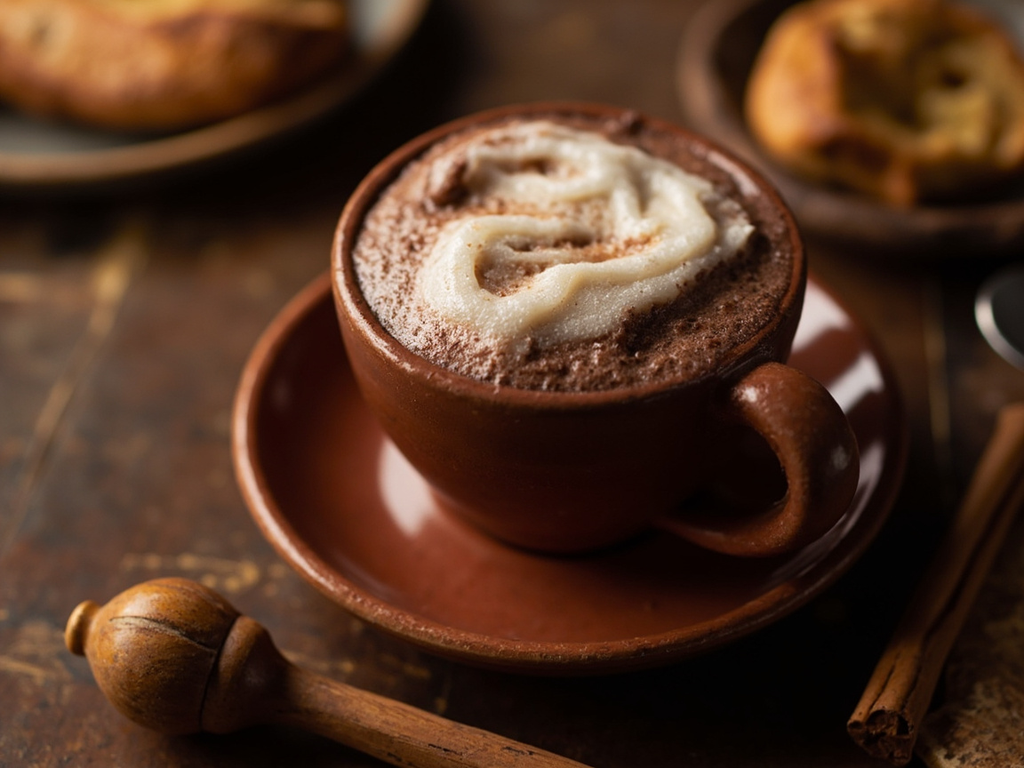
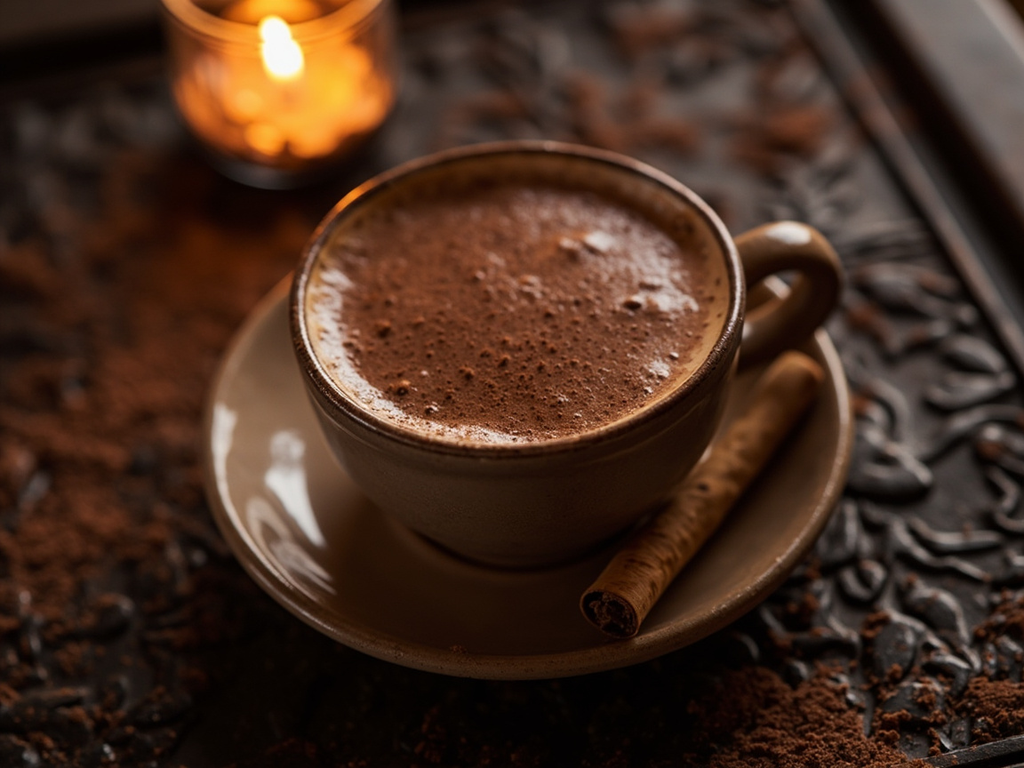
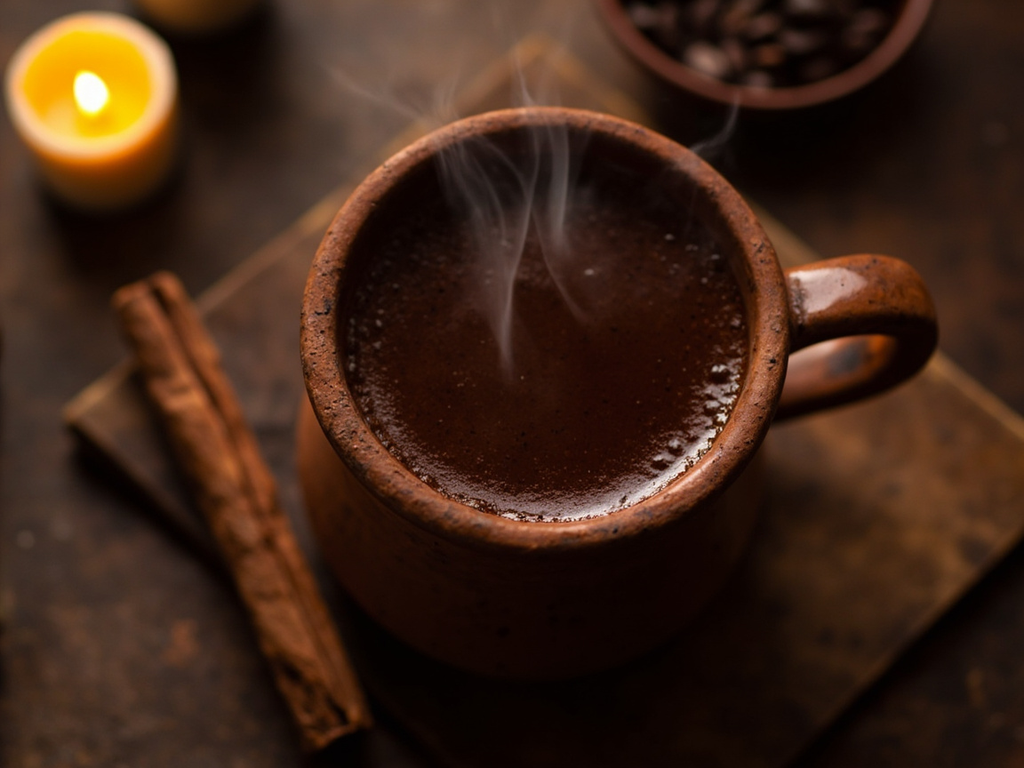
A hot, thick, frothy drink made from grated cacao beaten in water or milk with a little raw sugar and cinnamon. Bitter and comforting, whipped until it forms foam using a wooden whisk.
Here is a drink whose tree I have studied as much as I have tasted its liquor. Cacao, which the ancients held as a gift from the gods, is roasted, ground on a hot stone, then beaten in boiling water with the molinillo until a brown foam rises. I add a hint of cinnamon and very little sugar, for I like to taste the fruit's bitterness. Take it at daybreak: no other liquor better sustains the spirit of the traveler about to climb.
- •Roasted and ground cacao (cacao paste) — a piece per cup (base)
- •Water (or milk, depending on locale) — one cup (liquid)
- •Raw sugar (panela) — to taste (sweetness)
- •Cinnamon — a pinch (signature spice)
Chocolate criollo (Whipped Cacao of the Americas)
A hot, thick, frothy drink made from grated cacao beaten in water or milk with a little raw sugar and cinnamon. Bitter and comforting, whipped until it forms foam using a wooden whisk.
Why this dish? Cacao appears explicitly in his field diet, and Humboldt, as a naturalist, studied and described cacao cultivation in the Venezuelan provinces. Whipped chocolate was THE morning drink of the Spanish-American colonial world he traversed.
Here is a drink whose tree I have studied as much as I have tasted its liquor. Cacao, which the ancients held as a gift from the gods, is roasted, ground on a hot stone, then beaten in boiling water with the molinillo until a brown foam rises. I add a hint of cinnamon and very little sugar, for I like to taste the fruit's bitterness. Take it at daybreak: no other liquor better sustains the spirit of the traveler about to climb.
Ingredients (period version)
- Roasted and ground cacao (cacao paste) — a piece per cup (base)
- Water (or milk, depending on locale) — one cup (liquid)
- Raw sugar (panela) — to taste (sweetness)
- Cinnamon — a pinch (signature spice)
Ingredients
- Dark chocolate 80–100% or cacao paste — 40 g (base)
- Water or milk — 250 ml (liquid)
- Whole cane sugar (panela/rapadura) — 1–2 tsp (sweetness)
- Cinnamon — 1 pinch or ½ stick (spice)
Method
- Heat the water or milk with the cinnamon without boiling.
- Melt the grated cacao in it, stirring.
- Add the whole sugar and taste: the drink should remain boldly cocoa-like, barely sweet.
- Whisk vigorously (or use a wooden molinillo, rolled between the palms) until thick foam forms.
- Serve piping hot in a small bowl, foam on top.
How it was made : Chocolate was drunk, not eaten: the solid bar is a later invention. Throughout Spanish America, cacao was beaten with a molinillo to raise foam, a sign of quality. Cinnamon and sometimes achiote flavored the liquor. Humboldt devoted pages to the economy of Venezuelan cacao.
The contemporary twist : Serve 'old-style' in a jícara (half-calabash) with a cloud of beaten foam, and grate a little raw cacao bean on top.
Sources : Alexander von Humboldt, Essai politique sur le royaume de la Nouvelle-Espagne (1811)
Alexander von Humboldt · Charactorium