 flip
flipSharāb with Rose Water and Honey (jullāb)
Sharāb with Rose Water and Honey (jullāb)
Why this dish? Almohad religious rigor banned wine from the court. In its place, perfumed syrups diluted with fresh water were offered — rose water and honey — drinks of hospitality par excellence at the caliph's table.
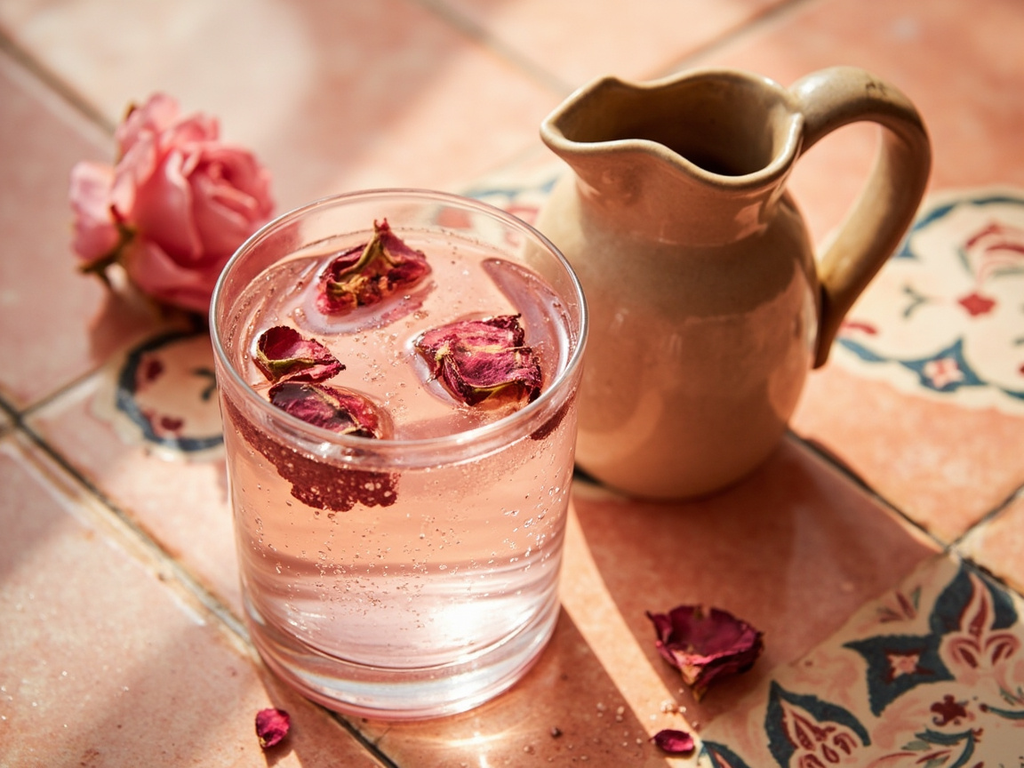
A honey syrup perfumed with rose water and sharpened with a little acidic juice, diluted with fresh water. Refreshing, floral, of all-Andalusi refinement.
Wine, we have driven from our walls, for our faith forbids it and drunkenness lowers the man whom knowledge should elevate. But hospitality, that is never forbidden! To the guest who crosses my threshold, we present sharāb: melted honey, the water of our roses of Seville, and just enough acidity to awaken the tongue. We dilute it with fresh water drawn from jars kept in the shade. Drink, traveler, and you will feel the sweetness of al-Andalus without losing any clarity of mind.
- •Honey — generous (sweet base)
- •Rose water — a good dash (signature perfume)
- •Lemon juice or mild vinegar — a little (acidity (sharāb/sikanjabīn))
- •Fresh water — as needed (dilution)
- •Dried rose petals — a few (decoration and perfume)
Sharāb with Rose Water and Honey (jullāb)
A honey syrup perfumed with rose water and sharpened with a little acidic juice, diluted with fresh water. Refreshing, floral, of all-Andalusi refinement.
Why this dish? Almohad religious rigor banned wine from the court. In its place, perfumed syrups diluted with fresh water were offered — rose water and honey — drinks of hospitality par excellence at the caliph's table.
Wine, we have driven from our walls, for our faith forbids it and drunkenness lowers the man whom knowledge should elevate. But hospitality, that is never forbidden! To the guest who crosses my threshold, we present sharāb: melted honey, the water of our roses of Seville, and just enough acidity to awaken the tongue. We dilute it with fresh water drawn from jars kept in the shade. Drink, traveler, and you will feel the sweetness of al-Andalus without losing any clarity of mind.
Ingredients (period version)
- Honey — generous (sweet base)
- Rose water — a good dash (signature perfume)
- Lemon juice or mild vinegar — a little (acidity (sharāb/sikanjabīn))
- Fresh water — as needed (dilution)
- Dried rose petals — a few (decoration and perfume)
Ingredients
- Honey — 100 g (sweet base)
- Water — 100 ml (for syrup) (dissolution)
- Food-grade rose water — 2 tablespoons (signature perfume)
- Lemon juice — 2 tablespoons (acidity)
- Fresh or sparkling water — 1 liter (dilution at serving)
- Dried edible rose petals — a few (decoration)
- Ice cubes — as needed (coolness (modern option))
Method
- Gently heat the honey with 100 ml water until it becomes a fluid syrup, without boiling.
- Off the heat, add the lemon juice and then the rose water (which evaporates with heat).
- Let cool: you obtain a concentrated syrup that keeps for several days in the fridge.
- At serving, pour a little syrup into each glass and dilute with fresh water to taste.
- Decorate with a few rose petals.
How it was made : Syrups (sharāb, which gave our word «syrup») and sikanjabīn (honey-vinegar) were the great specialty of medieval Muslim courts, blending pleasure and pharmacopoeia. They were kept concentrated and diluted on demand.
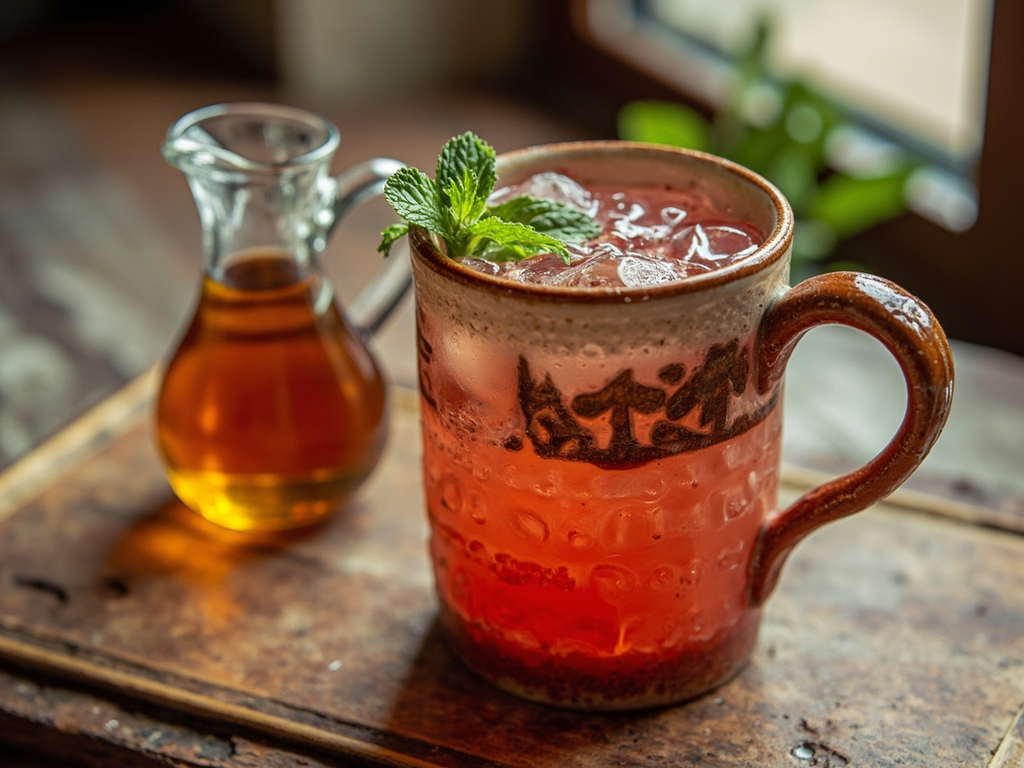
The contemporary twist : Served over crushed ice with sparkling water and a rose petal — a medieval lemonade perfect for a family snack.
Sources : Lucie Bolens, La cuisine andalouse, un art de vivre, Albin Michel, 1990 · Anonyme andalou, Kitāb al-ṭabīkh fī l-Maghrib wa-l-Andalus (XIIIe s.)
Abu Yaqub Yusuf · Charactorium