 flip
flipHummus with Tahini
Hummus with Tahini
Why this dish? Hummus is at the heart of Ada Yonath's daily diet, cited among her typical meals: fresh vegetables, hummus, fish from the market. It's the everyday dish, prepared without thinking and shared in the lab at the Weizmann Institute as at home in Rehovot.
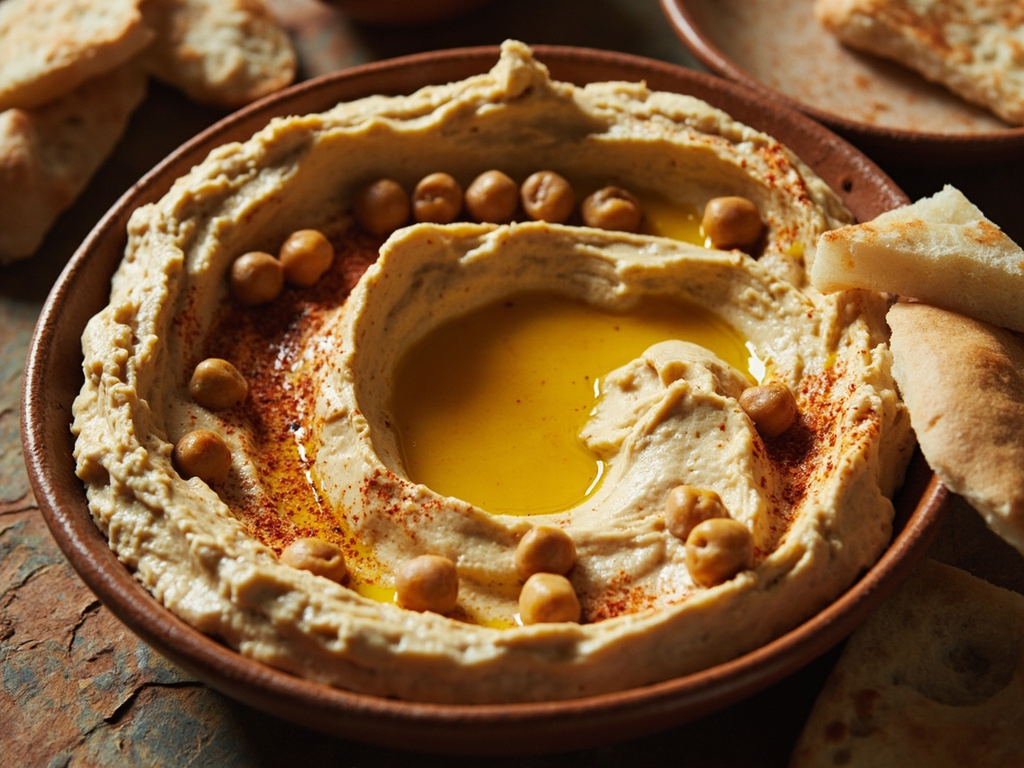
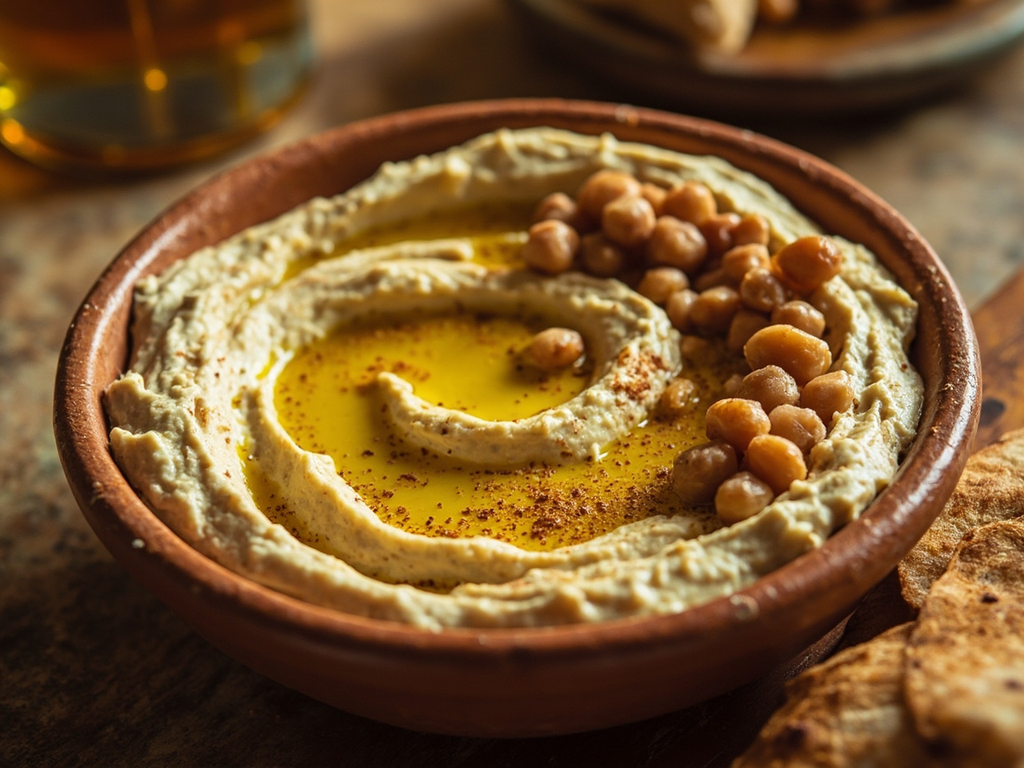
A cream of chickpeas smoothed with tahini, lemon, and garlic, drizzled with olive oil. Creamy, nourishing, eaten warm with pita bread, at any hour.
You know, I grew up in Jerusalem in a family where every penny counted — my father died when I was eleven, and hummus was the wealth of the poor: chickpeas, sesame, a lemon, and you're full. The secret, I give it to you like a protocol: crush the chickpeas while they're still warm, that's when they surrender. At the synchrotron, between two diffraction images, I dreamed of a real plate of smooth hummus rather than my cold sandwiches. Taste, adjust the lemon, start again — in cooking as in the lab, you iterate until it's right.
- •Dried chickpeas — a bowl, soaked the night before (base)
- •Tahini (sesame cream) — a few generous spoonfuls (binder and signature)
- •Lemon — juice of 1 to 2 (acidity)
- •Garlic — 1 to 2 cloves (aromatic)
- •Olive oil — a drizzle for serving (finishing)
- •Cumin and salt — to taste (seasoning)
Hummus with Tahini
A cream of chickpeas smoothed with tahini, lemon, and garlic, drizzled with olive oil. Creamy, nourishing, eaten warm with pita bread, at any hour.
Why this dish? Hummus is at the heart of Ada Yonath's daily diet, cited among her typical meals: fresh vegetables, hummus, fish from the market. It's the everyday dish, prepared without thinking and shared in the lab at the Weizmann Institute as at home in Rehovot.
You know, I grew up in Jerusalem in a family where every penny counted — my father died when I was eleven, and hummus was the wealth of the poor: chickpeas, sesame, a lemon, and you're full. The secret, I give it to you like a protocol: crush the chickpeas while they're still warm, that's when they surrender. At the synchrotron, between two diffraction images, I dreamed of a real plate of smooth hummus rather than my cold sandwiches. Taste, adjust the lemon, start again — in cooking as in the lab, you iterate until it's right.
Ingredients (period version)
- Dried chickpeas — a bowl, soaked the night before (base)
- Tahini (sesame cream) — a few generous spoonfuls (binder and signature)
- Lemon — juice of 1 to 2 (acidity)
- Garlic — 1 to 2 cloves (aromatic)
- Olive oil — a drizzle for serving (finishing)
- Cumin and salt — to taste (seasoning)
Ingredients
- Dried chickpeas — 250 g (soaked 12 h) or 2 cans cooked (base)
- Tahini — 120 g (binder and signature)
- Lemon juice — 60 ml (1 to 2 lemons) (acidity)
- Garlic — 1 clove (aromatic)
- Olive oil — 3 tbsp (finishing)
- Ground cumin — 1/2 tsp (seasoning)
- Salt + a pinch of baking soda — 1 tsp salt, 1/2 tsp baking soda for cooking (seasoning and texture)
Method
- If using dried chickpeas, soak them 12 h then cook 1 h to 1 h 30 with a pinch of baking soda until they crush between two fingers.
- Reserve a ladle of cooking water and a few whole chickpeas for garnish.
- Blend the warm chickpeas with garlic, lemon juice, salt, and cumin.
- Add the tahini and blend thoroughly, adding a little cooking water, until very smooth and pale.
- Spread in a shallow dish, forming a well, drizzle with olive oil, sprinkle with reserved chickpeas and a little cumin.
- Serve warm with hot pita bread.
How it was made : Hummus bi tahini has been attested in Levantine cuisine for centuries. Traditionally, chickpeas were cooked slowly over a fire then pounded in a mortar with sesame; the blender simply replaced arm and pestle. Sesame itself has been cultivated and ground in the Near East since antiquity.
The contemporary twist : Dress it in a spiral on the back of a spoon, like a crystal cup seen under a microscope — a discreet tribute to the structures Ada Yonath spent her life revealing.
Ada Yonath · Charactorium