 flip
flipHummus bi-tahini, the daily bowl
Hummus bi-tahini, the daily bowl
Why this dish? Hummus is the foundation of Israeli and Mediterranean cuisine that the sheet associates with Sharon: at his table, as in every home in the country, the bowl of chickpeas mashed with tahini was never missing, dipped with pita bread.
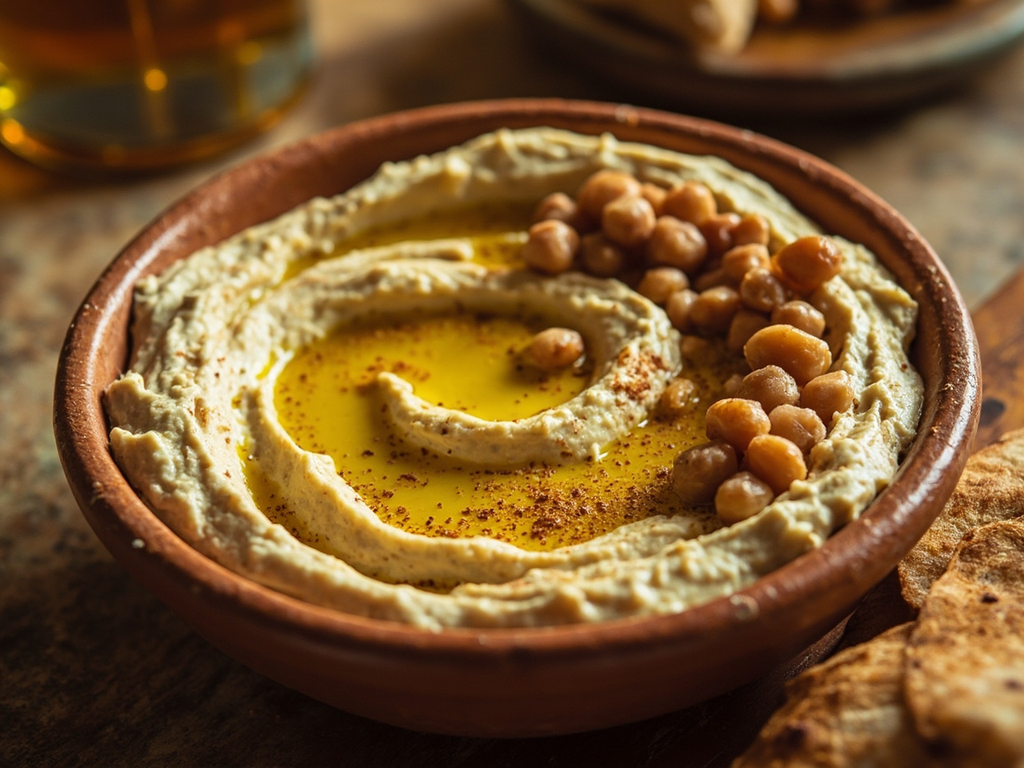
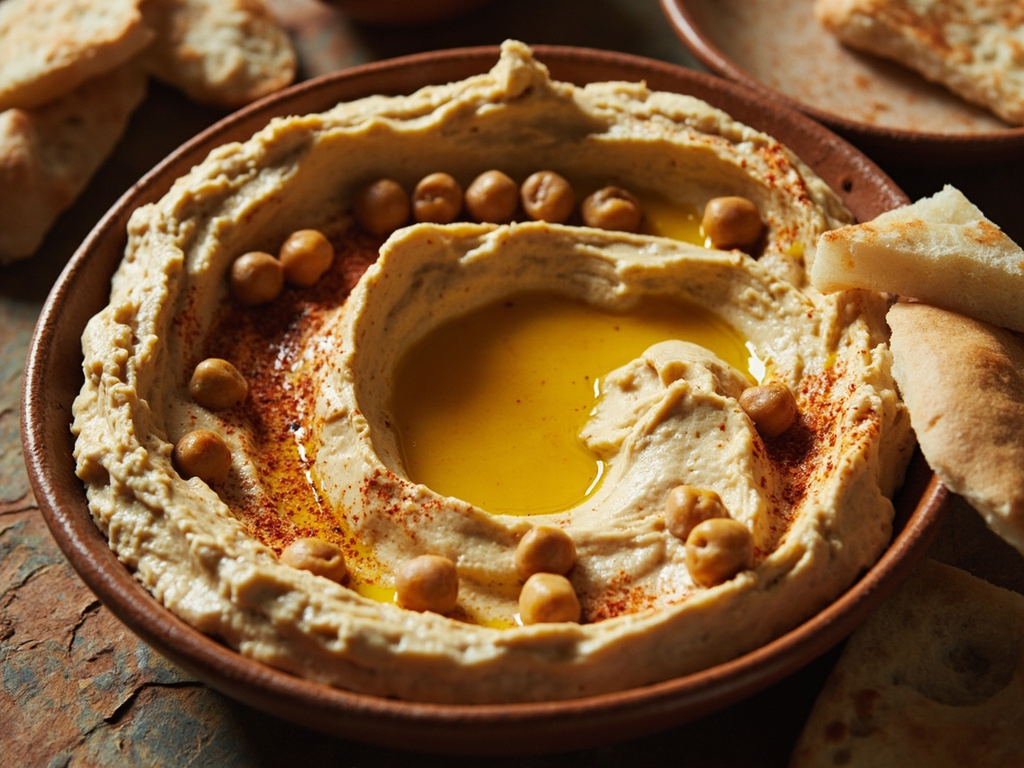
Slow-cooked chickpeas mashed into a cream with sesame paste, lemon juice, garlic, and a drizzle of olive oil. Served warm, the center hollowed into a well for the oil, topped with whole chickpeas and paprika.
Listen to me well: a man who doesn't eat his hummus in the morning isn't ready for the day. At home, on the farm, we would soak the chickpeas all night, cook them until they melted under your thumb — not a minute less. The tahini, you thin it with ice water and lemon until it pales and becomes smooth as cream. And the oil, my friend, you never put enough: dig a well in the middle and drown it. Tear the bread, dip your hand, and talk loud.
- •Dried chickpeas — a large bowl, soaked overnight (base)
- •Sesame paste (tehina) — several spoonfuls (creamy binder)
- •Lemon — juice of a few (acidity)
- •Garlic — a few cloves, crushed (aromatic)
- •Olive oil — generous (finishing)
- •Salt, cumin — to taste (seasoning)
Hummus bi-tahini, the daily bowl
Slow-cooked chickpeas mashed into a cream with sesame paste, lemon juice, garlic, and a drizzle of olive oil. Served warm, the center hollowed into a well for the oil, topped with whole chickpeas and paprika.
Why this dish? Hummus is the foundation of Israeli and Mediterranean cuisine that the sheet associates with Sharon: at his table, as in every home in the country, the bowl of chickpeas mashed with tahini was never missing, dipped with pita bread.
Listen to me well: a man who doesn't eat his hummus in the morning isn't ready for the day. At home, on the farm, we would soak the chickpeas all night, cook them until they melted under your thumb — not a minute less. The tahini, you thin it with ice water and lemon until it pales and becomes smooth as cream. And the oil, my friend, you never put enough: dig a well in the middle and drown it. Tear the bread, dip your hand, and talk loud.
Ingredients (period version)
- Dried chickpeas — a large bowl, soaked overnight (base)
- Sesame paste (tehina) — several spoonfuls (creamy binder)
- Lemon — juice of a few (acidity)
- Garlic — a few cloves, crushed (aromatic)
- Olive oil — generous (finishing)
- Salt, cumin — to taste (seasoning)
Ingredients
- Dried chickpeas — 250 g (soaked 12 h) or 2 cans (base)
- Tahini — 120 g (creamy binder)
- Lemon juice — 5 cl (1 to 2 lemons) (acidity)
- Garlic — 1 to 2 cloves (aromatic)
- Ice water — 5 to 10 cl (emulsion)
- Olive oil — 4 tbsp (finishing)
- Ground cumin, salt, paprika — to taste (seasoning)
Method
- Cook the soaked chickpeas for 1.5 to 2 hours with a pinch of baking soda, until they mash effortlessly. Reserve a few whole chickpeas for garnish.
- Blend the warm chickpeas with garlic, lemon juice, salt, and cumin.
- Add the tahini then the ice water in a stream, blending at length until a pale, airy cream forms.
- Spread in a wide bowl, making a well in the center with a spoon.
- Pour olive oil into the well, arrange whole chickpeas, sprinkle with paprika and cumin. Serve warm with hot pita bread.
How it was made : Chickpeas were cooked over a low fire in a clay pot for hours; the tahini was ground on a stone mill from roasted sesame seeds. Hummus served warm, never cold from the pantry, is the mark of a home that cares for its guests.
The contemporary twist : A masabacha hummus: half the chickpeas kept whole, still warm, placed on the cream with their cooking liquid and a drizzle of tahini — the spirit of the Jaffa counters.
Ariel Sharon · Charactorium