 flip
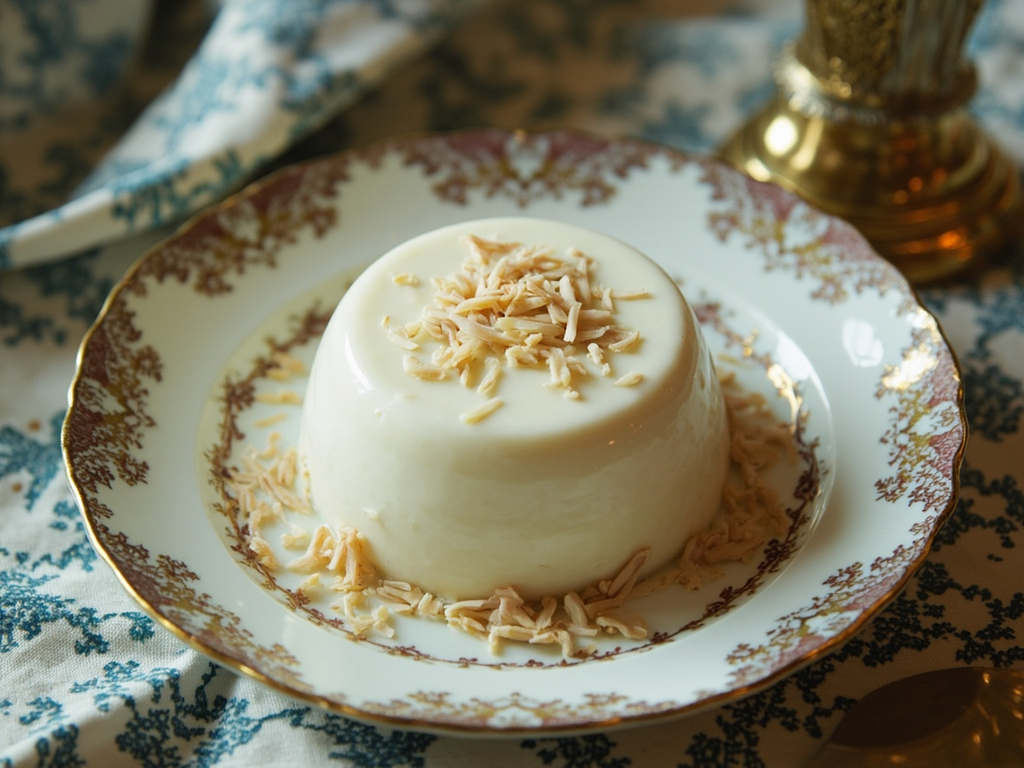
flipBlancmange with almonds and rose water
Blancmange with almonds and rose water
Why this dish? Trembling and perfectly white, blancmange graced a reception table. Adélaïde, who held a salon and received students and colleagues in her studio, could offer this elegant and inexpensive dessert to shape, worthy of a tasteful hostess.
A milky almond jelly, sweetened and perfumed with rose water, set in a mold and unmolded cold. The quintessential refined dessert of the 18th century, both simple and spectacular.
When I receive guests after a sitting, I like to present something that pleases the eye before the palate—is that not my trade? This blancmange, I want it spotless white, made from my pounded and strained almonds, set in its mold like a figure taking shape under the brush. A hint of rose water, not too much, for excess spoils everything, in painting as in cooking. One unmolds it trembling, and the whole table holds its breath: that is my little triumph at the end of dinner.
- •Blanched sweet almonds — one pound (base almond milk)
- •A few bitter almonds — five or six (flavor)
- •Pounded loaf sugar — to taste (sweetness)
- •Rose water — one spoonful (flavor)
- •Isinglass or grated stag's horn — as needed to set (gelling agent)
Blancmange with almonds and rose water
A milky almond jelly, sweetened and perfumed with rose water, set in a mold and unmolded cold. The quintessential refined dessert of the 18th century, both simple and spectacular.
Why this dish? Trembling and perfectly white, blancmange graced a reception table. Adélaïde, who held a salon and received students and colleagues in her studio, could offer this elegant and inexpensive dessert to shape, worthy of a tasteful hostess.
When I receive guests after a sitting, I like to present something that pleases the eye before the palate—is that not my trade? This blancmange, I want it spotless white, made from my pounded and strained almonds, set in its mold like a figure taking shape under the brush. A hint of rose water, not too much, for excess spoils everything, in painting as in cooking. One unmolds it trembling, and the whole table holds its breath: that is my little triumph at the end of dinner.
Ingredients (period version)
- Blanched sweet almonds — one pound (base almond milk)
- A few bitter almonds — five or six (flavor)
- Pounded loaf sugar — to taste (sweetness)
- Rose water — one spoonful (flavor)
- Isinglass or grated stag's horn — as needed to set (gelling agent)
Ingredients
- Ground almonds — 200 g (base almond milk)
- Whole milk — 500 ml (liquid)
- Sugar — 100 g (sweetness)
- Rose water — 1 to 2 teaspoons (flavor)
- Bitter almond extract — 2 drops (flavor)
- Gelatin — 5 sheets (gelling agent)
Method
- Heat the milk with the ground almonds and sugar, let infuse off the heat for 20 minutes.
- Strain through a fine cloth, pressing well to extract a smooth almond milk.
- Soften the gelatin in cold water, then dissolve it in the warmed almond milk without boiling.
- Flavor with rose water and a hint of bitter almond.
- Pour into a mold rinsed with cold water and let set in the fridge for at least four hours.
- Unmold while cold by briefly dipping the mold in warm water.
How it was made : In the 18th century, blancmange was set with isinglass (fish glue) or grated stag's horn, for lack of sheet gelatin. Almond milk was obtained by pounding almonds in a mortar then pressing the paste through a cloth. Massialot and Menon give several versions.
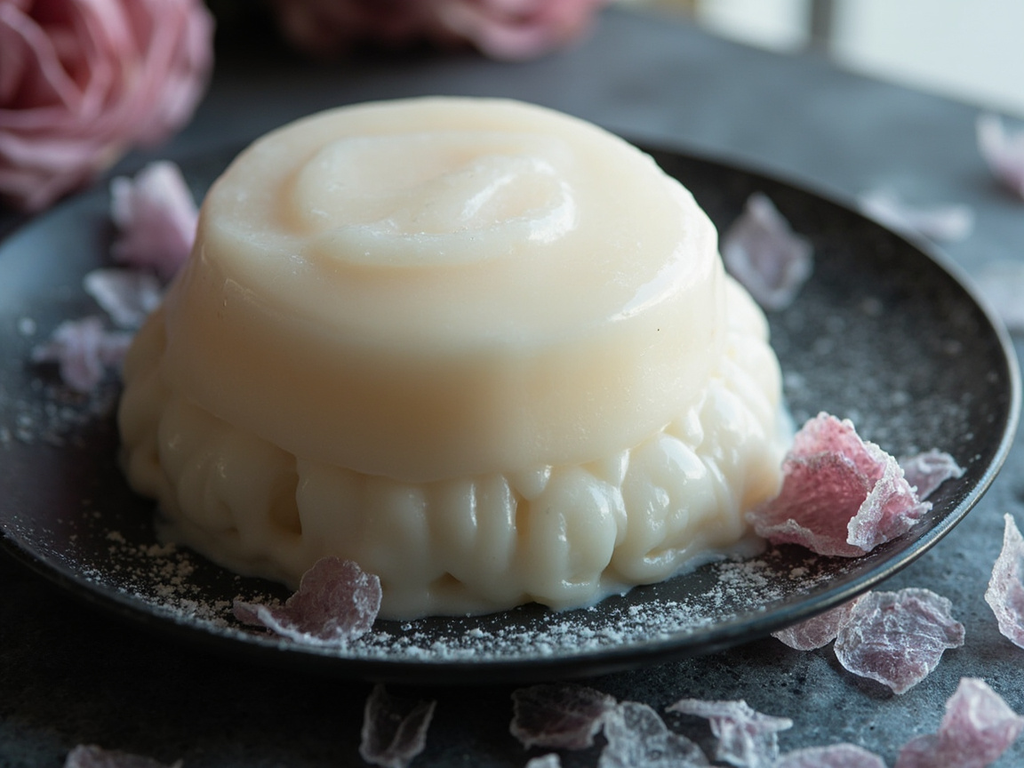
The contemporary twist : Unmold onto a dark slate plate and sprinkle with crystallized rose petals—a pale cameo on a dark background, like a portrait in the style of the time.
Sources : François Massialot, Le Cuisinier roïal et bourgeois (1691) · Menon, La Cuisinière bourgeoise (1746)
Adélaïde Labille-Guiard · Charactorium