 flip
flipGolden Age apple and raisin tart (Appeltaart)
Golden Age apple and raisin tart (Appeltaart)
Why this dish? Spiced tarts filled Dutch tables during feasts and visits, as evidenced by the still-life paintings that Descartes encountered in the Dutch Republic. He, who appreciated moderation, could on days of rejoicing share such a sweet where the spices brought by the VOC mingled.
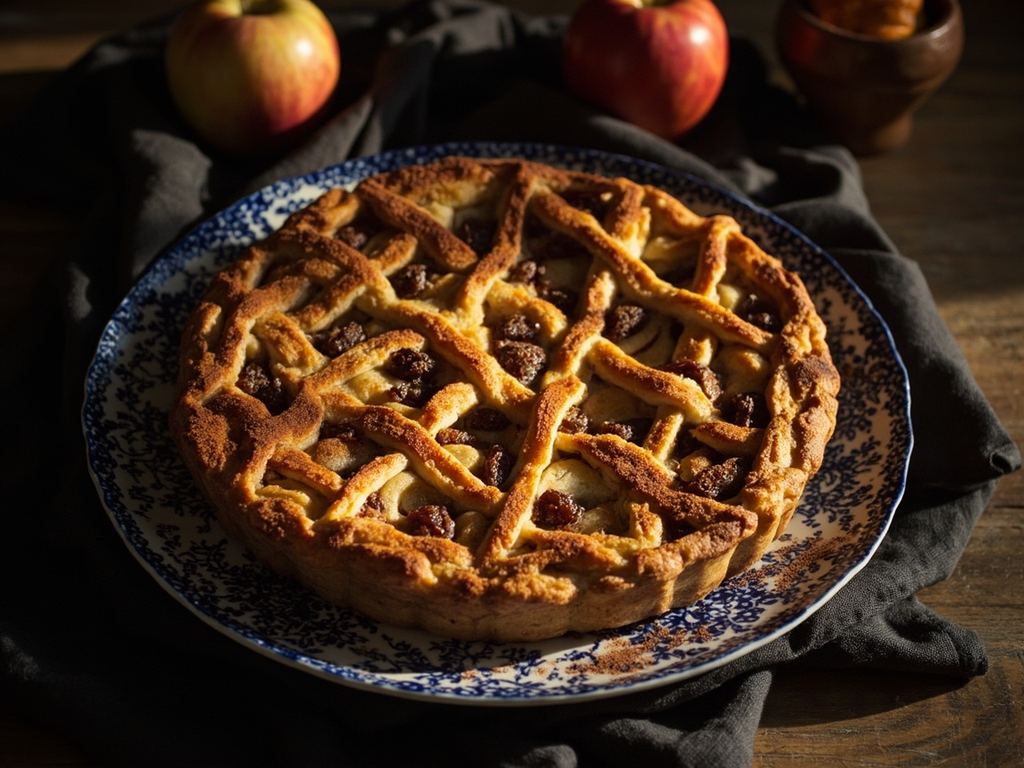
A deep tart with buttery pastry, filled with tart apples, plumped raisins, cinnamon and nutmeg, with a splash of wine. The domestic luxury of the Golden Age.
I grant you, I am hardly a glutton, and I distrust pleasures that disturb serenity. But press me on a feast day, and I will not refuse a slice of this tart where orchard apples marry raisins from the South and those spices our ships bring from the Indies. My hosts would pour in a finger of wine and cinnamon; it was eaten warm, and I observed, as a scholar, how heat awakens all its perfume.
- •Tart apples — a full apron (main filling)
- •Raisins (currants) — a handful (sweetness, chew)
- •Butter — freely (rich pastry)
- •Wheat flour — as needed (pastry)
- •Sugar — according to purse (sweetness)
- •Cinnamon and nutmeg — generously (signature spices)
- •Wine — a finger (filling aroma)
Golden Age apple and raisin tart (Appeltaart)
A deep tart with buttery pastry, filled with tart apples, plumped raisins, cinnamon and nutmeg, with a splash of wine. The domestic luxury of the Golden Age.
Why this dish? Spiced tarts filled Dutch tables during feasts and visits, as evidenced by the still-life paintings that Descartes encountered in the Dutch Republic. He, who appreciated moderation, could on days of rejoicing share such a sweet where the spices brought by the VOC mingled.
I grant you, I am hardly a glutton, and I distrust pleasures that disturb serenity. But press me on a feast day, and I will not refuse a slice of this tart where orchard apples marry raisins from the South and those spices our ships bring from the Indies. My hosts would pour in a finger of wine and cinnamon; it was eaten warm, and I observed, as a scholar, how heat awakens all its perfume.
Ingredients (period version)
- Tart apples — a full apron (main filling)
- Raisins (currants) — a handful (sweetness, chew)
- Butter — freely (rich pastry)
- Wheat flour — as needed (pastry)
- Sugar — according to purse (sweetness)
- Cinnamon and nutmeg — generously (signature spices)
- Wine — a finger (filling aroma)
Ingredients
- Apples (e.g. Reine des Reinettes) — 1 kg (main filling)
- Raisins — 80 g (sweetness, chew)
- Butter — 200 g (pastry)
- Flour — 350 g (pastry)
- Sugar — 120 g (50 g pastry + 70 g filling) (sweetness)
- Cinnamon — 1.5 tsp (spice)
- Nutmeg — ¼ tsp grated (signature spice)
- Sweet white wine — 3 tbsp (aroma)
- 1 egg — 1 (egg wash and pastry binder)
Method
- Soak raisins in warm wine. Peel and quarter apples; mix with sugar, cinnamon, nutmeg and drained raisins.
- Make pastry by rubbing cold butter into flour, add 50 g sugar, the egg and a little water; knead briefly, rest 30 min in the fridge.
- Line a deep buttered tart tin with two-thirds of the pastry. Fill with the apple mixture, pressing firmly.
- Cut remaining pastry into strips, arrange in a lattice on top, brush with beaten egg.
- Bake at 180°C for 50–60 minutes, until golden. Leave to cool slightly before serving.
How it was made : The Dutch cookbook *De verstandige kock* (1667) gives a very similar recipe for appeltaart, with apples, butter, sugar, cinnamon and currants: the deep lattice-top pie and generous use of colonial spices were already the norm in affluent households.
The contemporary twist : Serve each slice warm with a dusting of fresh nutmeg and a dollop of unsweetened whipped cream—the hot/cold contrast very typical of Dutch 'koffietijd'.
Sources : De verstandige kock (Amsterdam, 1667)
René Descartes · Charactorium