 flip
flipSesame and Honey Itria
Sesame and Honey Itria
Why this dish? On religious festival days, when expensive meat finally appeared on Athenian tables, the meal ended with *tragemata*: dried fruits, nuts, and honey sweets. Agnodice, living according to the civic calendar of Athens, shared in these festivals — and sesame, linked to weddings and fertility, spoke particularly to one who watched over births.
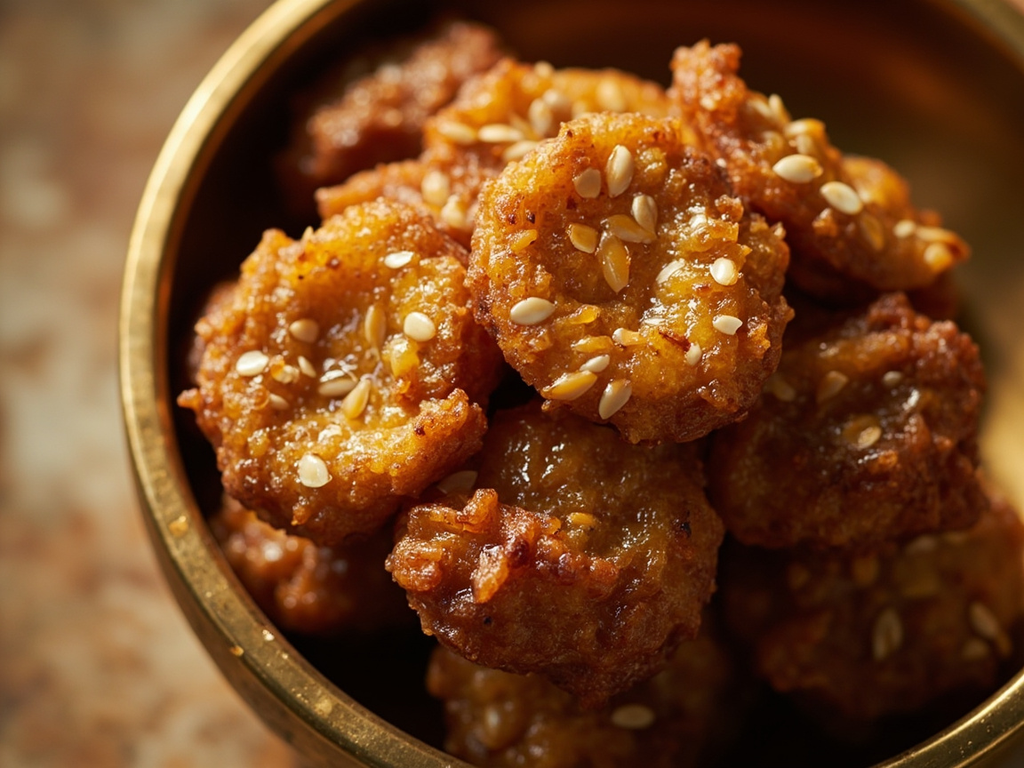
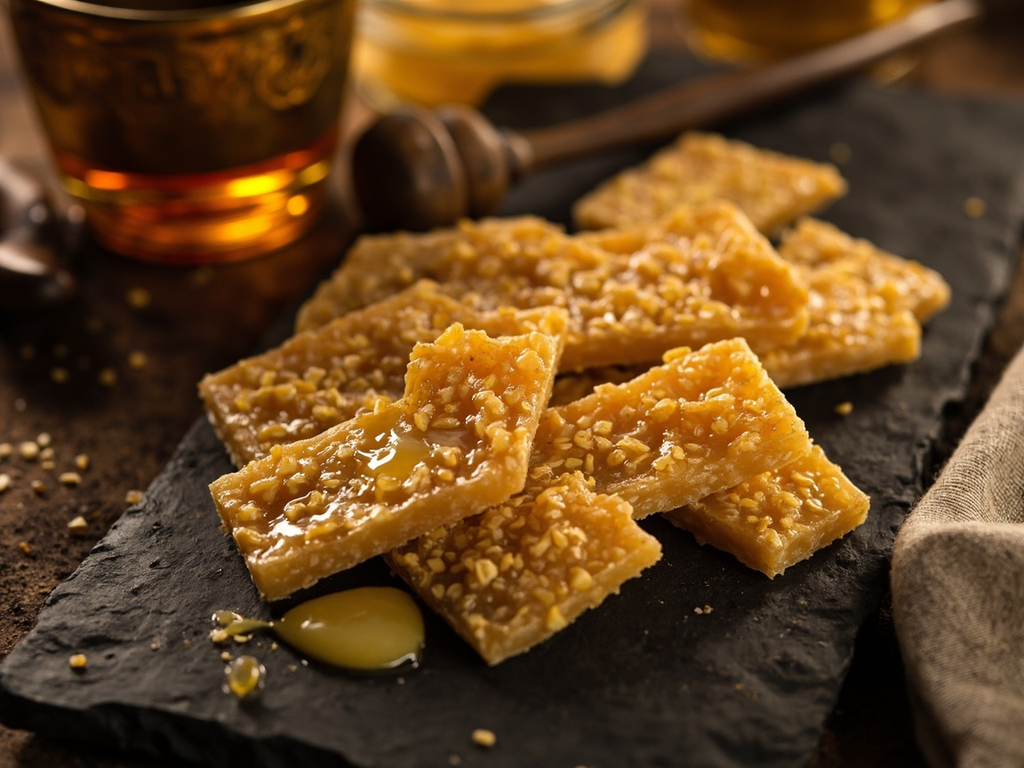
Thin, crunchy sesame brittle bound with honey, a forerunner of Greek pasteli. Crisp, golden, fragrant: the sweetness of feast days, nibbled while drinking wine mixed with water.
On the days when the city honors the gods and meat smokes on the altar, I do not refuse a sweet. I toast the sesame until it sings under the spoon, drown it in hot Hymettus honey, and spread it thin on an oiled board. Sesame, you see, is thrown to young brides so they may be fertile — and I, who have seen so many women give birth, eat it willingly, thinking of all those lives.
- •Sesame seeds — a good measure (crunchy base)
- •Hymettus honey — enough to bind (binder and flavor)
- •Olive oil — a drizzle (for the board)
Sesame and Honey Itria
Thin, crunchy sesame brittle bound with honey, a forerunner of Greek pasteli. Crisp, golden, fragrant: the sweetness of feast days, nibbled while drinking wine mixed with water.
Why this dish? On religious festival days, when expensive meat finally appeared on Athenian tables, the meal ended with *tragemata*: dried fruits, nuts, and honey sweets. Agnodice, living according to the civic calendar of Athens, shared in these festivals — and sesame, linked to weddings and fertility, spoke particularly to one who watched over births.
On the days when the city honors the gods and meat smokes on the altar, I do not refuse a sweet. I toast the sesame until it sings under the spoon, drown it in hot Hymettus honey, and spread it thin on an oiled board. Sesame, you see, is thrown to young brides so they may be fertile — and I, who have seen so many women give birth, eat it willingly, thinking of all those lives.
Ingredients (period version)
- Sesame seeds — a good measure (crunchy base)
- Hymettus honey — enough to bind (binder and flavor)
- Olive oil — a drizzle (for the board)
Ingredients
- Sesame seeds — 150 g (crunchy base)
- Honey — 120 g (binder)
- Lemon zest or orange blossom water (optional) — a few drops (aroma)
- Olive oil — a little (to oil the work surface)
Method
- Toast the sesame seeds dry in a pan, stirring, until golden and fragrant. Set aside.
- Gently heat the honey in the same pan until it simmers and becomes more fluid (2 to 3 minutes).
- Pour the sesame into the honey, mix quickly to coat well, add aroma if desired.
- Pour the mixture onto an oiled work surface (or parchment paper) and spread thinly with an oiled spatula or rolling pin.
- Let cool for 2 minutes, then cut into diamonds or sticks before complete cooling.
- Let harden, then lift off: the *itria* should be crunchy.
How it was made : Ancient Greeks knew several sesame and honey sweets; the word *itrion* refers to fine dry pastries mentioned as early as Anacreon and Aristophanes. Since sugar was unknown, honey was the only sweetener, and sesame, imported from the Levant, carried a strong symbolic charge related to marriage and fertility — wedding cakes were made from it.
The contemporary twist : Present them as small diamonds on a slate board, sprinkled with a touch of fleur de sel and lemon zest: a chic pasteli to accompany coffee.
Agnodice · Charactorium