 flip
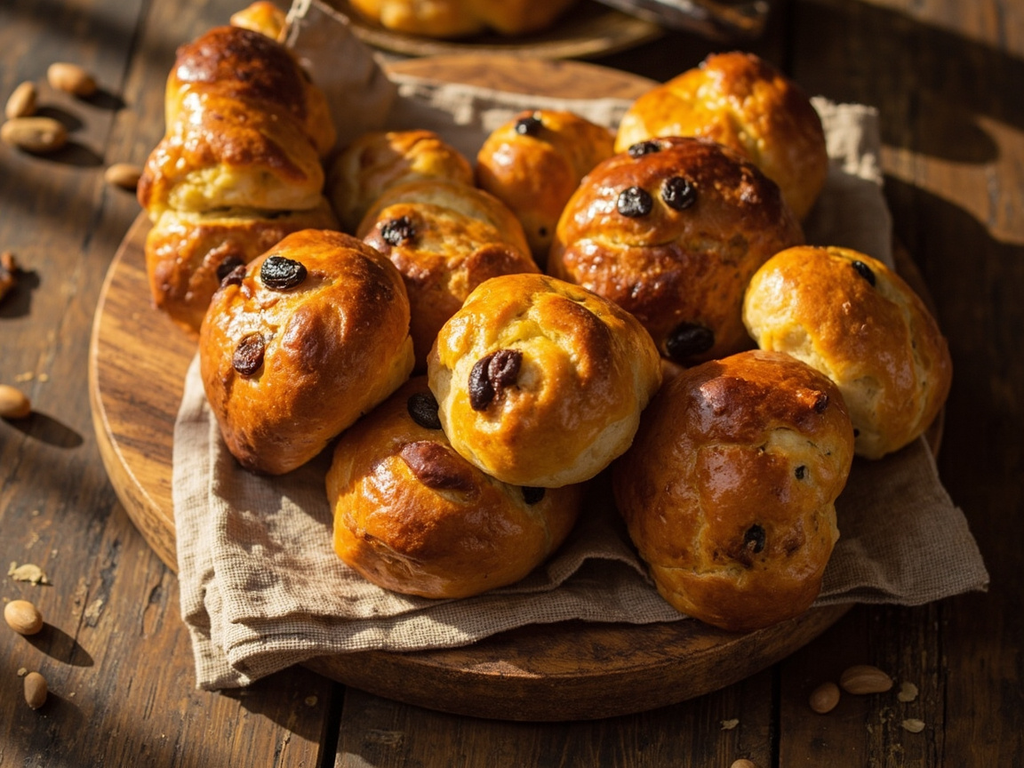
flipMaritozzo with Raisins and Pine Nuts
Maritozzo with Raisins and Pine Nuts
Why this dish? Between two sketches at the port of Livorno or on the way to Trastevere, a painter always in a hurry would grab a sweet raisin bun from the baker. The maritozzo, a sweet Roman bread filled with raisins, pine nuts, and zest, was the quintessential street snack.
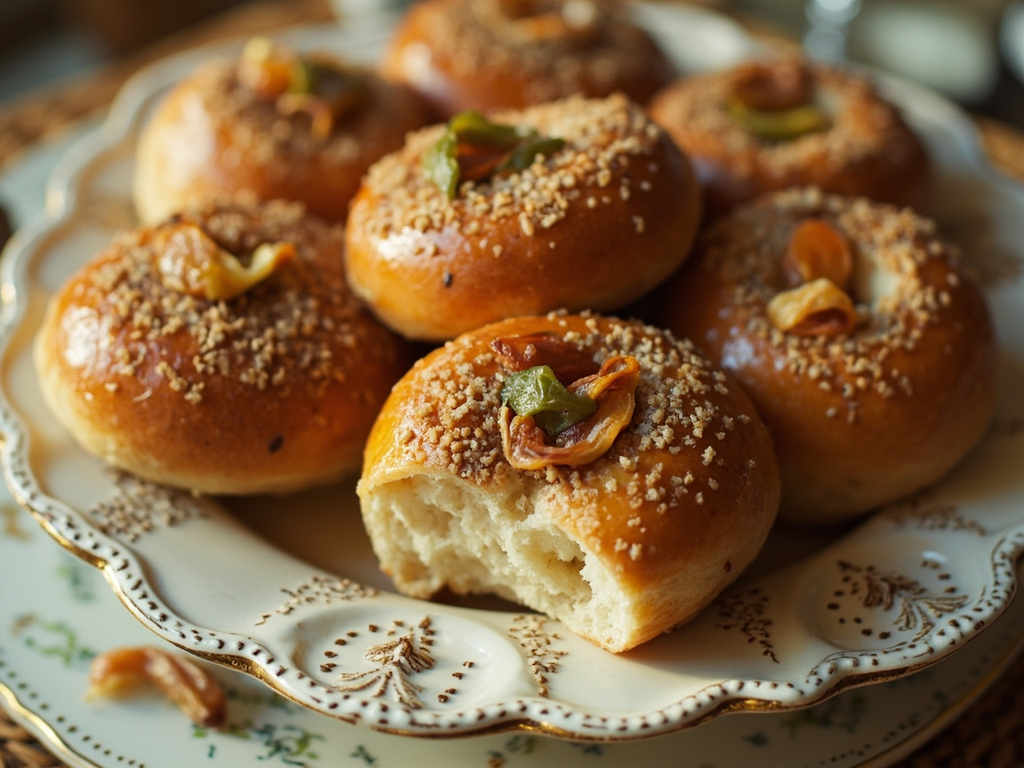
A small brioche-like bun, lightly sweetened with honey, enriched with raisins, pine nuts, and orange zest: the morning sweetness you take away and eat on the go, the only frankly sweet recipe in the spread.
When I ran from one worksite to another, my belly screaming and no time to sit, I would grab from the baker one of those little golden buns stuffed with raisins and pine nuts. You slip it into your pocket, still warm, and eat it walking, your sketchbook under your arm. A touch of honey, a hint of orange peel — it's little, but it puts you in good humor to draw the harbor masts. A painter's happiness sometimes lies in a sweet crust.
- •Wheat flour — as needed (bread base)
- •Sourdough starter — a little (leavening)
- •Honey — a few spoonfuls (sweetness)
- •Raisins — a handful (filling)
- •Pine nuts — a small handful (crunch)
- •Mild olive oil — a drizzle (softness)
- •Orange peel — one strip (flavor)
Maritozzo with Raisins and Pine Nuts
A small brioche-like bun, lightly sweetened with honey, enriched with raisins, pine nuts, and orange zest: the morning sweetness you take away and eat on the go, the only frankly sweet recipe in the spread.
Why this dish? Between two sketches at the port of Livorno or on the way to Trastevere, a painter always in a hurry would grab a sweet raisin bun from the baker. The maritozzo, a sweet Roman bread filled with raisins, pine nuts, and zest, was the quintessential street snack.
When I ran from one worksite to another, my belly screaming and no time to sit, I would grab from the baker one of those little golden buns stuffed with raisins and pine nuts. You slip it into your pocket, still warm, and eat it walking, your sketchbook under your arm. A touch of honey, a hint of orange peel — it's little, but it puts you in good humor to draw the harbor masts. A painter's happiness sometimes lies in a sweet crust.
Ingredients (period version)
- Wheat flour — as needed (bread base)
- Sourdough starter — a little (leavening)
- Honey — a few spoonfuls (sweetness)
- Raisins — a handful (filling)
- Pine nuts — a small handful (crunch)
- Mild olive oil — a drizzle (softness)
- Orange peel — one strip (flavor)
Ingredients
- All-purpose flour (T45) — 350 g (bread base)
- Fresh baker's yeast — 15 g (leavening)
- Honey — 60 g (sweetness)
- Raisins — 60 g (filling)
- Pine nuts — 30 g (crunch)
- Mild olive oil — 40 ml (softness)
- Orange zest — 1 (flavor)
- Warm water — 150 ml (hydration)
- Salt — 1 pinch (balance)
Method
- Dissolve the yeast in warm water with a spoonful of honey, let foam for 10 minutes.
- Mix the flour, salt, remaining honey, oil, orange zest, and the dissolved yeast; knead for 10 minutes until a soft dough forms.
- Fold in the raisins (previously soaked and drained) and pine nuts, then let rise for 1 hour 30 minutes under a cloth.
- Shape into small oval buns, place on a baking sheet, and let rise another 45 minutes.
- Brush with honey diluted in a little water and bake for 18 to 20 minutes at medium heat (180°C), until golden brown.
How it was made : The maritozzo is one of the oldest sweet breads of Rome, already known in a simple form as a nourishing snack for workers and travelers; it was filled with raisins, pine nuts, and zests, accessible Mediterranean ingredients. Cane sugar remained rare and expensive, so honey provided the sweetness.
The contemporary twist : Today's Roman version is split in half and filled with a generous dollop of whipped cream — the famous "maritozzo con la panna" of Roman cafés.
Agostino Tassi · Charactorium