 flip
flipKabuli Palau
Kabuli Palau
Why this dish? Kabuli Palau is the showpiece dish of the Afghan court, served at military victories and great tribal assemblies (jirgas). Ahmad Shah, who made Kandahar his capital and held court in Kabul, offered this sumptuous rice to his tribal chiefs to seal alliances and loyalties — a political as much as a culinary gesture.
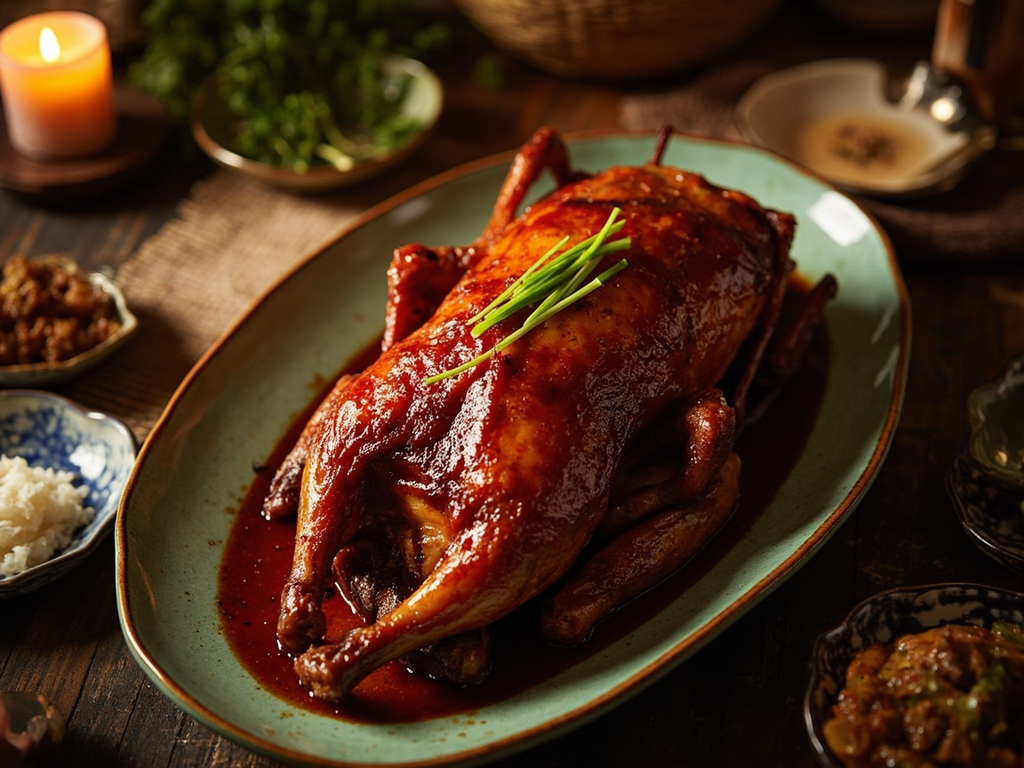
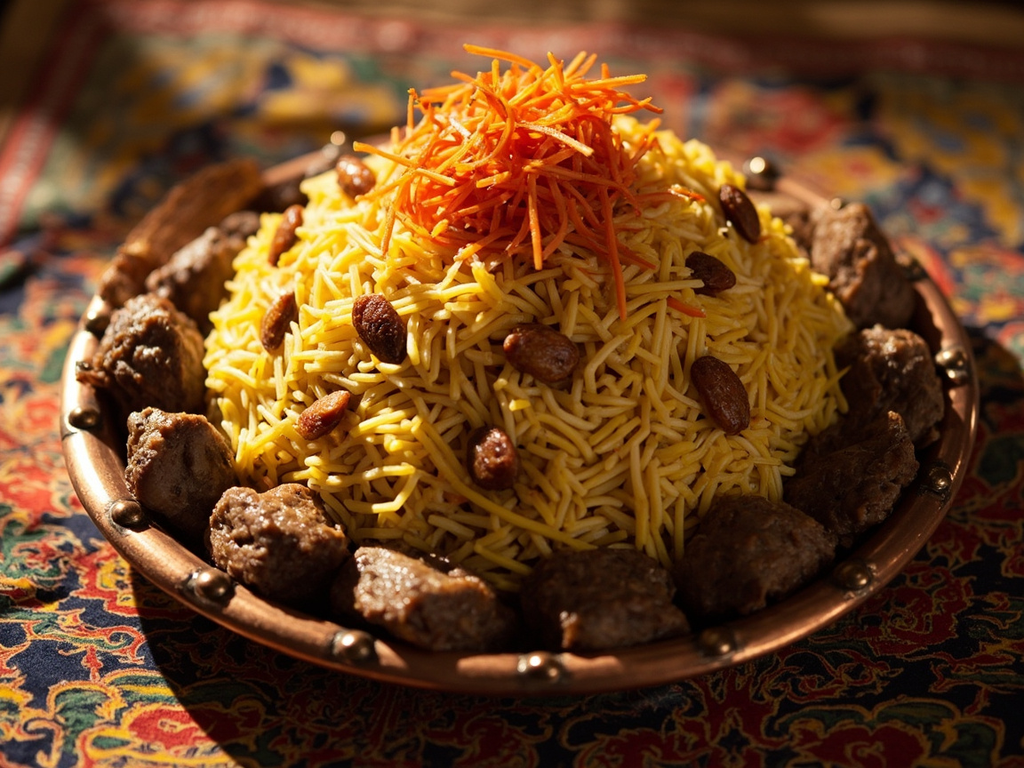
Long-grain basmati rice steamed with tender lamb, crowned with caramelized carrots, raisins, and almonds, perfumed with cardamom and cumin. The sweet-savory contrast and golden hue of the rice make it the jewel of the Afghan dastarkhwan.
Know, O guest at my table, that this palau is no mere rice. When I gathered my sardars after the victory of Panipat, it was this dish my cooks laid on the cloth — rice golden as the sun of Kandahar, lamb so tender it falls apart under bread. The carrots, you see, must be cut fine as silk threads and fried in fat until they take the color of amber. It is the generosity of this dish that tells the chiefs: your shah does not count, he gives. And he who eats well at my table fights well on the field.
- •Long-grain rice — a good measure for ten men (base)
- •Lamb shoulder with bone — a fine piece (protein, stock)
- •Carrots — a generous handful, cut into julienne (sweet garnish)
- •Raisins — a handful (sweet garnish)
- •Whole almonds — a handful (garnish, crunch)
- •Sheep tail fat — a good piece (cooking fat)
- •Onion — two large (aromatic base)
- •Green cardamom — several pods (main aroma)
- •Cumin seeds — a pinch (spice)
- •Salt — to taste (seasoning)
- •Sugar or honey — a little (caramelizing carrots)
Kabuli Palau
Long-grain basmati rice steamed with tender lamb, crowned with caramelized carrots, raisins, and almonds, perfumed with cardamom and cumin. The sweet-savory contrast and golden hue of the rice make it the jewel of the Afghan dastarkhwan.
Why this dish? Kabuli Palau is the showpiece dish of the Afghan court, served at military victories and great tribal assemblies (jirgas). Ahmad Shah, who made Kandahar his capital and held court in Kabul, offered this sumptuous rice to his tribal chiefs to seal alliances and loyalties — a political as much as a culinary gesture.
Know, O guest at my table, that this palau is no mere rice. When I gathered my sardars after the victory of Panipat, it was this dish my cooks laid on the cloth — rice golden as the sun of Kandahar, lamb so tender it falls apart under bread. The carrots, you see, must be cut fine as silk threads and fried in fat until they take the color of amber. It is the generosity of this dish that tells the chiefs: your shah does not count, he gives. And he who eats well at my table fights well on the field.
Ingredients (period version)
- Long-grain rice — a good measure for ten men (base)
- Lamb shoulder with bone — a fine piece (protein, stock)
- Carrots — a generous handful, cut into julienne (sweet garnish)
- Raisins — a handful (sweet garnish)
- Whole almonds — a handful (garnish, crunch)
- Sheep tail fat — a good piece (cooking fat)
- Onion — two large (aromatic base)
- Green cardamom — several pods (main aroma)
- Cumin seeds — a pinch (spice)
- Salt — to taste (seasoning)
- Sugar or honey — a little (caramelizing carrots)
Ingredients
- Basmati rice — 500 g (base)
- Lamb shoulder — 600 g, cut into pieces (protein)
- Carrots — 3 medium, julienned (sweet garnish)
- Golden raisins — 80 g (garnish)
- Slivered almonds — 50 g (garnish)
- Vegetable oil or ghee — 4 tbsp (fat)
- Onions — 2 medium, sliced (aromatic base)
- Green cardamom pods — 6 (aroma)
- Cumin seeds — 1 tsp (spice)
- Sugar — 1 tbsp (caramelization)
- Salt — to taste (seasoning)
- Water — about 1 L (cooking)
Method
- Rinse the basmati rice in cold water until the water runs clear, then soak for 30 minutes. Drain.
- In a large pot, heat the ghee and sauté the sliced onions until deep golden. Remove half the onions and set aside.
- Add the lamb pieces, cardamom pods, and cumin. Brown the meat on all sides.
- Cover with water (about 1 L), add salt, bring to a boil, then reduce heat and simmer covered for about 1 hour, until the meat is very tender.
- Meanwhile, sauté the julienned carrots in a little ghee with the sugar until tender and lightly caramelized. Set aside. Briefly toast the raisins and almonds in the same ghee. Set aside.
- Remove the meat from the broth and set aside. Strain the broth.
- Bring the broth to a boil, add the drained rice, and cook at a vigorous boil for 5 minutes (the rice should be parboiled). Drain the rice, reserving a little broth.
- In the pot, arrange the meat at the bottom, cover with the parboiled rice. Drizzle with 2-3 tablespoons of reserved broth. Cover tightly (a cloth under the lid helps) and cook over very low heat for 25-30 minutes (dampokht steam cooking).
- Mound the rice on a large platter, arrange the meat around, and top with caramelized carrots, raisins, toasted almonds, and the reserved fried onions.
How it was made : Palau is attested across Central Asia since Timurid times. The dampokht (steam-cooking) technique allowed army camp cooks to prepare rice over coals with a lid sealed with dough. Sheep tail fat (dumba) was the preferred fat; carrots and raisins, abundant in the Kandahar region, distinguished Afghan palau from its Persian or Indian cousins.
The contemporary twist : Serve as individual domes using an inverted bowl, sprinkle with crushed pistachios and dried rose petals to evoke the gardens of Kandahar.
Sources : Mountstuart Elphinstone, An Account of the Kingdom of Caubul, 1815 — descriptions of Afghan feasts and food customs · Helen Saberi, Noshe Djan: Afghan Food and Cookery, Prospect Books, 2000
Ahmad Shah Durrani · Charactorium