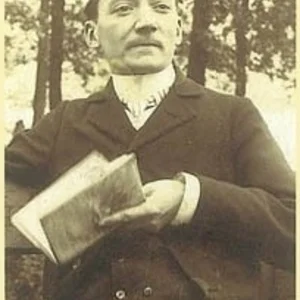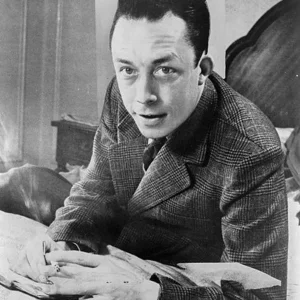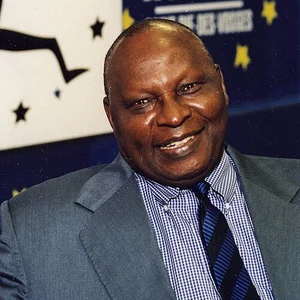

Ahmadou Kourouma was an Ivorian writer and a major figure of French-language African literature. His work denounces post-colonial dictatorships and the violence of contemporary Africa by reinventing the French language through contact with Malinke.
Ahmadou Kourouma(1927 — 2003)
Ahmadou Kourouma
Côte d'Ivoire
7 min read
Frequently asked questions
Key Facts
- Born in 1927 in Boundiali, Côte d'Ivoire, into a Malinke family
- Published *The Suns of Independence* in 1968 (released in 1970), which criticizes post-colonial regimes
- Received the Prix Renaudot in 2000 for *Allah Is Not Obliged*, a novel about child soldiers
- Died in 2003 in Lyon, France
Works & Achievements
Kourouma's first novel and masterpiece, painting the bitterness of a fallen prince in the Africa of the independence era. It revolutionizes the French language by weaving in the rhythm and imagery of the Malinké.
A play critical of those in power, which was banned. Its censorship opened a long period of exile for the author.
A novel recounting a century of colonization seen from the African side, built around the untranslatable word “monnè.” It marked Kourouma's grand return to the novel after twenty years.
A satire of an African dictator, told in the manner of a griot (the “donsomana”). The book denounces the authoritarian Cold War regimes of Africa.
The story of a child soldier, Birahima, in the wars of Liberia and Sierra Leone. Crowned with the Prix Renaudot and the Prix Goncourt des lycéens, it is his most widely read book.
The continuation of Birahima's adventures, this time plunged into the Ivorian civil war. The novel, left unfinished at the author's death, appeared a year later.
Anecdotes
Before becoming a writer, Ahmadou Kourouma was forcibly conscripted as a *tirailleur* (colonial rifleman) in the French colonial army. According to his biographical legend, after he refused to take part in suppressing demonstrations, he was punished by being sent to fight in Indochina in the early 1950s. This experience of colonial violence would deeply mark his work.
His first novel, *The Suns of Independence*, was initially rejected by French publishers. It was in Quebec that he finally gained recognition: he won a contest run by the Montreal journal *Études françaises* in 1968 and was published there, before Seuil released it in France in 1970. The book quickly became a classic of African literature.
Kourouma earned his living as an actuary, a profession of insurance mathematics, far removed from the world of letters. He wrote in his free time and lived for many years in exile (Algeria, Cameroon, Togo) because his outspokenness displeased the regime of Félix Houphouët-Boigny in Côte d'Ivoire.
To write *Allah Is Not Obliged*, a novel narrated by a child soldier named Birahima, Kourouma has his narrator explain that he relies on four dictionaries to make himself understood. The book, which plunges into the wars of Liberia and Sierra Leone, received the Prix Renaudot and the Prix Goncourt des lycéens in 2000.
Kourouma is famous for having “Malinké-ized” French: he wove the imagery, proverbs, and syntax of Malinké, his mother tongue, into the French language. From the very first sentence of *The Suns of Independence*, he renders death through a Malinké expression: the deceased “had not withstood a little cold.”
Primary Sources
It had been a week since Koné Ibrahima, of the Malinké people, had come to his end in the capital — or, to put it in Malinké: he hadn't survived a little head cold…
One day, President Senghor asked some French lexicologists the meaning of the Malinké word “monnè.” No French word could capture it: outrages, defiance, contempt, insults, humiliations, raging fury…
Allah is not obliged to be fair about all the things he created here on earth.
The tale, told by a griot (sora) accompanied by his respondent, recounts the “donsomana,” the epic of a dictator-huntsman, blending praise, satire and truth.
Key Places
Town in northern Côte d'Ivoire where Kourouma was born in 1927, in Malinké country. It is the cradle of the language and culture that would nourish all his work.
Theater of the colonial war where Kourouma was sent as a tirailleur in the early 1950s. There he witnessed firsthand the violence of empires.
City where Kourouma studied mathematics and insurance, and where he died in 2003. The France of his student years stands in contrast with his years of African exile.
Economic capital where Kourouma worked as an actuary and observed up close the disillusionments of independence. Houphouët-Boigny's regime would drive him into exile.
City where “The Suns of Independence” was awarded a prize and published in 1968, after French publishers turned it down. This is where Kourouma's literary career was born.
One of the countries where Kourouma lived in exile, as an actuary, far from Côte d'Ivoire during the 1980s and 1990s. Exile was a constant feature of his adult life.
Typical Objects

A working tool of 20th-century writers, on which Kourouma composed his novels outside his job as an actuary. Each typed page bore his unique way of blending French and Malinke.

Kourouma relied on several dictionaries to bend the French language and bring in the words and turns of phrase of Malinke. In “Allah Is Not Obliged”, the young narrator cites four of them to make himself understood.

The military dress of African soldiers enlisted by colonial France, which Kourouma wore before becoming a writer. The tirailleur embodies the part of Africa sacrificed in the empire's wars.

Documents for calculating probabilities and risks used by insurance actuaries, a profession Kourouma practiced all his life. They remind us that he was as much a man of numbers as a man of letters.

The printed book was Kourouma's main weapon for denouncing dictatorships and post-colonial violence. His novels circulated from Quebec to Africa and entered school curricula.

A seed offered as a sign of hospitality and respect in Malinke culture, present in the imagery of Kourouma's tales. It symbolizes the social codes of West Africa that he brings to life in his books.
School Curriculum
Vocabulary & Tags
Key Vocabulary
Tags
Daily Life
Morning
In the morning, Kourouma goes to his job as an actuary at an insurance company, in Abidjan or in one of his countries of exile. He works with figures, statistics and risk calculations, far removed from the world of novels.
Afternoon
The afternoon continues at the office, between files and clients. His professional life as a meticulous executive contrasts with the boundless imagination of his books.
Evening
In the evening and at night, he becomes a writer: he composes his novels slowly, chiseling every sentence and making French converse with Malinké. A single work could take him many years.
Food
His diet blends West African dishes — rice, peanut- or leaf-based sauces, yam, cassava — with the French cuisine he discovered during his studies. The kola nut traditionally accompanies Malinké hospitality.
Clothing
Depending on the era, he wears the Western suit of an insurance employee, but also the boubou and West African outfits. As a young man, he had donned the rifleman's uniform of the colonial army.
Housing
As an adult, he lives in urban executive housing, in Abidjan and then in his successive places of exile (Algeria, Cameroon, Togo) and finally in Lyon. His life is marked by the relocations forced upon him by politics.
Historical Timeline
Period Vocabulary
Liens externes & ressources
Références
Œuvres
Les Soleils des indépendances
1968 (Montréal), 1970 (France)
Tougnantigui ou le diseur de vérité
1972
Monnè, outrages et défis
1990
En attendant le vote des bêtes sauvages
1998
Allah n'est pas obligé
2000
Quand on refuse on dit non
2004 (posthume, inachevé)