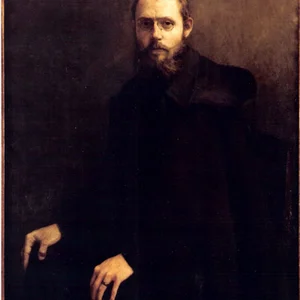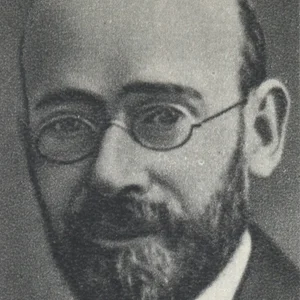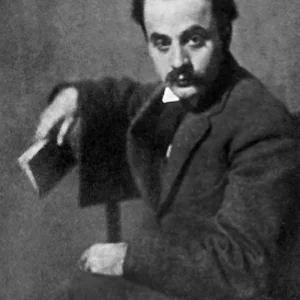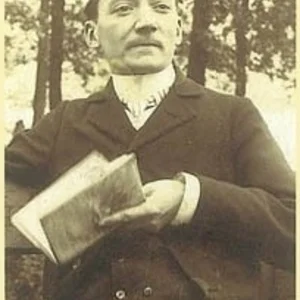

Aimé Pallière (1868-1949) was a French writer and lecturer, first destined for the Catholic priesthood before drawing closer to Judaism. Having become a figure of the Noahide movement, he worked toward dialogue between Christianity and Judaism while remaining unconverted.
Aimé Pallière(1868 — 1949)
Aimé Pallière
France
5 min read
Frequently asked questions
Key Facts
- Born in 1868 in Lyon into a Catholic family, he was at first destined for the priesthood.
- Drew closer to Judaism under the influence of Rabbi Elia Benamozegh, who steered him toward Noahidism.
- Published his autobiographical work *The Unknown Sanctuary* in 1926, an account of his spiritual journey.
- Became a leading figure of the Noahide movement, without formally converting to Judaism.
- Died in 1949, leaving behind a body of work devoted to dialogue between religions.
Works & Achievements
Autobiographical account of his journey from Catholicism to Judaism and the Noahide path; his most famous work.
Major work of transmitting the universalist thought of his master, which he made known to the French-speaking public.
Numerous public interventions promoting rapprochement between religions and the Noahide doctrine.
Unprecedented educational commitment for a non-convert, guiding French Jewish youth.
Contributions disseminating the idea of a universal spiritual path based on the Seven Laws of Noah.
Anecdotes
Born in Lyon into a devoutly Catholic family, Aimé Pallière intended to become a priest. Everything changed one Yom Kippur: having entered a Lyon synagogue out of curiosity, he was overwhelmed by the fervor of Jewish prayer and came out transformed.
Seeking to understand Judaism, Pallière wrote to the Italian rabbi Elijah Benamozegh, of Livorno. Against all expectations, the sage did not encourage him to convert: he advised him to become a “Noahide,” that is, a non-Jew who observes the universal laws of Noah. This counsel would shape his entire life.
Although he never formally converted to Judaism, Pallière was so close to this community that he was entrusted with the spiritual leadership of Jewish youth movements and delivered lectures in synagogues — a wholly unprecedented situation for a man who remained a Christian.
His book *The Unknown Sanctuary* (1926) recounts his spiritual journey. The title evokes the Judaism he discovered as a hidden sanctuary, and the work became a reference for understanding the dialogue between religions in the early 20th century.
Pallière devoted years to translating and promoting the work of his master Benamozegh, who died in 1900, convinced that this rabbi's thought could reconcile Christians and Jews around shared values.
Primary Sources
It was in a synagogue, on a Yom Kippur day, that the fate of my religious life was decided, without my suspecting it at the time.
The Noachide doctrine opens a path to God for the nations without requiring them to cease being what they are.
The master turned me away from Jewish baptism and invited me to remain among the sons of Noah, faithful to the universal laws given to humanity.
Key Places
Birthplace of Pallière, where he had his decisive experience in a synagogue on Yom Kippur.
City of Rabbi Elie Benamozegh, his spiritual master, with whom he corresponded at length.
Center of French intellectual and Jewish life where Pallière gave lectures and led youth movements.
Site of the spiritual revelation that reoriented his life toward Judaism and the Noahide path.
Typical Objects

Everyday instruments of Pallière as a writer and lecturer, used to draft books, articles, and an extensive spiritual correspondence.

His 1926 autobiographical work recounting his discovery of Judaism and his choice of the Noahide path.

Sacred text he studied passionately, source of his reflection on the universalism of the Noahide laws.

Stand from which he delivered his many lectures on interfaith dialogue, sometimes even in synagogues.

His correspondence with Rabbi Benamozegh, a precious document of their master-disciple dialogue.
School Curriculum
Vocabulary & Tags
Key Vocabulary
Daily Life
Morning
Pallière's mornings often began with reading and studying sacred texts, the Hebrew Bible and the writings of Benamozegh. A man of reflection, he devoted these quiet hours to meditating and preparing his own writings.
Afternoon
The afternoon was dedicated to writing his works and tending to his voluminous correspondence. He also received visitors and disciples who came to discuss spirituality and interfaith dialogue.
Evening
In the evening, he frequently gave lectures or took part in meetings, sometimes in the synagogues of Paris or Lyon, extending the exchanges late into the night.
Food
Living in the France of his day, his diet remained that of the urban middle class. His closeness to Judaism led him to observe certain dietary rules, without rigidity, out of respect for the tradition he loved.
Clothing
Pallière wore the sober, bourgeois attire of the French intellectual of the Third Republic: a frock coat or dark suit, a stiff collar, in a discreet and neat manner.
Housing
He lived in bourgeois urban dwellings, first in Lyon and then in Paris, surrounded by books and manuscripts that made his home a veritable study.
Historical Timeline
Period Vocabulary
Liens externes & ressources
Références
Œuvres
Le Sanctuaire inconnu
1926
Édition et présentation d'« Israël et l'Humanité » d'Elie Benamozegh
1914
Conférences sur le dialogue judéo-chrétien
1900-1940
Direction spirituelle de mouvements de jeunesse juifs
années 1920-1930
Articles et essais sur le noahisme
début XXe siècle