 flip
flipParahaoma, the Libation of Light
Parahaoma, the Libation of Light
Why this dish? At the heart of the liturgy addressed to Ahura Mazda, the priests pressed a sacred plant, haoma, mixed with water and milk, to offer the libation. This is the most intimate ritual gesture of the worship of the god of wisdom: we offer here a respectful evocation, never a reproduction of the living rite.
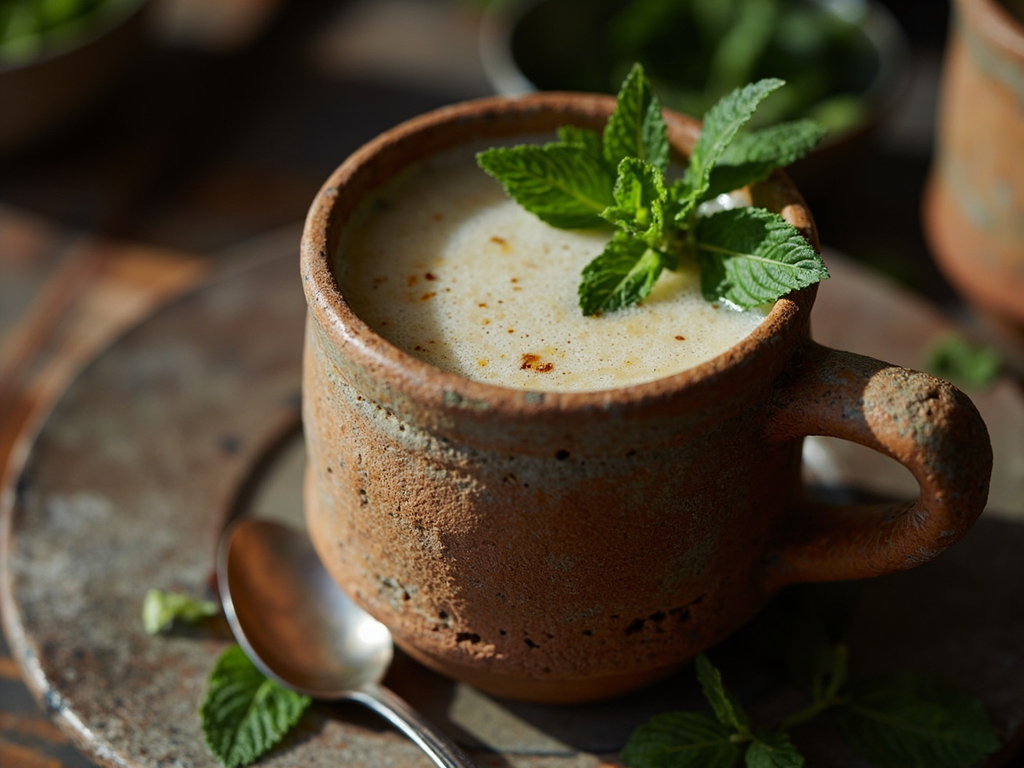
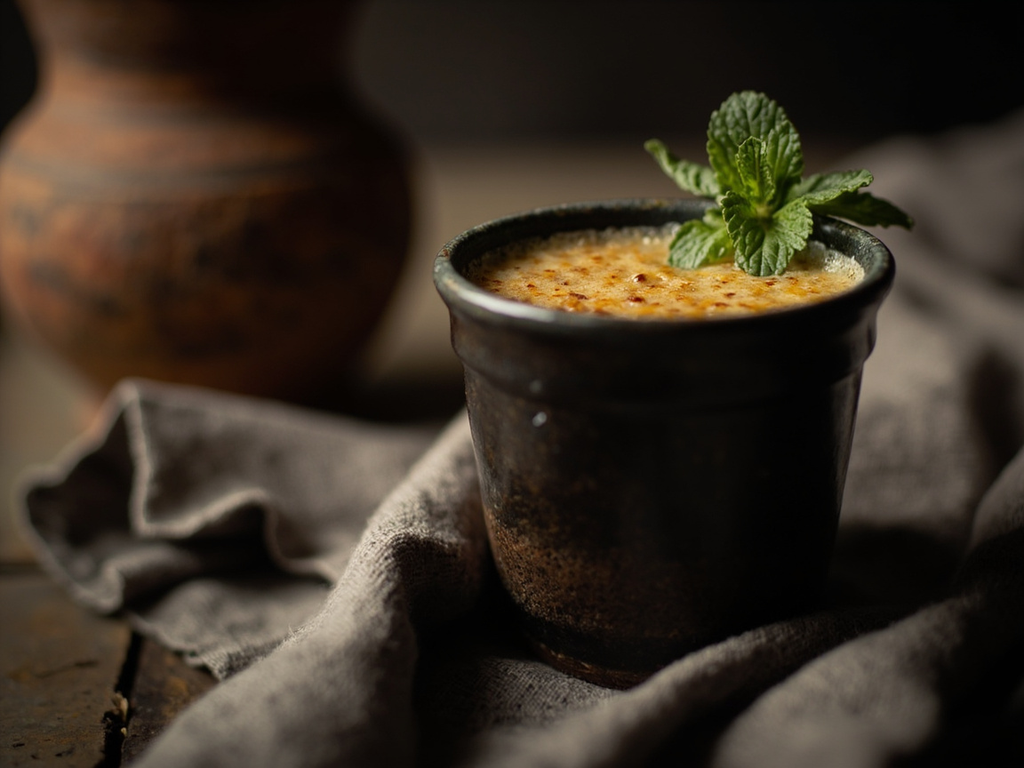
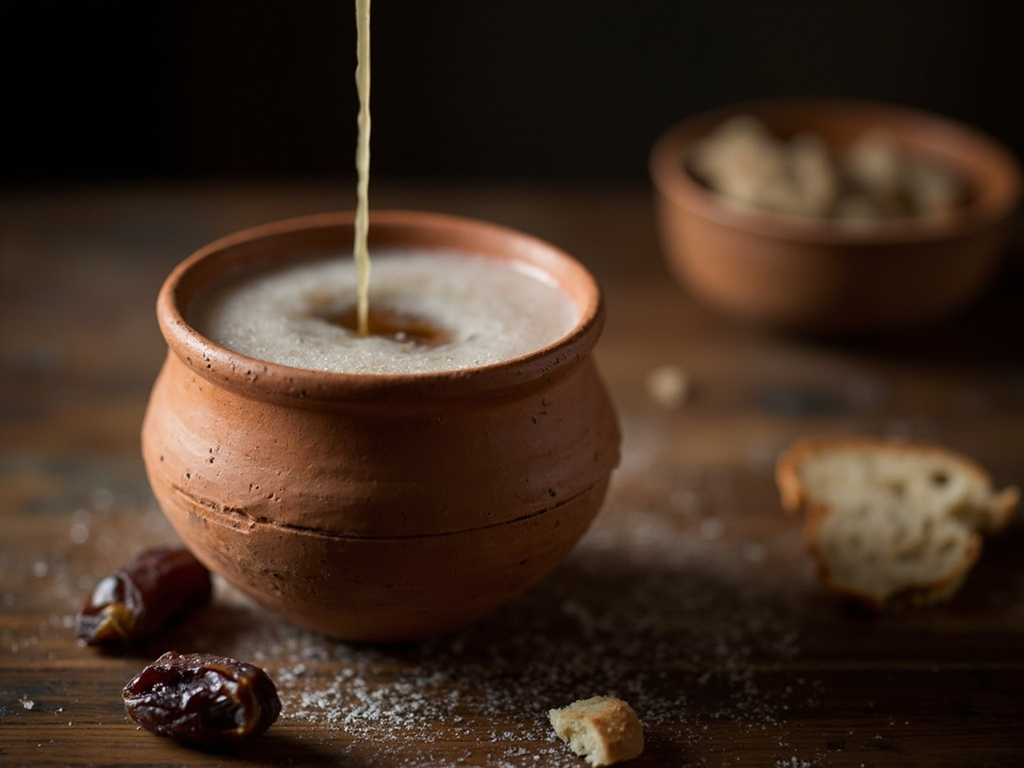
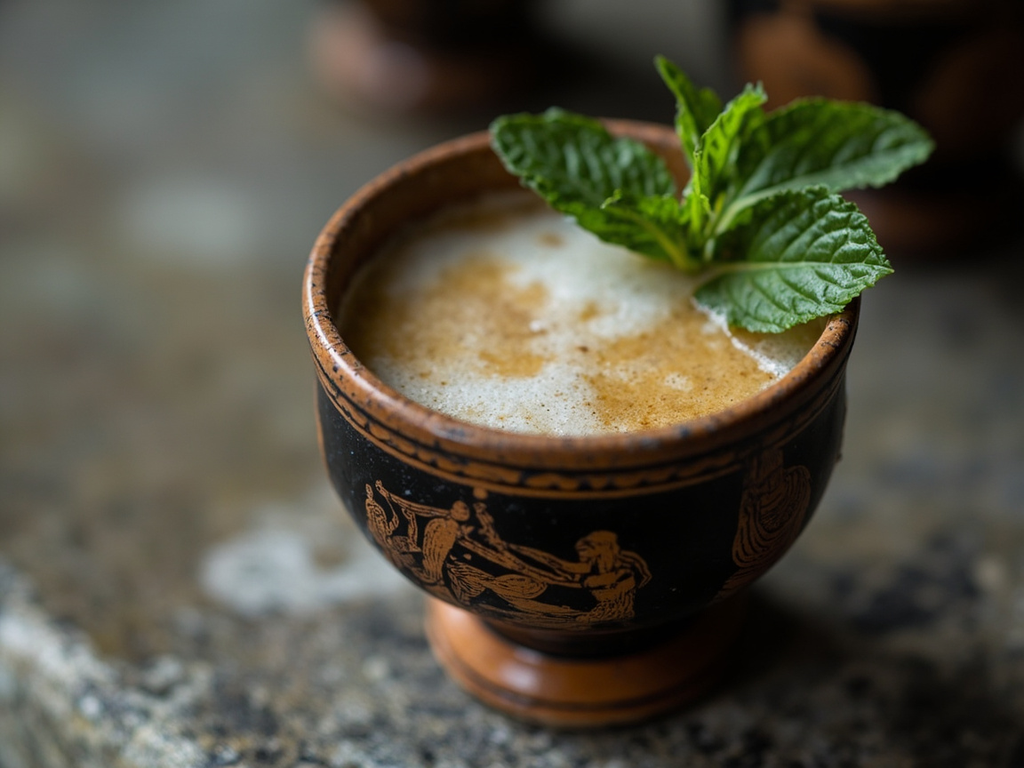
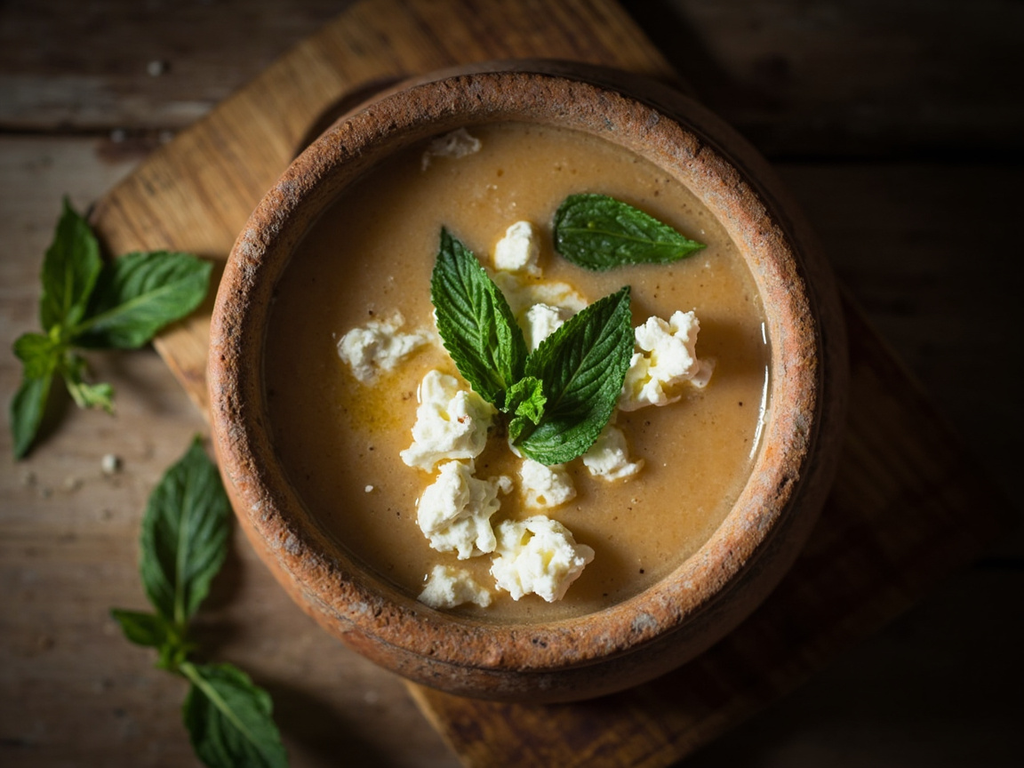
A clear, slightly bitter drink, infused with green herbs and then softened with a cloud of milk, which evokes — without reproducing — the haoma libation offered to Ahura Mazda before the fire.
Know, you who listen, that I am the most holy Spirit, and I neither eat nor drink as creatures of flesh do. But when My priests, with washed hands, press the luminous plant and mix it with living water and milk, it is My wisdom they honor and the purity of the world I have thought out. Pour this cup toward running water, slowly, your face turned toward the flame; let your heart be as clean as the beverage. What is offered with a good thought, a good word, a good deed, rises toward the Light.
- •Haoma stalks (ephedra) — a small bundle (pressed sacred plant (heart of the rite))
- •Pomegranate branch (urvaram) — one twig (plant of purity added to the mortar)
- •Pure spring water — one cup (ritual diluent)
- •Fresh milk — a drizzle (symbol of creation, softens bitterness)
Parahaoma, the Libation of Light
A clear, slightly bitter drink, infused with green herbs and then softened with a cloud of milk, which evokes — without reproducing — the haoma libation offered to Ahura Mazda before the fire.
Why this dish? At the heart of the liturgy addressed to Ahura Mazda, the priests pressed a sacred plant, haoma, mixed with water and milk, to offer the libation. This is the most intimate ritual gesture of the worship of the god of wisdom: we offer here a respectful evocation, never a reproduction of the living rite.
Know, you who listen, that I am the most holy Spirit, and I neither eat nor drink as creatures of flesh do. But when My priests, with washed hands, press the luminous plant and mix it with living water and milk, it is My wisdom they honor and the purity of the world I have thought out. Pour this cup toward running water, slowly, your face turned toward the flame; let your heart be as clean as the beverage. What is offered with a good thought, a good word, a good deed, rises toward the Light.
Ingredients (period version)
- Haoma stalks (ephedra) — a small bundle (pressed sacred plant (heart of the rite))
- Pomegranate branch (urvaram) — one twig (plant of purity added to the mortar)
- Pure spring water — one cup (ritual diluent)
- Fresh milk — a drizzle (symbol of creation, softens bitterness)
Ingredients
- Fresh thyme (or green mint) — 10 sprigs (herbaceous bitterness evoking the sacred plant)
- Spring water — 50 cl (infusion base)
- Whole milk — 3 tbsp (milky softener)
- Pomegranate seeds — 1 tbsp (reminder of the pomegranate twig)
Method
- Bring the spring water to a simmer (do not boil vigorously, to keep it gentle).
- Remove from heat, add the thyme, and let steep for 5 to 7 minutes: the liquid should remain clear and slightly bitter.
- Strain into a clean cup, without pressing the herbs hard.
- Add the drizzle of milk: a white veil forms, a sign of purity.
- Place a few pomegranate seeds at the bottom of the cup and serve warm, without sugar.
How it was made : In the Yasna, the priest pounded haoma stalks (probably an ephedra) in a mortar with water and milk, filtered the juice through sacred hairs, and poured it as a libation. The bitterness of the plant was accepted: it symbolized lucidity and immortality. The rite, still alive among Zoroastrians, is only evoked here — real ephedra, toxic and regulated, never enters a domestic kitchen.
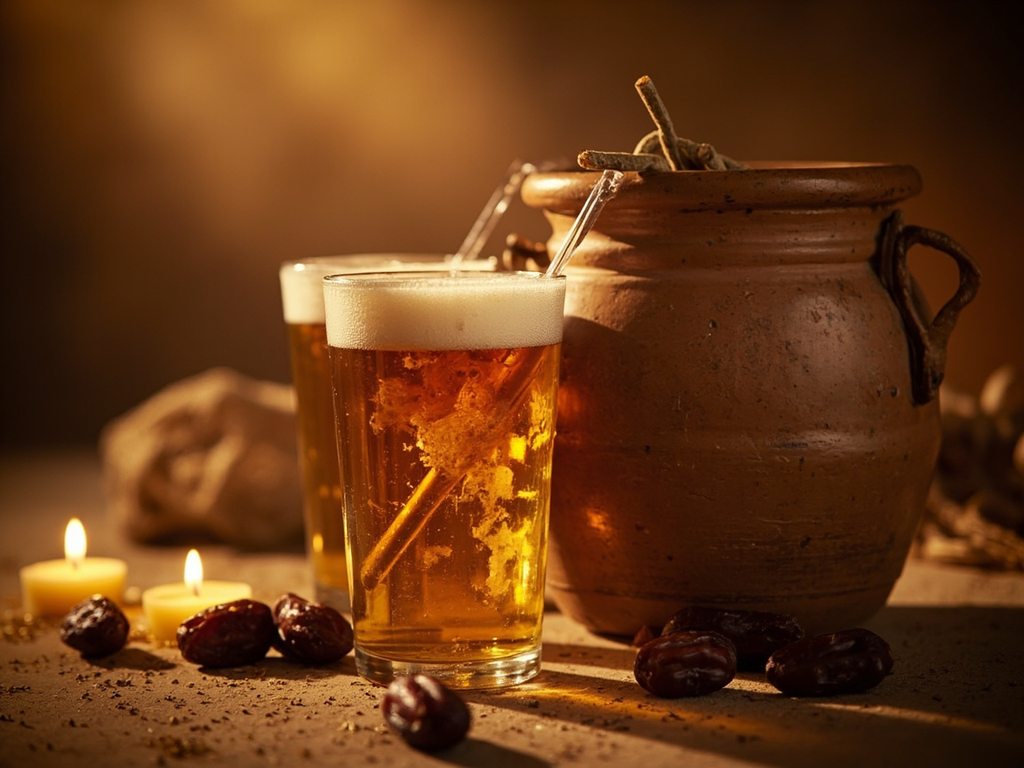
The contemporary twist : Serve in a clear glass cup placed near a candle: the flame shines through the clear beverage, a small nod to the sacred fire that watches over every offering.
Sources : Avesta, Yasna 9-11 (hymns to Haoma) · Mary Boyce, Zoroastrians: Their Religious Beliefs and Practices, Routledge, 1979 · Herodotus, Histories, I, 131-132 (religious customs of the Persians)
Ahura Mazda · Charactorium