 flip
flipSikaru, the Barley Beer Drunk Through a Straw
Sikaru, the Barley Beer Drunk Through a Straw
Why this dish? Wine and beer flowed at Sarah's wedding, where Asmodeus struck down her seven husbands before Tobias drove him away. Barley beer, sikaru, was THE drink of Mesopotamia, shared through a straw from a large common jar — at the very heart of the banquets the demon haunted.
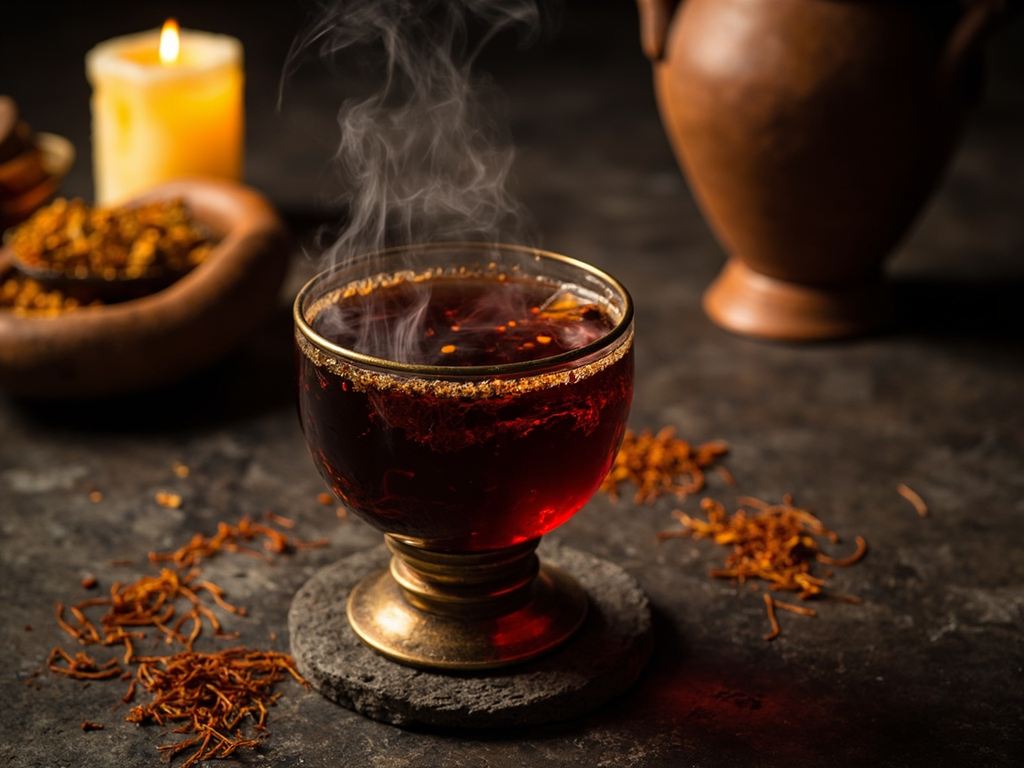
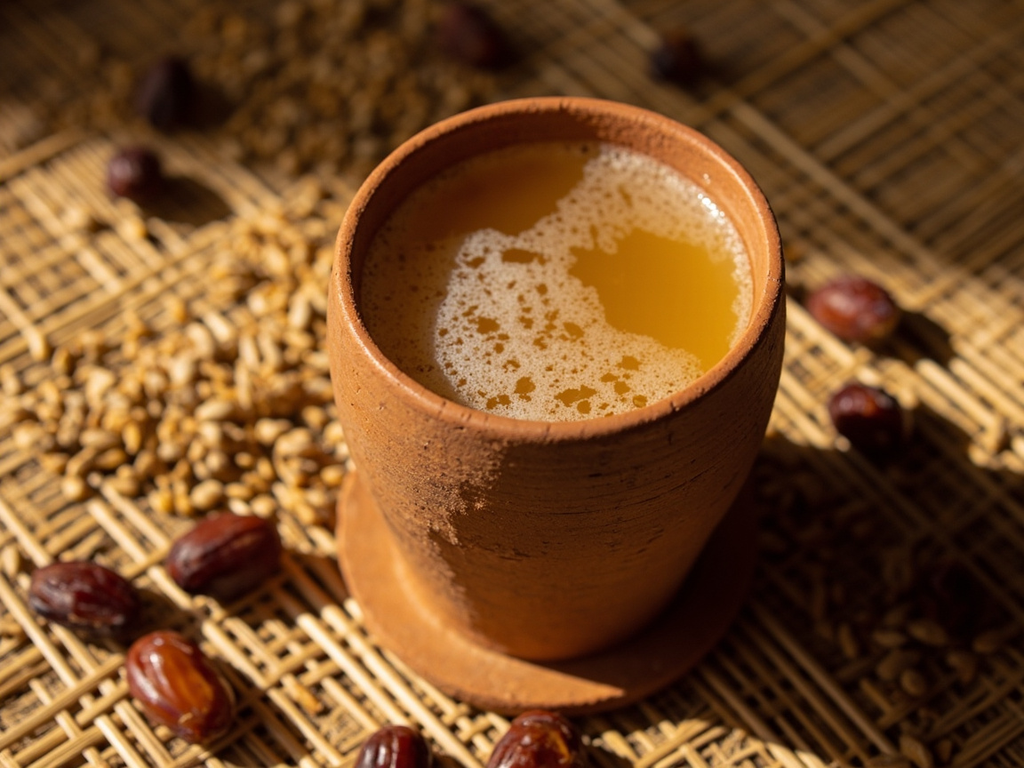
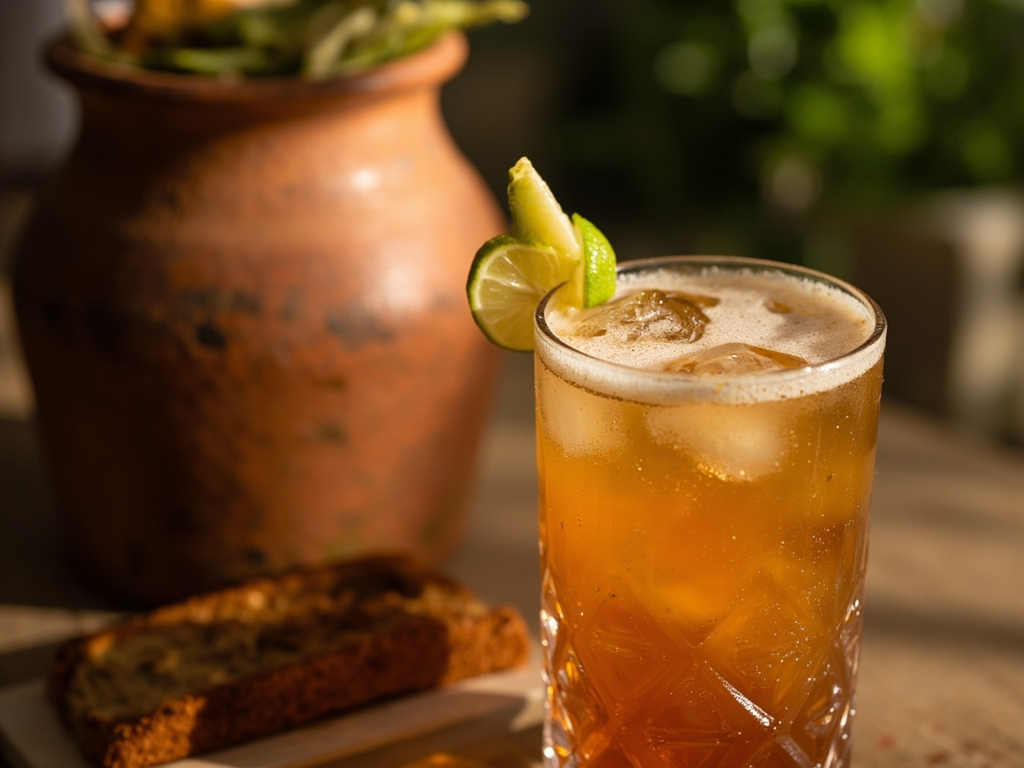
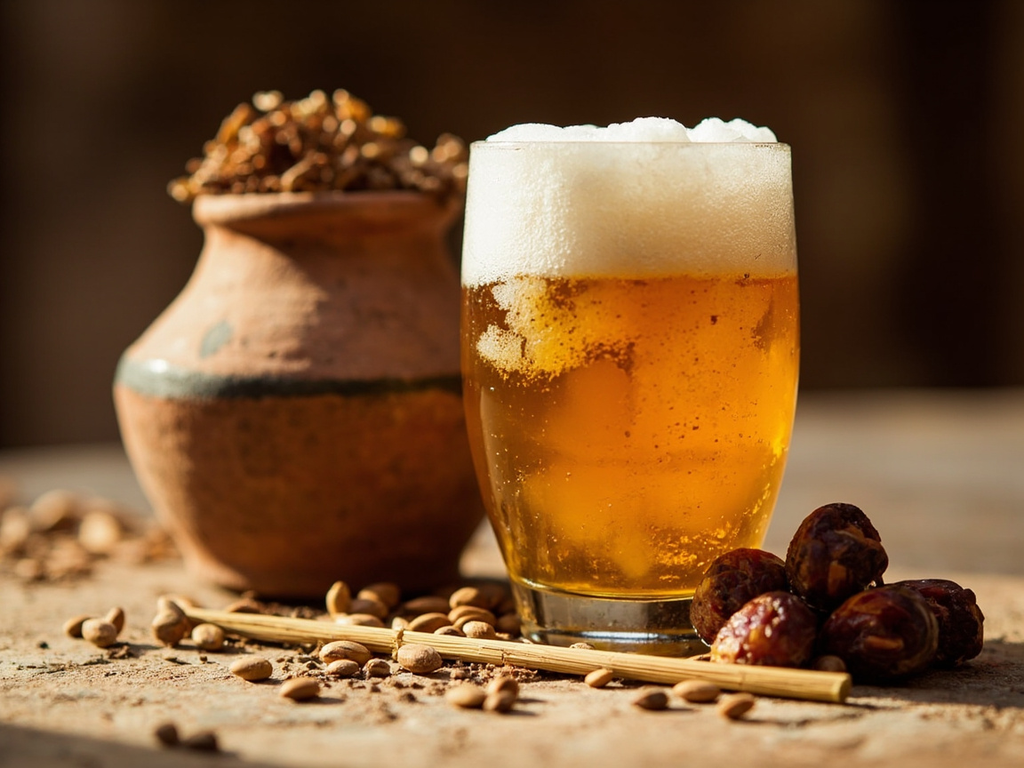
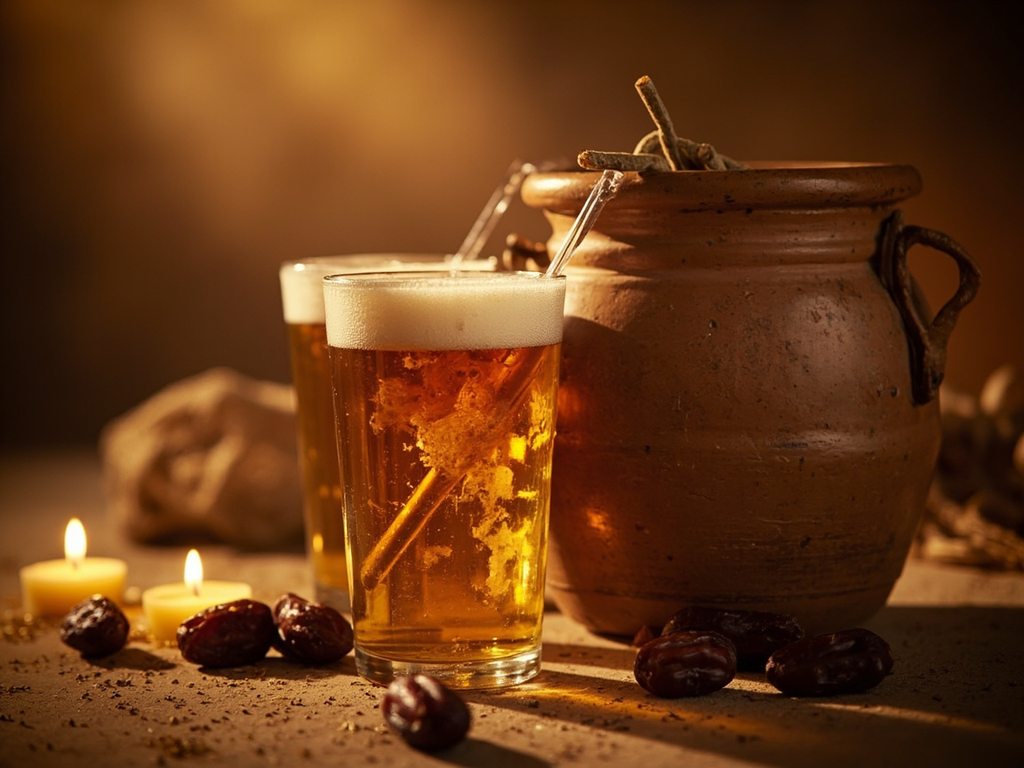
A cloudy, bittersweet barley beer brewed from malted barley loaves (bappir) and dates, fermented and then drunk warm through a straw, directly from the jar, to avoid the sediment.
Drink, mortal, but first lean over the jar as it has always been done, the reed straw between your lips. It is in this drunkenness that I work best: at weddings, when fermented barley loosens tongues and heats the blood. They drew it from malted bread and dates, let it bubble for three days under the breath of the goddess Ninkasi. And if your head spins, do not blame me — I have only accompanied you to the bottom of the cup.
- •Malted barley loaves (bappir) — several (fermentable base)
- •Dates — a handful (sugar and flavor)
- •Water — a jar (liquid)
- •Natural wild yeast — present in the air and jars (fermentation)
Sikaru, the Barley Beer Drunk Through a Straw
A cloudy, bittersweet barley beer brewed from malted barley loaves (bappir) and dates, fermented and then drunk warm through a straw, directly from the jar, to avoid the sediment.
Why this dish? Wine and beer flowed at Sarah's wedding, where Asmodeus struck down her seven husbands before Tobias drove him away. Barley beer, sikaru, was THE drink of Mesopotamia, shared through a straw from a large common jar — at the very heart of the banquets the demon haunted.
Drink, mortal, but first lean over the jar as it has always been done, the reed straw between your lips. It is in this drunkenness that I work best: at weddings, when fermented barley loosens tongues and heats the blood. They drew it from malted bread and dates, let it bubble for three days under the breath of the goddess Ninkasi. And if your head spins, do not blame me — I have only accompanied you to the bottom of the cup.
Ingredients (period version)
- Malted barley loaves (bappir) — several (fermentable base)
- Dates — a handful (sugar and flavor)
- Water — a jar (liquid)
- Natural wild yeast — present in the air and jars (fermentation)
Ingredients
- Crushed barley malt — 500 g (fermentable base)
- Barley or whole rye bread, toasted — 2 slices (flavor and bitterness (bappir))
- Pitted dates — 100 g (sugar and flavor)
- Spring water — 2 liters (liquid)
- Brewer's yeast (or natural sourdough starter) — 1 packet (fermentation)
Method
- Infuse crushed malt and toasted bread in water heated to 65°C for 1 hour (mashing).
- Strain, bring the wort to a simmer with crushed dates for 30 minutes, then let cool.
- Add yeast once the liquid is body temperature, cover with a cloth.
- Let ferment for 3 to 4 days at room temperature, stirring daily.
- Serve cloudy and warm, in a common jar, with a straw — as in the days of Babylon.
How it was made : Beer was the national drink of Sumer and Babylon. The Hymn to Ninkasi (goddess of beer), inscribed around 1800 BC, describes the recipe: malted barley loaves (bappir) soaked and fermented. It was drunk through a reed straw to avoid the grains and floating sediment, a gesture depicted on many cylinder seals.
The contemporary twist : Served in a miniature amphora with a bamboo straw and a date stuck on the rim — the 'Book of Tobit apéritif.'
Sources : Hymn to Ninkasi (Sumerian text, ca. 1800 BC) · Jean Bottéro, La plus vieille cuisine du monde, Audibert, 2002
Asmodeus · Charactorium