 flip
flipObbattu (Holige) with Dal and Jaggery
Obbattu (Holige) with Dal and Jaggery
Why this dish? Obbattu is THE sweet bread of major Karnataka festivals — Ugadi (New Year), Diwali, weddings. For a Karnataka family like Aishwarya's, it's the taste of family celebrations, where the West discovered her gowns.
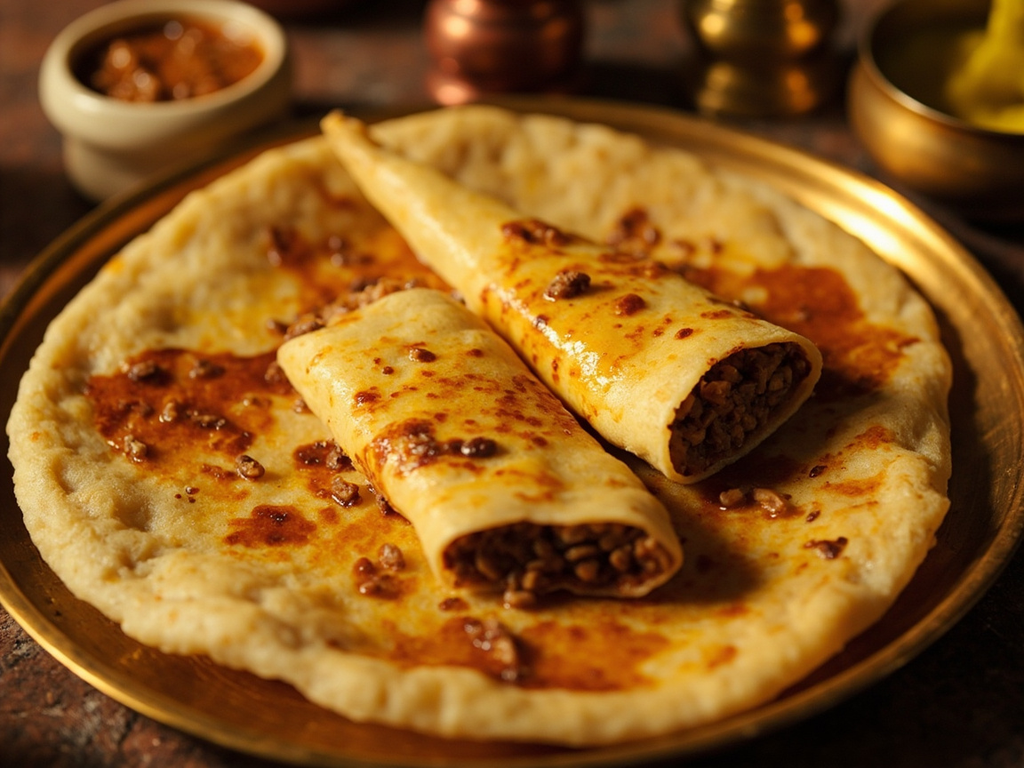
A thin, golden flatbread with a soft wheat dough, filled with a creamy chana dal and jaggery mixture perfumed with cardamom and nutmeg. Served warm, sometimes drizzled with ghee.
For Ugadi, in our families, we would roll the obbattu with several hands around the table, because the dough is finicky: too thick, it tears; too thin, the filling escapes. The secret, my amma told me, is to let the dough rest in oil for a long time so it becomes silky. The house smelled of melted jaggery and cardamom, and we knew then that the celebration had begun. It's a simple luxury, and I prefer it a thousand times to any palace cake.
- •Wheat flour — one bowl (dough (poli))
- •Chana dal (split chickpeas) — one bowl (filling (hooran))
- •Jaggery (unrefined cane sugar) — equal to cooked dal (sweetness)
- •Cardamom and nutmeg — a pinch (flavor)
- •Ghee — generous (cooking and serving)
Obbattu (Holige) with Dal and Jaggery
A thin, golden flatbread with a soft wheat dough, filled with a creamy chana dal and jaggery mixture perfumed with cardamom and nutmeg. Served warm, sometimes drizzled with ghee.
Why this dish? Obbattu is THE sweet bread of major Karnataka festivals — Ugadi (New Year), Diwali, weddings. For a Karnataka family like Aishwarya's, it's the taste of family celebrations, where the West discovered her gowns.
For Ugadi, in our families, we would roll the obbattu with several hands around the table, because the dough is finicky: too thick, it tears; too thin, the filling escapes. The secret, my amma told me, is to let the dough rest in oil for a long time so it becomes silky. The house smelled of melted jaggery and cardamom, and we knew then that the celebration had begun. It's a simple luxury, and I prefer it a thousand times to any palace cake.
Ingredients (period version)
- Wheat flour — one bowl (dough (poli))
- Chana dal (split chickpeas) — one bowl (filling (hooran))
- Jaggery (unrefined cane sugar) — equal to cooked dal (sweetness)
- Cardamom and nutmeg — a pinch (flavor)
- Ghee — generous (cooking and serving)
Ingredients
- Wheat flour (type T55 or maida) — 200 g (dough)
- Neutral oil — 4 tbsp (relaxes and softens dough)
- Turmeric — 1 pinch (golden color of dough)
- Chana dal (split chickpeas) — 150 g (filling)
- Grated jaggery — 150 g (sweetness)
- Ground cardamom — 1/2 tsp (flavor)
- Nutmeg — 1 pinch (flavor)
- Ghee — for cooking (browning and serving)
Method
- Knead the flour, turmeric, oil, and a little water into a very soft dough; cover with a little oil and let rest 2 to 3 hours.
- Cook the chana dal in water until tender, drain thoroughly.
- Melt the jaggery with a little water, add the dal, and cook while mashing until a thick paste forms; flavor with cardamom and nutmeg, let cool.
- Form balls of filling, and slightly smaller balls of dough.
- Flatten a dough ball, encase the filling, then gently roll into a thin disc on an oiled surface or leaf.
- Cook on a pan over medium heat, brushing with ghee, until golden spots appear on both sides. Serve warm.
How it was made : Obbattu (called holige or puran poli elsewhere) is passed down through generations as a festive skill. Jaggery, a traditional unrefined sugar, was used long before white sugar and remains preferred for these ritual sweets. They were stacked and offered to neighbors during special occasions.
The contemporary twist : Cut into wedges and sprinkled with pistachio slivers, it is served as elegant bites for an afternoon tea.
Aishwarya Rai · Charactorium