 flip
flipMead of Oaths
Mead of Oaths
Why this dish? Among the Germanic peoples, one does not swear loyalty to a king empty-handed: one empties a cup with him. Mead — honey wine — was the noble drink of Visigothic chiefs. Alaric had it flow to cement his warriors' alliance before marching on Rome.
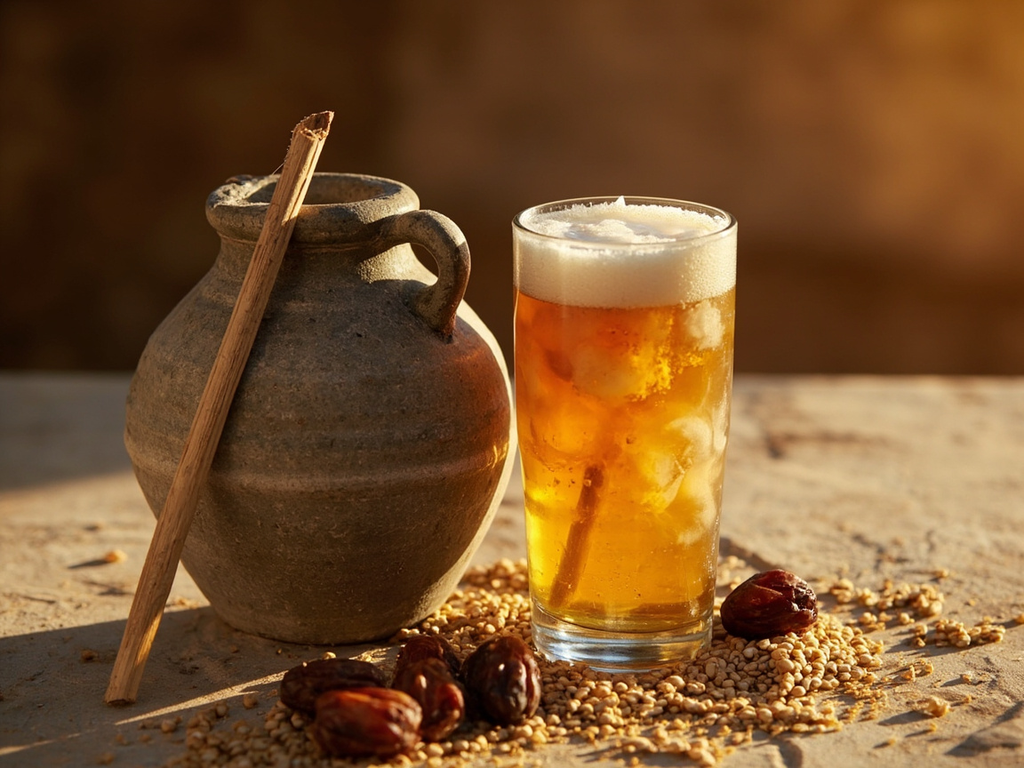
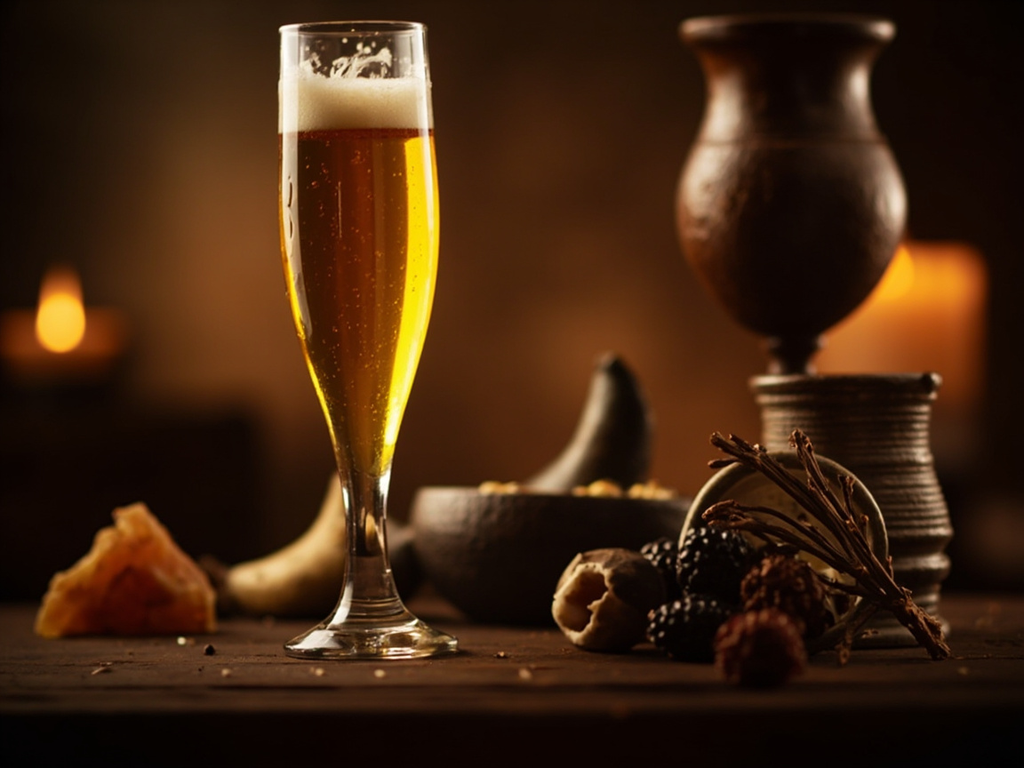
A golden, sweet drink born from the fermentation of honey in water. Sweet then sharp as it ages, sometimes perfumed with juniper, it is the Germanic ancestor of wine, drunk from a horn during oaths and feasts.
Raise the horn, stranger. One does not become a king's man by words alone — one drinks with him, and the word holds. This is the honey of our forests drowned in spring water, left to work on its own until it bites the tongue. The Roman has his grape wine; we have that of the bees. Drink slowly: it is sweet as victory and, like it, goes quickly to the head.
- •Honey — one part to three of water (sugar to ferment)
- •Spring water — three parts (base)
- •Juniper berries — a handful (perfume (optional))
Mead of Oaths
A golden, sweet drink born from the fermentation of honey in water. Sweet then sharp as it ages, sometimes perfumed with juniper, it is the Germanic ancestor of wine, drunk from a horn during oaths and feasts.
Why this dish? Among the Germanic peoples, one does not swear loyalty to a king empty-handed: one empties a cup with him. Mead — honey wine — was the noble drink of Visigothic chiefs. Alaric had it flow to cement his warriors' alliance before marching on Rome.
Raise the horn, stranger. One does not become a king's man by words alone — one drinks with him, and the word holds. This is the honey of our forests drowned in spring water, left to work on its own until it bites the tongue. The Roman has his grape wine; we have that of the bees. Drink slowly: it is sweet as victory and, like it, goes quickly to the head.
Ingredients (period version)
- Honey — one part to three of water (sugar to ferment)
- Spring water — three parts (base)
- Juniper berries — a handful (perfume (optional))
Ingredients
- Honey — 350 g (sugar to ferment)
- Spring water — 1 liter (base)
- Yeast (mead or organic bread yeast) — 1 pinch (fermentation)
- Juniper berries — 6 berries (perfume (optional))
Method
- Warm the water (not boiling) and dissolve the honey in it until homogeneous.
- Let cool to room temperature, add juniper berries, then the yeast.
- Pour into a clean bottle or jar, close with an airlock (or a balloon pricked with a needle to let gas escape).
- Let ferment in the dark for 2 to 4 weeks, until bubbles stop.
- Filter and bottle; taste: the longer you wait, the drier and stronger it becomes.
- Note for school audiences: present the making, taste a simply infused non-alcoholic version for children.
How it was made : Mead predates wine among northern peoples, where the vine does not grow. It was made without equipment: honey, water, and the wild yeasts present in the air and honey were enough to start fermentation. The drinking horn, passed from hand to hand, made the sharing of mead a social and legal act as much as a festive one.
The contemporary twist : Served chilled in a stoneware cup, with a lick of honey on the rim 'oath horn' style — or in a non-alcoholic sparkling version for younger ones.
Alaric I · Charactorium