 flip
flipCurdled Milk with Honey from the Promised Land
Curdled Milk with Honey from the Promised Land
Why this dish? Gabriel is the messenger of divine promises, and the founding promise of the biblical Near East is that of a 'land flowing with milk and honey.' This drink of fermented milk sweetened with honey puts into the mouth that announcement of abundance that the archangel embodies.
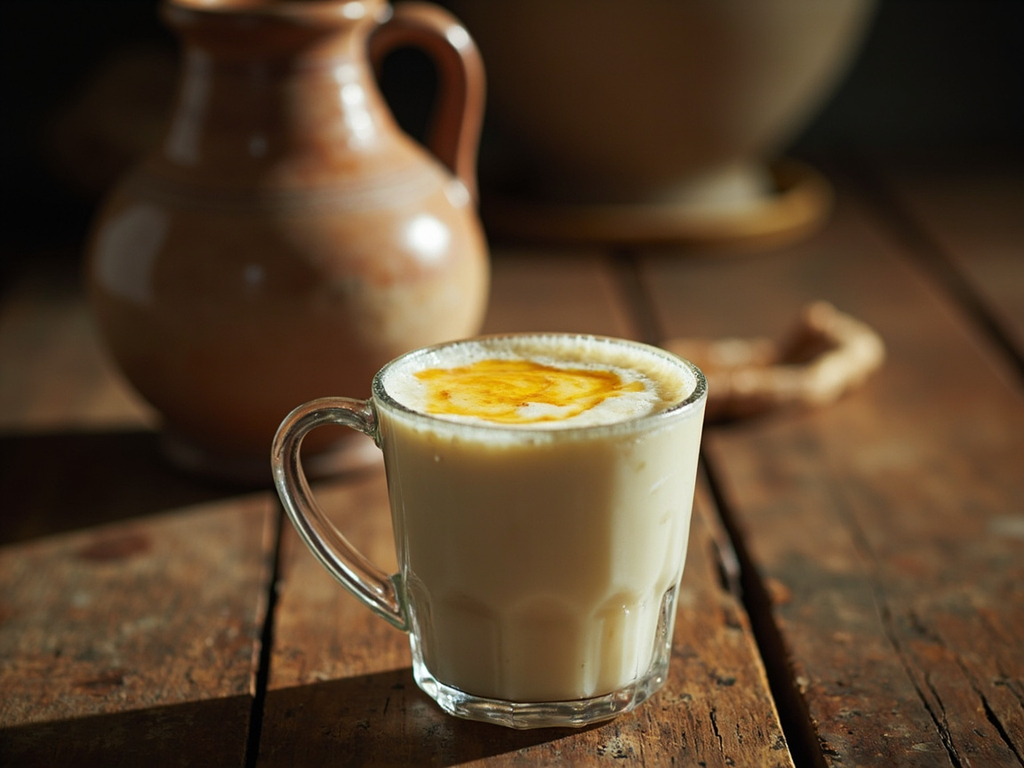
Curdled milk (laban), fresh and slightly tangy, beaten with water and sweetened with a drizzle of honey, sometimes perfumed with a hint of orange blossom water. Thirst-quenching, lively, both acidic and sweet like the promise.
Drink, and remember the promise. Where I carry the word from on high, it speaks of a land flowing with milk and honey — an image of the abundance God reserves for his own. In these hot lands, milk stays fresh only a few hours; it is left to curdle, and becomes laban, tangy and light, beaten with a little water. Pour in the honey of wild bees, and you will hold in your cup the very taste of the promised land.
- •Curdled milk (laban) from goat or sheep — a cup (fermented base)
- •Fresh spring water — to taste (dilution)
- •Honey — a drizzle (sweetness)
- •Orange blossom water or petals (optional) — a few drops (flavor)
Curdled Milk with Honey from the Promised Land
Curdled milk (laban), fresh and slightly tangy, beaten with water and sweetened with a drizzle of honey, sometimes perfumed with a hint of orange blossom water. Thirst-quenching, lively, both acidic and sweet like the promise.
Why this dish? Gabriel is the messenger of divine promises, and the founding promise of the biblical Near East is that of a 'land flowing with milk and honey.' This drink of fermented milk sweetened with honey puts into the mouth that announcement of abundance that the archangel embodies.
Drink, and remember the promise. Where I carry the word from on high, it speaks of a land flowing with milk and honey — an image of the abundance God reserves for his own. In these hot lands, milk stays fresh only a few hours; it is left to curdle, and becomes laban, tangy and light, beaten with a little water. Pour in the honey of wild bees, and you will hold in your cup the very taste of the promised land.
Ingredients (period version)
- Curdled milk (laban) from goat or sheep — a cup (fermented base)
- Fresh spring water — to taste (dilution)
- Honey — a drizzle (sweetness)
- Orange blossom water or petals (optional) — a few drops (flavor)
Ingredients
- Plain yogurt or laban — 300 g (fermented base)
- Cold water — 200 ml (dilution)
- Honey — 2 tbsp (sweetness)
- Orange blossom water — a few drops (optional) (flavor)
- Ice cubes — as desired (coolness (modern touch))
Method
- Pour the yogurt or laban into a pitcher and thin it by whisking with cold water until smooth and frothy.
- Incorporate the honey and whisk until fully dissolved.
- Perfume, if desired, with a few drops of orange blossom water.
- Taste and adjust honey according to the tanginess of the fermented milk.
- Serve well chilled in cups; in the old way, without ice, freshly beaten.
How it was made : In the climate of the Near East, fresh milk turned within hours: it was therefore mostly consumed curdled or beaten (laban, leben), a daily drink since antiquity. Sweetening it with wild honey made it a prized delicacy. The expression 'land flowing with milk and honey,' repeated in the Bible, precisely celebrates this pastoral abundance.
The contemporary twist : Serve as a Levantine 'lassi', well iced, with a hint of orange blossom water and a drizzle of honey flowing over the rim of the cup.
Sources : Exodus 3:8 ('land flowing with milk and honey') · Food traditions of the ancient Near East (fermented milk / laban)
Archangel Gabriel · Charactorium