 flip
flipWattle Seed Flatbread
Wattle Seed Flatbread
Why this dish? Wattle seeds were a staple of the Arrernte, harvested and ground by the women of the Hermannsburg community. Namatjira, who traveled long distances on foot and camel to reach his painting sites in the MacDonnell Ranges and Palm Valley, carried this type of compact, nutritious food on his expeditions.
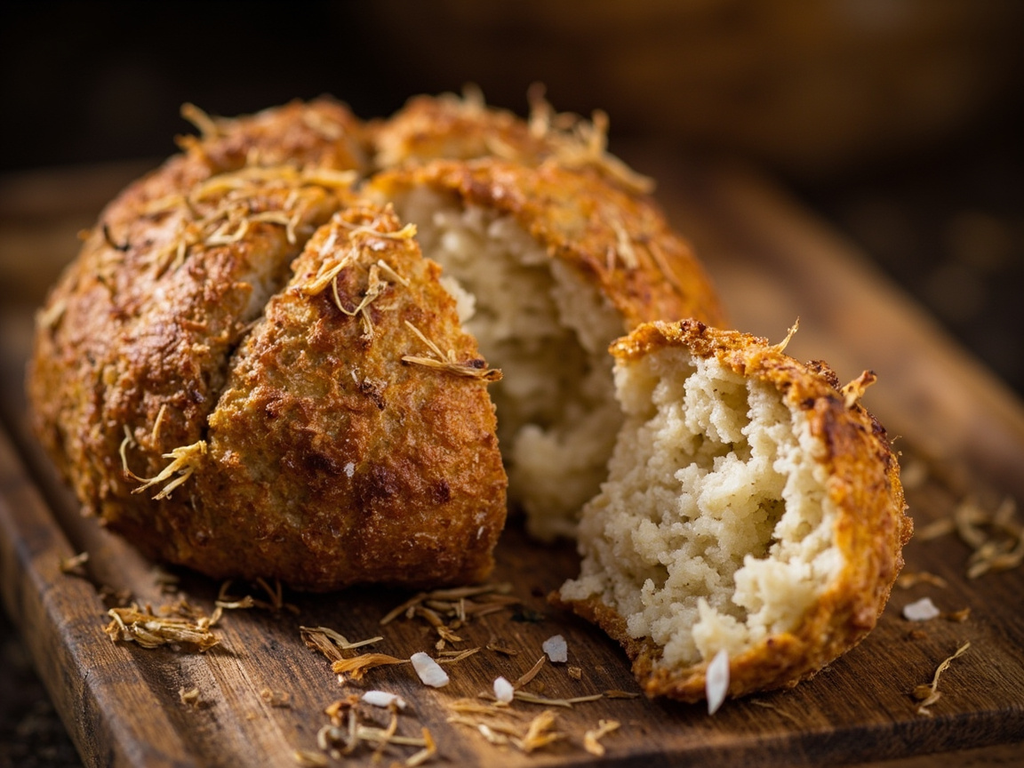
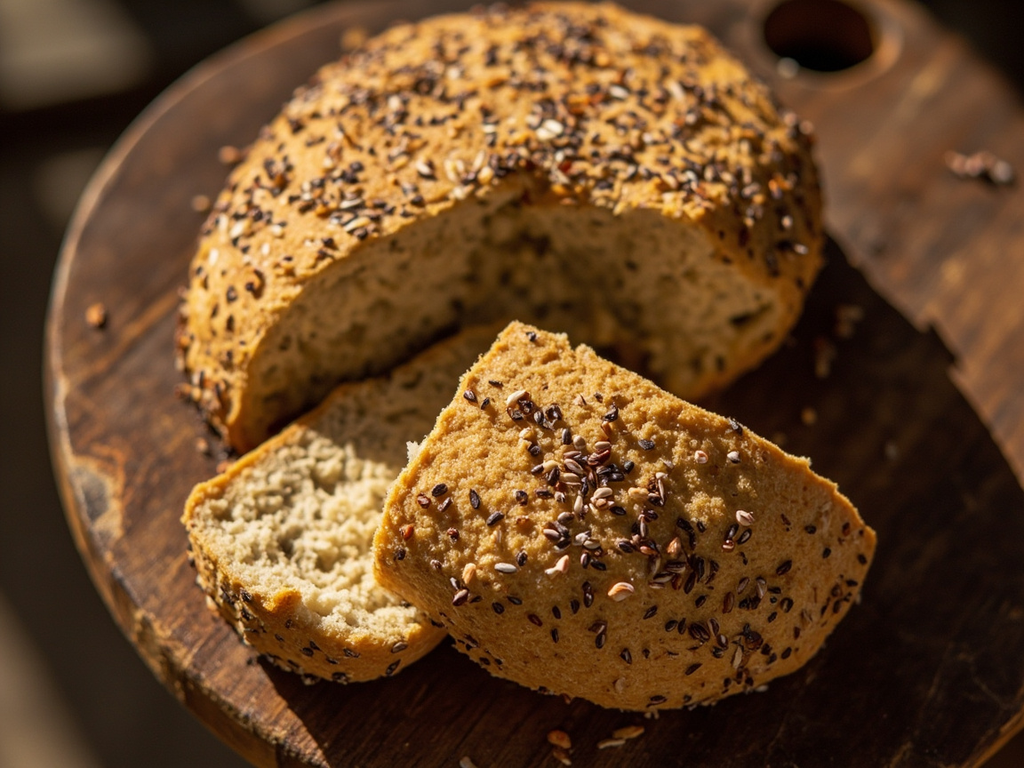
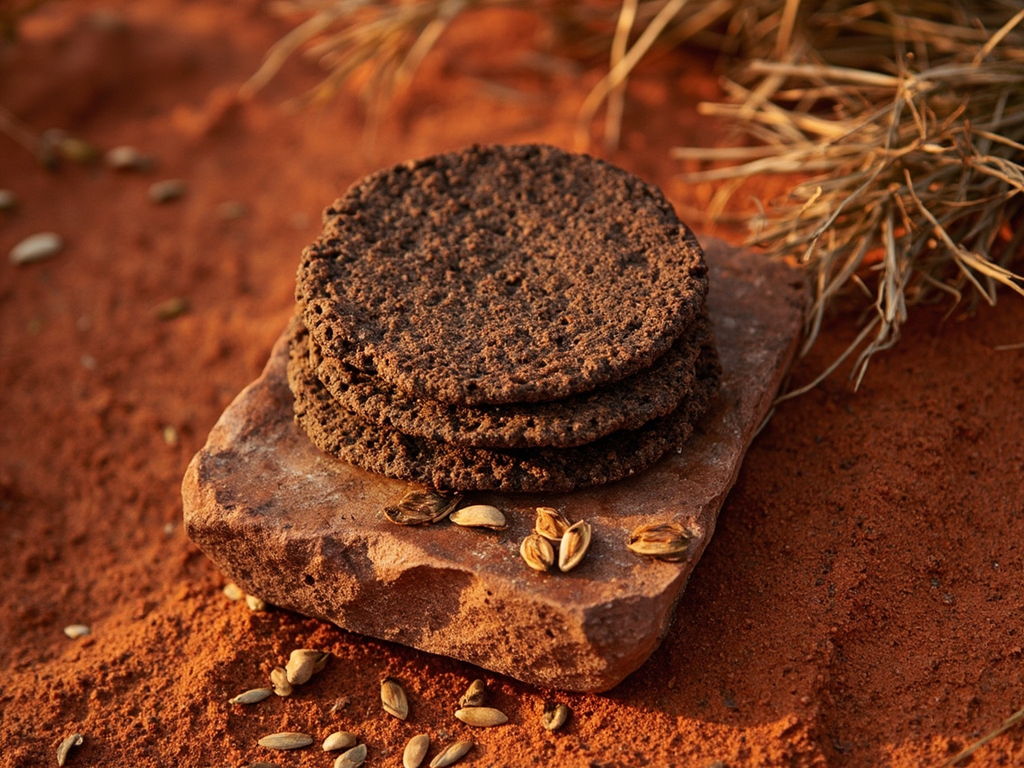
A dense, nutritious flatbread made from roasted and ground wattle seeds, mixed with water and cooked on a flat stone heated over the fire. Rich in protein and fiber, with a distinctive flavor of roasted hazelnut and light coffee, it is the quintessential travel food of Arrernte bush tucker.
The women collect the acacia pods when they are dry, after the hot season. They beat the pods, sort the seeds, roast them on the coals, then grind them between two flat stones, just like our grandmothers did. With that flour you make a paste, put it on a hot stone near the fire, and you have a flatbread that stays in your belly for walking all day. When I go painting far away, that's what I take along with damper and tea.
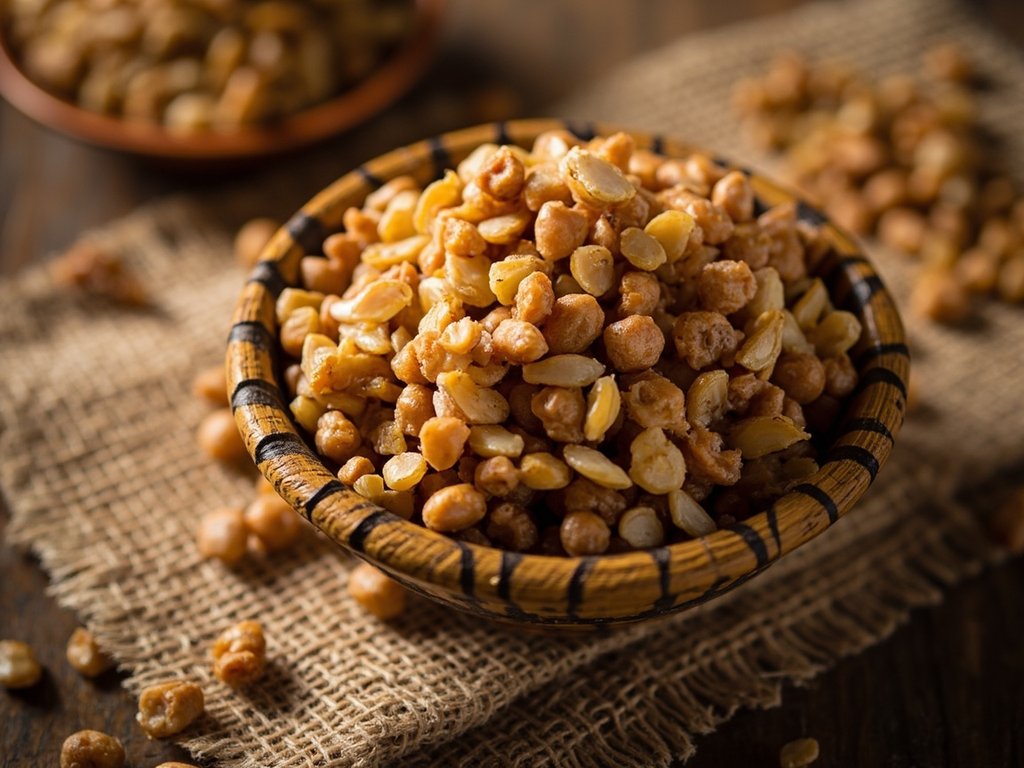
- •Roasted and ground wattle seeds — two handfuls of flour (nutritious base)
- •Water — enough to bind (hydration)
- •Kangaroo or emu fat — a little (binder and energy)
Wattle Seed Flatbread
A dense, nutritious flatbread made from roasted and ground wattle seeds, mixed with water and cooked on a flat stone heated over the fire. Rich in protein and fiber, with a distinctive flavor of roasted hazelnut and light coffee, it is the quintessential travel food of Arrernte bush tucker.
Why this dish? Wattle seeds were a staple of the Arrernte, harvested and ground by the women of the Hermannsburg community. Namatjira, who traveled long distances on foot and camel to reach his painting sites in the MacDonnell Ranges and Palm Valley, carried this type of compact, nutritious food on his expeditions.
The women collect the acacia pods when they are dry, after the hot season. They beat the pods, sort the seeds, roast them on the coals, then grind them between two flat stones, just like our grandmothers did. With that flour you make a paste, put it on a hot stone near the fire, and you have a flatbread that stays in your belly for walking all day. When I go painting far away, that's what I take along with damper and tea.
Ingredients (period version)
- Roasted and ground wattle seeds — two handfuls of flour (nutritious base)
- Water — enough to bind (hydration)
- Kangaroo or emu fat — a little (binder and energy)
Ingredients
- Wattle seed flour (roasted ground acacia seeds) — 100 g (nutritious and aromatic base)
- Whole wheat flour — 100 g (structure)
- Warm water — about 100 ml (hydration)
- Melted butter or coconut oil — 1 tbsp (binder and richness)
- Salt — 1 pinch (seasoning)
Method
- Mix wattle seed flour and whole wheat flour with salt in a bowl.
- Add melted butter, then gradually add warm water while kneading until a firm, smooth dough forms.
- Divide dough into 6–8 balls, flatten into 1 cm thick rounds.
- Heat a cast-iron pan over medium-high heat without oil.
- Cook each flatbread for 3–4 minutes per side until golden and slightly crispy on the surface.
- Let cool — the flatbreads keep well for travel.
How it was made : The harvesting and preparation of wattle seeds is a millennia-old skill of Arrernte women. The seeds were roasted in hot ashes to develop their aroma, then ground on stone grinding slabs (called grinding stones or nardoo stones). The resulting flour was mixed with water to form a paste, cooked on heated flat stones. These flatbreads could be stored for several days, making them ideal travel food in the desert.
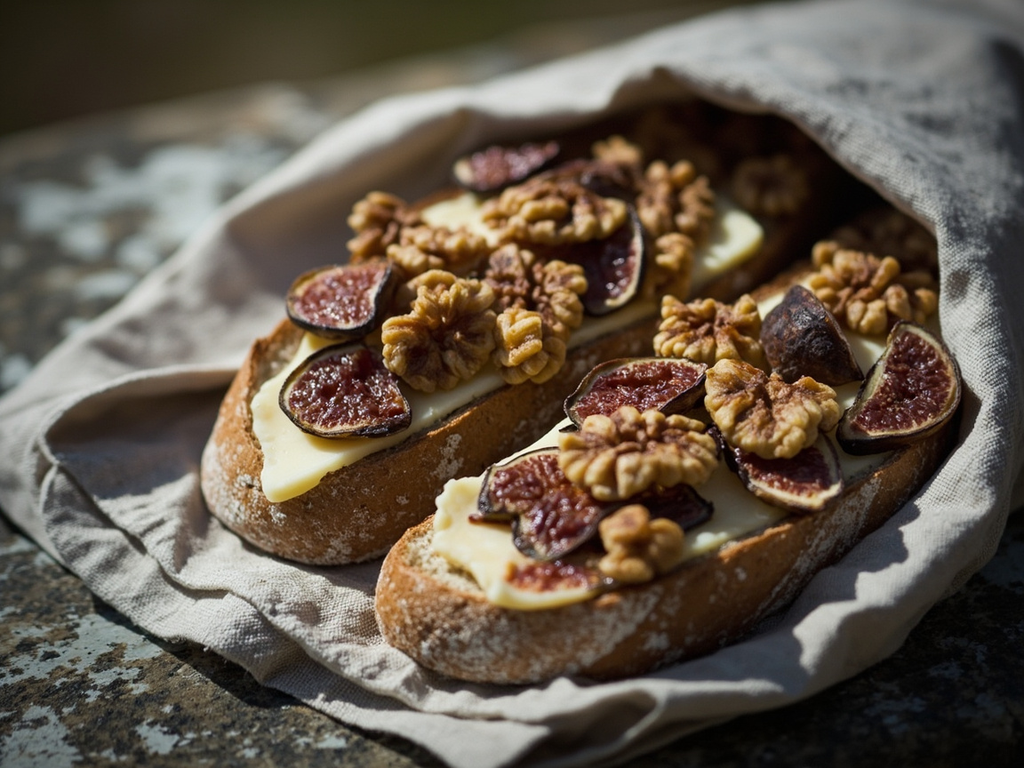
The contemporary twist : Shape into thinner, crispier crackers and serve with goat cheese and a drizzle of bush honey for a contemporary Australian appetizer.
Sources : Isaacs, Jennifer. 'Bush Food: Aboriginal Food and Herbal Medicine'. Weldons, 1987. · Latz, Peter. 'Bushfires and Bushtucker: Aboriginal Plant Use in Central Australia'. IAD Press, 1995.
Albert Namatjira · Charactorium