 flip
flipShoebox Lunch Fried Chicken
Shoebox Lunch Fried Chicken
Why this dish? In 1925, Randolph founded the Brotherhood of Sleeping Car Porters, the first major Black union, organizing Pullman car porters. At that time, Black travelers were barred from dining cars; they carried their meals in a shoebox. This cold fried chicken, which travels without spoiling, is the symbol of that dignity in the face of segregation that Randolph fought his whole life.
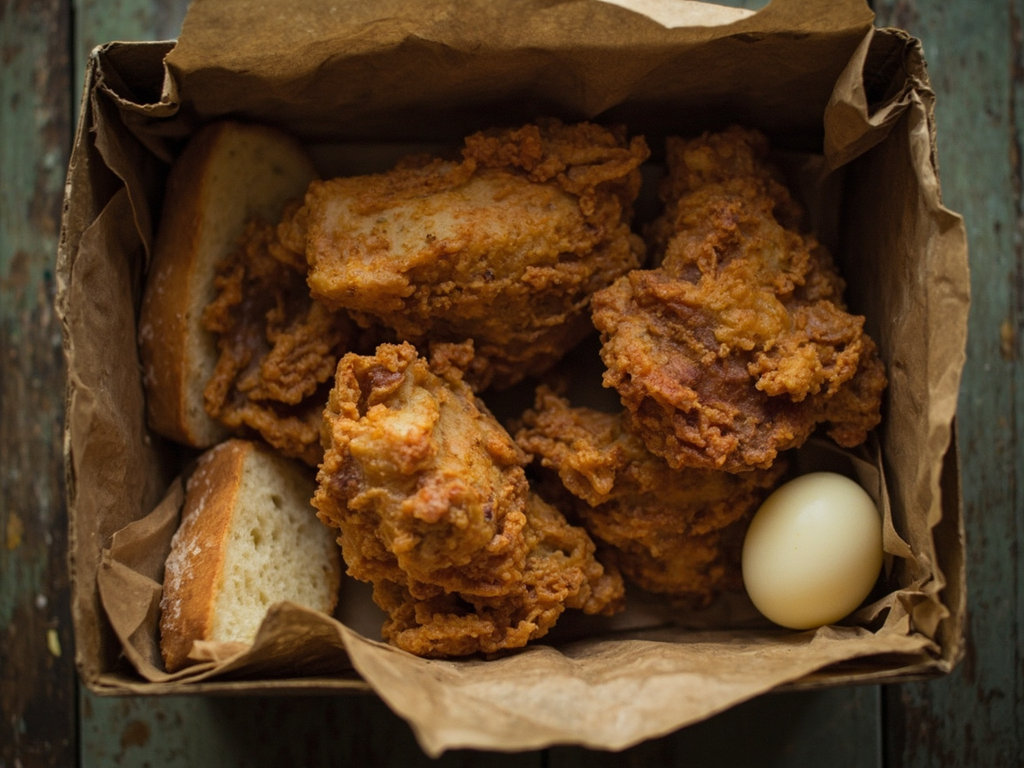
Well-seasoned fried chicken, golden and crispy, designed to be eaten cold hours later on the train. It was packed in a wax-paper-lined shoebox with bread and a hard-boiled egg.
Understand well what that humble shoebox represented. When our people boarded the train, the doors of the dining car were closed to them by the mere color of their skin; so our mothers and wives would fry the chicken the night before, season it with care, and pack it in a box lined with paper. That cold meal was an act of pride: no one would feed us, we would feed ourselves, and with dignity. I devoted my life to those Pullman porters; know that behind every uniform was a family and, often, such a box clutched on their laps.
- •Chicken pieces — one whole cut-up chicken (centerpiece)
- •Buttermilk — enough to cover (tenderizing marinade)
- •Wheat flour — one bowl (breading)
- •Salt, black pepper, cayenne pepper — by feel (seasoning)
- •Lard — a large skillet (frying fat)
Shoebox Lunch Fried Chicken
Well-seasoned fried chicken, golden and crispy, designed to be eaten cold hours later on the train. It was packed in a wax-paper-lined shoebox with bread and a hard-boiled egg.
Why this dish? In 1925, Randolph founded the Brotherhood of Sleeping Car Porters, the first major Black union, organizing Pullman car porters. At that time, Black travelers were barred from dining cars; they carried their meals in a shoebox. This cold fried chicken, which travels without spoiling, is the symbol of that dignity in the face of segregation that Randolph fought his whole life.
Understand well what that humble shoebox represented. When our people boarded the train, the doors of the dining car were closed to them by the mere color of their skin; so our mothers and wives would fry the chicken the night before, season it with care, and pack it in a box lined with paper. That cold meal was an act of pride: no one would feed us, we would feed ourselves, and with dignity. I devoted my life to those Pullman porters; know that behind every uniform was a family and, often, such a box clutched on their laps.
Ingredients (period version)
- Chicken pieces — one whole cut-up chicken (centerpiece)
- Buttermilk — enough to cover (tenderizing marinade)
- Wheat flour — one bowl (breading)
- Salt, black pepper, cayenne pepper — by feel (seasoning)
- Lard — a large skillet (frying fat)
Ingredients
- Chicken thighs and drumsticks — 8 pieces (centerpiece (dark meat stays moist cold))
- Buttermilk — 500 ml (marinade)
- Wheat flour — 250 g (breading)
- Smoked paprika + cayenne pepper — 1 tbsp + 1 tsp (color and heat)
- Salt and black pepper — 2 tsp + 1 tsp (seasoning)
- Neutral oil (or lard) — 1 liter for frying (cooking oil)
Method
- Marinate chicken pieces in salted buttermilk for at least 4 hours (ideally overnight) in the refrigerator.
- Mix flour, paprika, cayenne, salt, and pepper in a large dish.
- Drain chicken and dredge generously in seasoned flour, pressing to coat well.
- Heat oil to 170°C and fry pieces for 12–15 minutes, turning, until golden brown and cooked through.
- Drain on a wire rack (not paper, to keep crisp) and cool completely.
- Wrap in wax paper at the bottom of a box, with a slice of bread and a hard-boiled egg: ready for travel.
How it was made : The 'shoebox lunch' (sometimes called box lunch) is a well-documented historical fact from the Jim Crow era: denied access to dining cars, Black families prepared a travel-friendly meal—fried chicken, hard-boiled eggs, bread, cake. The chicken was fried the day before to be delicious cold.
The contemporary twist : Serve today in a real kraft box, street-food style, with a small note explaining the history of the shoebox lunch: a dish that is both eaten and narrated.
Sources : Psyche Williams-Forson, Building Houses out of Chicken Legs: Black Women, Food, and Power (2006) · Smithsonian National Museum of African American History and Culture — documentation on 'box lunches' and the Jim Crow era
A. Philip Randolph · Charactorium