 flip
flipHoney Popana for the Olympians
Honey Popana for the Olympians
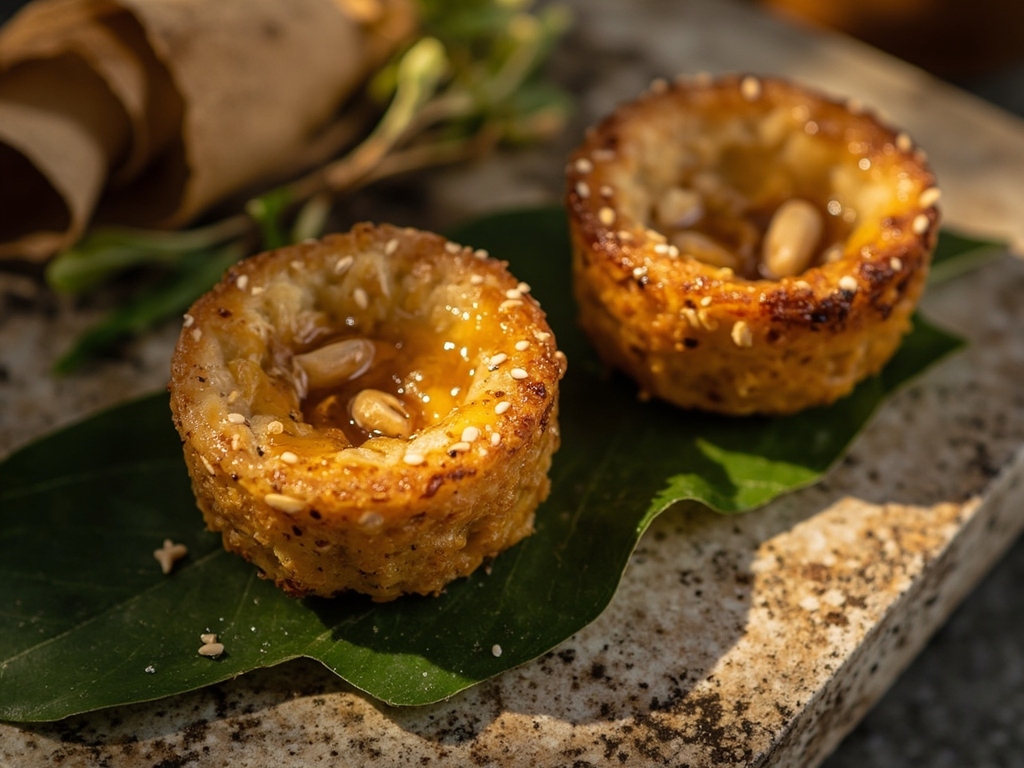
Why this dish? Mother of a son of Zeus, Alcmene owes the gods more than any other mortal. The *popana* — small round barley and honey cakes — are the offering the Greeks burned on the altar to honor Olympus: a gesture befitting her whose child would one day join the Blessed.
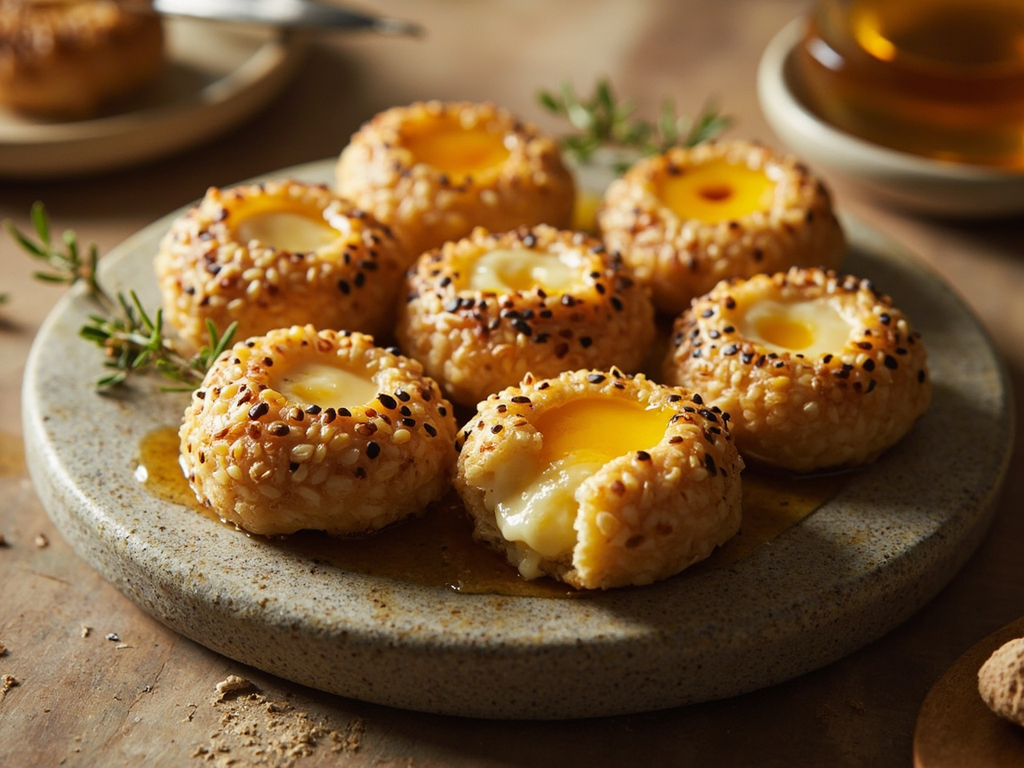
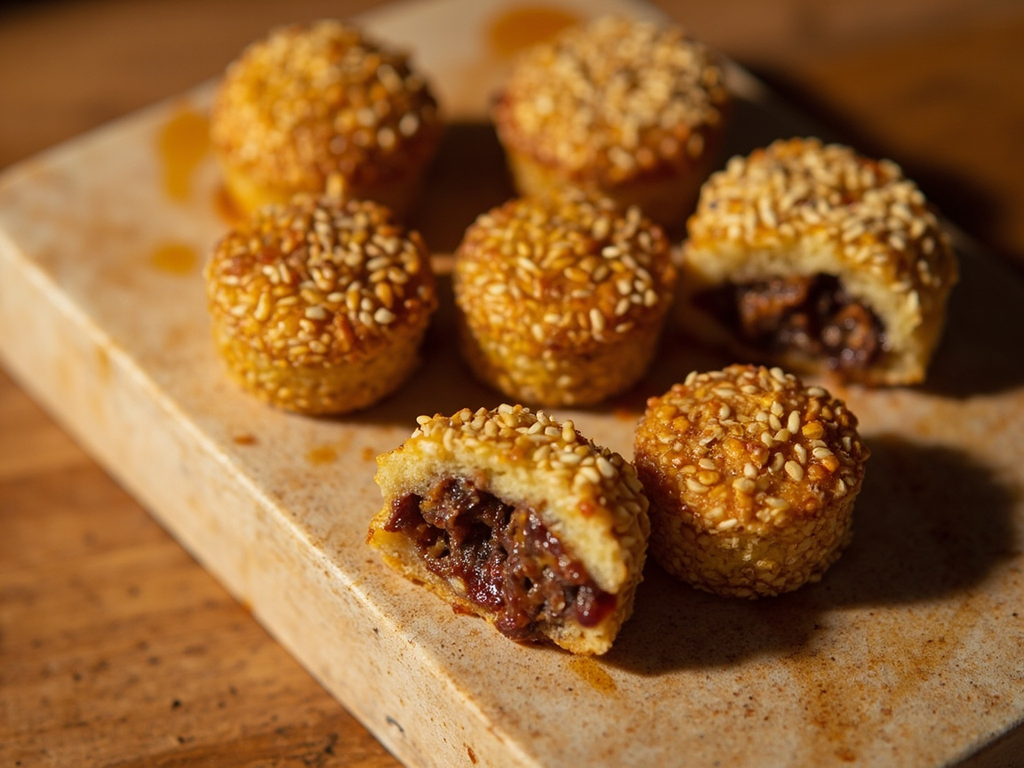
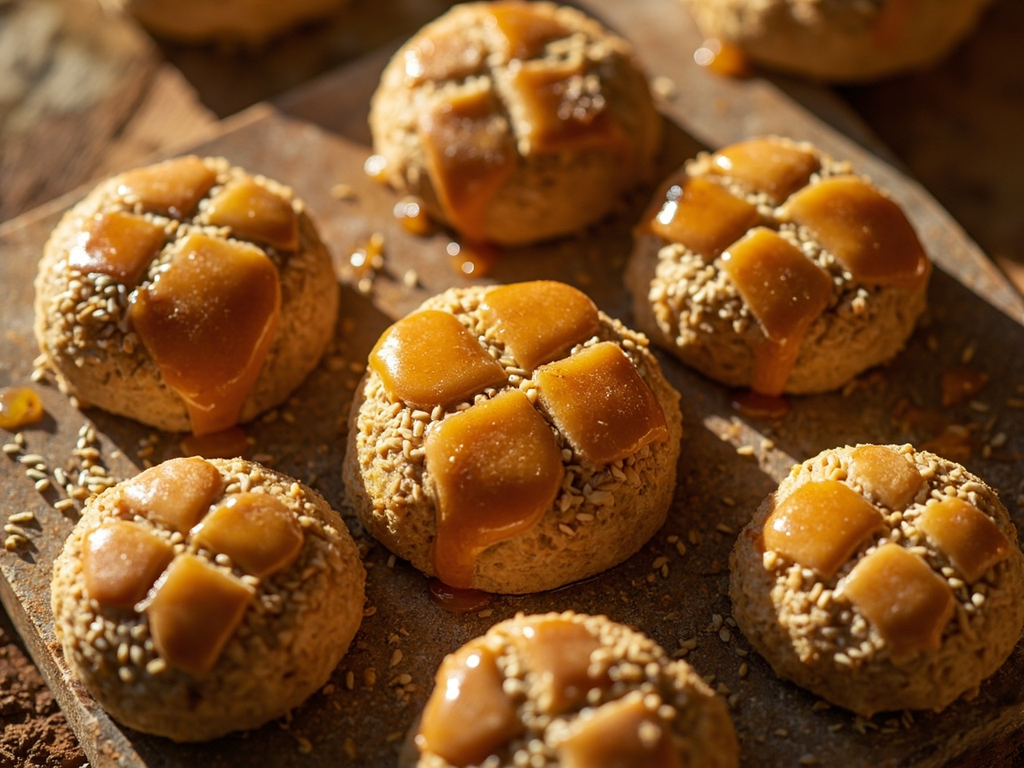
Small round cakes of barley and honey, sometimes marked with a cross or bumps representing horns, offered to the deities. Inspired by Greek sacrificial cakes — here a sweet to share, not a ritual reproduction.
You who read these words, know that one does not approach the Immortals empty-handed. I shape these round barley and honey cakes with my fingers, mark them with the sign of horns, and place them on the altar with a prayer. Honey is the sweetest gift of the earth: it takes no less to sway those who dwell on Olympus and watch over the lineage I have borne.
- •Barley flour — two handfuls (base)
- •Wild honey — generously (binder and sweetness)
- •Water — a little (binder)
- •Sesame seeds — a pinch (flavor)
Honey Popana for the Olympians
Small round cakes of barley and honey, sometimes marked with a cross or bumps representing horns, offered to the deities. Inspired by Greek sacrificial cakes — here a sweet to share, not a ritual reproduction.
Why this dish? Mother of a son of Zeus, Alcmene owes the gods more than any other mortal. The *popana* — small round barley and honey cakes — are the offering the Greeks burned on the altar to honor Olympus: a gesture befitting her whose child would one day join the Blessed.
You who read these words, know that one does not approach the Immortals empty-handed. I shape these round barley and honey cakes with my fingers, mark them with the sign of horns, and place them on the altar with a prayer. Honey is the sweetest gift of the earth: it takes no less to sway those who dwell on Olympus and watch over the lineage I have borne.
Ingredients (period version)
- Barley flour — two handfuls (base)
- Wild honey — generously (binder and sweetness)
- Water — a little (binder)
- Sesame seeds — a pinch (flavor)
Ingredients
- Barley flour (or half barley, half wheat) — 200 g (base)
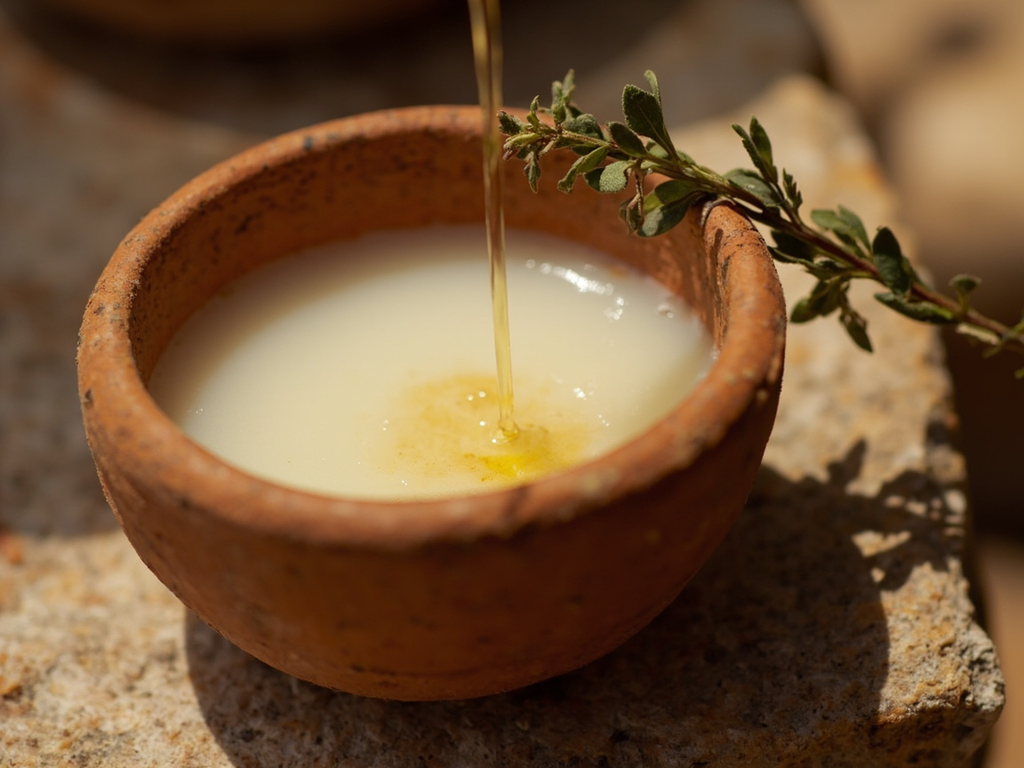
- Honey — 4 tbsp (binder and sweetness)
- Warm water — 4 to 5 tbsp (binder)
- Sesame seeds — 1 tbsp (flavor)
- Olive oil — 1 tbsp (for the baking sheet)
Method
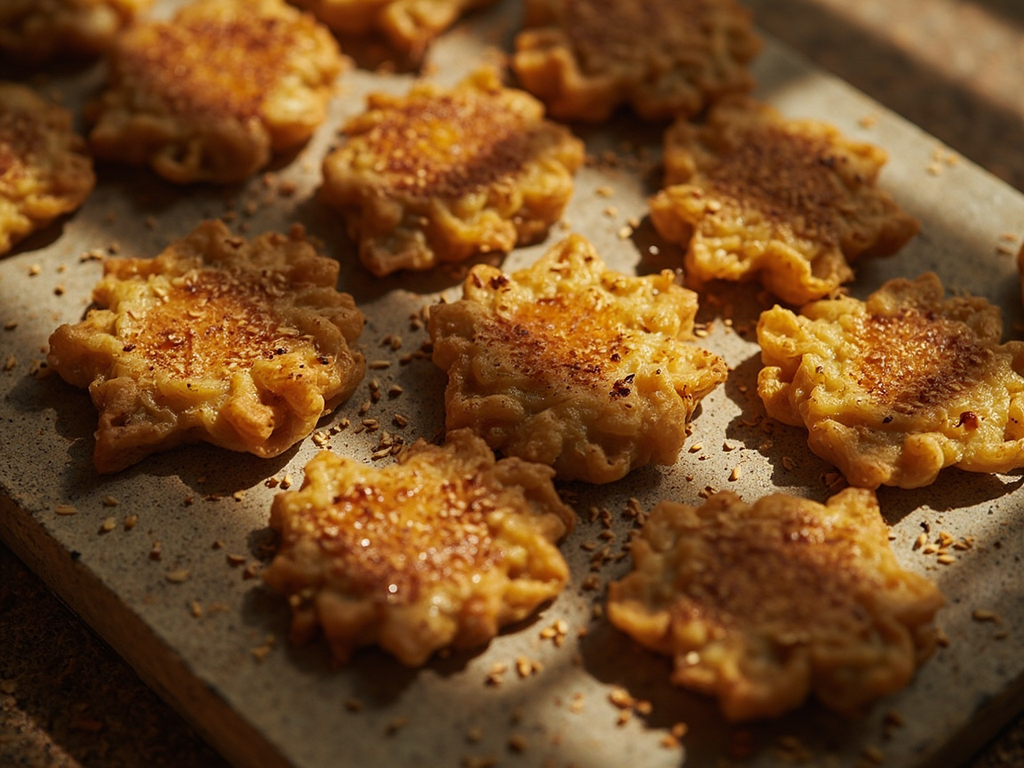
- Mix the flour and sesame seeds, then incorporate the honey and warm water until you get a dense, pliable dough.
- Shape into walnut-sized balls, then flatten into small discs.
- Lightly mark each disc with a cross using a knife (traditional pattern).
- Place on an oiled baking sheet and bake at 180°C for 12-15 minutes, until golden.
- Let cool slightly: they firm up a bit and keep for several days.
How it was made : The Greeks offered many ritual cakes (*popana*, *pelanos*, *pemmata*) made of barley and honey, sometimes substituting for animals in modest households or for certain deities. Sugar being unknown, honey was the only sweetener, a precious and sacred commodity. These cakes were burned on the altar or shared after the sacrifice.
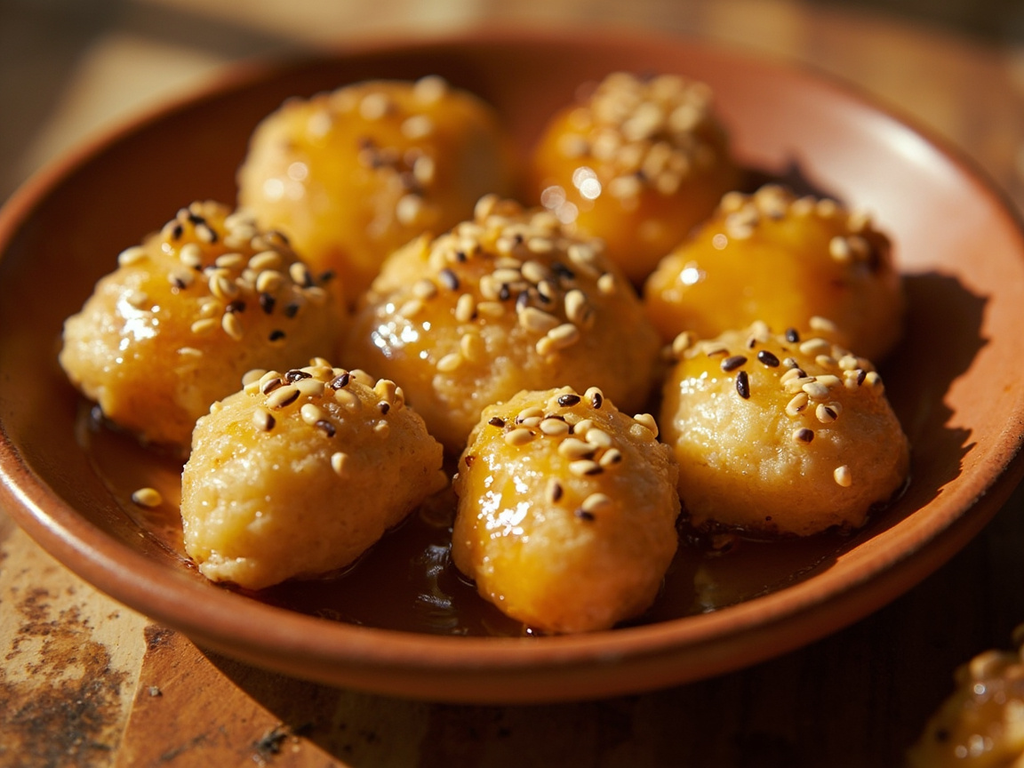
The contemporary twist : Shaped into small crescents and rolled in sesame, they become snack biscuits 'Greek offering style' to dip in honey yogurt.
Alcmene · Charactorium