 flip
flipIndian Black Tea the English Way
Indian Black Tea the English Way
Why this dish? Marshall lived at the height of the British Empire, which massively imported tea from India and Ceylon. Tea punctuates the day of every Victorian academic—taken at breakfast, luncheon, and especially at the ritual of afternoon tea, conducive to scholarly discussions.
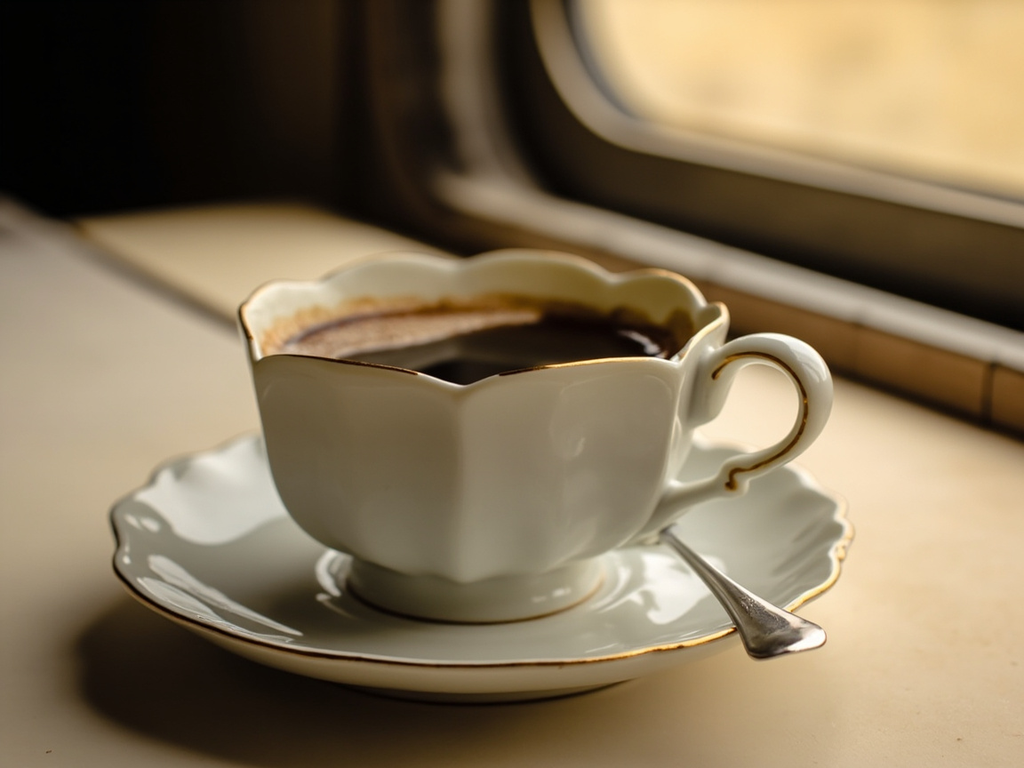
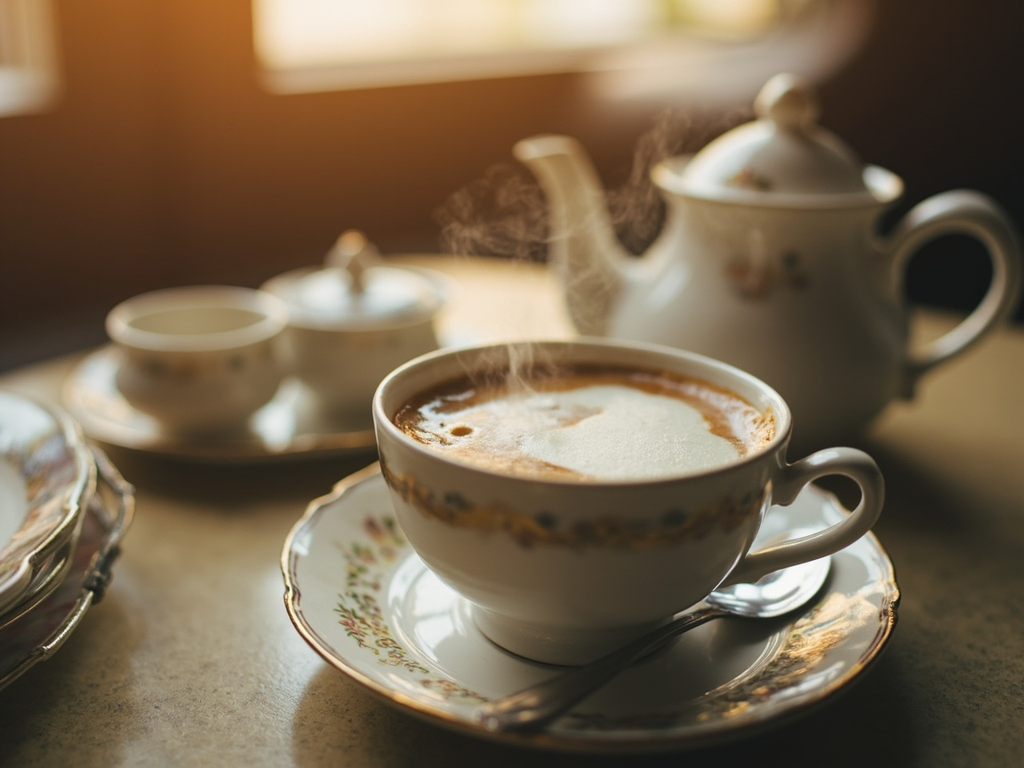
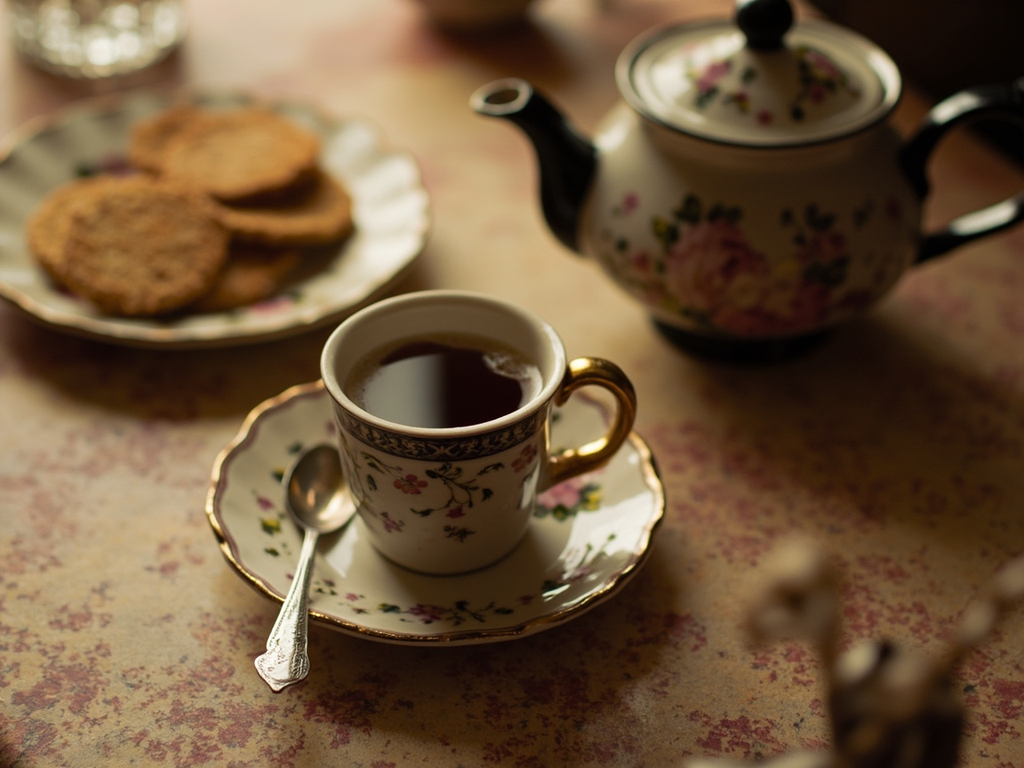
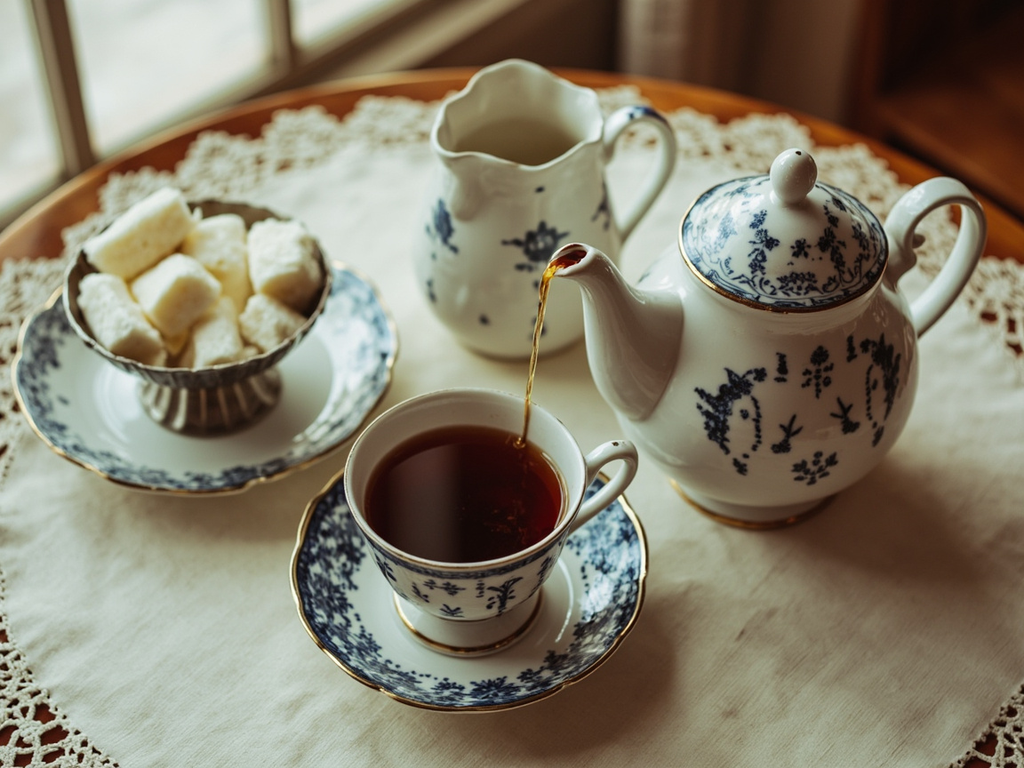
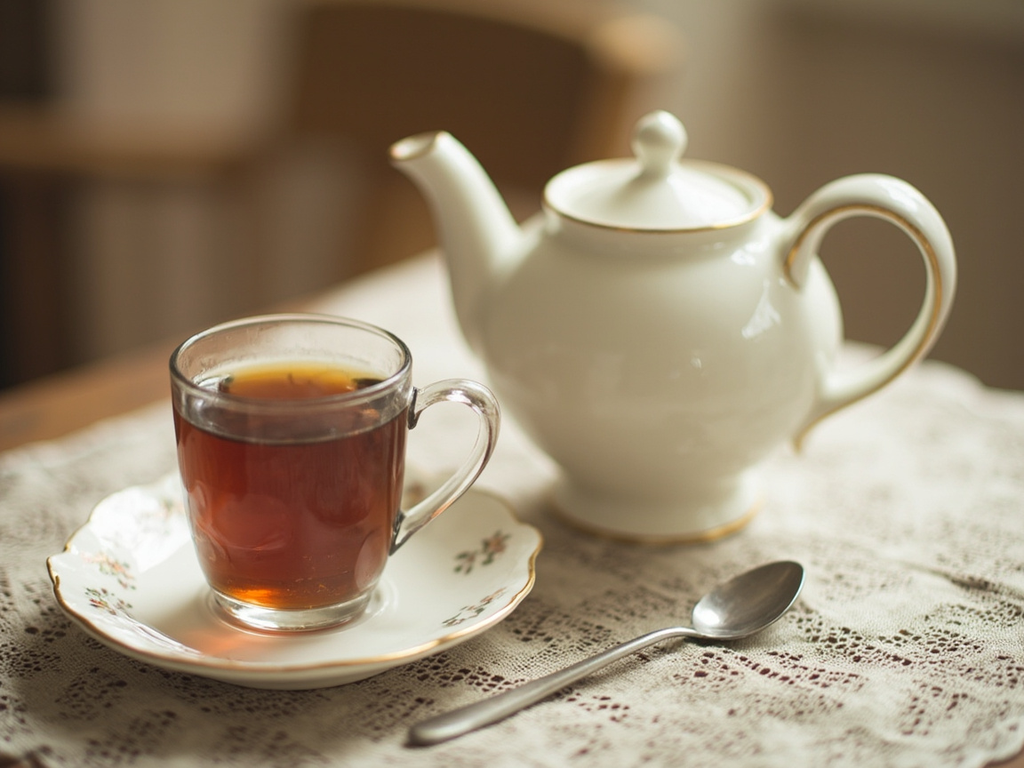
A strong black tea, brewed in a warm teapot, served with a splash of milk in the English fashion. The drink that structures the day and welcomes visitors.
One cannot think straight without a good cup of tea at hand. I like it strong, brewed in a teapot previously scalded—for a cold teapot spoils everything—and made from the leaves of our Indies. A touch of milk to round off the bitterness, no excessive ceremony, and it is ready. At five o'clock, when colleagues call and we debate value and utility, it is this beverage, not wine, that serves as peacemaker.
- •Indian black tea (Assam) leaves — one spoonful per cup + one "for the pot" (infusion)
- •Freshly boiled water — according to number of cups (infusion)
- •Milk — a splash (softener)
- •Sugar — optional (sweetness)
Indian Black Tea the English Way
A strong black tea, brewed in a warm teapot, served with a splash of milk in the English fashion. The drink that structures the day and welcomes visitors.
Why this dish? Marshall lived at the height of the British Empire, which massively imported tea from India and Ceylon. Tea punctuates the day of every Victorian academic—taken at breakfast, luncheon, and especially at the ritual of afternoon tea, conducive to scholarly discussions.
One cannot think straight without a good cup of tea at hand. I like it strong, brewed in a teapot previously scalded—for a cold teapot spoils everything—and made from the leaves of our Indies. A touch of milk to round off the bitterness, no excessive ceremony, and it is ready. At five o'clock, when colleagues call and we debate value and utility, it is this beverage, not wine, that serves as peacemaker.
Ingredients (period version)
- Indian black tea (Assam) leaves — one spoonful per cup + one "for the pot" (infusion)
- Freshly boiled water — according to number of cups (infusion)
- Milk — a splash (softener)
- Sugar — optional (sweetness)
Ingredients
- Assam or English Breakfast black tea leaves — 1 tsp per cup + 1 for the pot (infusion)
- Water at 95 °C — 1 cup (250 ml) per person (infusion)
- Whole milk — a dash (softener)
- Sugar — to taste (sweetness)
Method
- Rinse the teapot with boiling water, then discard.
- Put in the tea leaves and pour the just-boiled water (95 °C, not vigorously boiling).
- Let steep 3 to 5 minutes depending on desired strength.
- Pour through a strainer into cups.
- Add a dash of milk and, if desired, some sugar.
How it was made : Afternoon tea is said to have been introduced around 1840 by Anna, Duchess of Bedford, to bridge the gap between luncheon and the late dinner. The debate "milk in first or after tea" (MIF/TIF) already divided Victorians. Indian tea (Assam, cultivated from the 1830s) gradually supplanted Chinese tea.
The contemporary twist : Present the tea in a cast-iron teapot with a glass hourglass to time the infusion—an economist's rigor applied to the cup.
Sources : Mrs Beeton, Book of Household Management, 1861 · History of the tea trade in the British Empire
Alfred Marshall · Charactorium