 flip
flipConstantinian Doubara
Constantinian Doubara
Why this dish? Alfred Nakache was born in Constantine in 1915, in the noisy alley of the old city. Doubara is THE popular dish of the Rocher: chickpeas and beans served piping hot in street stalls, gulped down standing by workers, schoolchildren, and kids running toward the pool. It is the taste of his Algerian childhood.
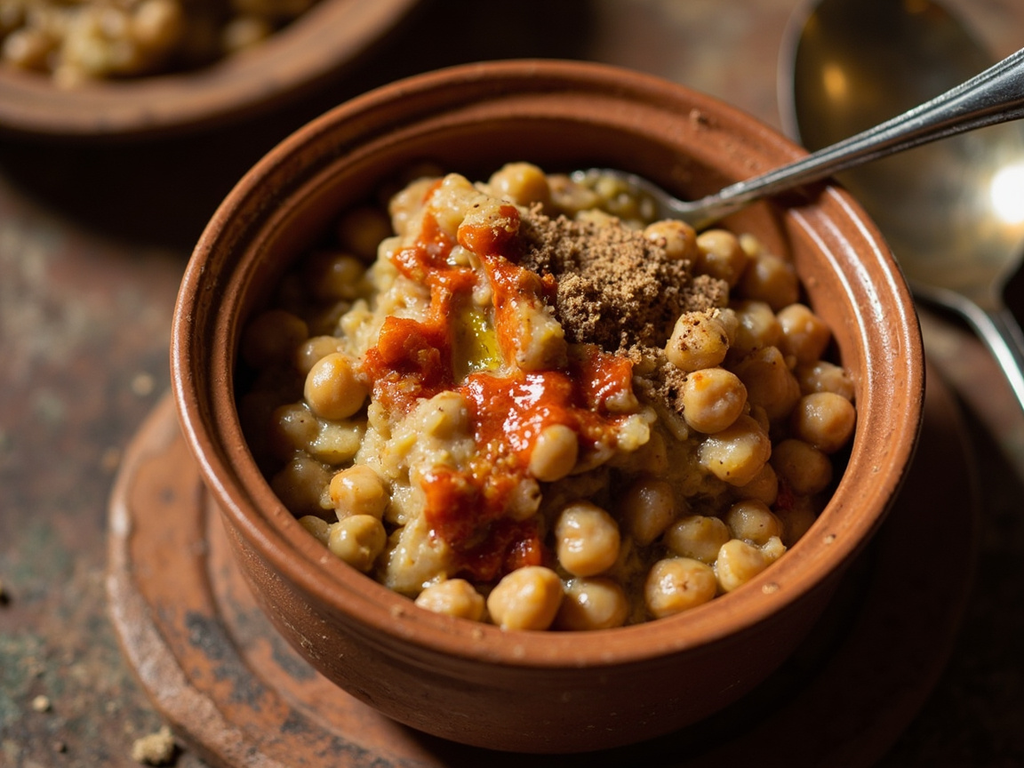
A thick soup-purée of chickpeas and dried fava beans, perfumed with cumin and spiced with a spoonful of harissa and a drizzle of olive oil. Cheap, filling, served from morning to night in the street stalls of Constantine.
Listen, kid: back home in Constantine, we didn't eat off porcelain, we ate standing in the alley! The vendor would hand you a bowl of steaming doubara, you'd add your pinch of cumin, your dab of harissa, your drizzle of oil, and off you'd go with a full belly. Believe me, before a training session at the pool, nothing stuck to your ribs better than this chickpea mash. It was the poor man's strength, and we did just fine on it.
- •Dried chickpeas — two handfuls per person (nourishing base)
- •Dried split fava beans — one handful (smooth binder)
- •Ground cumin — to taste, generous (signature flavor)
- •Harissa — one spoonful (spicy heat)
- •Olive oil — a drizzle (roundness)
- •Garlic — a few cloves (aromatic base)
- •Salt — to taste (seasoning)
Constantinian Doubara
A thick soup-purée of chickpeas and dried fava beans, perfumed with cumin and spiced with a spoonful of harissa and a drizzle of olive oil. Cheap, filling, served from morning to night in the street stalls of Constantine.
Why this dish? Alfred Nakache was born in Constantine in 1915, in the noisy alley of the old city. Doubara is THE popular dish of the Rocher: chickpeas and beans served piping hot in street stalls, gulped down standing by workers, schoolchildren, and kids running toward the pool. It is the taste of his Algerian childhood.
Listen, kid: back home in Constantine, we didn't eat off porcelain, we ate standing in the alley! The vendor would hand you a bowl of steaming doubara, you'd add your pinch of cumin, your dab of harissa, your drizzle of oil, and off you'd go with a full belly. Believe me, before a training session at the pool, nothing stuck to your ribs better than this chickpea mash. It was the poor man's strength, and we did just fine on it.
Ingredients (period version)
- Dried chickpeas — two handfuls per person (nourishing base)
- Dried split fava beans — one handful (smooth binder)
- Ground cumin — to taste, generous (signature flavor)
- Harissa — one spoonful (spicy heat)
- Olive oil — a drizzle (roundness)
- Garlic — a few cloves (aromatic base)
- Salt — to taste (seasoning)
Ingredients
- Dried chickpeas — 250 g (soaked overnight) (nourishing base)
- Dried split fava beans — 100 g (soaked overnight) (smooth binder)
- Ground cumin — 2 tsp + a little for serving (signature flavor)
- Harissa — 1 to 2 tsp (spicy heat)
- Olive oil — 4 tbsp (roundness)
- Garlic — 3 cloves, crushed (aromatic base)
- Salt — to taste (seasoning)
Method
- The night before, soak the chickpeas and fava beans separately in cold water.
- The next day, cook the chickpeas in a large pot of unsalted water with the garlic for 1 to 1½ hours until tender.
- Add the fava beans and continue cooking for 30 minutes: they should break down and thicken the broth.
- Season with salt; roughly mash with a fork to achieve a texture between soup and purée.
- Serve piping hot in bowls: each person adds their own cumin, harissa mixed with a little oil, and a final drizzle of olive oil.
How it was made : In the street stalls of Constantine, doubara simmered from dawn in enormous copper pots. It was served for a few pennies in earthenware bowls, and customers helped themselves from the pot of harissa and cumin on the counter. The quintessential street food, shared by all communities of the city.
The contemporary twist : A modern presentation: doubara in a deep bowl, a soft-boiled egg placed in the center, harissa in a swirl, and a sprinkle of toasted cumin — a nod to the high-protein breakfast of today's swimmers.
Alfred Nakache · Charactorium