 flip
flipAlexandrian Ta'meya
Alexandrian Ta'meya
Why this dish? Ta'meya — the Egyptian falafel, made from fava beans not chickpeas — is the street snack of Alexandria where Zewail studied at university. Crispy, green with coriander, slipped into bread: the food of students and sidewalks of his youth.
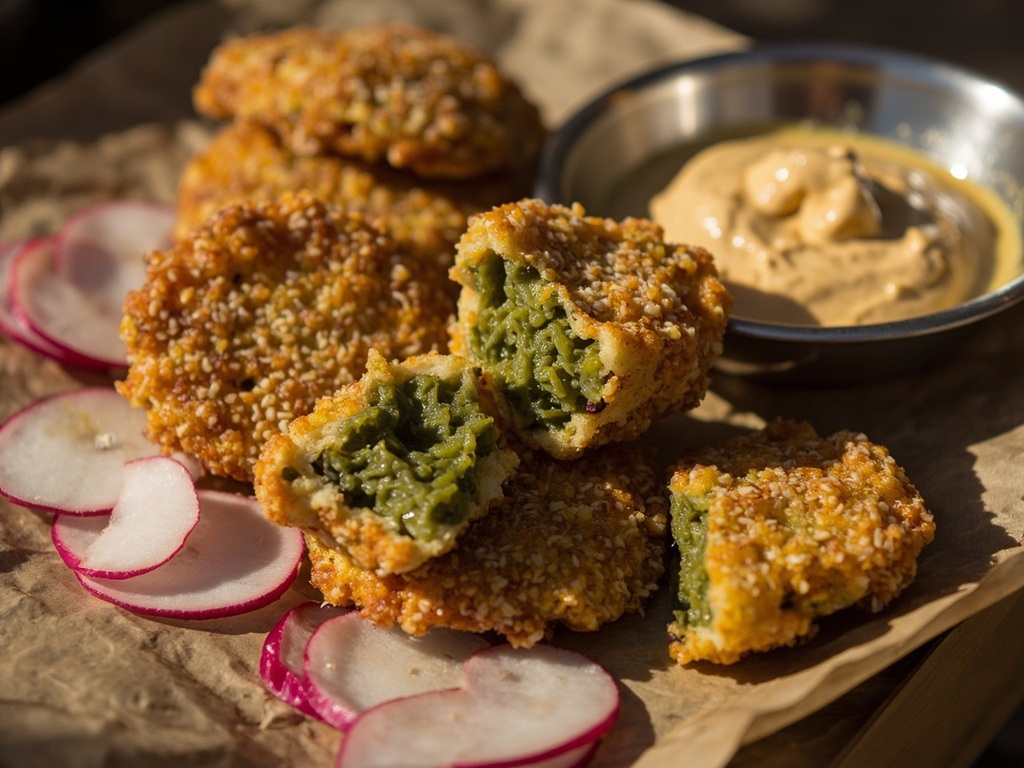
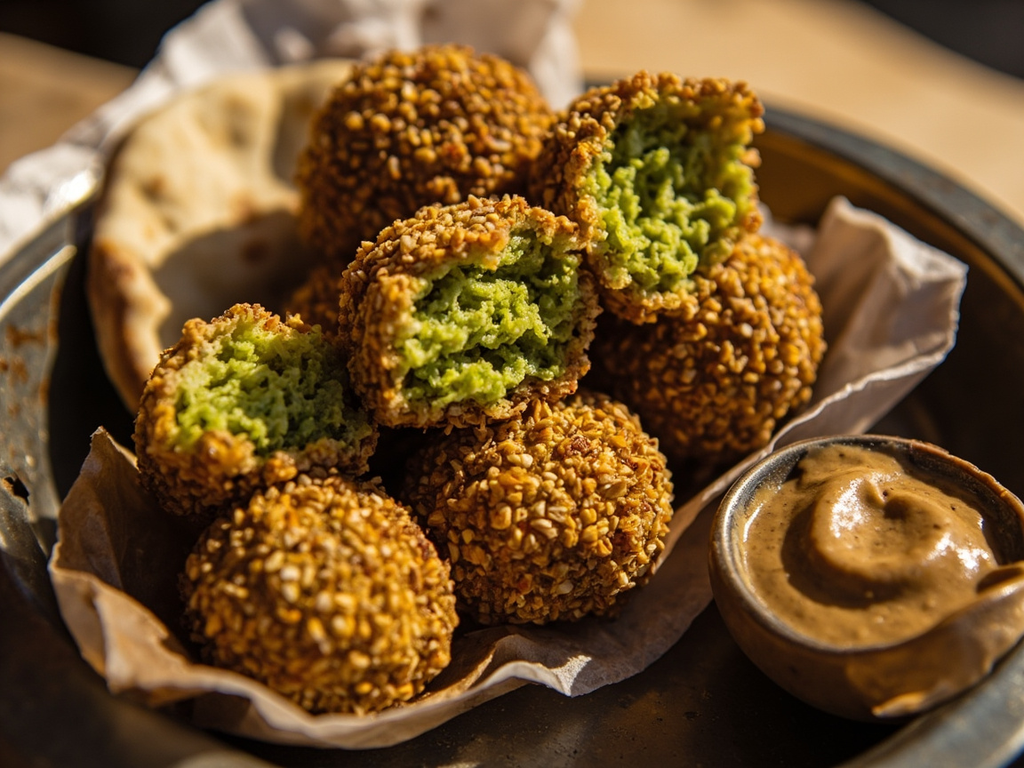
Patties of raw ground dried fava beans with coriander, parsley, onion and cumin, then fried until they form a golden, crunchy shell around a soft green heart. Eaten hot, in bread, with sesame tarator sauce.
When I was a student in Alexandria, my pockets were light but my stomach was never empty: for a few piastres, the vendor would plunge his ta'meya patties into boiling oil and hand them to me scorching hot, wrapped in bread with herbs. Note well — we make it with fava beans, never chickpeas, that is the whole difference from our Levantine neighbors. The secret lies in the intense green of the interior: a handful of coriander and parsley ground raw with the beans. I tell you, I have traveled across many continents, but I have never found that crunch anywhere else.
- •Dried split fava beans — soaked overnight (base, ground raw)
- •Fresh coriander and parsley — large bunches (color and aroma)
- •Onion and garlic — equal parts (aromatics)
- •Cumin and coriander seeds — to taste (spices)
- •Sesame seeds and coriander seeds — for coating (crust)
- •Oil for frying — plenty (cooking)
Alexandrian Ta'meya
Patties of raw ground dried fava beans with coriander, parsley, onion and cumin, then fried until they form a golden, crunchy shell around a soft green heart. Eaten hot, in bread, with sesame tarator sauce.
Why this dish? Ta'meya — the Egyptian falafel, made from fava beans not chickpeas — is the street snack of Alexandria where Zewail studied at university. Crispy, green with coriander, slipped into bread: the food of students and sidewalks of his youth.
When I was a student in Alexandria, my pockets were light but my stomach was never empty: for a few piastres, the vendor would plunge his ta'meya patties into boiling oil and hand them to me scorching hot, wrapped in bread with herbs. Note well — we make it with fava beans, never chickpeas, that is the whole difference from our Levantine neighbors. The secret lies in the intense green of the interior: a handful of coriander and parsley ground raw with the beans. I tell you, I have traveled across many continents, but I have never found that crunch anywhere else.
Ingredients (period version)
- Dried split fava beans — soaked overnight (base, ground raw)
- Fresh coriander and parsley — large bunches (color and aroma)
- Onion and garlic — equal parts (aromatics)
- Cumin and coriander seeds — to taste (spices)
- Sesame seeds and coriander seeds — for coating (crust)
- Oil for frying — plenty (cooking)
Ingredients
- Dried split fava beans — 250 g (soaked 12 h, NOT cooked) (base)
- Fresh coriander — 1 bunch (color and aroma)
- Flat-leaf parsley — 1/2 bunch (aroma)
- Onion — 1 small (aromatic)
- Garlic — 3 cloves (aromatic)
- Ground cumin — 1 tsp (spice)
- Ground coriander — 1 tsp (spice)
- Baking soda — 1/2 tsp (fluffiness inside)
- Sesame seeds — 3 tbsp (crispy coating)
- Frying oil — 1 liter (cooking)
- Salt — 1.5 tsp (seasoning)
Method
- Drain the soaked fava beans thoroughly (they must never be cooked before blending).
- Blend beans, herbs, onion, garlic, spices and salt into a thick, smooth green paste, without adding water.
- Cover and rest 30 min in the fridge; add baking soda just before shaping patties.
- Shape flattened patties, roll one side in sesame seeds.
- Fry in hot oil (180°C / 350°F) until deep golden and crispy, about 3-4 minutes.
- Drain on paper and serve immediately in flatbread, with sesame tarator, tomato and arugula.
How it was made : Ta'meya is likely the ancestor of falafel: the Egyptian version, made from fava beans (not chickpeas as in the Levant), is thought to be the oldest, sometimes linked to Coptic communities. Sold by fawwalin from dawn, fried to order in large cauldrons of oil, it fed workers and students. The baking soda and resting of the dough give the characteristic airy interior.
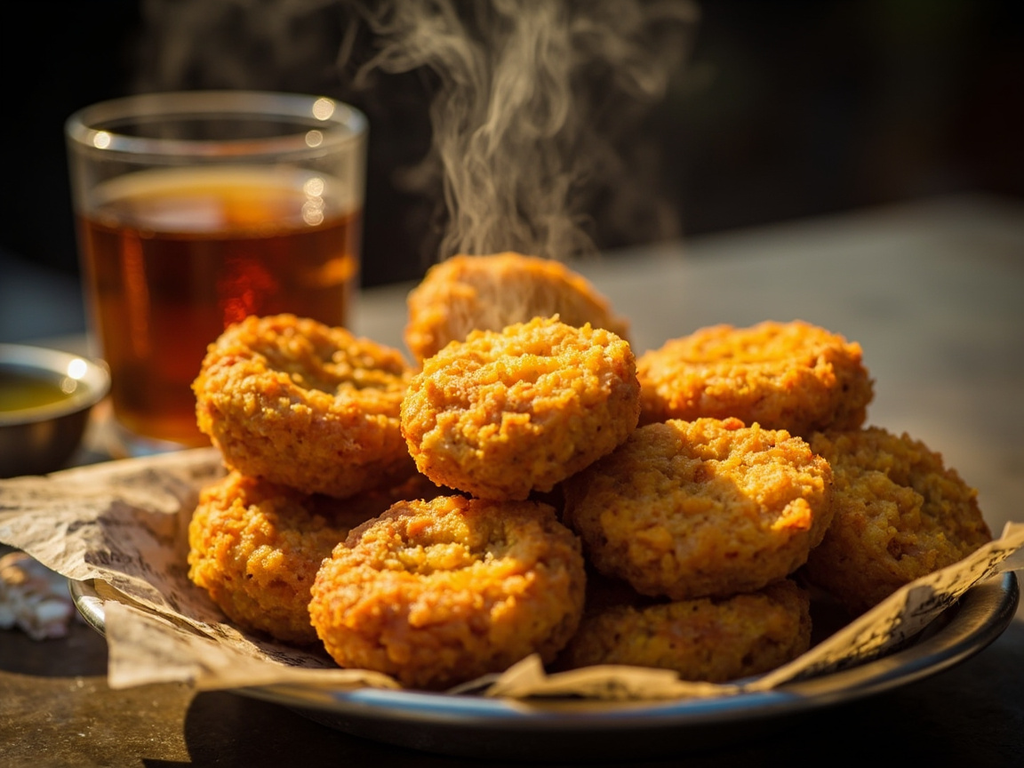
The contemporary twist : Shape mini patties calibrated to the same diameter, lined up on the plate: a "regular network" that amuses the eye of a physical chemist used to reproducible samples.
Sources : Claudia Roden, A Book of Middle Eastern Food · Magda Mehdawy, My Egyptian Grandmother's Kitchen
Ahmed Zewail · Charactorium