 flip
flipSaffron Semolina Halva (Sweet Offering)
Saffron Semolina Halva (Sweet Offering)
Why this dish? In the Hindu devotion that Alice Coltrane embraced after John Coltrane's death, food is first offered to the divine before being shared. Sooji halwa — semolina fried in ghee and sugar — is the classic sweet prasad of temples and the kirtans she led. Inspired by this living tradition, without reproducing the sacred ritual.
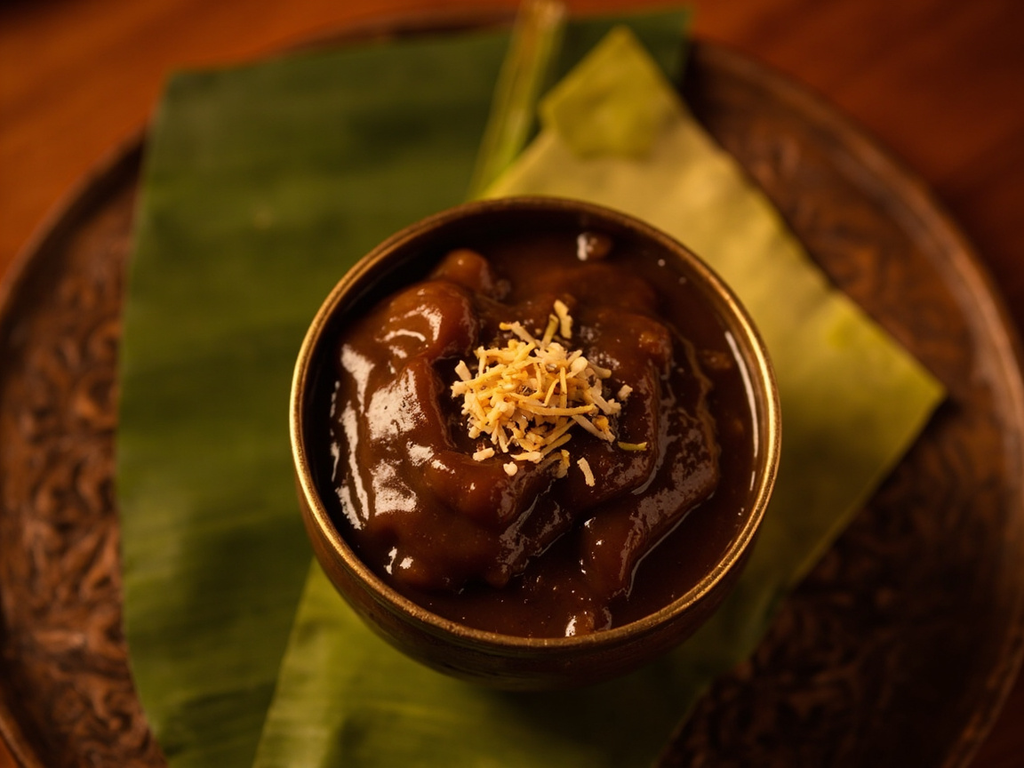
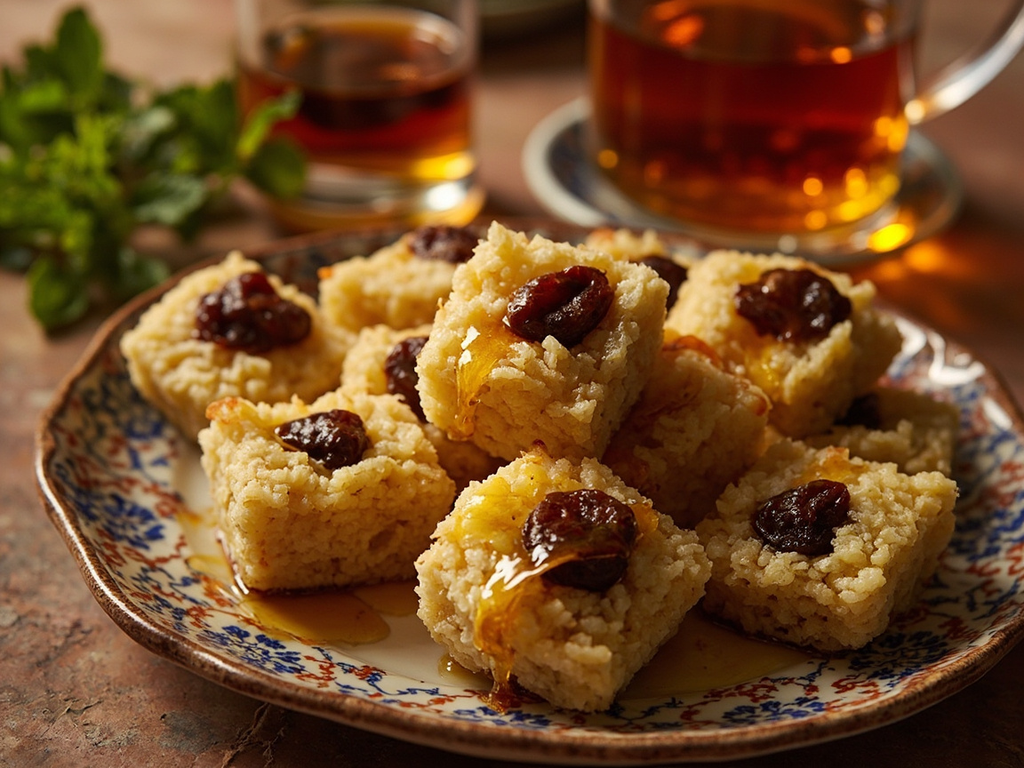
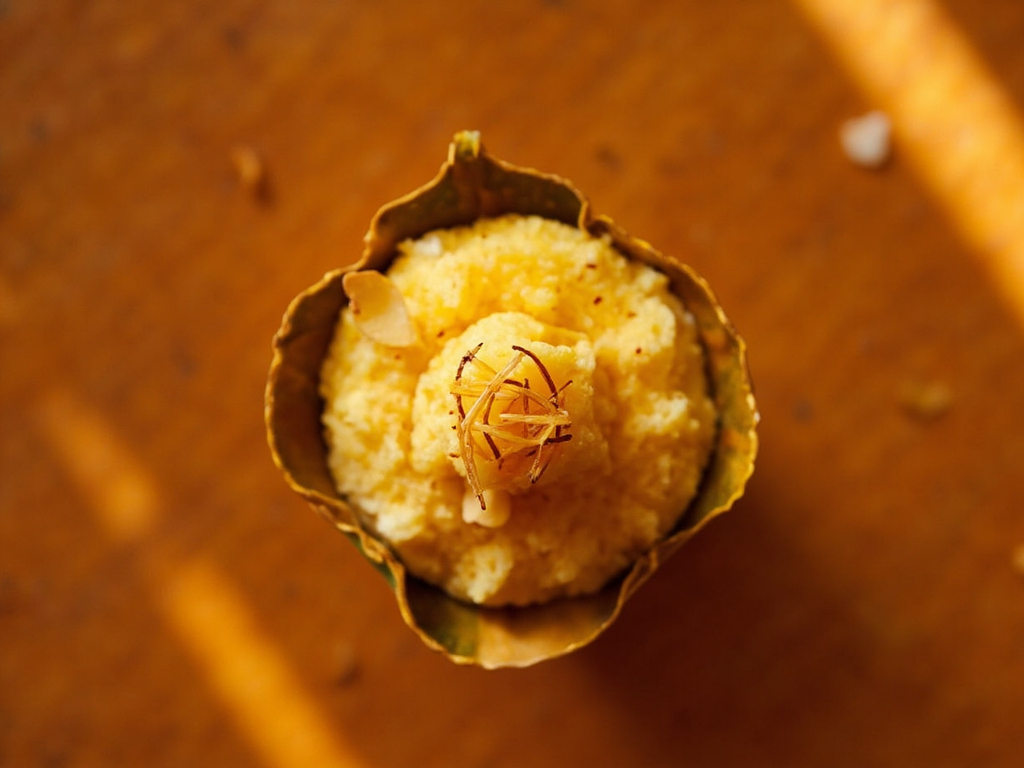
A golden semolina, toasted in ghee until it releases a nutty aroma, then plumped in a hot saffron syrup and perfumed with cardamom. Creamy, comforting, dotted with raisins and almonds — the sweetness shared after singing.
When we had sung until evening fell, I would prepare the halva to first offer it to the Lord on the altar, before placing it in your hands. Listen to the semolina sing in the ghee: as long as it does not smell of toasted nuts, it is not ready. Then I pour the syrup, and see how it swells, how it breathes. This sweetness, my children, is not for the belly: it is grace you taste.
- •Fine wheat semolina — one bowl (base)
- •Ghee — generously (toasting and creaminess)
- •Sugar — equal parts to semolina (sweetness)
- •Saffron — a few strands (color and noble fragrance)
- •Ground cardamom — a pinch (fragrance)
- •Raisins — a handful (garnish)
- •Almonds — a handful (garnish)
- •Water — for the syrup (liquid)
Saffron Semolina Halva (Sweet Offering)
A golden semolina, toasted in ghee until it releases a nutty aroma, then plumped in a hot saffron syrup and perfumed with cardamom. Creamy, comforting, dotted with raisins and almonds — the sweetness shared after singing.
Why this dish? In the Hindu devotion that Alice Coltrane embraced after John Coltrane's death, food is first offered to the divine before being shared. Sooji halwa — semolina fried in ghee and sugar — is the classic sweet prasad of temples and the kirtans she led. Inspired by this living tradition, without reproducing the sacred ritual.
When we had sung until evening fell, I would prepare the halva to first offer it to the Lord on the altar, before placing it in your hands. Listen to the semolina sing in the ghee: as long as it does not smell of toasted nuts, it is not ready. Then I pour the syrup, and see how it swells, how it breathes. This sweetness, my children, is not for the belly: it is grace you taste.
Ingredients (period version)
- Fine wheat semolina — one bowl (base)
- Ghee — generously (toasting and creaminess)
- Sugar — equal parts to semolina (sweetness)
- Saffron — a few strands (color and noble fragrance)
- Ground cardamom — a pinch (fragrance)
- Raisins — a handful (garnish)
- Almonds — a handful (garnish)
- Water — for the syrup (liquid)
Ingredients
- Fine wheat semolina — 150 g (base)
- Ghee — 100 g (toasting and creaminess)
- Sugar — 150 g (sweetness)
- Saffron strands — 1 pinch (color and fragrance)
- Ground cardamom — 1/2 tsp (fragrance)
- Raisins — 40 g (garnish)
- Slivered almonds — 40 g (garnish)
- Water — 450 ml (syrup)
Method
- Heat the water with the sugar and saffron until dissolved; keep this syrup warm.
- In a large pan, melt the ghee and briefly fry the almonds and raisins, then set them aside.
- In the same ghee, pour in the semolina and toast over medium heat, stirring constantly, for 8-10 minutes, until it turns golden and smells nutty.
- Off the heat (watch for splatters), pour the warm saffron syrup over the semolina while stirring vigorously.
- Return to low heat, add the cardamom, and stir until the semolina absorbs all the liquid and pulls away from the pan.
- Fold in the almonds and raisins, cover for 2 minutes, then serve warm.
How it was made : Semolina halva is one of the most widespread prasads in temples across the Indian subcontinent: prepared in large quantities, it is distributed to all devotees at the end of the ceremony. The classic ratio "one measure of semolina, one of ghee, one of sugar, three of water" is passed down by memory, without scales.
The contemporary twist : Press the warm halva into small muffin molds for individual domes, and decorate with a saffron strand: a festive prasad.
Alice Coltrane · Charactorium