 flip
flipAda pradhaman (rice payasam with coconut milk and jaggery)
Ada pradhaman (rice payasam with coconut milk and jaggery)
Why this dish? Payasam closes every sadya and, under the name naivedyam, it is offered in Kerala temples — notably at Ambalappuzha, famous for its payasam. For a man who read Vedanta as much as Physical Review, this dessert connects the family table and the spiritual dimension of his culture.
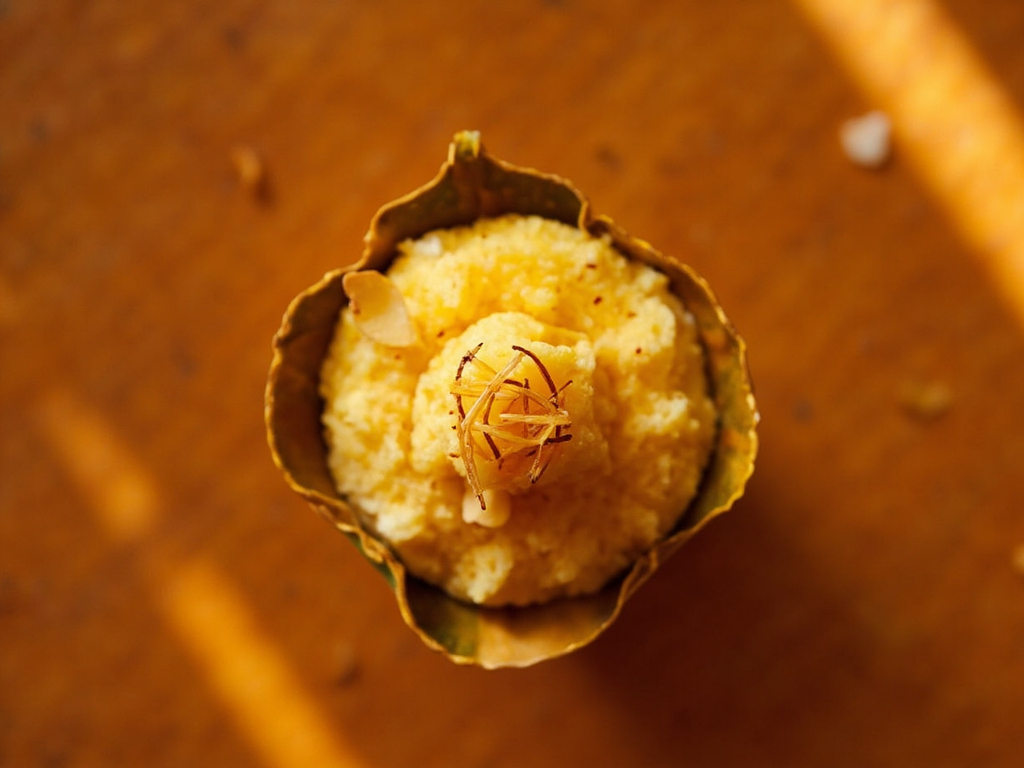
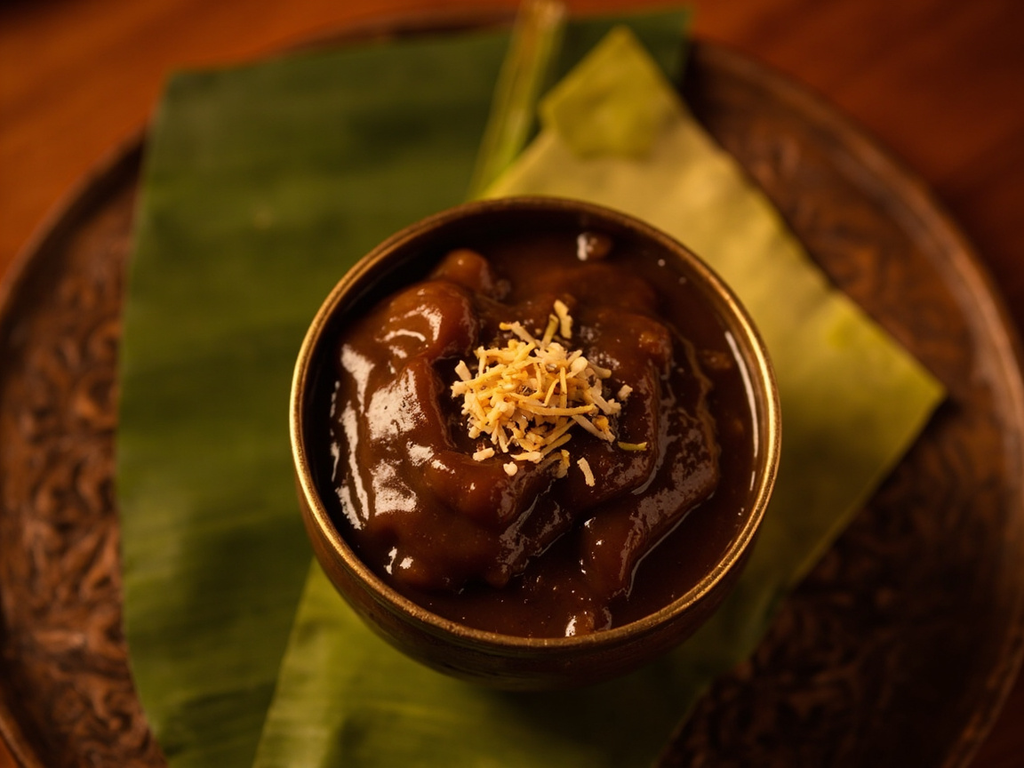
Thin rice flakes (ada) simmered in coconut milk and melted jaggery (palm sugar), perfumed with cardamom and dried ginger, topped with fried coconut. Sweet, deep, comforting.
Much has been said about the fact that I read Vedanta alongside my equations; I never saw a contradiction. At Onam, payasam closed the meal and at the temple, it was offered before being shared — the same sweetness connected the sacred and the everyday. Take inspiration from this tradition without mimicking it: let the jaggery melt slowly in the coconut milk, add the cardamom at the end so as not to lose its fragrance, and offer the first spoonful to someone other than yourself. That, I believe, is the best way to understand the unity the sages speak of.
- •Ada (thin rice flakes) — one measure (base)
- •Jaggery (palm sugar) — generous (sweetener)
- •Coconut milk (first and second press) — plenty (creamy liquid)
- •Cardamom — a few pods (fragrance)
- •Dried ginger (chukku) — a pinch (warmth)
- •Coconut slices — a handful (fried garnish)
- •Ghee — one spoon (richness)
Ada pradhaman (rice payasam with coconut milk and jaggery)
Thin rice flakes (ada) simmered in coconut milk and melted jaggery (palm sugar), perfumed with cardamom and dried ginger, topped with fried coconut. Sweet, deep, comforting.
Why this dish? Payasam closes every sadya and, under the name naivedyam, it is offered in Kerala temples — notably at Ambalappuzha, famous for its payasam. For a man who read Vedanta as much as Physical Review, this dessert connects the family table and the spiritual dimension of his culture.
Much has been said about the fact that I read Vedanta alongside my equations; I never saw a contradiction. At Onam, payasam closed the meal and at the temple, it was offered before being shared — the same sweetness connected the sacred and the everyday. Take inspiration from this tradition without mimicking it: let the jaggery melt slowly in the coconut milk, add the cardamom at the end so as not to lose its fragrance, and offer the first spoonful to someone other than yourself. That, I believe, is the best way to understand the unity the sages speak of.
Ingredients (period version)
- Ada (thin rice flakes) — one measure (base)
- Jaggery (palm sugar) — generous (sweetener)
- Coconut milk (first and second press) — plenty (creamy liquid)
- Cardamom — a few pods (fragrance)
- Dried ginger (chukku) — a pinch (warmth)
- Coconut slices — a handful (fried garnish)
- Ghee — one spoon (richness)
Ingredients
- Rice ada (or thick poha / beaten rice as substitute) — 150 g (base)
- Jaggery (palm sugar) — 250 g (sweetener)
- Thick coconut milk — 400 ml (final creaminess)
- Thin coconut milk (or water) — 600 ml (cooking liquid)
- Ground cardamom — 1/2 tsp (fragrance)
- Dried ginger powder — 1 pinch (warmth)
- Fresh coconut flakes — 30 g (garnish)
- Ghee — 2 tbsp (richness)
Method
- Soak the ada in warm water for 15 minutes, rinse, and drain.
- In a pot, melt the jaggery in a little water, strain to remove impurities.
- Add the ada and thin coconut milk, simmer for 20-25 minutes, stirring often: the mixture thickens and browns.
- Off high heat, stir in the thick coconut milk (it must not curdle), then cardamom and dried ginger.
- In a pan, toast the coconut flakes in ghee until golden and pour over the payasam.
- Serve warm or chilled, in small portions.
How it was made : At the Ambalappuzha temple, payasam simmered for hours in huge bronze cauldrons over a wood fire, coconut milk extracted by hand from freshly grated coconuts, and unrefined jaggery giving its dark color. The home version replicated this process on a smaller scale for Onam.
The contemporary twist : Served cold in a small glass with a fine toasted coconut tuile, this payasam becomes a restaurant dessert while keeping its soul of naivedyam.
George Sudarshan · Charactorium