 flip
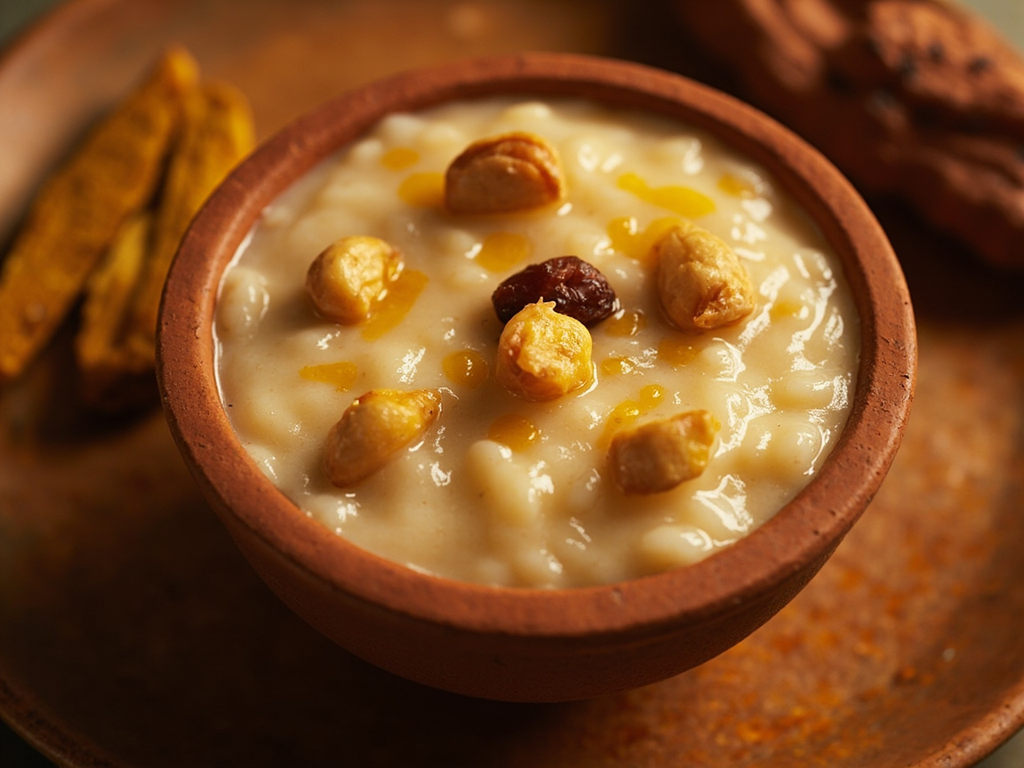
flipPayasa — rice pudding with jaggery and cardamom
Payasa — rice pudding with jaggery and cardamom
Why this dish? Before the niyoga rite that must perpetuate the Kuru lineage, a queen like Ambika multiplies offerings to the gods and ancestors. Payasa, rice melted in milk sweetened with jaggery, is the sweet offering par excellence, placed before the deities to call for prosperous offspring.
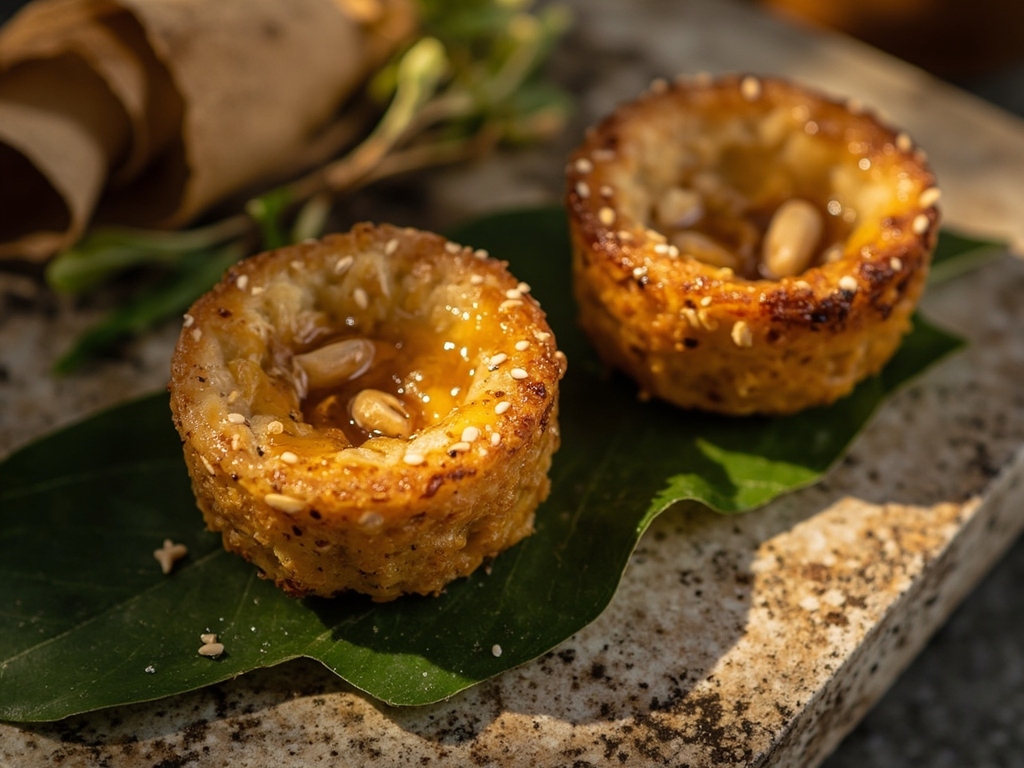
Rice long-creamed in milk with jaggery (unrefined cane sugar), perfumed with cardamom. Sweet, comforting, it is the dessert-offering that has closed great occasions for millennia.
Before the rite accomplishes what destiny demands of my house, I offer the gods what is sweetest. I reduce the milk of our cows long, until it thickens, then I drown the rice and brown cane sugar in it. A touch of cardamom perfumes everything. I first place it before the deities, for what is offered returns as a blessing upon the sons to be born.
- •Rice — a handful (cereal)
- •Cow's milk — in abundance (base)
- •Jaggery (raw cane sugar) — to taste (sweetener)
- •Cardamom — a few crushed pods (fragrance)
- •Ghee — a little (richness)
Payasa — rice pudding with jaggery and cardamom
Rice long-creamed in milk with jaggery (unrefined cane sugar), perfumed with cardamom. Sweet, comforting, it is the dessert-offering that has closed great occasions for millennia.
Why this dish? Before the niyoga rite that must perpetuate the Kuru lineage, a queen like Ambika multiplies offerings to the gods and ancestors. Payasa, rice melted in milk sweetened with jaggery, is the sweet offering par excellence, placed before the deities to call for prosperous offspring.
Before the rite accomplishes what destiny demands of my house, I offer the gods what is sweetest. I reduce the milk of our cows long, until it thickens, then I drown the rice and brown cane sugar in it. A touch of cardamom perfumes everything. I first place it before the deities, for what is offered returns as a blessing upon the sons to be born.
Ingredients (period version)
- Rice — a handful (cereal)
- Cow's milk — in abundance (base)
- Jaggery (raw cane sugar) — to taste (sweetener)
- Cardamom — a few crushed pods (fragrance)
- Ghee — a little (richness)
Ingredients
- Short-grain or basmati rice — 80 g (cereal)
- Whole milk — 1 liter (base)
- Jaggery (or whole cane sugar) — 120 g (sweetener)
- Ground green cardamom — 1/2 tsp (fragrance)
- Ghee — 1 tbsp (richness)
- Cashew nuts and raisins (optional) — a handful (garnish)
Method
- Sauté the rinsed rice in ghee for a minute.
- Pour in the milk and bring gently to a simmer.
- Cook on low heat for 40–50 minutes, stirring often, until the rice is soft and the milk thickened.
- Off the heat (to prevent curdling), stir in the grated jaggery until dissolved.
- Add cardamom, and optionally golden cashews and raisins fried in ghee.
- Serve warm or chilled.
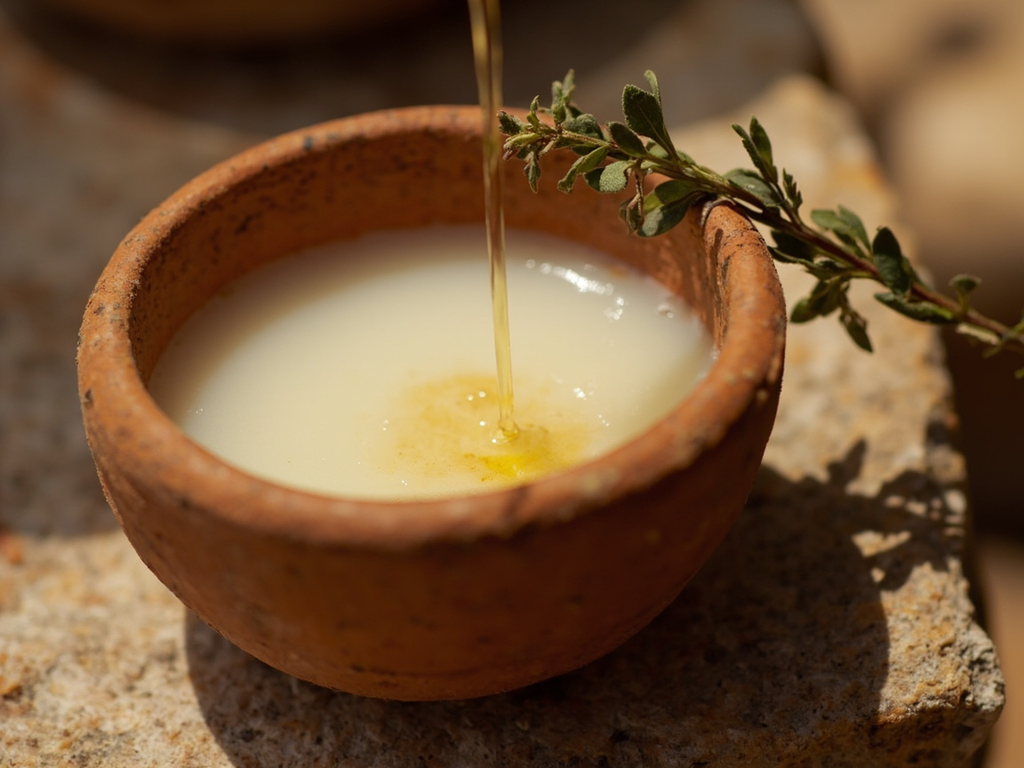
How it was made : Payasa (or kheer) is one of the oldest documented desserts of the subcontinent, mentioned in ancient texts as an offering dish (naivedya). It was sweetened with jaggery or honey, never with refined white sugar, and the milk was slowly reduced over a wood fire in large clay pots.
The contemporary twist : Served chilled in small cups with a grating of jaggery and rose petals, it becomes an elegant summer dessert.
Sources : K. T. Achaya, A Historical Dictionary of Indian Food, Oxford University Press, 1998 · Om Prakash, Food and Drinks in Ancient India, 1961
Ambika · Charactorium