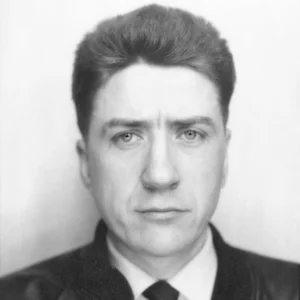

French painter and theorist (1886–1966), co-founder of Purism with Le Corbusier. He advocated a return to order and clarity as a reaction against the excesses of Cubism, and established several art schools across Europe and the United States.
Amédée Ozenfant(1886 — 1966)
Amédée Ozenfant
France
8 min read
Frequently asked questions
Key Facts
- 1886: born in Saint-Quentin
- 1918: co-founds Purism with Le Corbusier
- 1920: co-founds the journal *L'Esprit Nouveau* with Le Corbusier and Paul Dermée
- 1928: publishes *Art*, a survey of modern art
- 1938: emigrates to the United States, where he teaches and founds an art school
Works & Achievements
Founding manifesto of Purism, co-written with Le Corbusier and published on Armistice Day. It formulates the Purist program for the first time: a return to order, geometric clarity, and the rejection of ornament.
International journal co-edited with Le Corbusier and Paul Dermée, promoting Purism, modern architecture, and a machine aesthetic. It brought together avant-garde painters, architects, and poets.
Series of Purist still lifes depicting object-types (bottles, glasses, guitars) arranged in rigorously geometric compositions against a neutral background. Considered the major achievement of Purist painting.
Major theoretical essay published in Paris, translated into English as *Foundations of Modern Art*. It synthesizes Purist philosophy and traces the history of art through the lens of clarity and function.
Parisian school founded by Ozenfant to put Purist principles into practice for a new generation of European artists, as an alternative to traditional academies.
One of the most representative canvases of Purism: streamlined silhouettes against a light background, a reduced palette, and the complete absence of anecdotal detail. It perfectly embodies the ideal of the object-type rendered with rigorous precision.
Autobiography published posthumously, tracing his artistic journey from Saint-Quentin to New York. An essential source for understanding his relationship with Le Corbusier and the tensions within the avant-garde milieu.
Anecdotes
In 1917, Ozenfant met in Paris a young Swiss architect named Charles-Édouard Jeanneret, who would become famous under the name Le Corbusier. Together, they wrote *Après le Cubisme* in just a few weeks — a manifesto published in November 1918, on the very day of the armistice, as if to signal that art, too, had to enter an era of reconstruction and clarity after years of chaos.
To spread their Purist ideas, Ozenfant and Le Corbusier founded the journal *L'Esprit Nouveau* in 1920. Over five years and twenty-eight issues, they championed an aesthetic grounded in logic, geometry, and *objets-types* — everyday objects such as the bottle or the glass, perfected through centuries of use. The journal attracted architects, painters, and philosophers from around the world, and helped forge the vocabulary of modernity.
Fleeing war-torn Europe, Ozenfant settled in New York in 1939, where he founded a new art school. His American students were struck to find a French professor teaching them to paint refined still lifes — bottles, glasses, guitars — as though every ordinary object could become a model of universal perfection. His New York school helped introduce the debates of the European avant-garde to the United States.
Despite their intense collaboration, Ozenfant and Le Corbusier had a definitive falling-out in 1925, each claiming authorship of the Purist ideas. This break, never truly explained in public, left Ozenfant in the shadow of his former partner, whose architectural fame would gradually eclipse his painted work — an injustice that art historians only began to redress in the 1990s.
Primary Sources
Cubism was a necessary illness, a salutary fever that burned away the old conventions. But every illness must end: it is now time to rebuild on sound, clear, ordered foundations. The art of tomorrow will be geometric, or it will not be at all.
The engineer, inspired by the law of economy and guided by calculation, brings our limbs and senses into harmony; he creates objects that provoke in us a pure plastic emotion. This is what art must learn.
Purism is not a step backward — it is a conquest. It demands that every form occupy its necessary place, that nothing be there out of whim or decoration, that every painted object carry within it the age-old memory of its use.
Jeanneret and I wanted the same thing: to bring order into art as the machine had brought order into production. We believed that painting a glass perfectly was an act as revolutionary as it was political.
Key Places
Ozenfant's birthplace, where he was born on April 15, 1886. The Picard tradition of rigor and artisanal restraint would leave a lasting mark on his relationship with simple forms.
It was in Paris that Ozenfant developed his career as a painter and theorist, collaborated with Le Corbusier, founded the Académie Moderne in 1924, and published *L'Esprit Nouveau*. Paris was the heart of his creative activity.
Settling in England from 1935, Ozenfant opened an art school there and spread Purism throughout the English-speaking world, training British students in his principles of order and clarity.
Having taken refuge in the United States in 1939 on the eve of the war, Ozenfant taught there until 1955 and helped introduce the debates of the European avant-garde into American artistic circles.
Ozenfant spent his final years in Cannes and died there on May 4, 1966. The Mediterranean light of the Côte d'Azur accompanied the closing chapter of his life.
Typical Objects

The purist object par excellence: Ozenfant painted it dozens of times as a model of perfect form born from human use. Its clear, repeatable silhouette embodies the ideal of the *objet-type*.

Present in nearly all his still lifes, the glass symbolizes transparency, simple geometry, and the functional perfection that Purism championed against superfluous ornament.

Borrowed from Cubism but stripped of all fragmentation, the guitar in Ozenfant's works is reduced to its bare essentials — a curve, a body, a tension — the *objet-type* of musical culture.

The twenty-eight issues of the journal were Purism's vehicle of dissemination; each issue combined theoretical text, architectural photographs, and reproductions of Purist paintings.

Ozenfant worked in oils with a palette reduced to a handful of tones — white, grey, ochre, cool blue — applied in smooth, flat areas with no impasto or visible brushstroke.

Purist compositions were built from regulating geometric lines; the ruler and compass were as present in the painter's studio as in the architect's.
School Curriculum
Vocabulary & Tags
Key Vocabulary
Daily Life
Morning
Ozenfant began his day early in his Parisian studio, with carefully controlled northern light. He would arrange his type-objects — bottles, glasses, instruments — against a neutral background, observing them at length before laying down the first line. The morning was reserved for painting, in a silence and concentration he regarded as an intellectual discipline as much as an artistic one.
Afternoon
The afternoon was devoted to theory and writing: articles for 'L'Esprit Nouveau', correspondence with European artists and architects, preparation of lectures. He often received students or collaborators at his Académie Moderne premises, debating aesthetics with the rigor of a philosopher and the authority of a pedagogue.
Evening
In the evenings, Ozenfant frequented the cafés and galleries of the Montparnasse district, where the international avant-garde gathered — Cubist painters, Modernist architects, Dadaist poets. He read widely, particularly scientific and philosophical texts, convinced that art must engage in dialogue with the thought of its era.
Food
Like many Parisian intellectuals of the interwar period, Ozenfant frequented local brasseries and neighborhood restaurants. His sober way of life, in keeping with his Purist convictions, kept him away from the excesses of bohemian living; he preferred simple, regular meals conducive to concentration.
Clothing
Ozenfant adopted the sober, functional dress of the Modernist intellectual: grey or navy blue suit, understated tie, felt hat. Neither dandy nor bohemian, his appearance reflected his aesthetic convictions: nothing superfluous, everything in its rightful place.
Housing
In Paris, he occupied a bright, stripped-down studio apartment with white walls, lit by large windows — an interior in keeping with the principles of 'L'Esprit Nouveau' that he and Le Corbusier championed. Functional furniture, few ornaments, a handful of type-objects carefully arranged.
Historical Timeline
Period Vocabulary
Liens externes & ressources
Références
Œuvres
Après le Cubisme
1918
L'Esprit Nouveau (revue, 28 numéros)
1920–1925
Art (Foundations of Modern Art)
1928
Fondation de l'Académie Moderne, Paris
1924
Nature morte aux verres et à la bouteille
vers 1921
Mémoires 1886–1962
1968