 flip
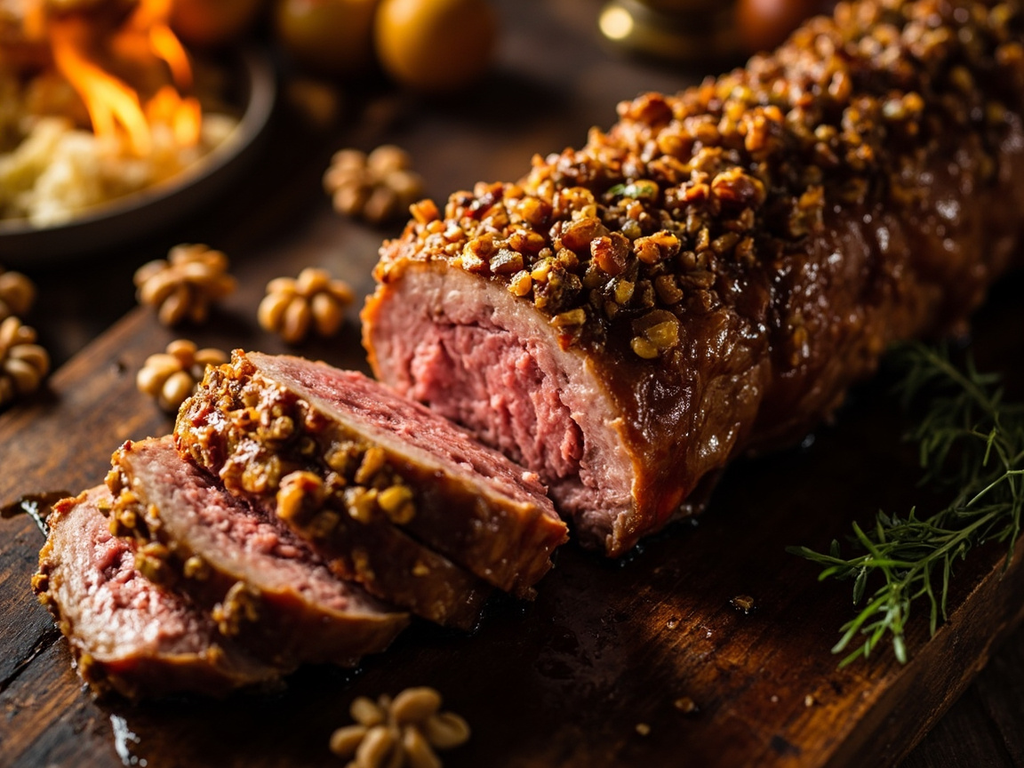
flipThe *curadmír* — the champion's portion, honey-and-salt roast pork
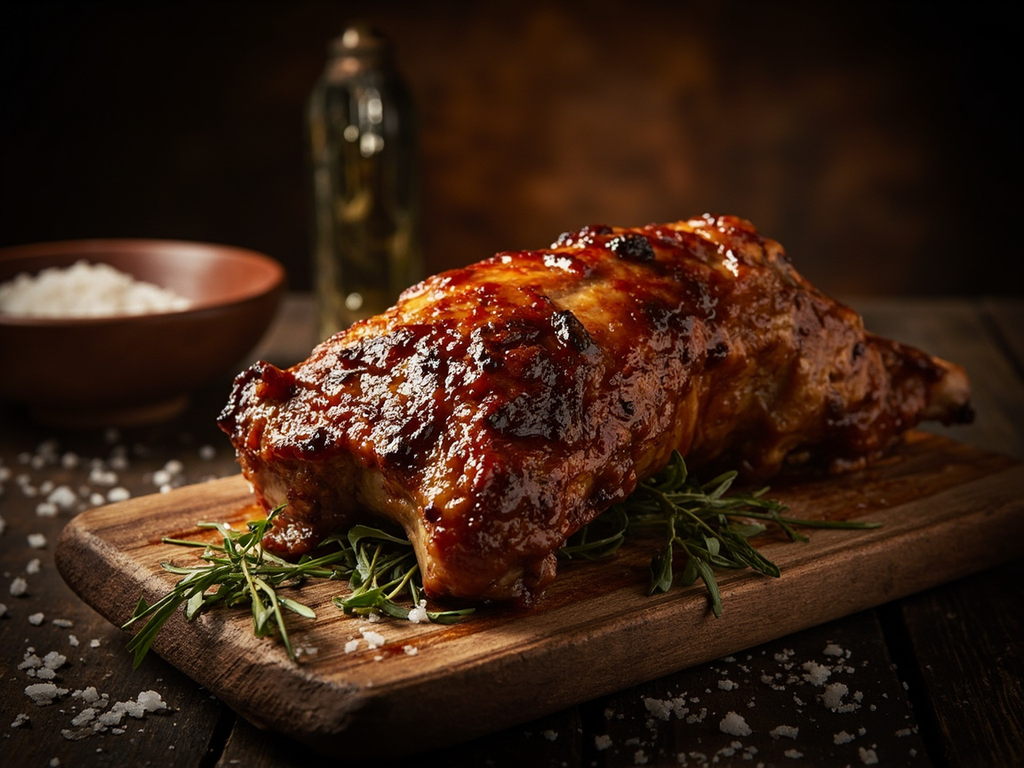
The *curadmír* — the champion's portion, honey-and-salt roast pork
Why this dish? In the Ulster Cycle, the great banquet is the stage for hero rivalries: the "champion's portion" (*curadmír*) triggers quarrels and deadly fights for honor. Nemain, goddess of battle panic linked to the Morrígan, hovers over these feasts where glory is won and blood is never far away. This roast pork, the royal meat of the *fled*, is the dish that summons her thrill.
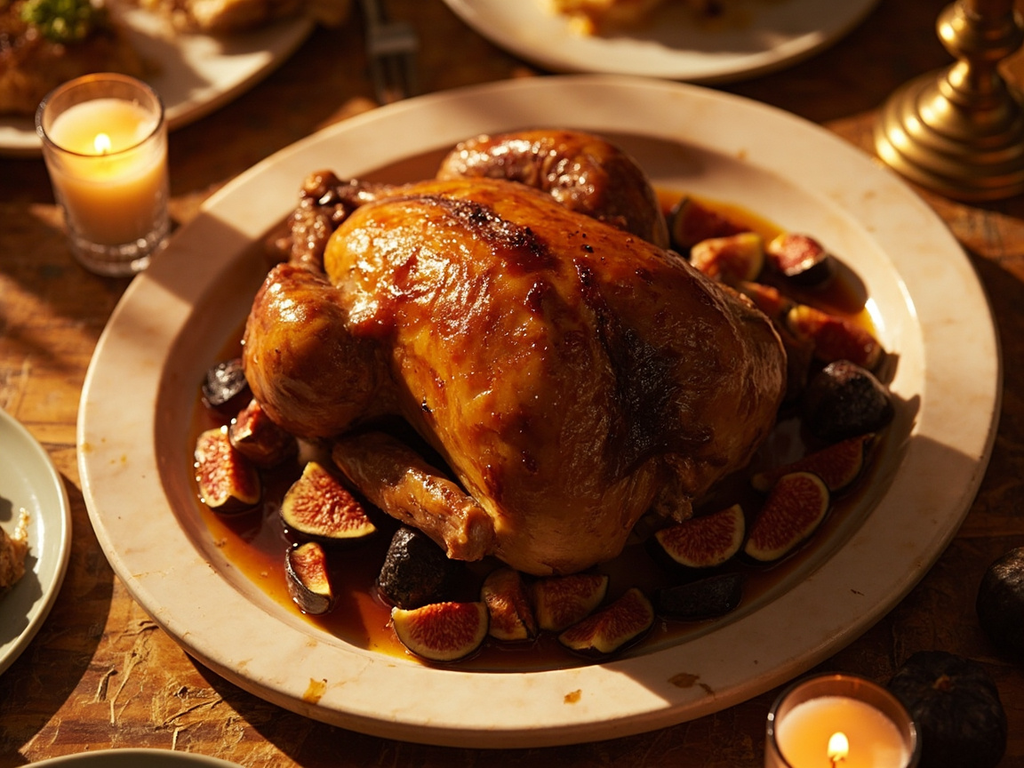
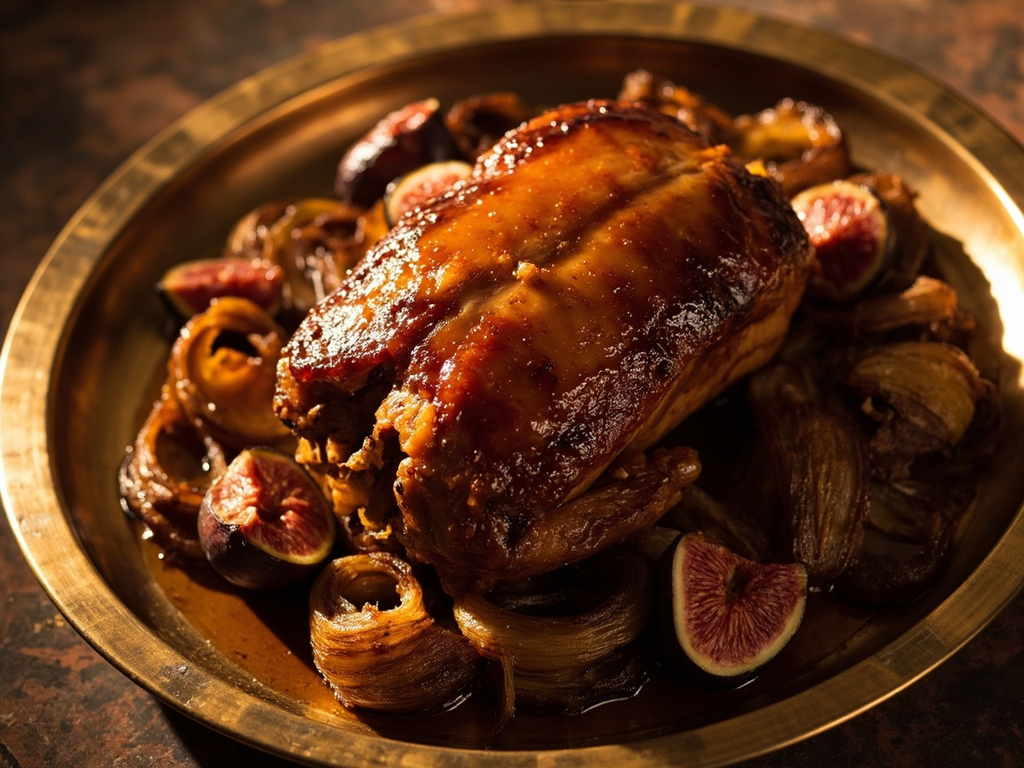
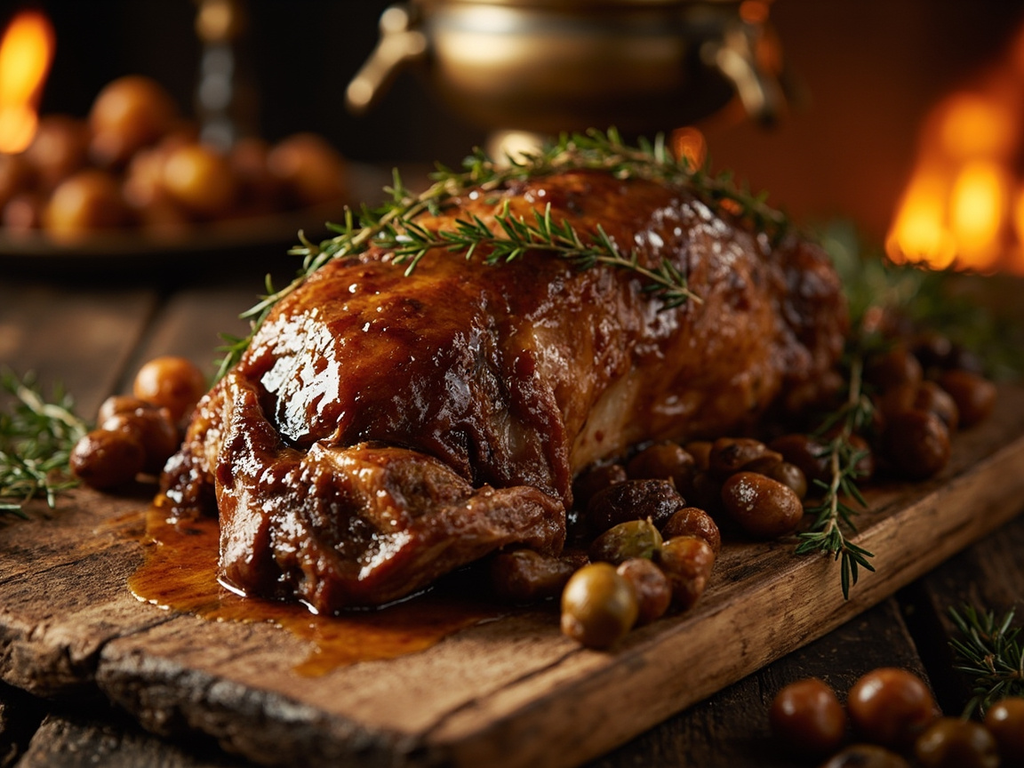
A long-cooked pork shoulder, glazed with honey and rubbed with salt, as the best warrior was honored at the banquet of Gaelic kings.
Approach, mortal, and do not yet tremble. Here is the portion reserved for the bravest — he who has not lowered his shield when my cry split the air. The fat beast is taken, bathed in the cauldron, then gilded over the embers until the fat sings. Pour the honey from wild hives, throw the salt with full hand: thus we feed those I will come for one day of battle. Eat, and may your courage be worthy of this flesh.
- •Pork shoulder — one piece for the household (meat of honor of the banquet)
- •Wild honey — a good ladleful (glaze and sweetness)
- •Sea salt — a full handful (seasoning and preservation)
- •Ramsons (wild garlic) — a few leaves (flavor)
- •Churned butter — a knob (cooking fat)
The *curadmír* — the champion's portion, honey-and-salt roast pork
A long-cooked pork shoulder, glazed with honey and rubbed with salt, as the best warrior was honored at the banquet of Gaelic kings.
Why this dish? In the Ulster Cycle, the great banquet is the stage for hero rivalries: the "champion's portion" (*curadmír*) triggers quarrels and deadly fights for honor. Nemain, goddess of battle panic linked to the Morrígan, hovers over these feasts where glory is won and blood is never far away. This roast pork, the royal meat of the *fled*, is the dish that summons her thrill.
Approach, mortal, and do not yet tremble. Here is the portion reserved for the bravest — he who has not lowered his shield when my cry split the air. The fat beast is taken, bathed in the cauldron, then gilded over the embers until the fat sings. Pour the honey from wild hives, throw the salt with full hand: thus we feed those I will come for one day of battle. Eat, and may your courage be worthy of this flesh.
Ingredients (period version)
- Pork shoulder — one piece for the household (meat of honor of the banquet)
- Wild honey — a good ladleful (glaze and sweetness)
- Sea salt — a full handful (seasoning and preservation)
- Ramsons (wild garlic) — a few leaves (flavor)
- Churned butter — a knob (cooking fat)
Ingredients
- Pork shoulder with rind — 1.5 kg (main meat)
- Liquid honey — 4 tbsp (glaze)
- Coarse salt — 2 tbsp (dry brine)
- Fresh ramsons (or 2 garlic cloves) — a handful (aromatic)
- Butter — 30 g (fat)
- Water — 250 ml (moist cooking)
Method
- The day before, rub the shoulder with coarse salt and refrigerate overnight, then rinse and dry.
- Preheat the oven to 150°C. Place the meat in a dish with water, butter, and garlic, cover with foil, and bake for 3 hours.
- Uncover, brush generously with honey, and increase to 210°C for 25–30 minutes, glazing twice, until a golden, shiny crust forms.
- Let rest 15 minutes, then shred or slice. Serve the finest portion to the "champion" of the table.
How it was made : Pork was the prestige meat of Gaelic feasts, often boiled in a large bronze cauldron or roasted on a spit over the hearth. Honey and salt, precious commodities, marked great occasions. The "champion's portion" is a central motif of the Ulster Cycle.
The contemporary twist : Serve the shredded shoulder on a rough wooden board, with honey and salt flakes on the side, and let each diner claim their "hero's portion."
Sources : Táin Bó Cúailnge (The Cattle Raid of Cooley), Ulster Cycle · Fergus Kelly, Early Irish Farming, Dublin Institute for Advanced Studies, 1997 · Regina Sexton, A Little History of Irish Food, 1998
Anand (Nemain) · Charactorium