 flip
flipTulsi Kadha — Holy Basil and Ginger Infusion
Tulsi Kadha — Holy Basil and Ginger Infusion
Why this dish? Tulsi (holy basil) grows in every Hindu courtyard, venerated on a small altar and associated with daily worship. This decoction, a home remedy against cold and fatigue from all-night chant sessions (kirtan), unites the sacred and the healing — exactly the devout domestic world that surrounded Ananda Moyi in the Himalayas, in Dehradun and Kankhal.
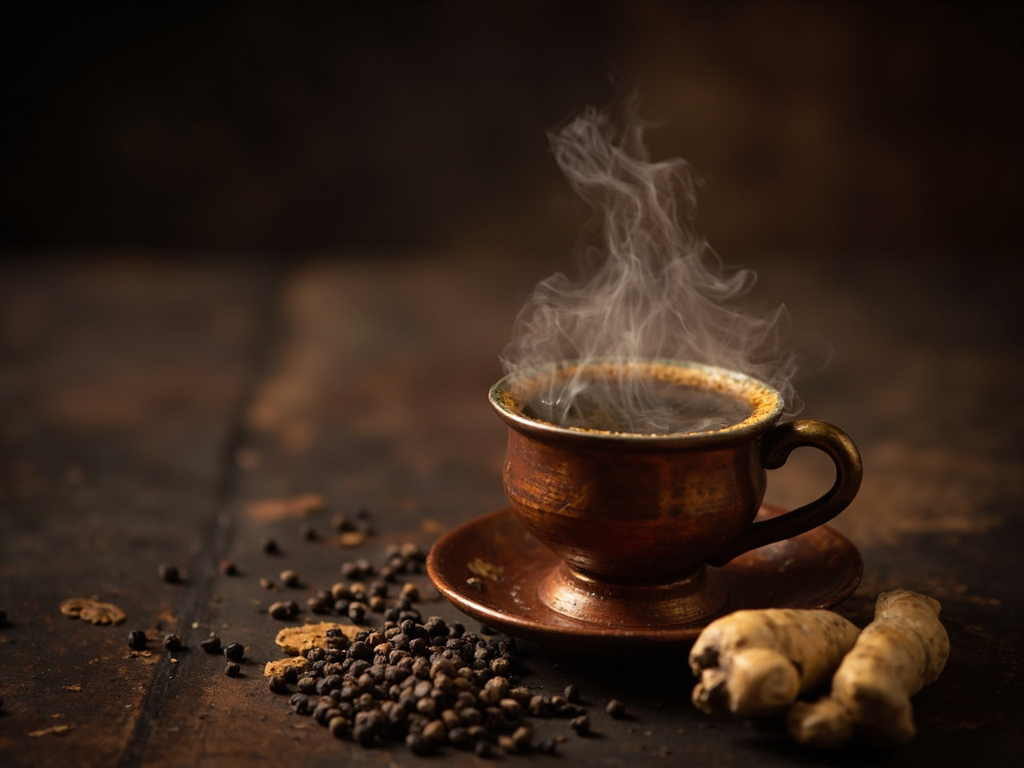
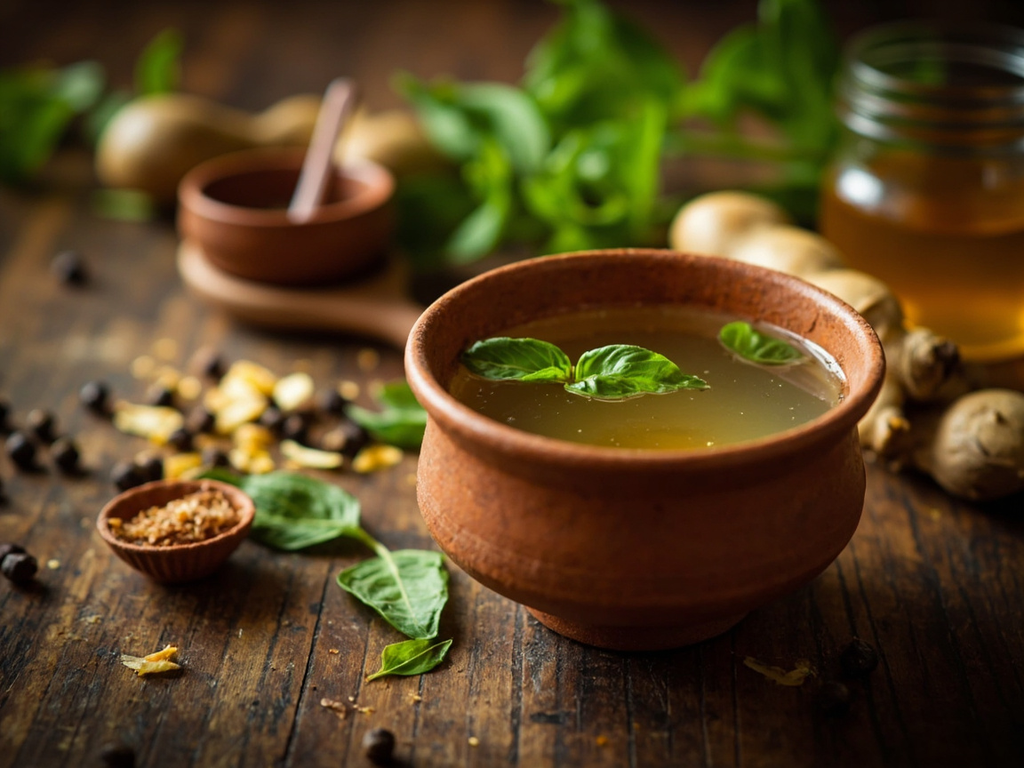
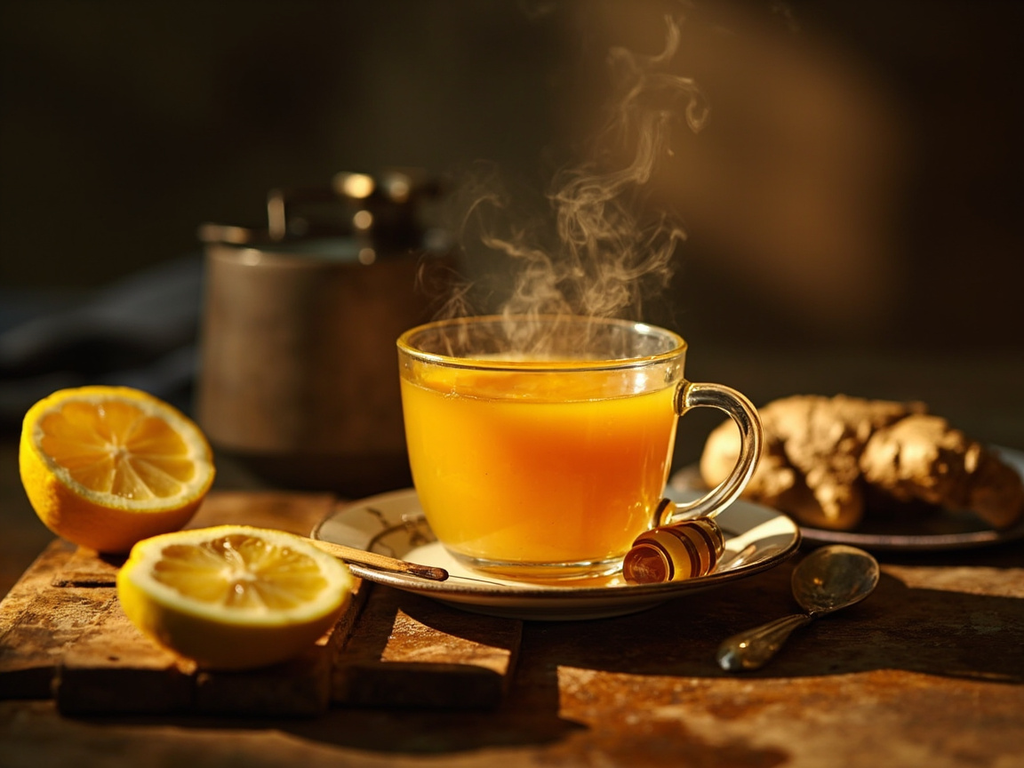
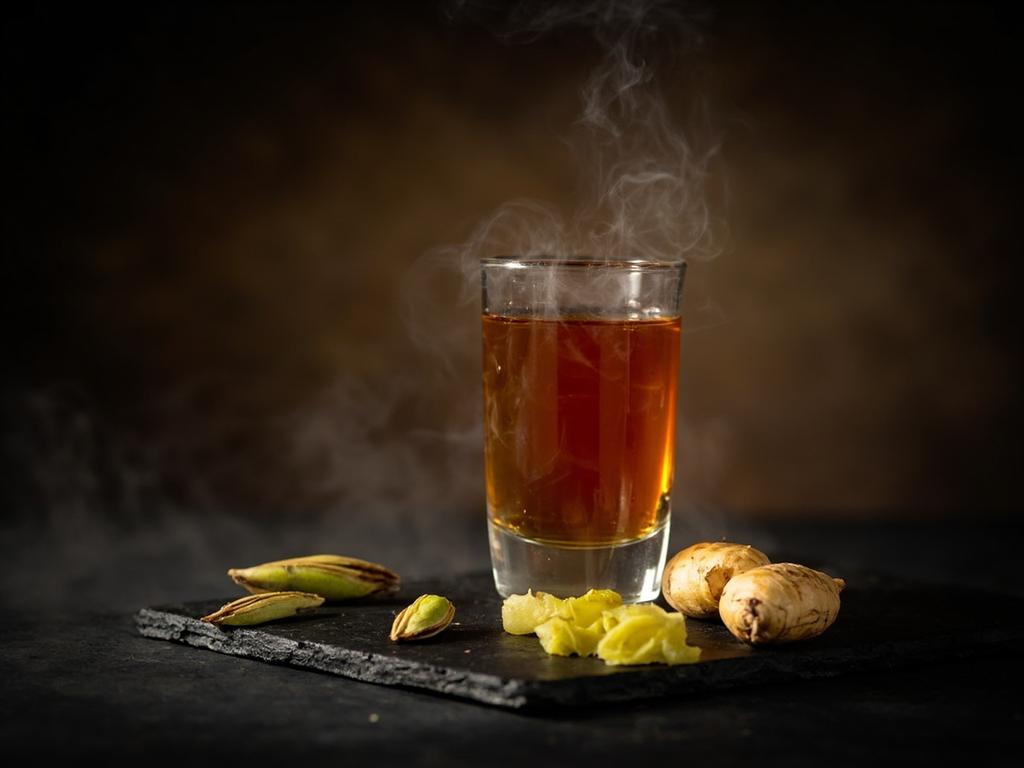
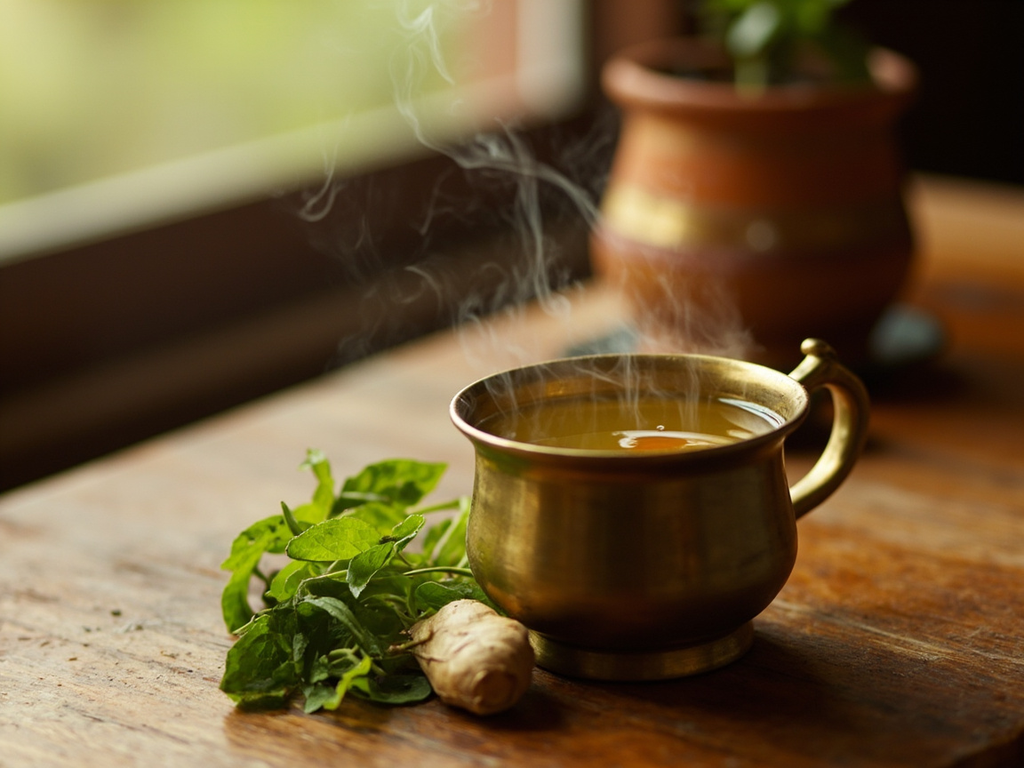
A warm, fragrant infusion of tulsi leaves, ginger, black pepper, and a little gur, sipped against the cold of Himalayan nights and to support the voice during long chants. Invigorating, slightly spicy and bitter.
You cough, baba, from chanting the divine name all night? Come, this body will tell you the grandmother's remedy. We pluck a few tulsi leaves from in front of the house — the very plant of the Lord —, boil them with a sliver of ginger and a grain of pepper, and a little gur to sweeten. Drink it hot, slowly: it warms the chest and clears the throat. Tulsi heals the body, and the Name heals the rest.
- •Tulsi leaves (holy basil) — a handful (sacred remedy plant)
- •Fresh ginger, crushed — a piece (warmth, anti-cold)
- •Black pepper, cracked — a few grains (pungency, clears the throat)
- •Gur (palm/cane sugar) — to taste (sweetens the bitterness)
- •Water — two bowls (decoction)
Tulsi Kadha — Holy Basil and Ginger Infusion
A warm, fragrant infusion of tulsi leaves, ginger, black pepper, and a little gur, sipped against the cold of Himalayan nights and to support the voice during long chants. Invigorating, slightly spicy and bitter.
Why this dish? Tulsi (holy basil) grows in every Hindu courtyard, venerated on a small altar and associated with daily worship. This decoction, a home remedy against cold and fatigue from all-night chant sessions (kirtan), unites the sacred and the healing — exactly the devout domestic world that surrounded Ananda Moyi in the Himalayas, in Dehradun and Kankhal.
You cough, baba, from chanting the divine name all night? Come, this body will tell you the grandmother's remedy. We pluck a few tulsi leaves from in front of the house — the very plant of the Lord —, boil them with a sliver of ginger and a grain of pepper, and a little gur to sweeten. Drink it hot, slowly: it warms the chest and clears the throat. Tulsi heals the body, and the Name heals the rest.
Ingredients (period version)
- Tulsi leaves (holy basil) — a handful (sacred remedy plant)
- Fresh ginger, crushed — a piece (warmth, anti-cold)
- Black pepper, cracked — a few grains (pungency, clears the throat)
- Gur (palm/cane sugar) — to taste (sweetens the bitterness)
- Water — two bowls (decoction)
Ingredients
- Holy basil (tulsi) leaves, fresh or dried — 15 leaves or 1 tsp dried
- Fresh ginger — 2 cm, crushed
- Black pepper — 4 grains, cracked
- Jaggery or honey — 1 to 2 tsp (honey added after boiling)
- Water — 400 ml
- Cardamom or clove (optional) — 1
Method
- Bring the water to a boil with the crushed ginger and cracked pepper.
- Add the tulsi leaves (and cardamom if desired) and simmer for 5 to 7 minutes, until the water takes color and fragrance.
- Remove from heat, add jaggery and stir to dissolve (if using honey, add only when lukewarm).
- Strain into a metal bowl or cup.
- Drink hot, in small sips.
How it was made : Kadha belongs to India's home pharmacy: each household had its recipe passed down from mother to daughter, adjusted by season. Tulsi, grown on a dedicated platform (tulsi math) in the center of the courtyard, was both an object of daily worship and a first-line remedy against colds.
The contemporary twist : An 'awakening tea' served in a stoneware cup, steeped to order: the Indian grandmothers' anti-cold ritual, wellness-style.
Anandamayi Ma · Charactorium