 flip
flipDate and Fig Travel Cakes
Date and Fig Travel Cakes
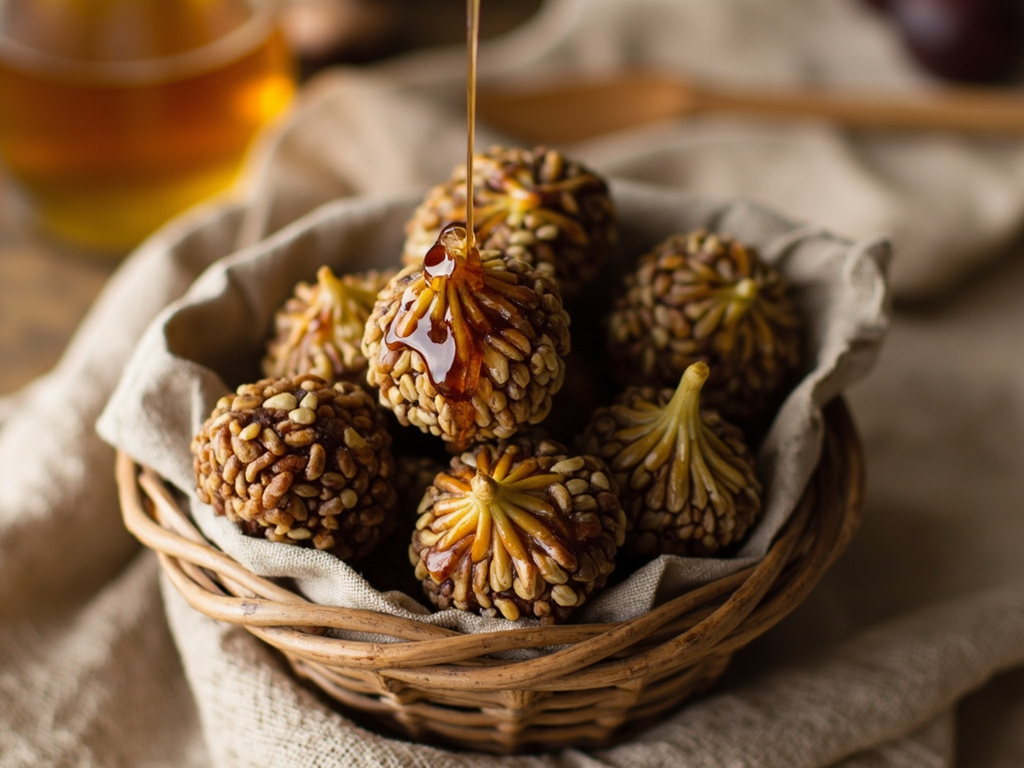
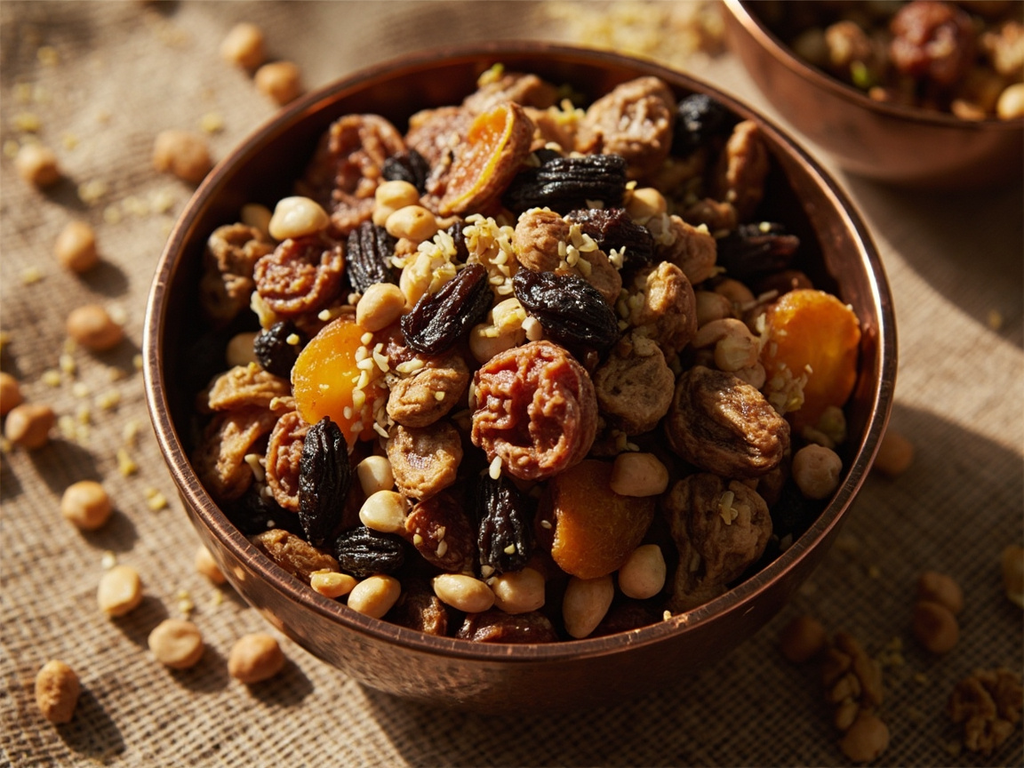
Why this dish? Anat is a goddess who roams battlefields and lands, from Sapanu to Egypt. These dried fruit pastes, compact and long-lasting, evoke the energy rations carried by Levantine warriors and travelers—a snack worthy of a goddess always on the move.
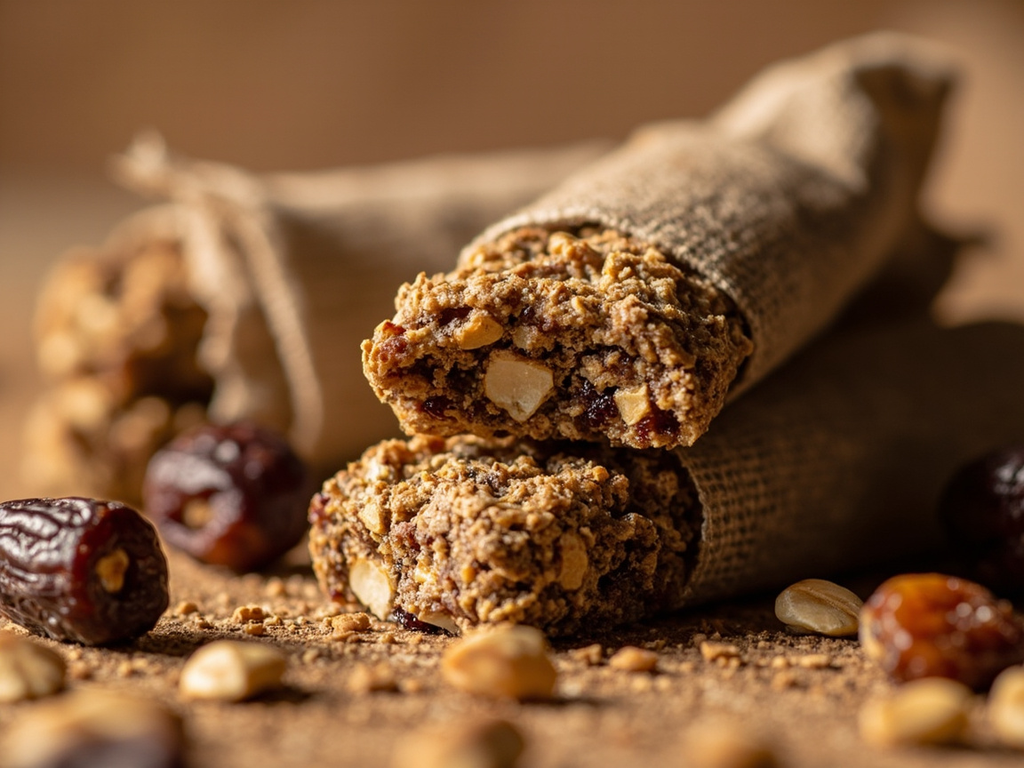
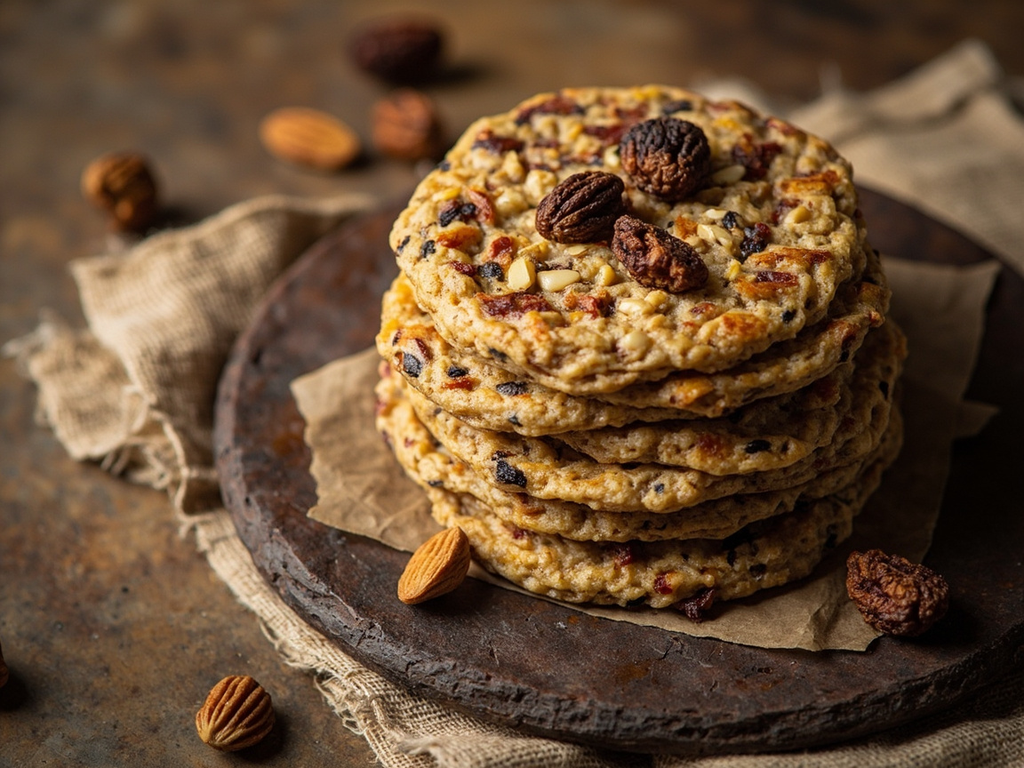
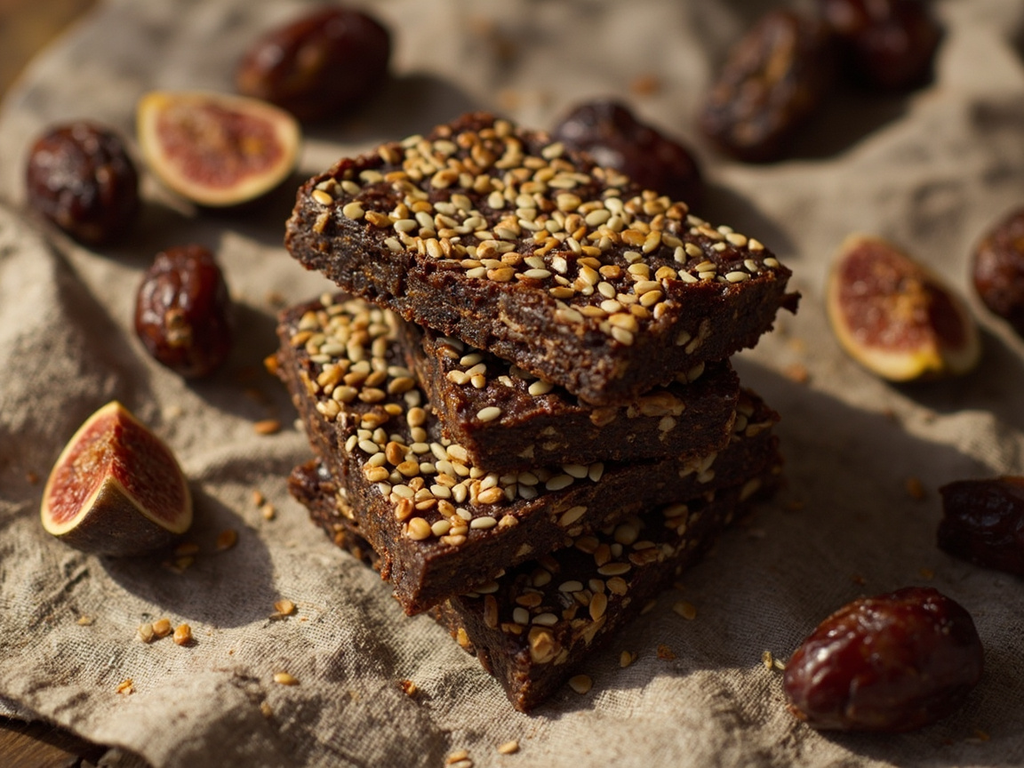
Dense bars of pounded dates and figs, bound with sesame and perfumed with cinnamon, dried to keep for a long time: the sweet ration for travel and military campaigns.
Do you think a warrior stops to eat? I walk from Mount Sapanu to the banks of the Nile without laying down my spear. So we pound dates and figs until they form a black, sticky paste, mix in toasted sesame and a breath of fragrant bark, and press it all into cakes as hard as leather. Slip them into your pouch: they do not spoil, they give strength, and when hunger bites you mid-stride, you bite back. That is the bread of the roads.
- •Dates — a good measure (sweetness and binder)
- •Dried figs — as much (body and flavor)
- •Sesame seeds — a handful toasted (richness and structure)
- •Cinnamon or cassia — a little (fragrance (imported))
- •Toasted barley flour — for rolling (anti-stick and preservation)
Date and Fig Travel Cakes
Dense bars of pounded dates and figs, bound with sesame and perfumed with cinnamon, dried to keep for a long time: the sweet ration for travel and military campaigns.
Why this dish? Anat is a goddess who roams battlefields and lands, from Sapanu to Egypt. These dried fruit pastes, compact and long-lasting, evoke the energy rations carried by Levantine warriors and travelers—a snack worthy of a goddess always on the move.
Do you think a warrior stops to eat? I walk from Mount Sapanu to the banks of the Nile without laying down my spear. So we pound dates and figs until they form a black, sticky paste, mix in toasted sesame and a breath of fragrant bark, and press it all into cakes as hard as leather. Slip them into your pouch: they do not spoil, they give strength, and when hunger bites you mid-stride, you bite back. That is the bread of the roads.
Ingredients (period version)
- Dates — a good measure (sweetness and binder)
- Dried figs — as much (body and flavor)
- Sesame seeds — a handful toasted (richness and structure)
- Cinnamon or cassia — a little (fragrance (imported))
- Toasted barley flour — for rolling (anti-stick and preservation)
Ingredients
- Medjool dates, pitted — 200 g (sweet base)
- Dried figs — 150 g (body)
- Sesame seeds — 50 g (binder and crunch)
- Ground cinnamon — 1 tsp (fragrance)
- Honey — 1 tbsp (extra binder)
- Toasted barley or wheat flour — 2 tbsp (coating)
Method
- Toast sesame seeds dry until golden and fragrant; reserve a little for coating.
- Roughly chop dates and figs, then pound or blend into a thick paste with cinnamon and honey.
- Mix in toasted sesame seeds and combine well.
- Shape into compact bars or cakes, pressing firmly.
- Roll in toasted flour and reserved sesame, then air-dry for a few hours before wrapping.
How it was made : Dates and figs were the main sweet fruits of the ancient Levant, dried to last through the year. Compacted into cakes, they provided concentrated, light, and durable food, ideal for soldiers, merchants, and pilgrims. Refined sugar did not exist: honey and dried fruits provided all sweetness.
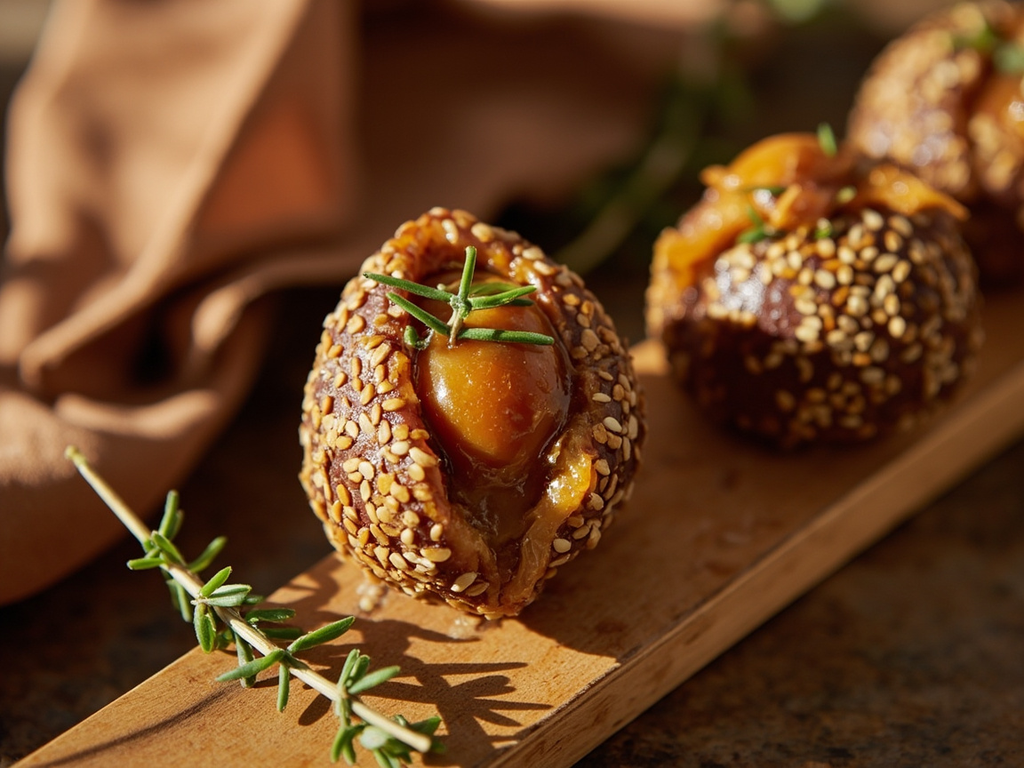
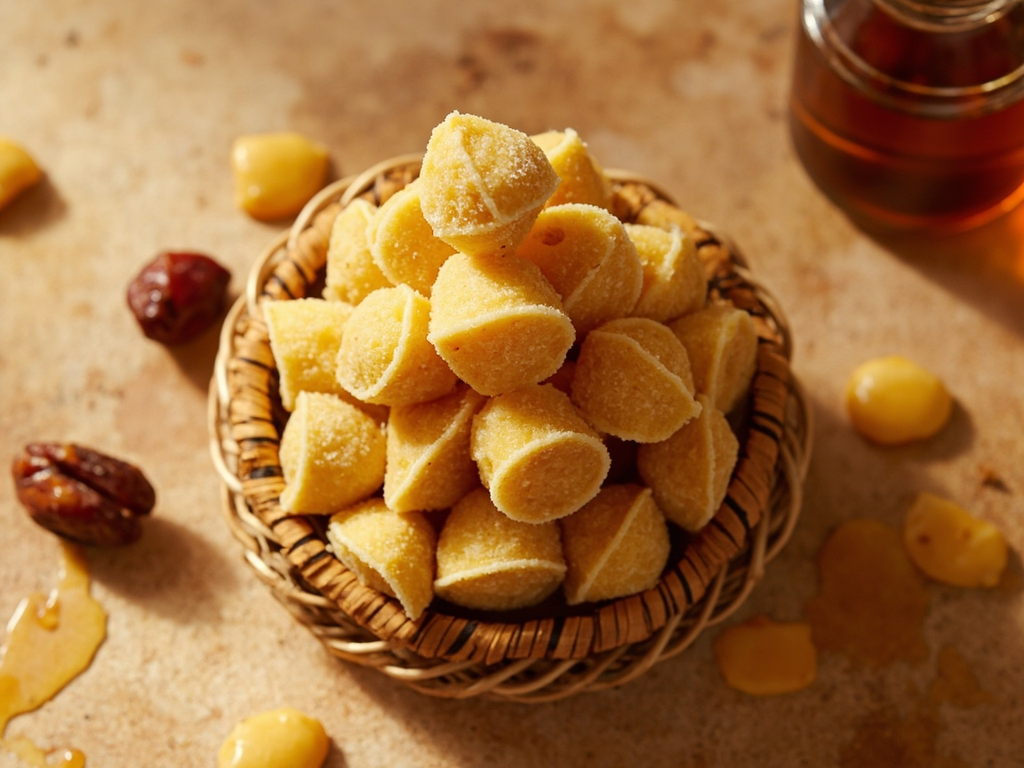
The contemporary twist : Cut into small cubes rolled in black and white sesame, offered as 'Goddess rations' in a raw linen sachet.
Sources : Daniel Bonnardel & coll., L'alimentation au Proche-Orient ancien · Marguerite Yon, La cité d'Ougarit sur le tell de Ras Shamra
Anat · Charactorium