 flip
flipChai from the samovar, served in a glass
Chai from the samovar, served in a glass
Why this dish? Tea served in a glass — the card explicitly mentions it — was the constant companion of Soviets, on film sets as on trains and in kitchens. The glass slipped into its carved metal podstakannik is the familiar object of a filmmaker's life spent waiting for the right light, talking for hours, writing his diary with a cup in hand.
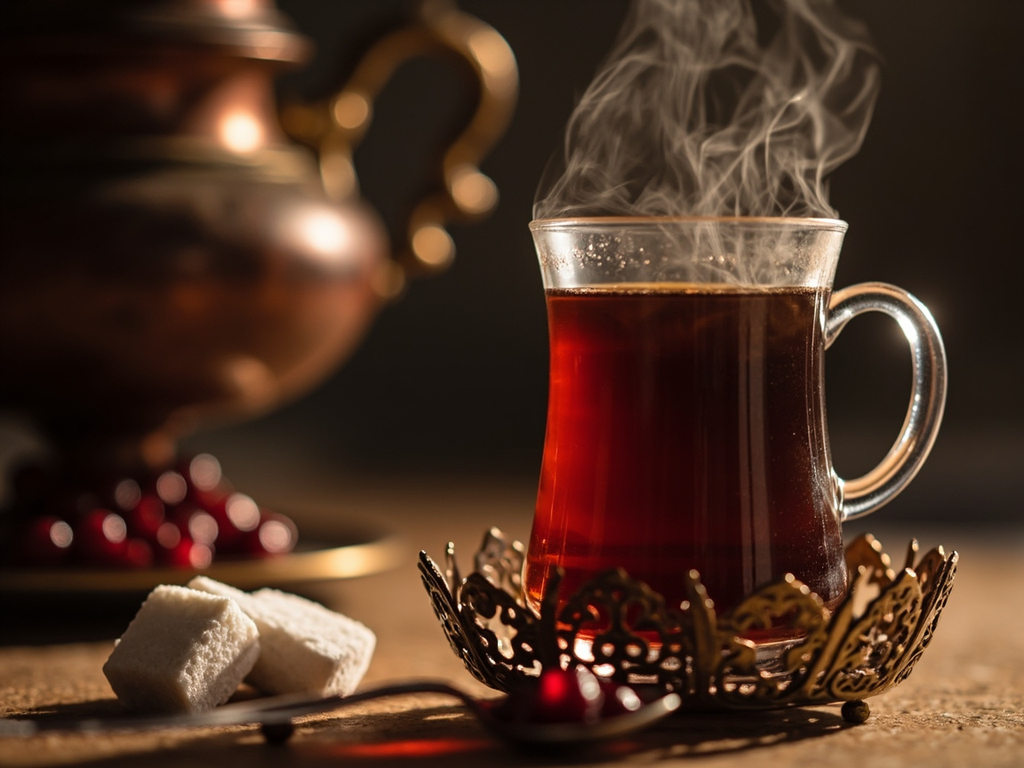
A strong black tea, prepared as a concentrate (zavarka) in a small teapot on the samovar, then diluted with boiling water at serving time, in a glass held by a metal holder. It is drunk scalding hot, slightly bitter, sweetened with a spoonful of jam or a lump of sugar held between the teeth.
The samovar, you see, is not a simple kettle: it is the heart of the house, humming softly in a corner all day. First you prepare the zavarka, that dark and bitter concentrate, then each person pours a little into their glass and tops it up with boiling water to their liking — stronger, lighter, according to the mood of the moment. You do not hold the glass by the glass, but by the podstakannik. And you drink slowly, for a long time, a spoonful of jam on the tongue; it is in those hours, as the tea cools, that true thoughts come.
- •Black tea leaves — generously for the zavarka (aromatic concentrate)
- •Water from the samovar — as needed (dilution)
- •Lump sugar or jam (varenye) — to taste (sweetness)
Chai from the samovar, served in a glass
A strong black tea, prepared as a concentrate (zavarka) in a small teapot on the samovar, then diluted with boiling water at serving time, in a glass held by a metal holder. It is drunk scalding hot, slightly bitter, sweetened with a spoonful of jam or a lump of sugar held between the teeth.
Why this dish? Tea served in a glass — the card explicitly mentions it — was the constant companion of Soviets, on film sets as on trains and in kitchens. The glass slipped into its carved metal podstakannik is the familiar object of a filmmaker's life spent waiting for the right light, talking for hours, writing his diary with a cup in hand.
The samovar, you see, is not a simple kettle: it is the heart of the house, humming softly in a corner all day. First you prepare the zavarka, that dark and bitter concentrate, then each person pours a little into their glass and tops it up with boiling water to their liking — stronger, lighter, according to the mood of the moment. You do not hold the glass by the glass, but by the podstakannik. And you drink slowly, for a long time, a spoonful of jam on the tongue; it is in those hours, as the tea cools, that true thoughts come.
Ingredients (period version)
- Black tea leaves — generously for the zavarka (aromatic concentrate)
- Water from the samovar — as needed (dilution)
- Lump sugar or jam (varenye) — to taste (sweetness)
Ingredients
- Black tea leaves (Assam or Russian blend) — 3 tsp (concentrate (zavarka))
- Simmering water — 200 ml for teapot + more for dilution (infusion and dilution)
- Lump sugar — to taste (sweetness)
- Homemade jam (see varenye recipe) — 1 tsp per glass (Russian-style sweetness)
- Lemon slice — optional (freshness ("tea Russian style"))
Method
- Rinse a small teapot with boiling water, add the tea and pour in a little simmering water to cover; let steep 5-7 minutes to obtain a dark concentrate.
- Pour a little of this concentrate into each glass (ideally placed in a podstakannik or, failing that, a thick handled glass).
- Top up with very hot water to the desired strength.
- Serve scalding hot, accompanied by sugar, a spoonful of jam, or a lemon slice — each person sweetens their glass their own way.
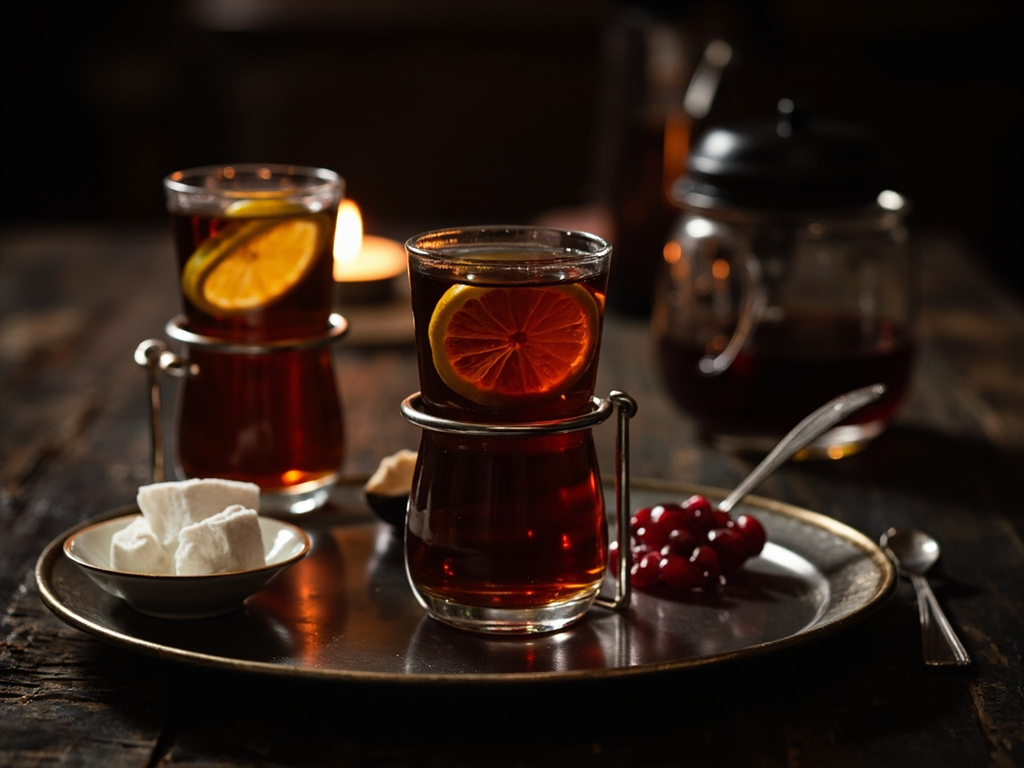
How it was made : The samovar, once heated by charcoal through its central chimney, kept water simmering all day; the small teapot of zavarka sat on top to stay warm. The podstakannik, a metal glass holder often ornate, became an icon of Soviet daily life, especially on trains, where hot tea is still served this way.
The contemporary twist : Present the glass in its metal holder on a dark saucer, steam captured against the light, a lump of sugar and a spoon of ruby jam beside it — a still life worthy of a fixed shot.
Andrei Tarkovsky · Charactorium