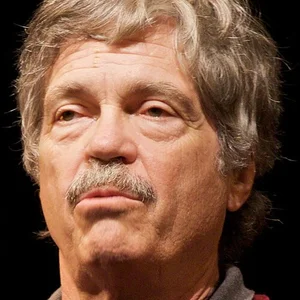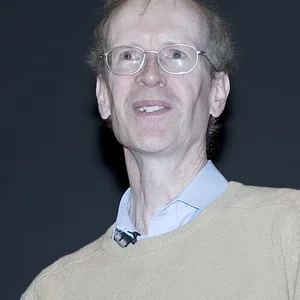

British mathematician born in 1953, famous for proving Fermat's Last Theorem in 1994 after seven years of secret work. His proof, published in 1995, solved a problem that had been open for 358 years.
Andrew Wiles(1953 — ?)
Andrew Wiles
Royaume-Uni
7 min read
Frequently asked questions
Famous Quotes
« It is impossible to separate a cube into two cubes, or a fourth power into two fourth powers, or in general, any power higher than the second into two like powers of the same degree. (Fermat, whose conjecture Wiles proved)»
Key Facts
- Born on April 11, 1953 in Cambridge, England
- Discovers Fermat's Last Theorem at age 10 in a library
- Presents his proof at Cambridge in June 1993
- Corrects a flaw in his proof and publishes the final version in 1995
- Receives the Abel Prize in 2016, the highest distinction in mathematics
Works & Achievements
A 109-page paper published in the Annals of Mathematics in which Wiles proves the Taniyama-Shimura conjecture for semistable elliptic curves, yielding Fermat's Last Theorem as a corollary. It is one of the most celebrated and consequential mathematical proofs of the 20th century.
A companion paper published simultaneously in the Annals of Mathematics. Wiles and Taylor establish the crucial algebraic properties needed to fill the technical gap in the original 1993 proof.
One of the important preparatory papers in Wiles's career, dealing with λ-adic representations associated to modular forms, which represents a decisive step in the gradual construction of his landmark proof.
Anecdotes
At the age of ten, Andrew Wiles stumbled upon a mathematics book in a local library in Cambridge. In it, he discovered Fermat's Last Theorem — a claim more than three centuries old stating that the equation xⁿ + yⁿ = zⁿ has no integer solutions for n greater than 2. The child was immediately fascinated: the problem was easy to understand, yet no mathematician had been able to solve it since 1637.
In 1986, Wiles learned that mathematician Ken Ribet had just proved that solving Fermat's Last Theorem was equivalent to proving the Taniyama-Shimura conjecture. He then decided to embark on an entirely secret endeavor, working for seven years in his office at Princeton without telling almost anyone. To avoid arousing his colleagues' suspicions, he continued publishing papers in other areas of mathematics.
On June 23, 1993, Wiles announced at a conference at the Newton Institute in Cambridge that he had solved Fermat's Last Theorem. The news traveled around the world within hours. A few months later, an examiner, Nick Katz, discovered a flaw in the proof. Wiles then spent nearly a year on the verge of despair trying to correct it.
In September 1994, just as he was about to release an incomplete proof, Wiles suddenly had a revelation while looking at his work from a new angle. Two methods he had believed incompatible combined in an unexpected way to fill the gap. He described the moment as “so beautiful and so unexpected” that he stood staring at his notes for twenty minutes, unable to believe it.
Primary Sources
A 109-page paper published in the Annals of Mathematics (vol. 141, no. 3). Wiles proves the Taniyama–Shimura conjecture for semistable elliptic curves, from which Fermat's Last Theorem follows as a corollary.
A companion paper published simultaneously in the Annals of Mathematics. Taylor and Wiles establish the ring-theoretic properties of Hecke algebras needed to fill the gap identified in 1993 in the original proof.
"It was so indescribably beautiful; it was so simple and so elegant. I couldn't understand how I'd missed it and I just stared at it in disbelief for twenty minutes." Wiles describes the moment he found the decisive correction to his proof.
A filmed interview in which Wiles recounts, in tears, the story of seven years of secret work and the discovery of the flaw — a primary source of the first importance for understanding the mathematical creative process.
Key Places
Andrew Wiles's hometown, where he grew up and first discovered Fermat's Last Theorem at the age of ten in a local library. Cambridge is also one of the world's great capitals of mathematics.
Wiles completed his undergraduate degree in mathematics here in the 1970s. Oxford is one of the oldest and most prestigious universities in the English-speaking world.
Wiles prepared and defended his doctoral thesis here in 1980, under the supervision of John Coates, a specialist in Iwasawa theory whose work would profoundly shape his future research.
It was in his office at Princeton that Wiles spent seven years working in secret on a proof of Fermat's Last Theorem, away from the eyes of the international mathematical community.
It was during a series of lectures at this institute that Wiles announced his proof of Fermat's Last Theorem on 23 June 1993, before an audience of mathematicians from around the world.
Liens externes & ressources
Références
Œuvres
Modular elliptic curves and Fermat's Last Theorem
1995
Ring-theoretic properties of certain Hecke algebras (avec Richard Taylor)
1995
On ordinary λ-adic representations associated to modular forms
1988