 flip
flipMorning masala chai
Morning masala chai
Why this dish? Spiced chai is the universal drink of both Kapoor's native India and the London where he lives and works — two cities where a steaming cup is offered to any visitor to the studio. It is the warm, everyday thread linking his native Bombay to his British studio.
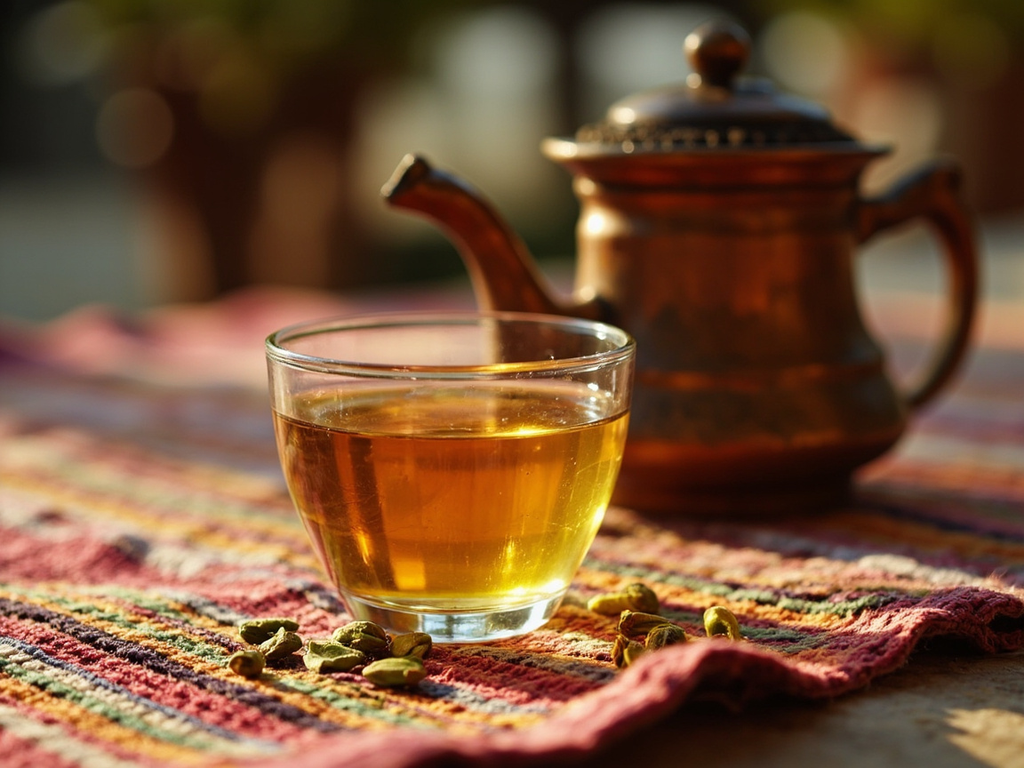
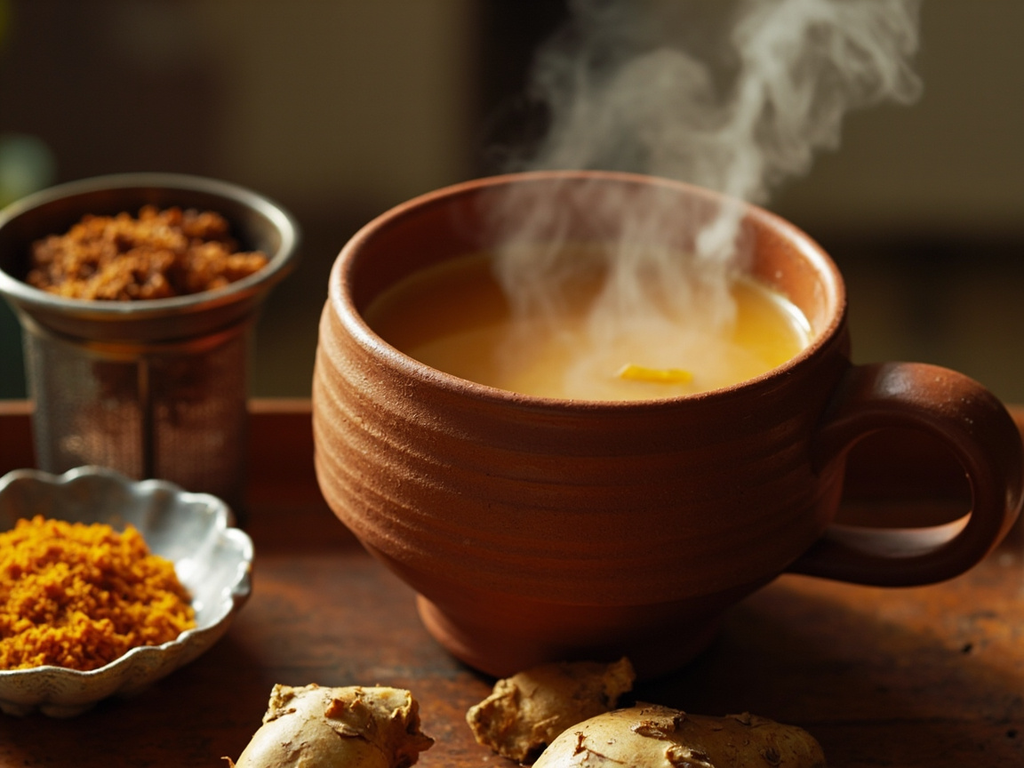
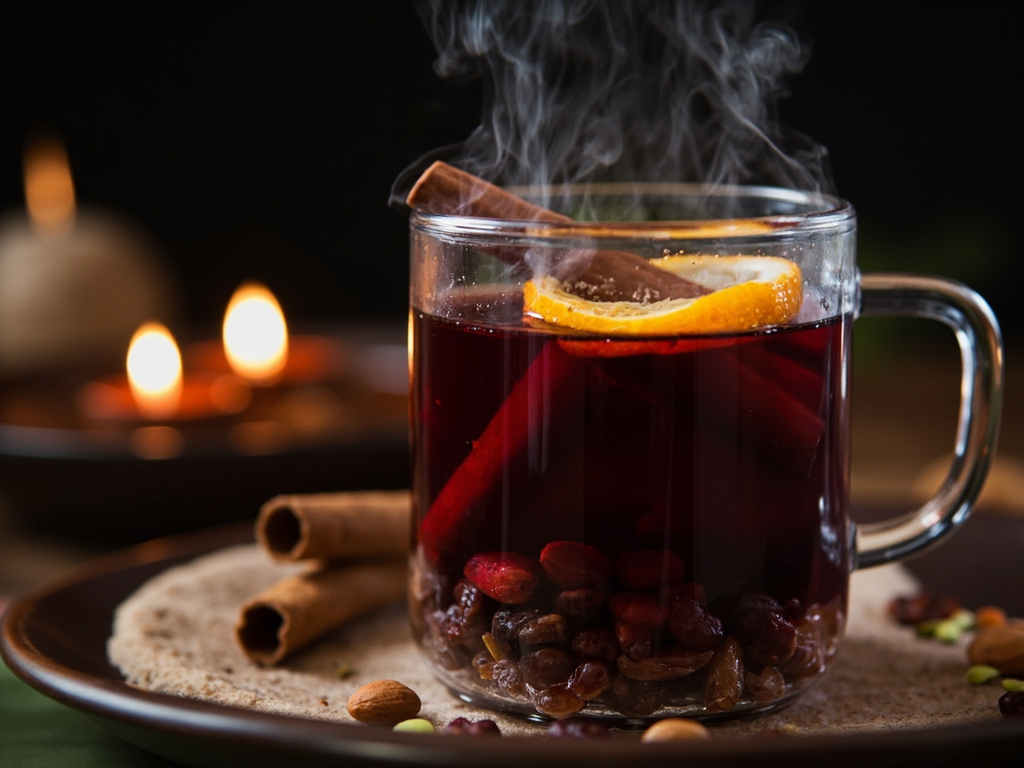
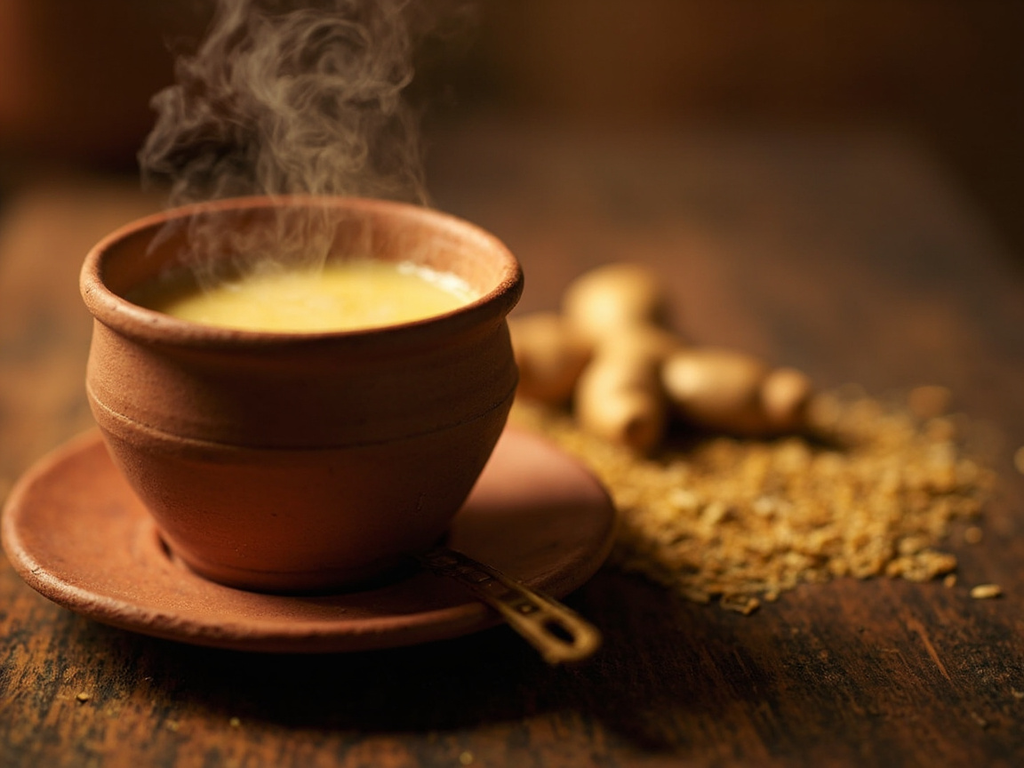
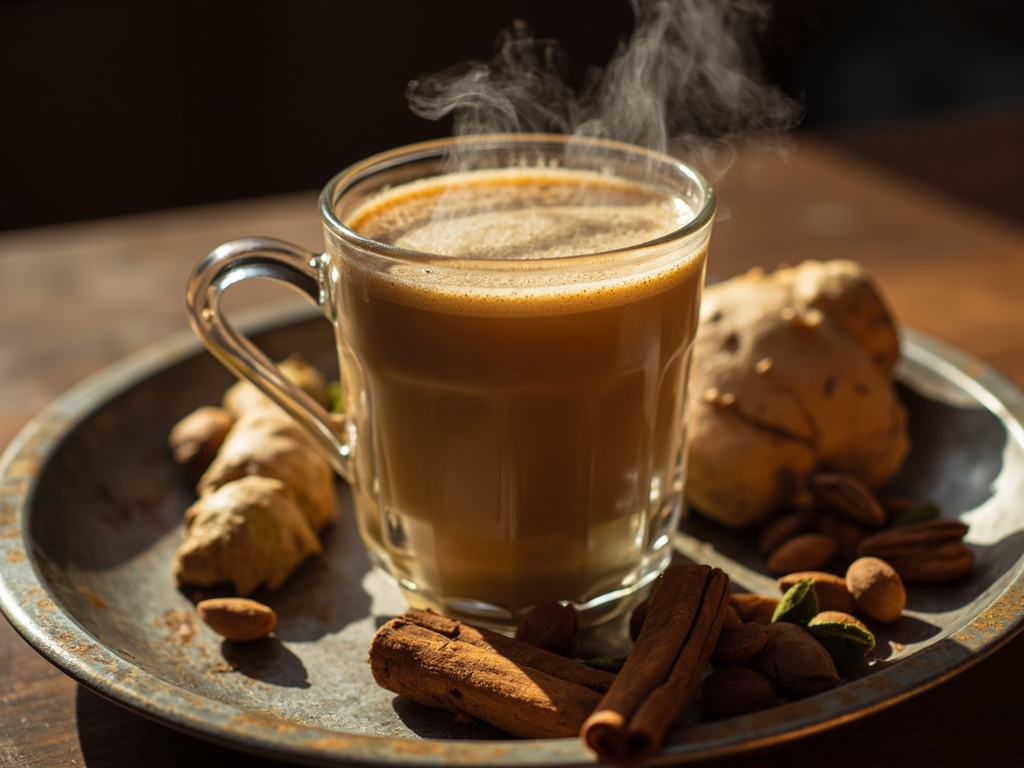
Black tea boiled with milk, sugar and crushed spices — ginger, cardamom, cinnamon, cloves. Comforting, fragrant and lightly spicy: the cup drunk on waking, or offered the moment someone steps through the door.
Quand quelqu'un entre dans mon atelier, avant même de parler de matière ou de forme, je lui tends un chai. C'est ainsi qu'on faisait chez moi : on broie le gingembre et la cardamome au mortier, on fait monter le lait et le thé ensemble, et la couleur passe du noir à ce brun-ocre tiède que je trouve plus juste que bien des œuvres. Il ne faut surtout pas presser l'ébullition — laisse-la gonfler et retomber deux ou trois fois, c'est là que les épices donnent tout. Une tasse de chai, vois-tu, c'est un petit monde tenu chaud entre les paumes.
- •Black tea (broken Assam leaves) — a good pinch per cup (base)
- •Milk — half-and-half with water (body)
- •Fresh ginger — a crushed piece (heat)
- •Cardamom, cinnamon, cloves — a few (spices)
- •Sugar — to taste (sweetness)
Morning masala chai
Black tea boiled with milk, sugar and crushed spices — ginger, cardamom, cinnamon, cloves. Comforting, fragrant and lightly spicy: the cup drunk on waking, or offered the moment someone steps through the door.
Why this dish? Spiced chai is the universal drink of both Kapoor's native India and the London where he lives and works — two cities where a steaming cup is offered to any visitor to the studio. It is the warm, everyday thread linking his native Bombay to his British studio.
Quand quelqu'un entre dans mon atelier, avant même de parler de matière ou de forme, je lui tends un chai. C'est ainsi qu'on faisait chez moi : on broie le gingembre et la cardamome au mortier, on fait monter le lait et le thé ensemble, et la couleur passe du noir à ce brun-ocre tiède que je trouve plus juste que bien des œuvres. Il ne faut surtout pas presser l'ébullition — laisse-la gonfler et retomber deux ou trois fois, c'est là que les épices donnent tout. Une tasse de chai, vois-tu, c'est un petit monde tenu chaud entre les paumes.
Ingredients (period version)
- Black tea (broken Assam leaves) — a good pinch per cup (base)
- Milk — half-and-half with water (body)
- Fresh ginger — a crushed piece (heat)
- Cardamom, cinnamon, cloves — a few (spices)
- Sugar — to taste (sweetness)
Ingredients
- Loose-leaf Assam black tea — 2 tsp (base)
- Water — 250 ml (infusion)
- Whole milk — 250 ml (body)
- Fresh ginger — 2 cm, crushed (heat)
- Green cardamom — 4 pods, crushed (flavor)
- Cinnamon stick — 1/2 (flavor)
- Cloves — 2 (flavor)
- Sugar — 2 tsp (adjust to taste) (sweetness)
Method
- Crush the ginger and spices in a mortar.
- Bring the water to a simmer with the spices and let infuse for 2 minutes.
- Add the tea and sugar, bring back to a boil.
- Pour in the milk and let it simmer gently: let it rise and fall 2 to 3 times.
- Strain into cups and serve piping hot.
How it was made : Masala chai in its current form (tea + milk + sugar + spices) spread across India in the 20th century, as cheap tea production and sugar became widely accessible. Before that, warm spices were mainly consumed as Ayurvedic remedies (kadha).
The contemporary twist : Serve in a small cup of polished stainless steel (a nod to Cloud Gate): the distorted reflection of the cup in the metal always delights children.
Sources : Lizzie Collingham, Curry: A Tale of Cooks and Conquerors, Oxford University Press, 2006 · K. T. Achaya, Indian Food: A Historical Companion, Oxford University Press, 1994
Anish Kapoor · Charactorium