 flip
flipSamovar Tea and Blackcurrant Jam (Varenye)
Samovar Tea and Blackcurrant Jam (Varenye)
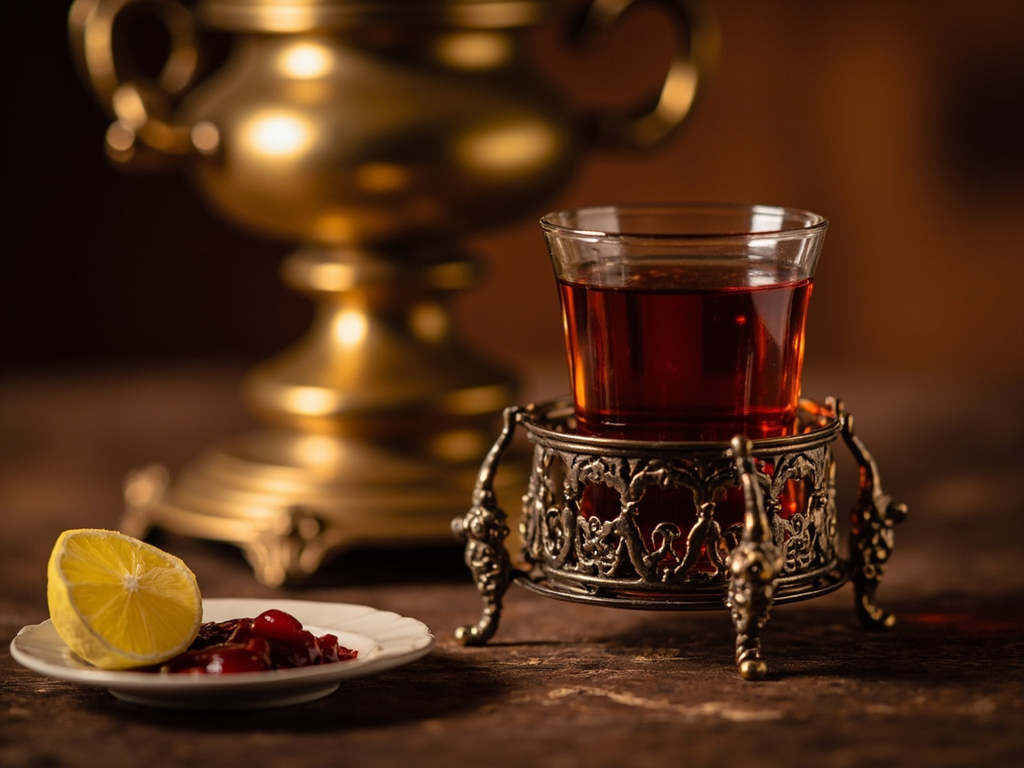
Why this dish? Tea from the samovar was the heart of Russian domestic life, the comforting ritual Pavlova found at home, both at Ivy House and in St. Petersburg. The jam served separately, eaten with a spoon alongside the tea, accompanied her moments of rest between tours.
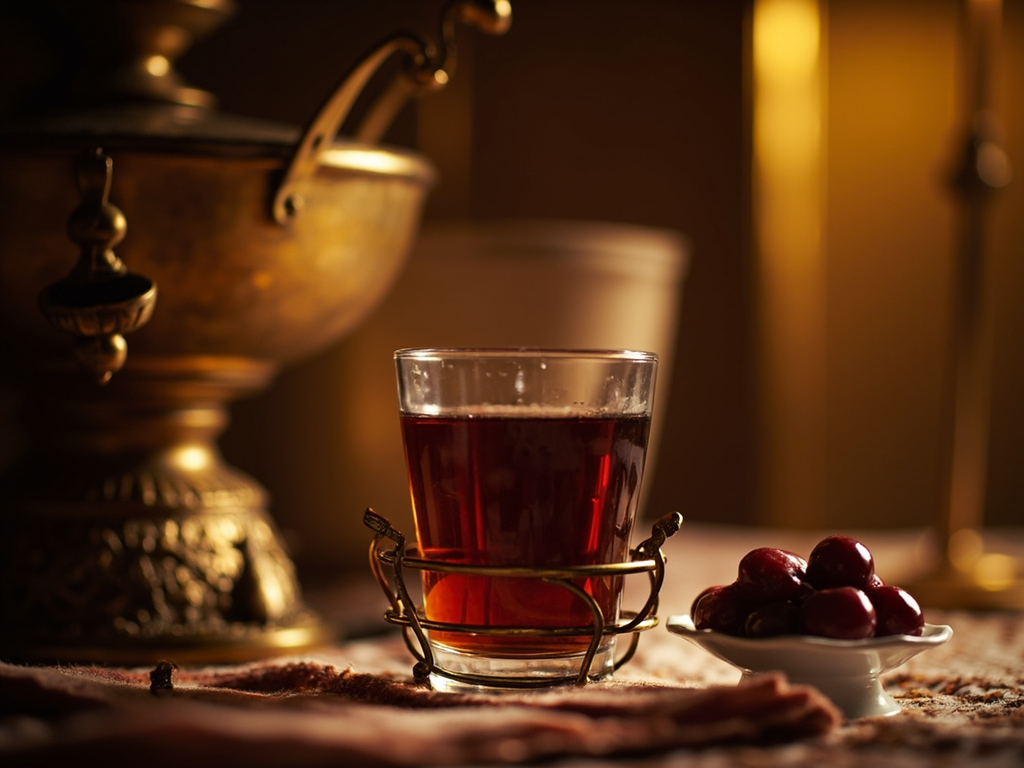
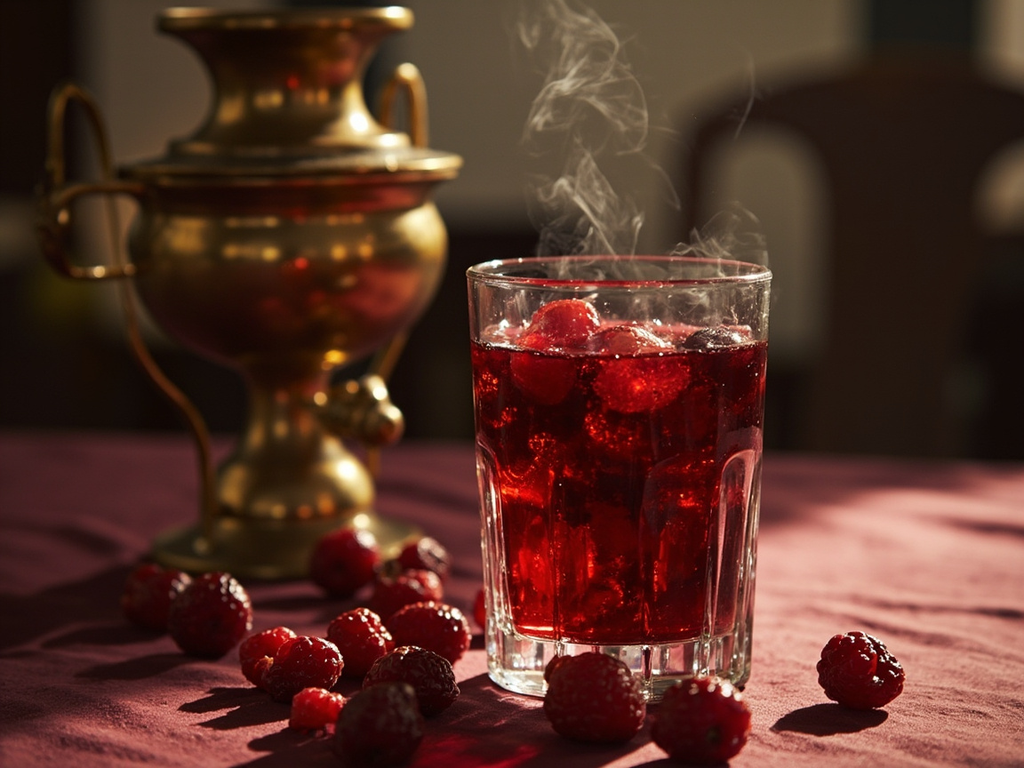
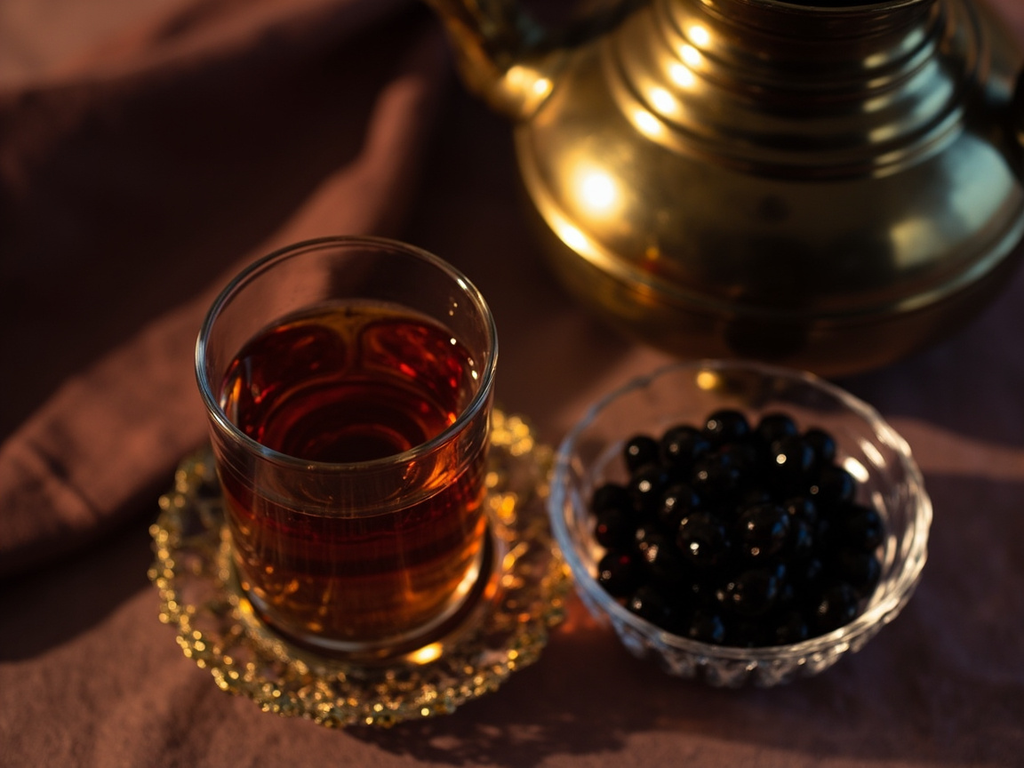
A strong black tea drawn from the samovar, diluted with boiling water and sweetened not with sugar but with a spoonful of tangy blackcurrant jam that melts on the tongue. Russian comfort in its purest simplicity.
At home, the samovar sang from morning to night — its murmur was the voice of the house. In Russia, we do not sweeten our tea, you know: you take a spoonful of varenye, that jam where the berries remain whole, hold it on your tongue, and drink the hot tea over it. That is how I rested between two trains, between two stages, dreaming of the summers of my childhood.
- •Black tea leaves — for a strong teapot (zavarka) (tea concentrate)
- •Samovar water — boiling, as needed (dilution)
- •Blackcurrants (smorodina) — several pounds (jam)
- •Sugar — equal weight to fruit (preservation and sweetness)
Samovar Tea and Blackcurrant Jam (Varenye)
A strong black tea drawn from the samovar, diluted with boiling water and sweetened not with sugar but with a spoonful of tangy blackcurrant jam that melts on the tongue. Russian comfort in its purest simplicity.
Why this dish? Tea from the samovar was the heart of Russian domestic life, the comforting ritual Pavlova found at home, both at Ivy House and in St. Petersburg. The jam served separately, eaten with a spoon alongside the tea, accompanied her moments of rest between tours.
At home, the samovar sang from morning to night — its murmur was the voice of the house. In Russia, we do not sweeten our tea, you know: you take a spoonful of varenye, that jam where the berries remain whole, hold it on your tongue, and drink the hot tea over it. That is how I rested between two trains, between two stages, dreaming of the summers of my childhood.
Ingredients (period version)
- Black tea leaves — for a strong teapot (zavarka) (tea concentrate)
- Samovar water — boiling, as needed (dilution)
- Blackcurrants (smorodina) — several pounds (jam)
- Sugar — equal weight to fruit (preservation and sweetness)
Ingredients
- Loose black tea (Russian or Ceylon type) — 2 tbsp (concentrated zavarka)
- Boiling water — as needed for cups (dilution)
- Fresh or frozen blackcurrants — 500 g (jam)
- Sugar — 400 g (preservation and sweetness)
- Lemon juice — 1 tbsp (balance)
Method
- Jam: Bring blackcurrants and sugar to a gentle boil, skim, add lemon juice, and cook for 20-25 minutes until a drop sets on a cold plate; jar it.
- Tea: Prepare a very concentrated zavarka in a small teapot (steep 5 minutes).
- Pour a little of this strong infusion into each cup, then dilute with boiling water to taste.
- Serve without sugar: each person takes a spoonful of blackcurrant jam separately, letting it melt in the mouth between sips of hot tea.
How it was made : The samovar, heated with charcoal, kept water boiling all day while the concentrated zavarka waited on top. Drinking tea 'vprikusku' (with a lump of sugar or jam eaten separately rather than sweetened in the cup) was the traditional Russian custom, inherited from modest homes where sugar was rationed.
The contemporary twist : Present the jam in a small glass dish with a teaspoon — a Slavic 'tea pairing' to offer instead of sugar.
Anna Pavlova · Charactorium