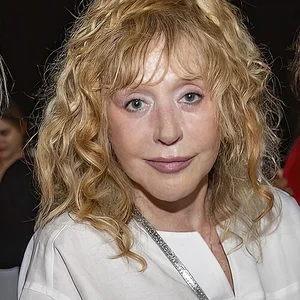

British-American jazz singer and actress, a pioneer of vocalese. A member of the trio Lambert, Hendricks & Ross, she is famous for setting lyrics to instrumental solos, notably her standard “Twisted” (1952).
Annie Ross(1930 — 2020)
Annie Ross
États-Unis, Royaume-Uni
6 min read
Frequently asked questions
Key Facts
- Born on 25 July 1930 in Mitcham (Surrey, England), died on 21 July 2020 in New York
- Recorded “Twisted” in 1952, a vocalese written over a 1949 saxophone solo by Wardell Gray
- Co-founded the vocal trio Lambert, Hendricks & Ross in 1957, the pinnacle of vocalese
- Took part in the seminal album “Sing a Song of Basie” (1957), a tribute to Count Basie's orchestra
- Pursued a career as an actress, notably in Robert Altman's films (“The Player”, “Short Cuts”, 1992-1993)
Works & Achievements
Her signature standard and one of the high points of vocalese: humor-filled lyrics set to a saxophone solo by Wardell Gray.
Another vocalese from her early years, confirming her talent for turning instrumental improvisations into songs.
The founding album of the Lambert, Hendricks & Ross trio, setting lyrics to entire arrangements by the Count Basie Orchestra.
A record made with saxophonist Gerry Mulligan, showcasing her supple voice in the cool jazz style.
The trio's emblematic album, whose title sums up the group's reputation at its peak.
On screen, she plays a jazz club singer, a character that echoes her own career.
Anecdotes
Annie Ross was not her real name: she was born Annabelle Short, near London, in 1930. Still a child, she crossed the Atlantic to be raised in Los Angeles by her aunt, the singer Ella Logan. From the age of seven, she could be seen singing “Loch Lomond” in the famous children's comedies “Our Gang” (the Little Rascals).
In 1952, she listened to a saxophone solo recorded by Wardell Gray in 1949 and had a brilliant idea: to set lyrics, note for note, to that improvisation. The result, “Twisted,” humorously recounts her visits to the psychoanalyst. The song became a classic, covered much later by Joni Mitchell (1974) and Bette Midler.
This technique has a name: vocalese. It involves singing lyrics modeled exactly on an already recorded instrumental solo. It is a formidable exercise that demands a perfect ear, rapid diction, and solid breath control, because the voice must mimic the speed and acrobatics of a saxophone or a trumpet.
In 1957, Annie Ross founded the trio Lambert, Hendricks & Ross with Dave Lambert and Jon Hendricks. Nicknamed “the hottest group in jazz,” they took on a wild challenge: putting lyrics to entire big band arrangements, such as those of the Count Basie Orchestra, singing all the instrumental parts in three-part harmony.
After jazz, Annie Ross pursued a second career as an actress. In 1993, director Robert Altman cast her in “Short Cuts” as an aging jazz singer in a club: a character strangely resembling her own life. She passed away in New York in 2020, at the age of 89.
Primary Sources
"My analyst told me that I was right out of my head, the way I act and play" — the witty opening lines of this famous vocalese song, in which Annie Ross pokes fun at her own psychoanalysis.
"The Hottest New Group in Jazz" — a title-slogan that captured the trio's reputation at the end of the 1950s.
Joni Mitchell covers Annie Ross's song to close out her album, a sign of vocalese's lasting influence on popular music.
Key Places
Birthplace region of Annabelle Short, the future Annie Ross, in 1930.
City where she was raised by her aunt Ella Logan and where she made her debut, as a child, in front of the camera.
Jazz capital where she recorded her great albums with Lambert, Hendricks & Ross; she died there in 2020.
City where she opened her own jazz club in 1965, “Annie's Room.”
Typical Objects

An essential tool for the club singer, it lets her whisper or fire off the rapid phrases of vocalese while staying audible over the band.

The sound medium of the era; it was by replaying solo records that Annie Ross transcribed improvisations before inventing lyrics for them.

The instrument of Wardell Gray's solo, which she turned into a song: vocalese is precisely about imitating with the voice what the saxophone plays.

The musical score on which the solos were written down; vocalese required following every note of the original improvisation.

An elegant outfit worn to perform in the clubs and cabarets of New York and London, a symbol of the glamour of 1950s vocal jazz.

A device used to listen to and replay recorded solos, note by note, in order to memorize them and compose the vocalese.
School Curriculum
Vocabulary & Tags
Key Vocabulary
Tags
Daily Life
Morning
On tour or in New York, Annie Ross gets up late: the concerts end in the dead of night. The morning is for recovering, answering fan mail, and rereading the lyrics she is in the middle of writing.
Afternoon
The afternoon is devoted to work: rehearsals with her partners, recording sessions in the studio, and, above all, repeatedly listening to the solos she learns note by note to compose her vocalese.
Evening
In the evening, it's the stage. In the smoky clubs of New York or London, she sings several “sets” before a seated audience, stringing together standards and vocal acrobatics late into the night.
Food
Life as a touring musician means irregular meals, grabbed between two turns on stage. Coffee, quick sandwiches, and late dinners in the restaurants that stay open at night set the rhythm of a club artist's daily life.
Clothing
For the stage, she takes great care with her look: elegant dresses, styled hair, and makeup, reflecting the glamour of 1950s jazz singers. Backstage, her outfit is simpler and more comfortable.
Housing
Between tours, she lives in hotels and apartments, often in New York and later in London. Later still, her club “Annie's Room” becomes a second home, both a place to work and a place to live.