 flip
flipRoast Pork from the Feast of Ithaca
Roast Pork from the Feast of Ithaca
Why this dish? At the house of Laertes and Anticlea, great days gather the household around a sacrificed pig roasted on a spit — the meat of gods and men that the Odyssey describes tirelessly, from the swineherd Eumaeus to the palace feasts. Anticlea, mistress of the royal hearth, presides over these distributions where each receives his portion according to rank.
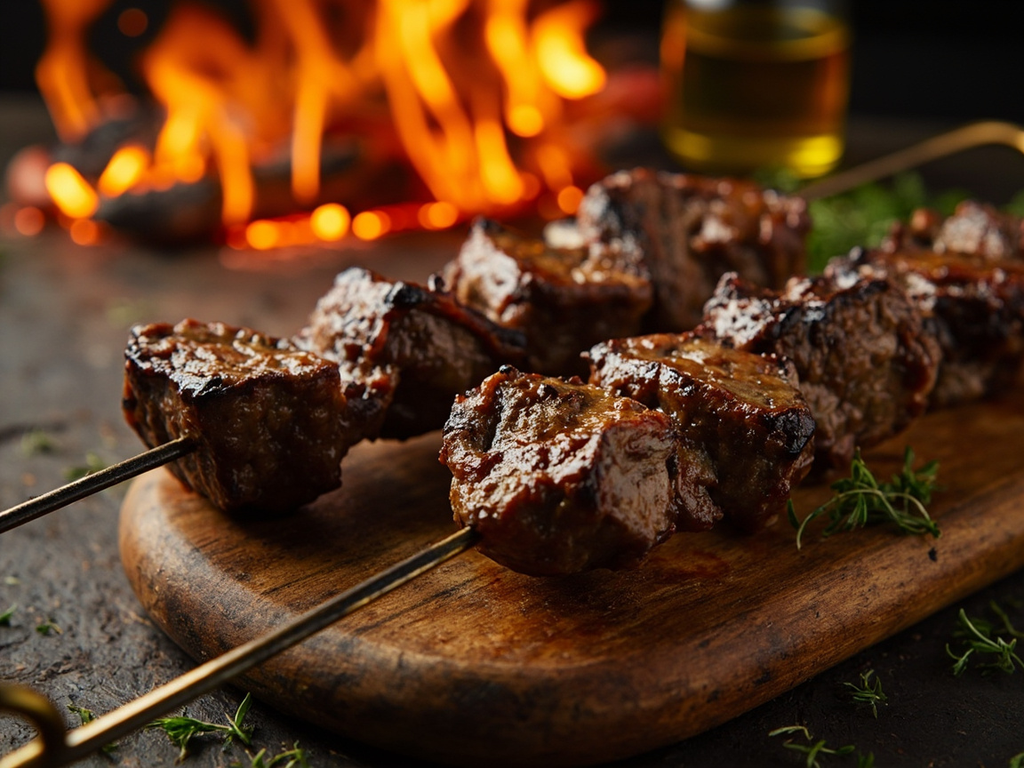
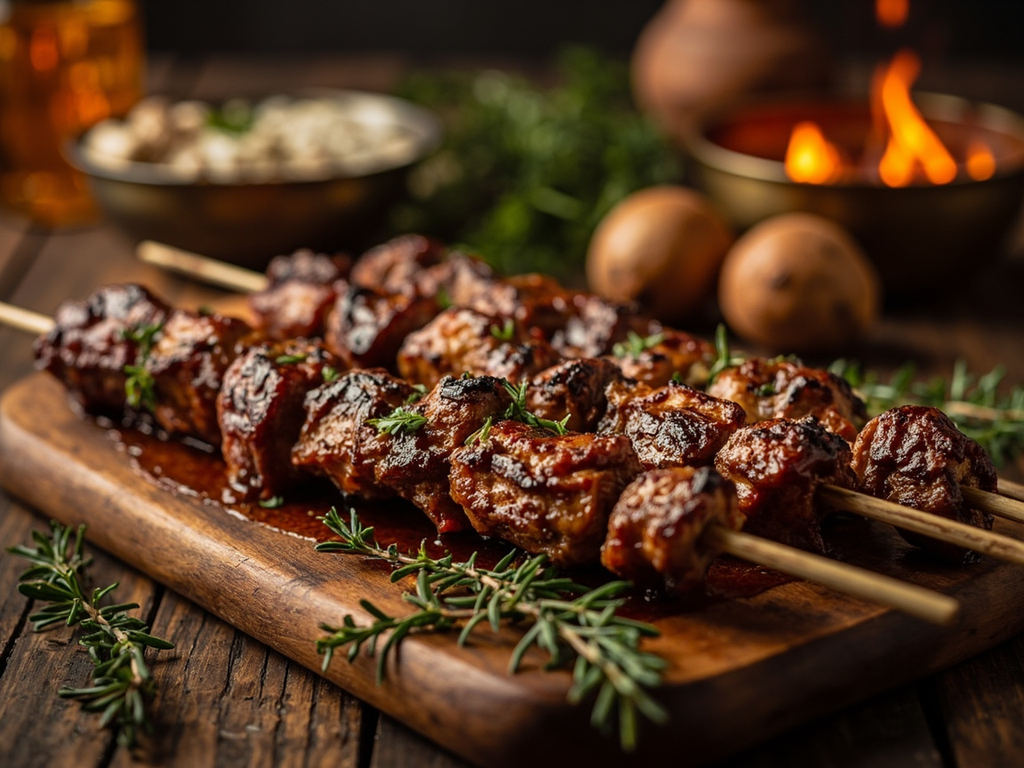
Pieces of pork rubbed with salt, skewered and slowly roasted over a wood fire, basted with their own fat. The meat of Homeric feasts in all its smoky simplicity.
When we honor a guest under my roof, we do not spare the fat pig from the pen. We slaughter it according to the rite, burn the thighs wrapped in fat for the gods, and the rest my people skewer and turn over the embers. I love to see the fat bead and sizzle on the fire. Let each be served his just portion, and the finest to the one the Immortals cherish — thus custom has willed it, thus I uphold it.
- •Pork (shoulder or loin) — a fine piece (feast meat)
- •Sea salt — by hand (seasoning and brief preservation)
- •Pork fat — rendered (basting during cooking)
- •Wild thyme and oregano — a few sprigs (scent of the hills)
Roast Pork from the Feast of Ithaca
Pieces of pork rubbed with salt, skewered and slowly roasted over a wood fire, basted with their own fat. The meat of Homeric feasts in all its smoky simplicity.
Why this dish? At the house of Laertes and Anticlea, great days gather the household around a sacrificed pig roasted on a spit — the meat of gods and men that the Odyssey describes tirelessly, from the swineherd Eumaeus to the palace feasts. Anticlea, mistress of the royal hearth, presides over these distributions where each receives his portion according to rank.
When we honor a guest under my roof, we do not spare the fat pig from the pen. We slaughter it according to the rite, burn the thighs wrapped in fat for the gods, and the rest my people skewer and turn over the embers. I love to see the fat bead and sizzle on the fire. Let each be served his just portion, and the finest to the one the Immortals cherish — thus custom has willed it, thus I uphold it.
Ingredients (period version)
- Pork (shoulder or loin) — a fine piece (feast meat)
- Sea salt — by hand (seasoning and brief preservation)
- Pork fat — rendered (basting during cooking)
- Wild thyme and oregano — a few sprigs (scent of the hills)
Ingredients
- Pork loin or shoulder — 1.2 kg (feast meat)
- Coarse salt — 2 tbsp (seasoning)
- Olive oil — 3 tbsp (basting)
- Fresh thyme — 1 small bunch (flavor)
- Dried oregano — 1 tbsp (flavor)
Method
- Cut the pork into 4-5 cm cubes and rub with salt, thyme, and oregano. Let rest 1 hour.
- Thread the meat onto skewers (metal or soaked wood).
- Cook over embers (barbecue) or under a hot oven broiler, turning regularly, 20-25 minutes.
- Baste several times with olive oil mixed with rendered fat to keep the meat moist.
- Check that the meat is golden outside and juicy inside.
- Serve immediately, on a board, with barley maza.
How it was made : In the Odyssey, sacrifice and roasting on a spit (obeloi) are the heart of the aristocratic feast. First, the thigh bones wrapped in fat were burned for the gods, then the flesh was roasted and distributed in portions (moirai) according to rank. Pork, the animal of Eumaeus the swineherd, was the most common meat in the Odyssean world.
The contemporary twist : Pierce each skewer with a bay leaf and serve with Greek yogurt and oregano — a souvlaki nod before its time.
Anticleia · Charactorium