 flip
flipKing of Kings' Spit-Roasted Beef Portions
King of Kings' Spit-Roasted Beef Portions
Why this dish? In the Iliad, Agamemnon, "shepherd of the people," honors his best warriors by reserving the finest portion of roasted meat for them. Before the great battle, he has a fat five-year-old ox sacrificed to Zeus, then the flesh is skewered over the fire: this is the very table of the supreme commander of the Achaeans.
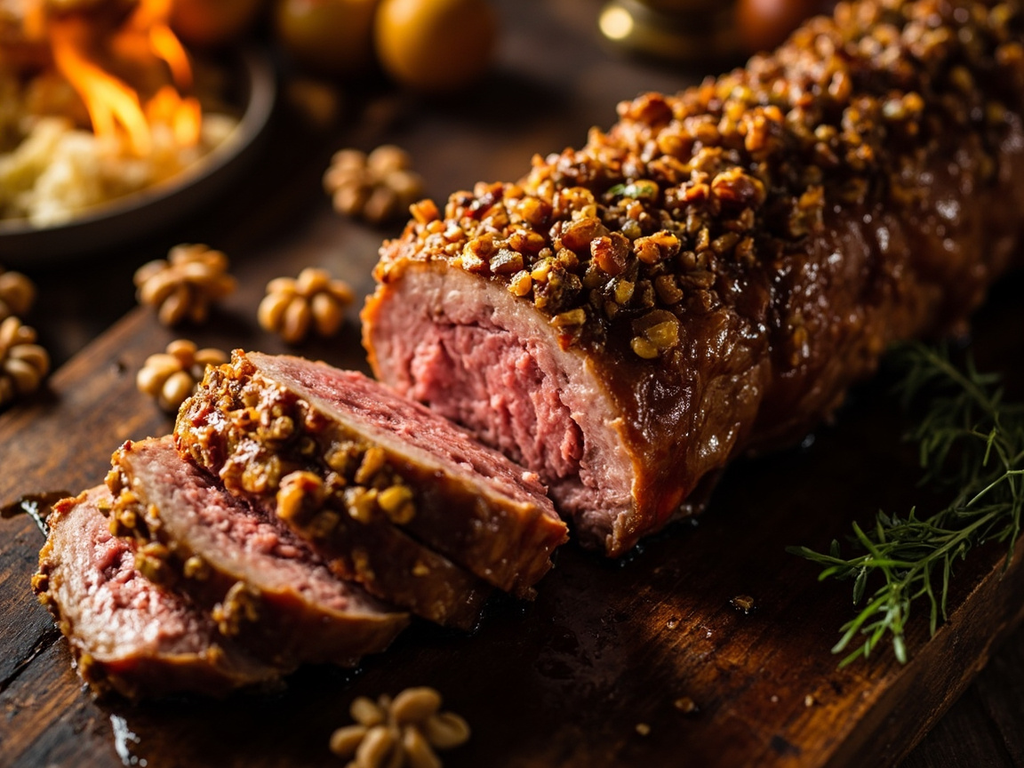
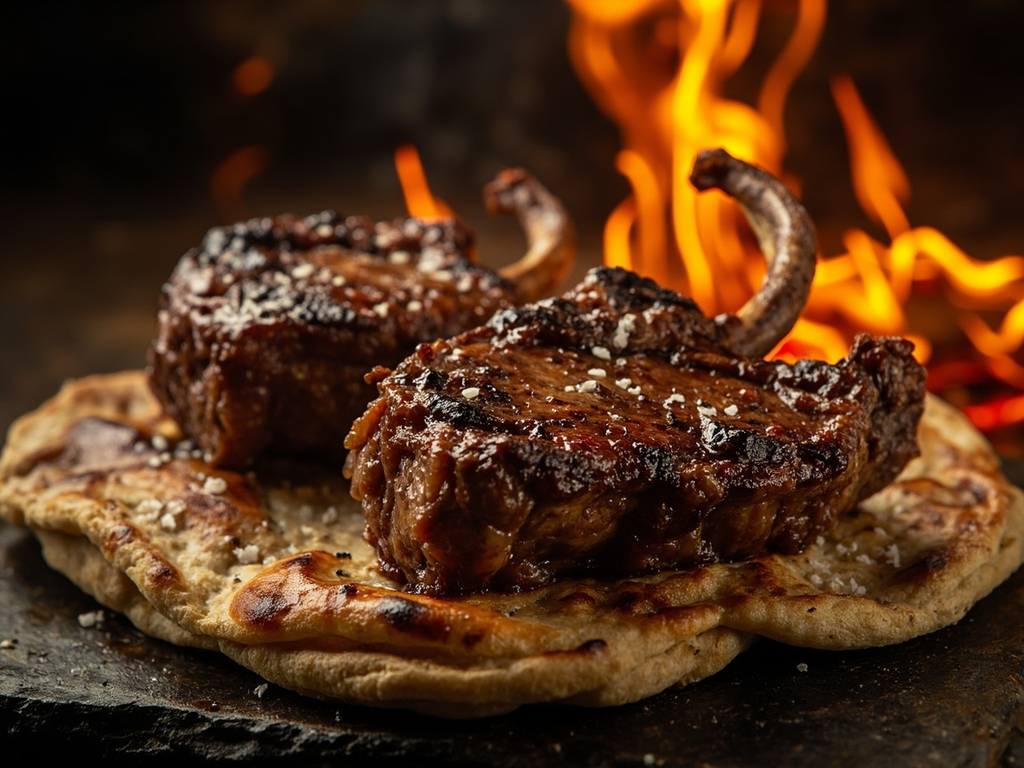
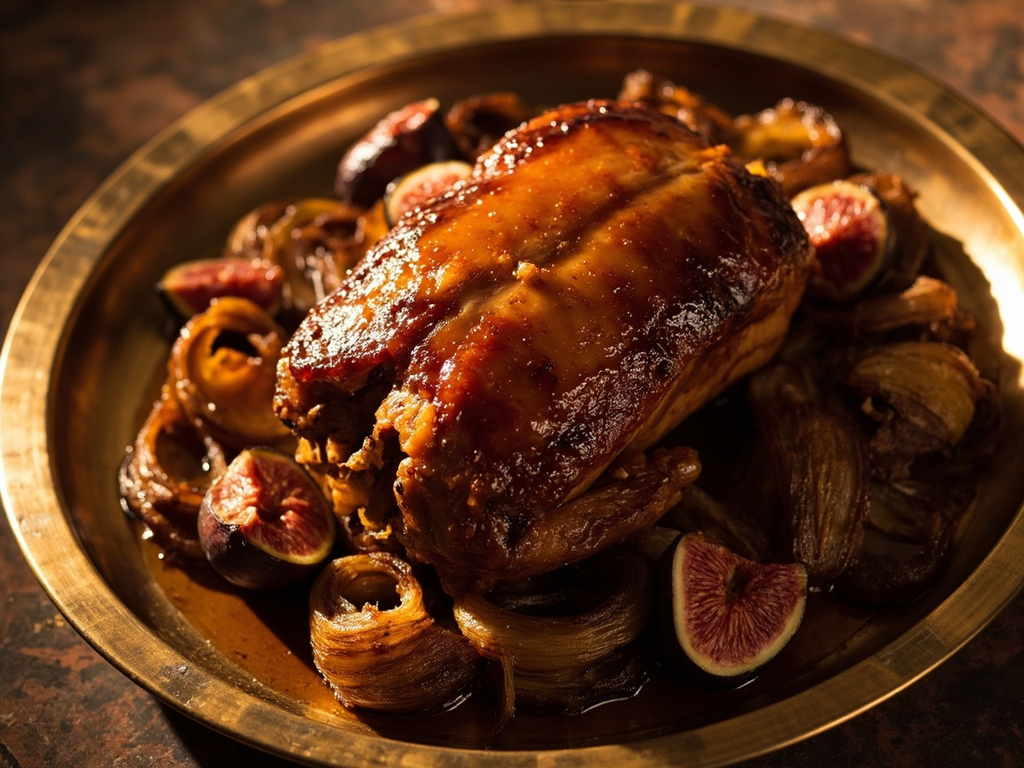
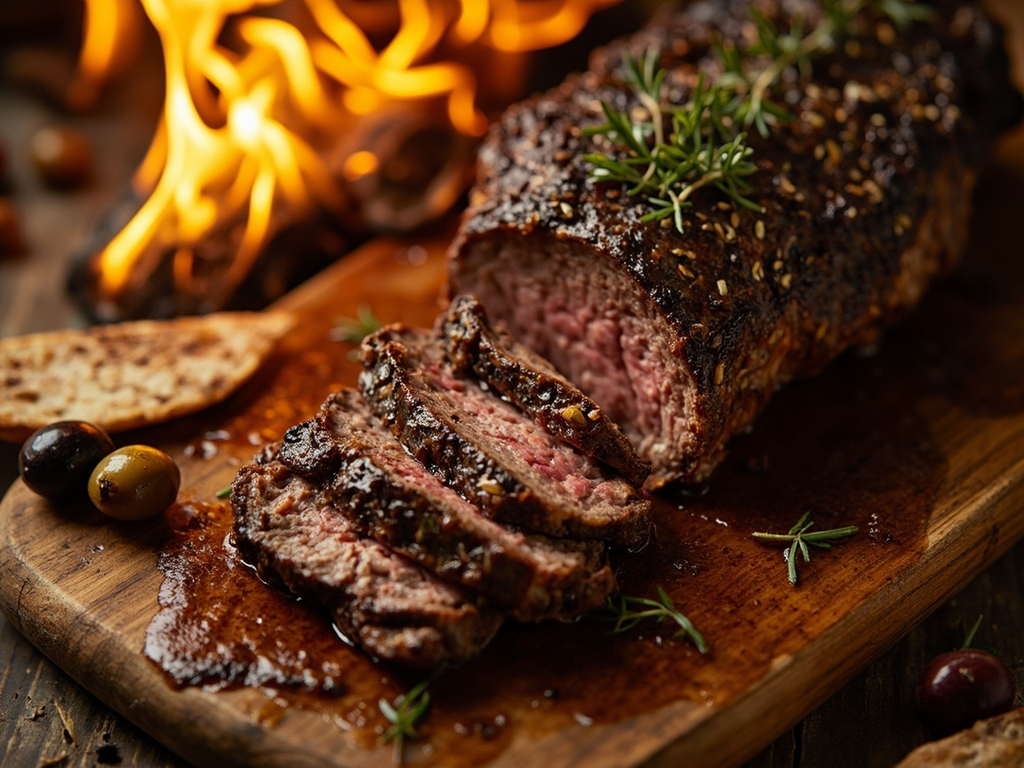
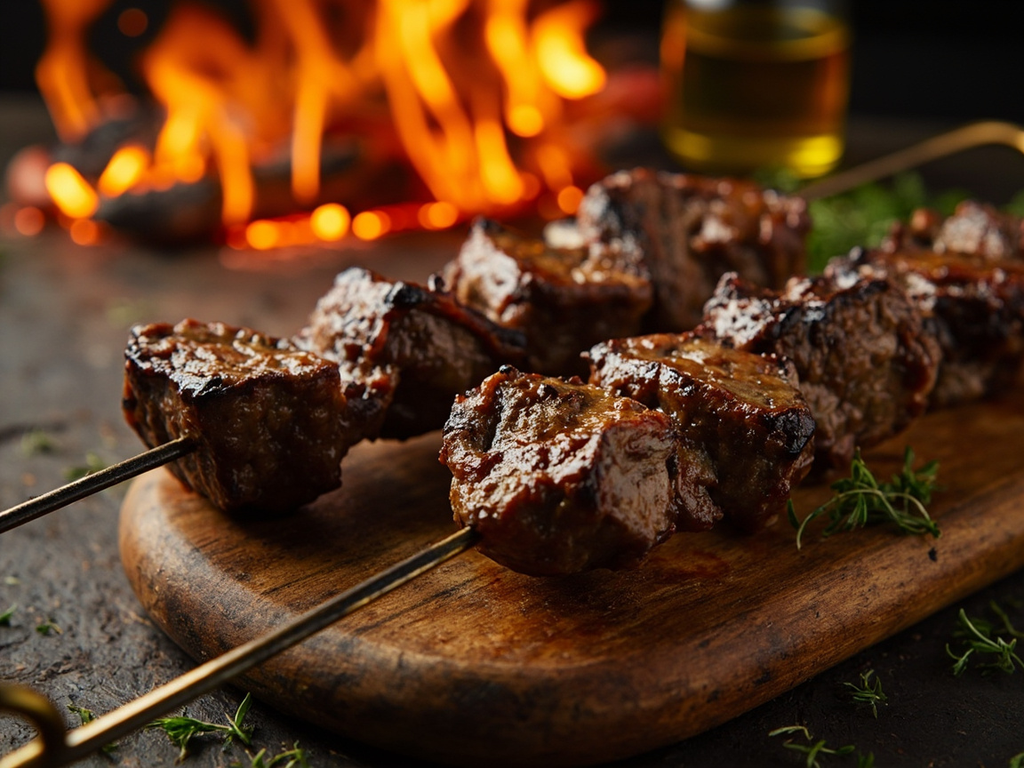
Large chunks of beef threaded onto skewers, salted, rubbed with oil, and slowly turned over embers until the crust turns golden. They are served cut into portions, the most generous going to the guest of honor.
Approach, and see what I set aside for those who are worthy in my eyes. When the fat ox has fallen under the knife and its fat has smoked for the Immortals, my men thread the flesh onto bronze spits and turn them over the hearth. To him who has fought well, I hand with my own hand the highest portion — for a king is known by how he honors the brave. Salt your meat, anoint it with oil, and may your spit never burn what the gods have left us.
- •Beef (shoulder or thigh) — large chunks (noble meat of the feast)
- •Olive oil — as needed (basting for browning)
- •Sea salt — a handful (seasoning)
- •Wild thyme and oregano — a few sprigs (scent of the Greek hills)
King of Kings' Spit-Roasted Beef Portions
Large chunks of beef threaded onto skewers, salted, rubbed with oil, and slowly turned over embers until the crust turns golden. They are served cut into portions, the most generous going to the guest of honor.
Why this dish? In the Iliad, Agamemnon, "shepherd of the people," honors his best warriors by reserving the finest portion of roasted meat for them. Before the great battle, he has a fat five-year-old ox sacrificed to Zeus, then the flesh is skewered over the fire: this is the very table of the supreme commander of the Achaeans.
Approach, and see what I set aside for those who are worthy in my eyes. When the fat ox has fallen under the knife and its fat has smoked for the Immortals, my men thread the flesh onto bronze spits and turn them over the hearth. To him who has fought well, I hand with my own hand the highest portion — for a king is known by how he honors the brave. Salt your meat, anoint it with oil, and may your spit never burn what the gods have left us.
Ingredients (period version)
- Beef (shoulder or thigh) — large chunks (noble meat of the feast)
- Olive oil — as needed (basting for browning)
- Sea salt — a handful (seasoning)
- Wild thyme and oregano — a few sprigs (scent of the Greek hills)
Ingredients
- Beef for grilling (rump or chuck) — 800 g (main meat)
- Extra virgin olive oil — 4 tbsp (marinade and basting)
- Coarse salt — 2 tsp (seasoning)
- Dried thyme and oregano — 2 tsp (flavor)
- Black pepper (optional, ground) — to taste (kick)
Method
- Cut the beef into large cubes of 4–5 cm and thread them onto skewers (metal or soaked wood).
- Mix olive oil, thyme, oregano, and salt; rub the pieces and let rest for 30 minutes.
- Grill over glowing embers (or a very hot grill), turning often to brown all sides.
- Allow 8–12 minutes depending on thickness: the crust should be colored, the center still pink.
- Serve hot, distributing the portions — the finest for the guest of honor.
How it was made : The Homeric epics describe this rite precisely: the animal is killed, the bones wrapped in fat are burned for the gods, then the flesh is roasted on spits planted near the fire. Red meat, rare and expensive, was mainly reserved for sacrifices and banquets of the powerful; common people mostly ate barley porridge, vegetables, and cheese.
The contemporary twist : Serve the skewers on an olive wood board with a drizzle of raw oil and a pinch of fleur de sel: the "king's share" in a courtly barbecue version.
Sources : Homer, Iliad (Books I, II, VII — sacrifices and feasts of the Achaeans) · Andrew Dalby, Siren Feasts: A History of Food and Gastronomy in Greece (1996)
Agamemnon · Charactorium