 flip
flipRoasted beef chine on the spit, the hero's portion
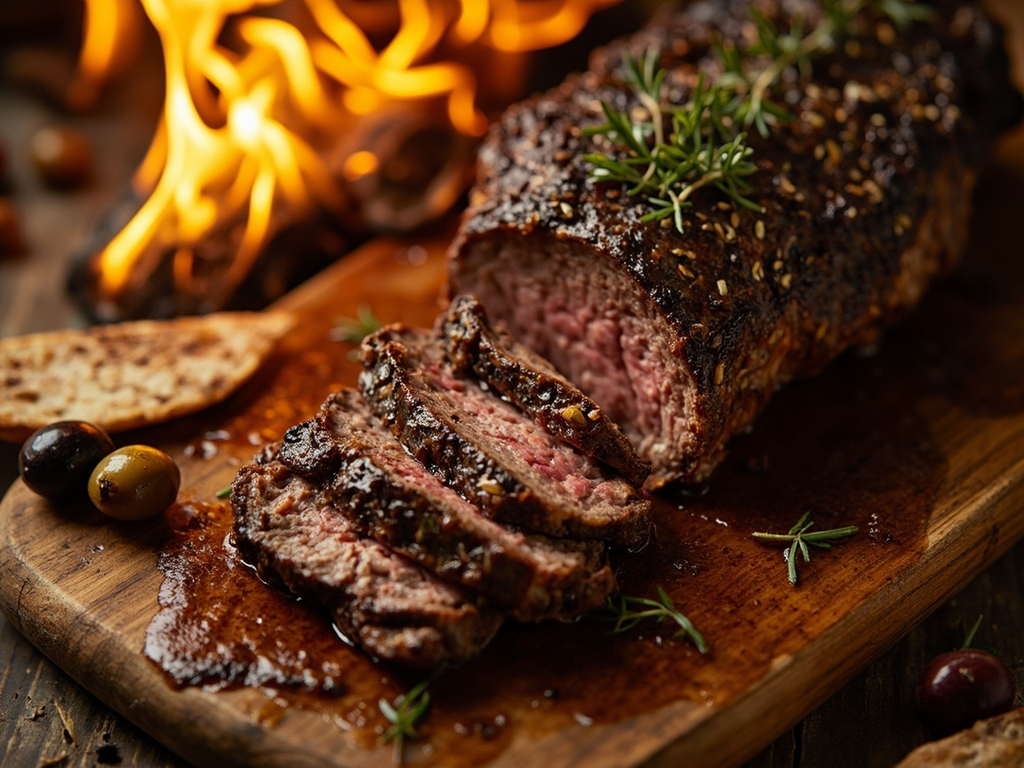
Roasted beef chine on the spit, the hero's portion
Why this dish? When Ajax returns victorious from his duel against Hector, Agamemnon honors him at the feast by reserving the long pieces of the chine, the fattest and most prized part of the ox's back. It is the tribute paid to the best of the warriors after Achilles — food as recognition of valor.
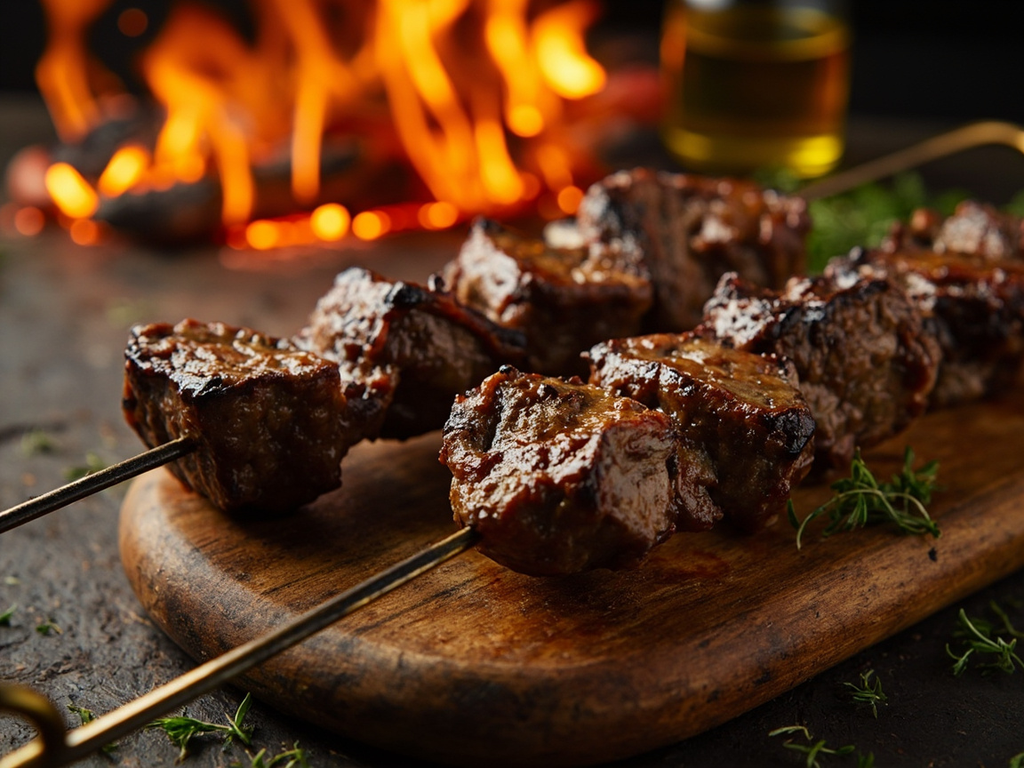
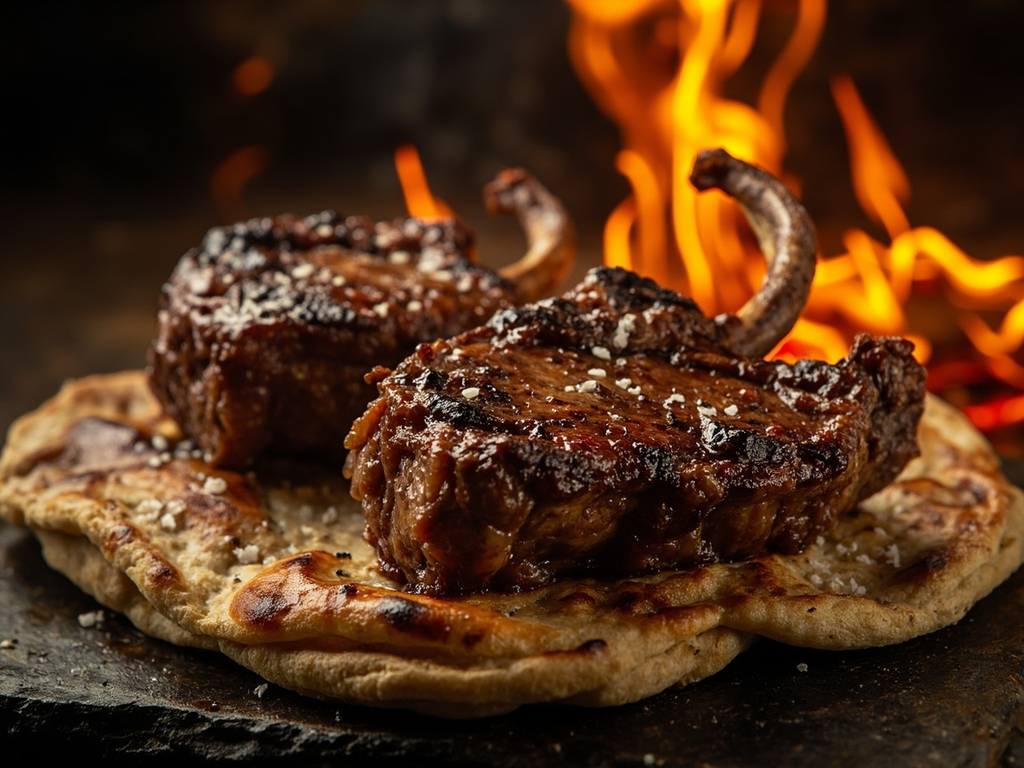
Large pieces of beef skewered and roasted over embers, salted and turned by hand, served on barley bread that soaks up the juice. The dish of victory banquets in the Achaean camp, simple and powerful like the men who eat it.
Stranger, look at this fire: this is where a man is measured, not only on the battlefield. After I held my ground against Hector all day without yielding, the king of men handed me with his own hands the long pieces of the chine — the portion given to the strongest. We skewer the flesh on bronze, turn it over the coals until the fat sings, sprinkle it with salt, and share it in equal portions so that no one feels cheated. Eat with me: a warrior filled with roast meat fears no one at dawn.
- •Beef chine or fatty cut — large pieces for the company (sacrificial meat, heart of the feast)
- •Sea salt — a handful (seasoning and preservation)
- •Barley bread (maza) — as needed (base that catches the juice)
- •Barley grains — a handful (ritual gesture of sacrifice (oulochytai))
Roasted beef chine on the spit, the hero's portion
Large pieces of beef skewered and roasted over embers, salted and turned by hand, served on barley bread that soaks up the juice. The dish of victory banquets in the Achaean camp, simple and powerful like the men who eat it.
Why this dish? When Ajax returns victorious from his duel against Hector, Agamemnon honors him at the feast by reserving the long pieces of the chine, the fattest and most prized part of the ox's back. It is the tribute paid to the best of the warriors after Achilles — food as recognition of valor.
Stranger, look at this fire: this is where a man is measured, not only on the battlefield. After I held my ground against Hector all day without yielding, the king of men handed me with his own hands the long pieces of the chine — the portion given to the strongest. We skewer the flesh on bronze, turn it over the coals until the fat sings, sprinkle it with salt, and share it in equal portions so that no one feels cheated. Eat with me: a warrior filled with roast meat fears no one at dawn.
Ingredients (period version)
- Beef chine or fatty cut — large pieces for the company (sacrificial meat, heart of the feast)
- Sea salt — a handful (seasoning and preservation)
- Barley bread (maza) — as needed (base that catches the juice)
- Barley grains — a handful (ritual gesture of sacrifice (oulochytai))
Ingredients
- Beef ribs or thick sirloin — 1.2 kg (main meat)
- Coarse salt — 2 tablespoons (seasoning)
- Olive oil — 3 tablespoons (basting, prevents drying)
- Barley flatbreads or rustic griddle cakes — 4 (accompaniment)
Method
- Take the meat out in advance to bring it to room temperature; salt generously on all sides.
- Prepare a bed of glowing embers (barbecue) or heat a heavy cast-iron pan until very hot.
- Brush the meat with olive oil and place it over the embers, without direct flame.
- Turn the pieces regularly, by hand or on a spit, for even cooking and a nice golden crust (8 to 12 minutes depending on thickness).
- Let the meat rest for 5 minutes, then slice it thick and place the pieces on the barley bread so they absorb the juice.
- Serve immediately, in equal portions, and eat with your fingers as in the camp.
How it was made : Homer describes this scene dozens of times, almost word for word: they slaughter the beast, wrap the thighs in fat to burn as an offering, then skewer the flesh (first the splanchna, then the rest) on bronze spits turned over the fire. No marinade, no rare spices: only salt, fire, and sharing. Beef was a luxury reserved for great occasions; daily fare was mostly mutton, goat, and pork.
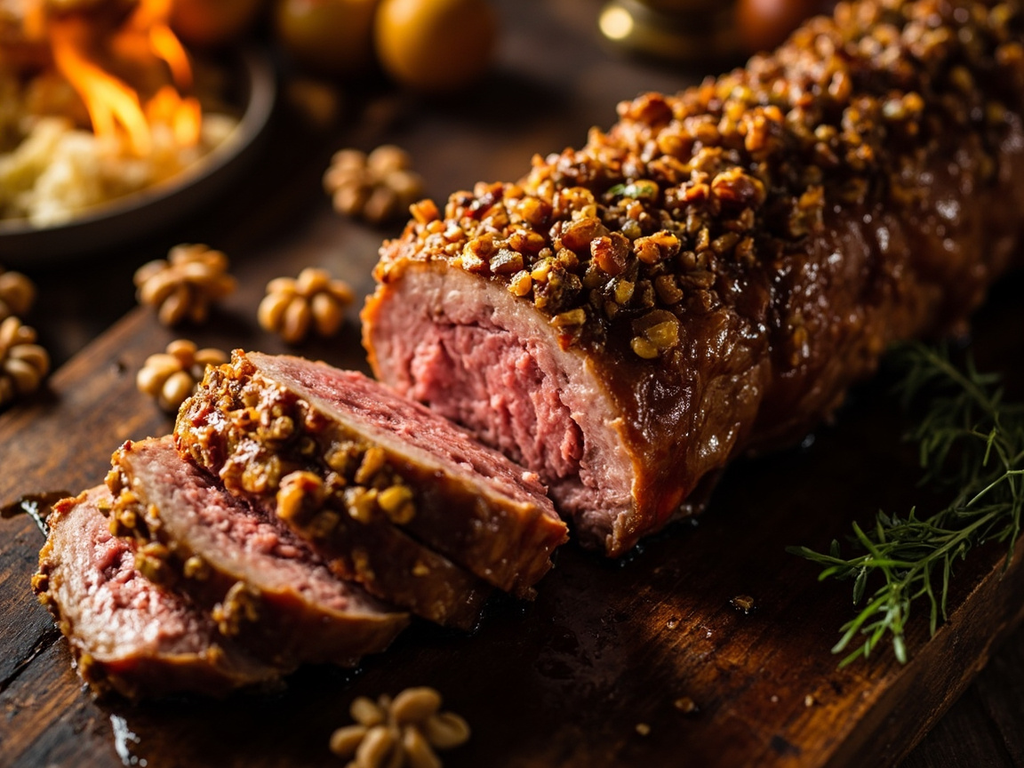
The contemporary twist : Serve the whole piece on an olive wood board, sliced in front of the guests, with a small ramekin of fleur de sel — a 'hero's portion' version to be amiably contested.
Sources : Homer, Iliad, Book 7 (feast after the duel of Ajax and Hector) and Book 1 (sacrifice to Apollo) · Homer, Odyssey, Book 3 (Nestor's sacrifice at Pylos)
Ajax · Charactorium