 flip
flipPélanos of honey and barley, offering to Apollo at Delphi
Pélanos of honey and barley, offering to Apollo at Delphi
Why this dish? Oedipus's entire destiny is born from an oracle at Delphi, which he goes to consult about his origins. The pélanos, a ritual cake of barley and honey, was the offering placed on Apollo's altar before consulting the Pythia — the very gesture that precipitates his tragedy.
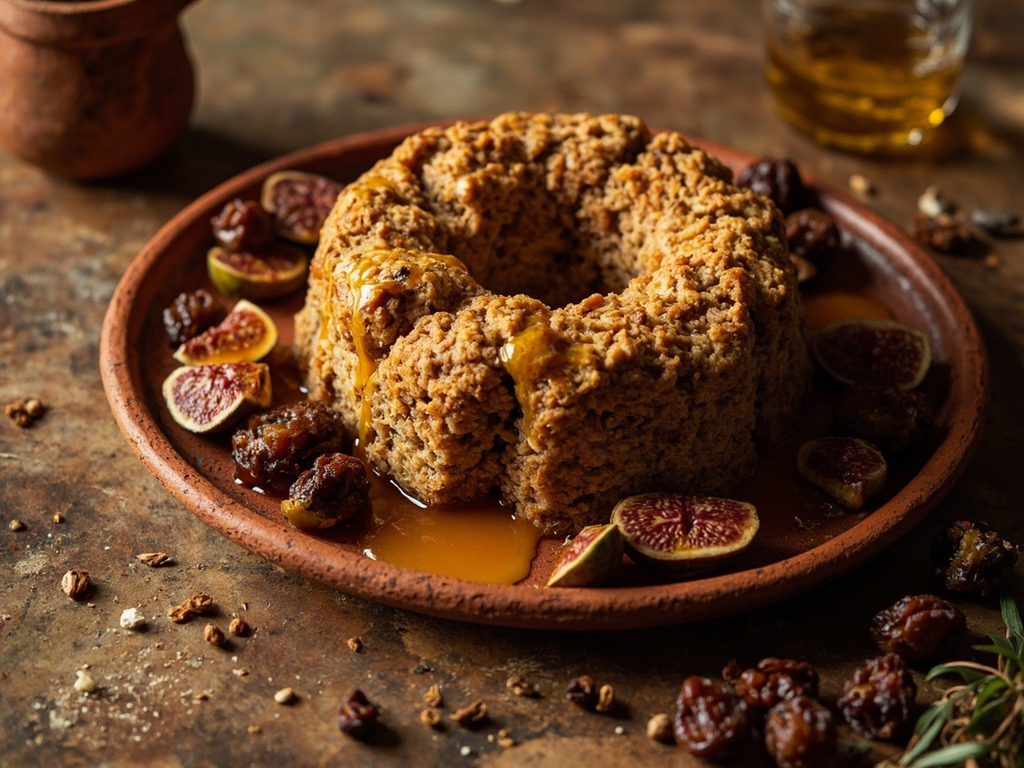
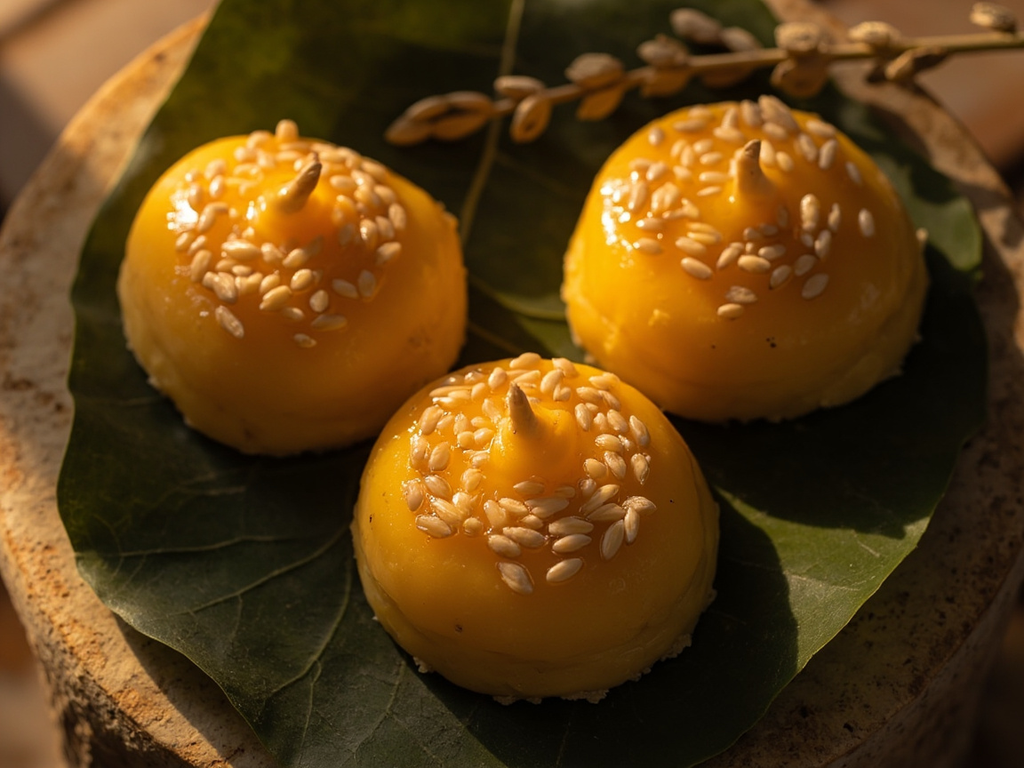
A small offering-cake of barley and honey, sometimes with oil, shaped into a round and presented to the gods. Sweet and dense, it is not a dessert but a sacred gift, inspired by the vegetable offerings attested at Delphi.
Before climbing the sacred path to the Pythia, I placed on Apollo's altar this cake of barley and honey, as is the custom of all who come to seek the god's word. Knead it with pure hands, stranger, and expect no satiety from it: it belongs to the Immortals, not to your belly. Alas, I thought to flee the oracle by fleeing Corinth — and every step brought me back. Honor the god better than I knew how to read his design.
- •Barley flour — a handful (base of the offering)
- •Honey — generously (sacred binder, sweetness)
- •Olive oil — a few drops (binder)
- •Spring water — a little (binder)
Pélanos of honey and barley, offering to Apollo at Delphi
A small offering-cake of barley and honey, sometimes with oil, shaped into a round and presented to the gods. Sweet and dense, it is not a dessert but a sacred gift, inspired by the vegetable offerings attested at Delphi.
Why this dish? Oedipus's entire destiny is born from an oracle at Delphi, which he goes to consult about his origins. The pélanos, a ritual cake of barley and honey, was the offering placed on Apollo's altar before consulting the Pythia — the very gesture that precipitates his tragedy.
Before climbing the sacred path to the Pythia, I placed on Apollo's altar this cake of barley and honey, as is the custom of all who come to seek the god's word. Knead it with pure hands, stranger, and expect no satiety from it: it belongs to the Immortals, not to your belly. Alas, I thought to flee the oracle by fleeing Corinth — and every step brought me back. Honor the god better than I knew how to read his design.
Ingredients (period version)
- Barley flour — a handful (base of the offering)
- Honey — generously (sacred binder, sweetness)
- Olive oil — a few drops (binder)
- Spring water — a little (binder)
Ingredients
- Barley flour (or half barley, half wheat) — 150 g (base)
- Honey — 5 tbsp (binder, sweetness)
- Olive oil — 2 tbsp (binder)
- Water — about 50 ml (binder)
- Sesame seeds — 1 tbsp (optional) (decoration, crunch)
Method
- Mix the flour and honey, add the oil then the water little by little until a supple, sticky dough forms.
- Shape into small thick disks; sprinkle with sesame if desired.
- Bake 15 min at 170 °C, until golden and fragrant with caramelized honey.
- Let cool slightly: the cake should remain soft and dense, almost candied.
How it was made : The pélanos designated an offering of flour (often barley), honey, and oil, presented to the gods as porridge or cake. At Delphi, consultants had to make an offering before approaching the Pythia. The Greeks readily offered cakes (pópana, pélanoi) as a substitute for or complement to blood sacrifices.
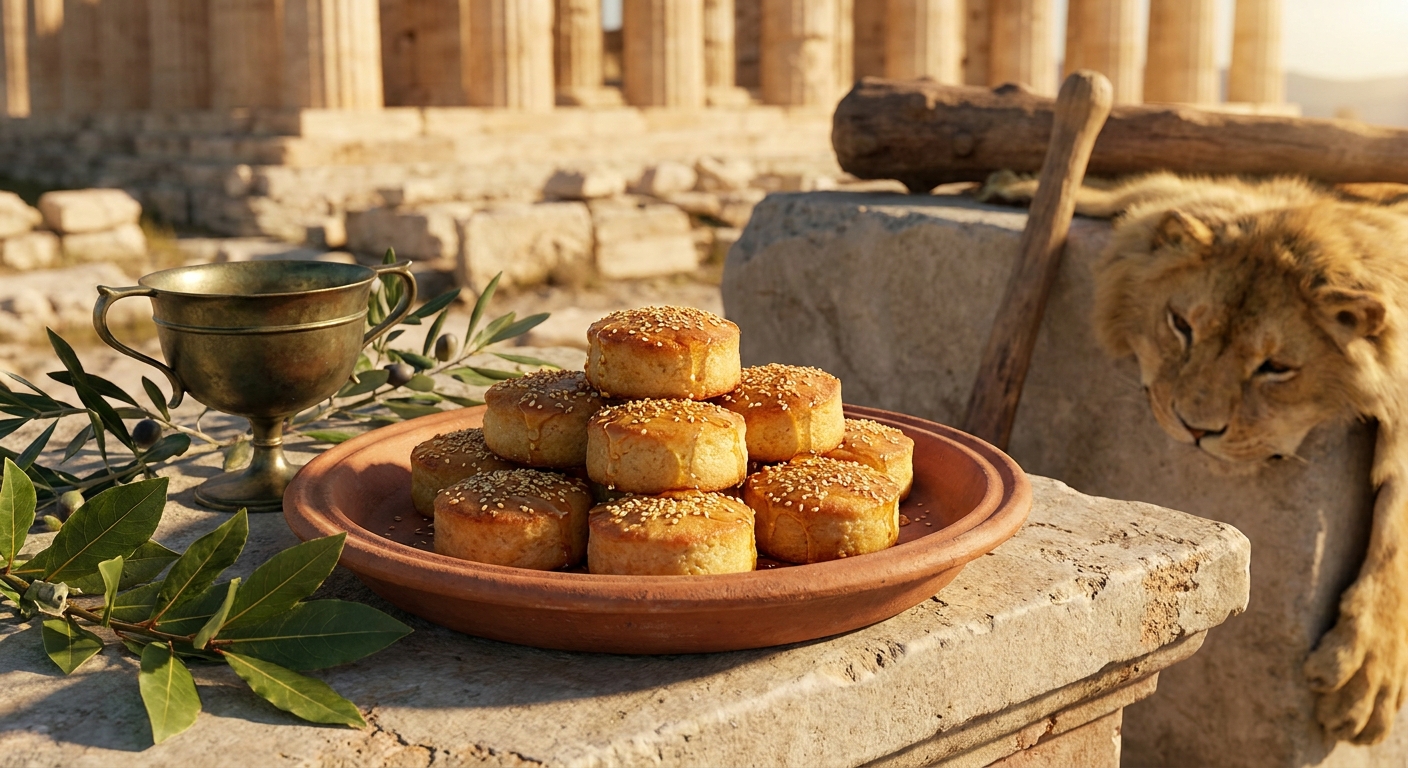
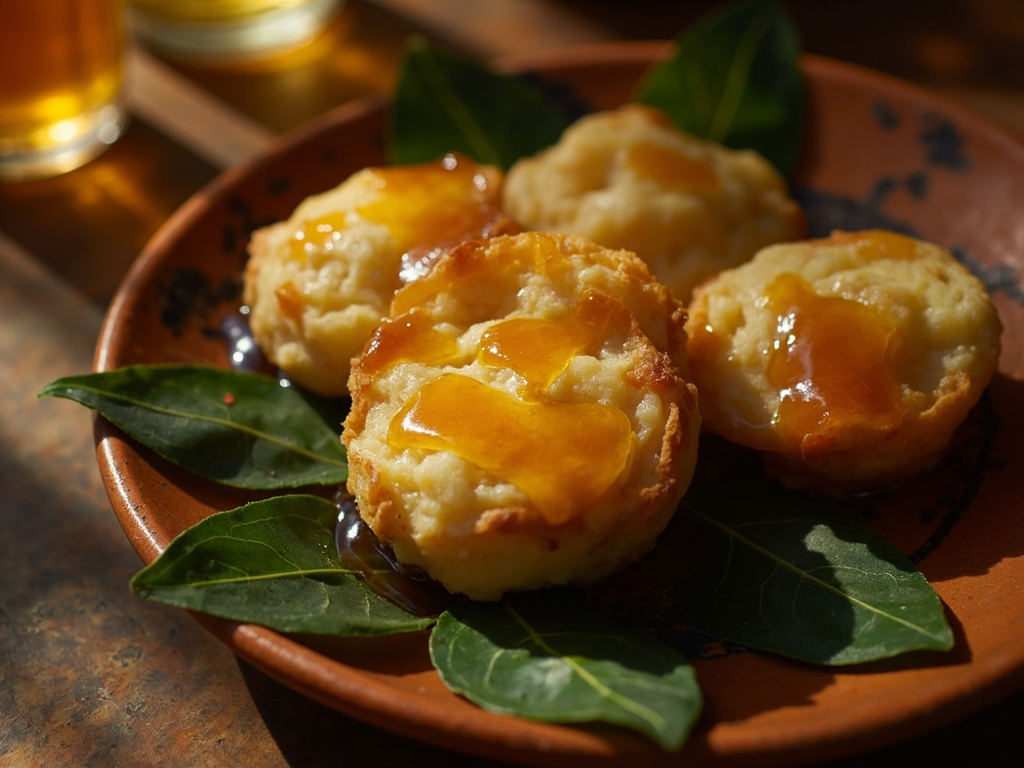
The contemporary twist : Present three mini-cakes on a bay leaf (Apollo's tree): a nod to the oracle, without reproducing a living rite.
Sources : Walter Burkert, Greek Religion (1985) — vegetable offerings and ritual cakes · Marcel Detienne & Jean-Pierre Vernant, La cuisine du sacrifice en pays grec (1979)
Oedipus · Charactorium