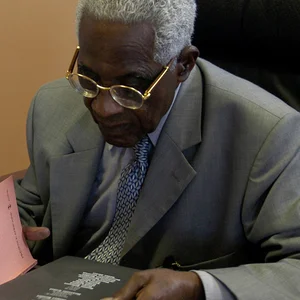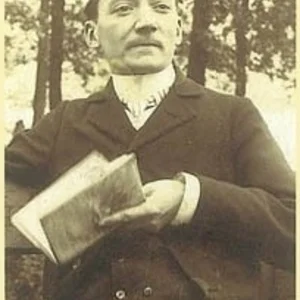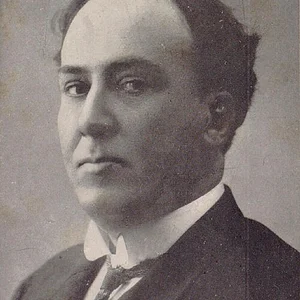

Antonio Machado was a Spanish poet born in Seville in 1875 and who died in exile in Collioure in 1939. A major figure of the Generation of '98, he celebrated the landscapes of Castile and the memory of Spain before fleeing Francoism.
Antonio Machado(1875 — 1939)
Antonio Machado
Espagne
6 min read
Frequently asked questions
Famous Quotes
« Traveller, there is no path, the path is made by walking.»
« One of the greatest mistakes is to believe that everything is understood when one is young.»
Key Facts
- Born in Seville in 1875 into a family of liberal intellectuals connected to the Institución Libre de Enseñanza.
- Published Soledades (1903) and then Campos de Castilla (1912), an emblematic collection of the Generation of '98.
- Became a French teacher in several provincial secondary schools (Soria, Baeza, Segovia).
- Committed to the Republican side during the Spanish Civil War (1936-1939).
- Died in exile in Collioure, France, in February 1939, shortly after crossing the border.
Works & Achievements
His first collection, intimate and melancholic, marked by symbolism and memory.
An expanded version of *Soledades* that established his inward, dreamlike poetic voice.
His masterpiece: here he paints the landscapes and the soul of Castile, opening his poetry up to Spain and its history.
A collection of short poems and proverbs inspired by popular wisdom.
Verse dramas (including *La Lola se va a los puertos*) co-written by the two brothers and successfully staged in Madrid.
A prose collection of the ironic and philosophical reflections of his imaginary teacher, first published in the press.
A deeply moving poem written after the murder of **Federico García Lorca**, which became a symbol of Republican resistance.
Anecdotes
In February 1939, fleeing the advance of Franco's troops, Antonio Machado crossed the Pyrenees on foot in the rain with his elderly mother, Ana Ruiz. Exhausted, they reached the small French port town of Collioure. The poet died less than a month later, on 22 February; his mother passed away in turn three days after him.
When he died, a crumpled scrap of paper was found in his coat pocket bearing his very last line of verse: “Estos días azules y este sol de la infancia” (“These blue days and this sun of childhood”). It was the luminous memory of his childhood in Seville that haunted the dying poet in exile.
Machado invented an imaginary poet, Juan de Mairena, an old philosopher-teacher to whom he attributed aphorisms full of humour and wisdom. This literary alter ego allowed him to slip ironic reflections on Spain, politics and education into the press between 1934 and 1936.
In 1907, Machado obtained a post as a French teacher at the secondary school in Soria, in the heart of Castile. There he met Leonor Izquierdo, whom he married in 1909 when she was only 15. The young woman died of tuberculosis in 1912, and this bereavement deeply and lastingly shaped his poetry.
Antonio and his elder brother Manuel, also a poet, wrote several successful plays together in the 1920s. But the civil war divided them into opposing camps: Manuel sided with the Francoists while Antonio defended the Republic until his exile.
Primary Sources
“I go on dreaming of the evening roads. The golden hills, the green pines, the dusty oaks!... Where can this road possibly lead?”
“Wanderer, your footsteps are the road, and nothing more; wanderer, there is no road, the road is made by walking.”
“The truth is what it is, and it remains true even if you think the opposite.”
“He was seen walking among the rifles, down a long street, going out into the cold countryside, still with the stars of early morning.”
Key Places
Machado's birthplace, where he was born in 1875 at the Palacio de las Dueñas; the Sevillian “sun of childhood” would haunt him until his death.
A town in Castile where he taught French, met and married Leonor, and which inspired *Campos de Castilla*.
Machado stayed here from 1899 as a translator and discovered Symbolism; he crossed paths with Rubén Darío and Oscar Wilde.
A small Andalusian town where he taught after Leonor's death, immersed in grief and writing.
A French port in the Pyrénées-Orientales where Machado, a refugee and exhausted, died on 22 February 1939; his grave there has become a place of remembrance.
Liens externes & ressources
Références
Œuvres
Soledades (Solitudes)
1903
Soledades, galerías y otros poemas
1907
Campos de Castilla (Champs de Castille)
1912
Nuevas canciones (Nouvelles chansons)
1924
Pièces de théâtre avec son frère Manuel
1926-1932
Juan de Mairena
1936
« El crimen fue en Granada »
1937