 flip
flipCastilian cocido (Sunday pot)
Castilian cocido (Sunday pot)
Why this dish? The cocido is the Sunday and holiday meal of the Castile where Machado lived, the one pot where each family put what they could. It is the common table of a modest country, that of a teacher who was not well-off.
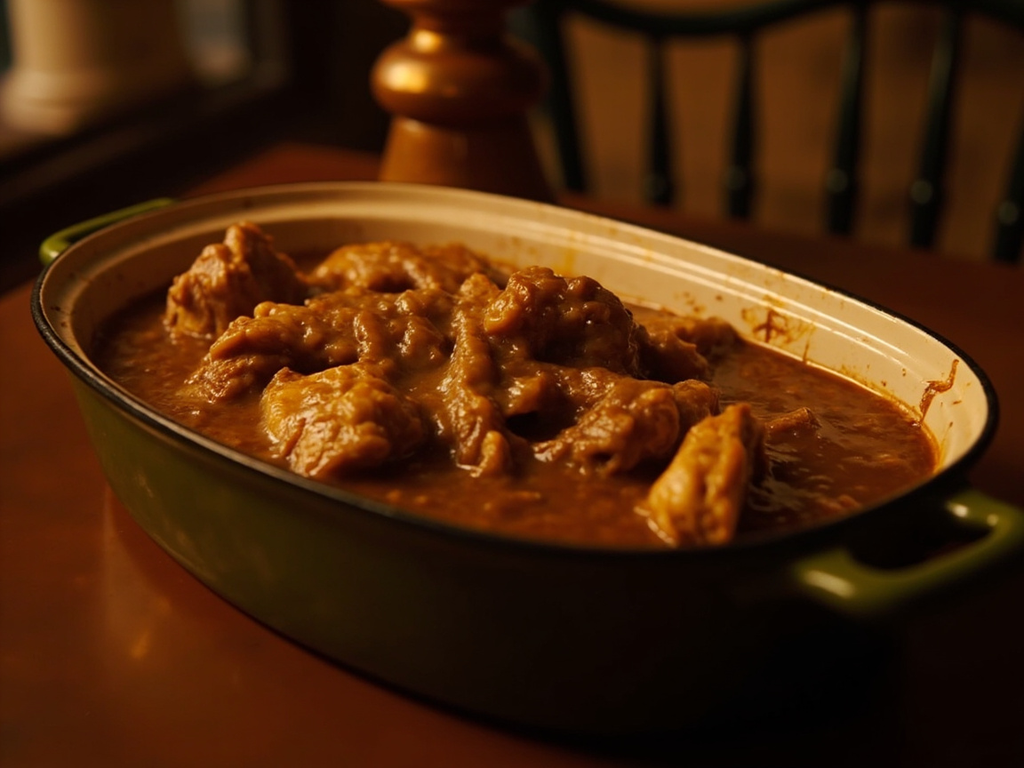
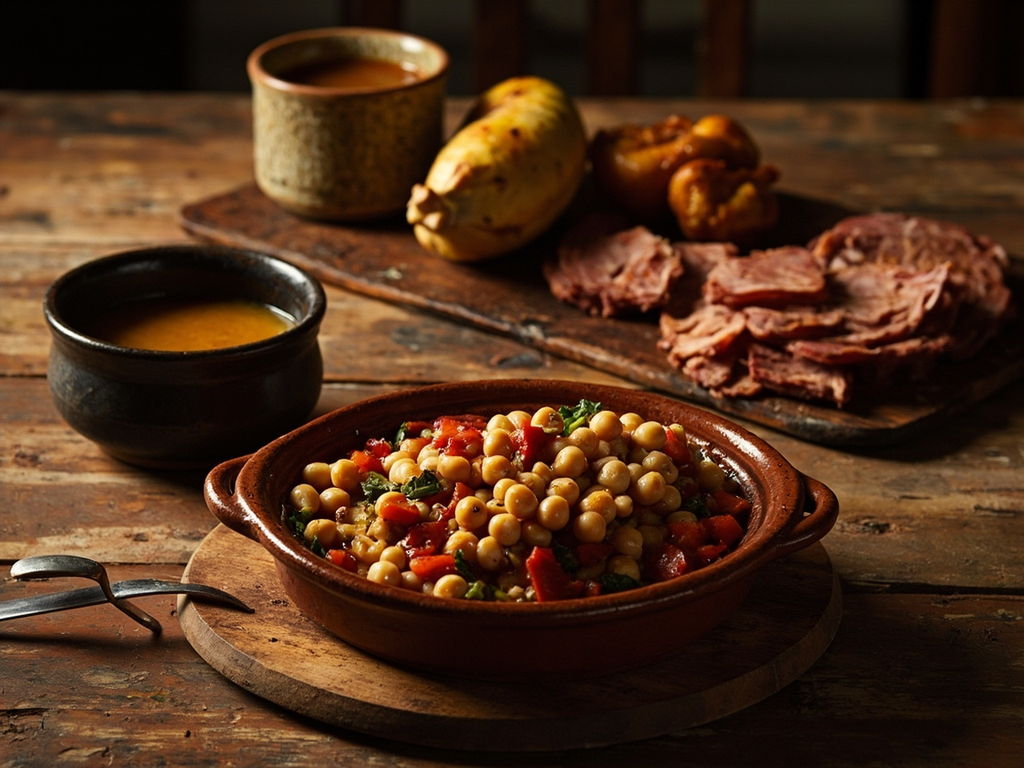
A large pot of chickpeas simmered all morning with meats, lard, chorizo, and vegetables. First comes a vermicelli soup, then the chickpeas and vegetables, finally the meats: one pot, three courses, all of Sunday.
On Sunday, you see, the whole house smelled of the olla. It was set on the fire early in the morning, the chickpeas soaked since the night before, a bit of lard, a blood sausage, whatever the purse allowed. First we drank the broth, then came the chickpeas and cabbage, and the meat at the end—one pot and a whole meal, like a poem unfolding in three stanzas.
- •Chickpeas — a good measure, soaked overnight (base)
- •Beef bones and a little meat — according to budget (broth and umami)
- •Lard and ham bone — a piece (richness)
- •Chorizo and morcilla (blood sausage) — one of each (flavor, pimentón)
- •Cabbage, carrot, turnip — what the garden gives (vegetables)
- •Vermicelli (fideos) — a handful (for the soup)
Castilian cocido (Sunday pot)
A large pot of chickpeas simmered all morning with meats, lard, chorizo, and vegetables. First comes a vermicelli soup, then the chickpeas and vegetables, finally the meats: one pot, three courses, all of Sunday.
Why this dish? The cocido is the Sunday and holiday meal of the Castile where Machado lived, the one pot where each family put what they could. It is the common table of a modest country, that of a teacher who was not well-off.
On Sunday, you see, the whole house smelled of the olla. It was set on the fire early in the morning, the chickpeas soaked since the night before, a bit of lard, a blood sausage, whatever the purse allowed. First we drank the broth, then came the chickpeas and cabbage, and the meat at the end—one pot and a whole meal, like a poem unfolding in three stanzas.
Ingredients (period version)
- Chickpeas — a good measure, soaked overnight (base)
- Beef bones and a little meat — according to budget (broth and umami)
- Lard and ham bone — a piece (richness)
- Chorizo and morcilla (blood sausage) — one of each (flavor, pimentón)
- Cabbage, carrot, turnip — what the garden gives (vegetables)
- Vermicelli (fideos) — a handful (for the soup)
Ingredients
- Dried chickpeas — 400 g, soaked 12 h (base)
- Beef shank — 400 g (meat and broth)
- Marrow bone and ham bone — 1 each (umami base)
- Lard / pork belly — 150 g (richness)
- Chorizo and morcilla — 1 each (pimentón flavor)
- Green cabbage, 2 carrots, 1 turnip, 1 potato — — (vegetables)
- Fine vermicelli — 80 g (first vuelco soup)
Method
- Place drained chickpeas, meats, bones, and lard in a large pot of cold water. Bring to a simmer, skim.
- Simmer for 2 to 3 hours over low heat, adding hot water if needed.
- Add carrots, turnip, and potato halfway through; cook cabbage and chorizo/morcilla separately to avoid clouding the broth.
- Strain part of the broth and cook the vermicelli in it: this is the first vuelco, the soup.
- Serve the chickpeas and vegetables (2nd vuelco), then the sliced meats (3rd vuelco).
How it was made : Heir to the medieval *olla podrida*, the cocido varied by region and wealth. In modest families, meat was scarce and the broth stretched; Sunday leftovers fed Monday's 'ropa vieja' (old clothes).
The contemporary twist : Plated as three successive courses like a Castilian menu, the broth served separately in a handled cup.
Sources : Néstor Luján & Juan Perucho, El libro de la cocina española, 1970 · Emilia Pardo Bazán, La cocina española antigua, 1913
Antonio Machado · Charactorium