 flip
flipFriday couscous with seven vegetables
Friday couscous with seven vegetables
Why this dish? "Tagines and couscous on Friday": for Laâbi as for every Moroccan, couscous is the weekly ritual that gathers the family after the great prayer. It is the dish of Fassi childhood and home, the opposite of the solitude of the cell.
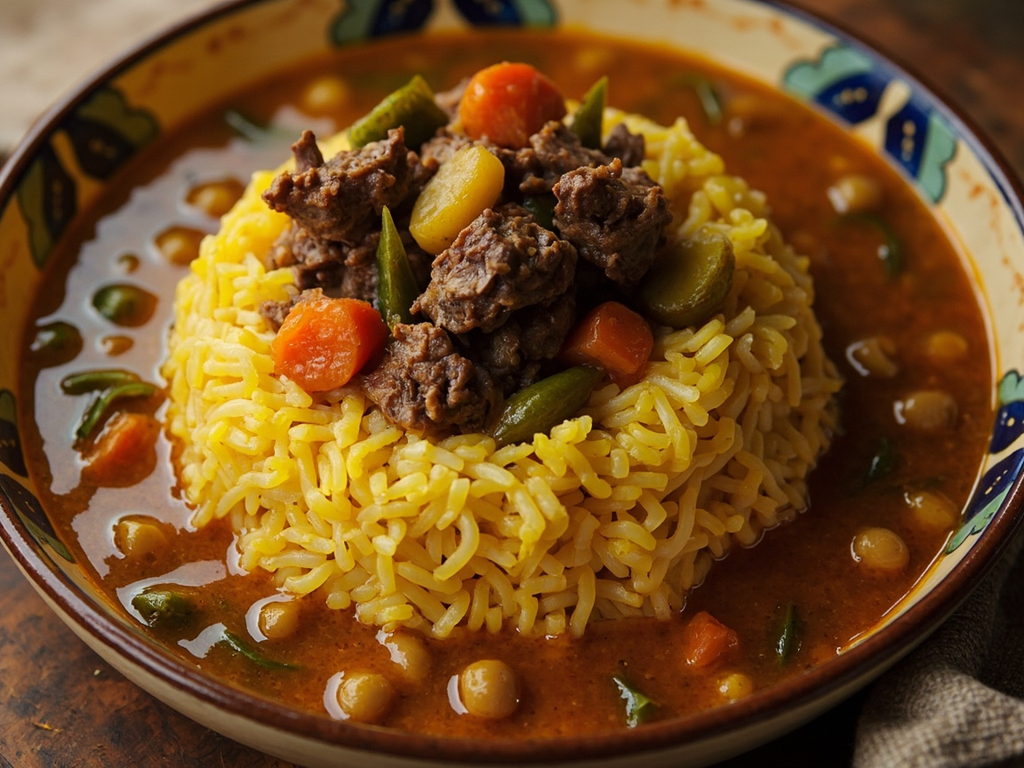
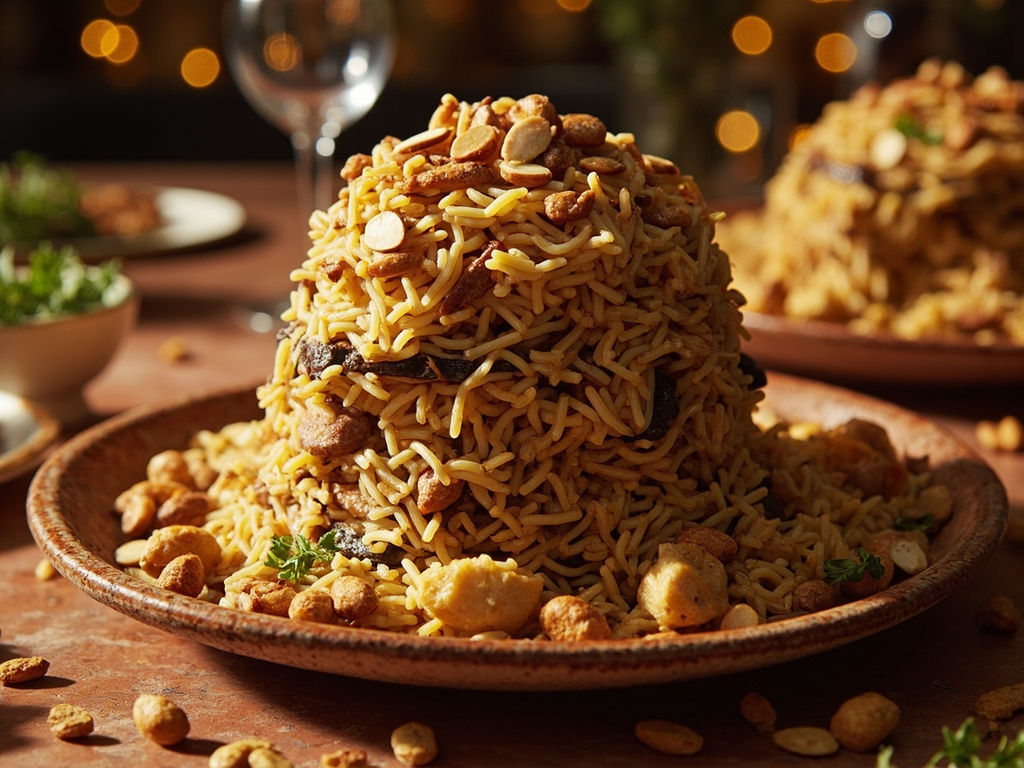
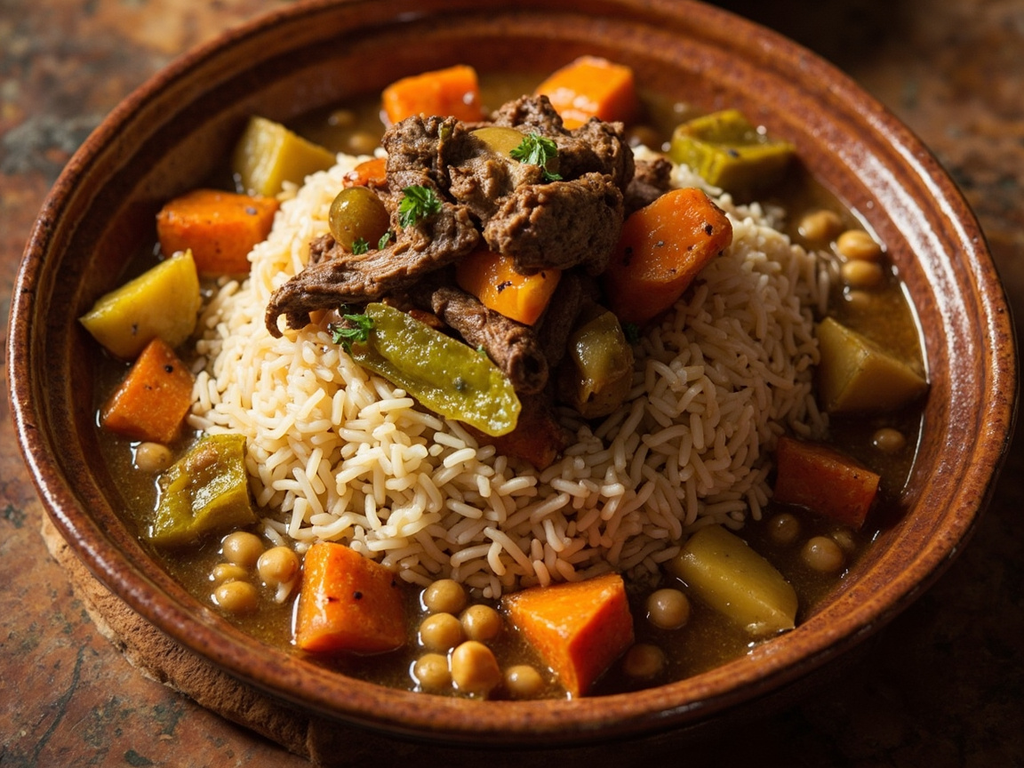
Semolina rolled and steamed three times, mounded into a dome and crowned with seven vegetables simmered in a fragrant broth, with lamb. The dish of abundance and sharing.
On Friday, the whole house orients itself toward the large platter as one orients oneself toward prayer. My mother rolled the semolina by hand, patiently, and passed it three times through the steam of the couscoussier — never fewer, otherwise the grain remains heavy. We mound the semolina into a dome, plant the meat and vegetables at the top, drizzle with broth, sprinkle with a little smen. And we eat together, from the same dish, each before his portion: that, in our home, is what it means to be a people.
- •Hand-rolled wheat semolina — for the company (base)
- •Lamb shoulder — a nice piece (meat)
- •Seven vegetables (turnip, carrot, zucchini, pumpkin, onion, chickpeas, cabbage) — according to season (garnish)
- •Ras el-hanout, ginger, saffron, pepper — to taste (spices)
- •Smen — a spoonful (signature)
Friday couscous with seven vegetables
Semolina rolled and steamed three times, mounded into a dome and crowned with seven vegetables simmered in a fragrant broth, with lamb. The dish of abundance and sharing.
Why this dish? "Tagines and couscous on Friday": for Laâbi as for every Moroccan, couscous is the weekly ritual that gathers the family after the great prayer. It is the dish of Fassi childhood and home, the opposite of the solitude of the cell.
On Friday, the whole house orients itself toward the large platter as one orients oneself toward prayer. My mother rolled the semolina by hand, patiently, and passed it three times through the steam of the couscoussier — never fewer, otherwise the grain remains heavy. We mound the semolina into a dome, plant the meat and vegetables at the top, drizzle with broth, sprinkle with a little smen. And we eat together, from the same dish, each before his portion: that, in our home, is what it means to be a people.
Ingredients (period version)
- Hand-rolled wheat semolina — for the company (base)
- Lamb shoulder — a nice piece (meat)
- Seven vegetables (turnip, carrot, zucchini, pumpkin, onion, chickpeas, cabbage) — according to season (garnish)
- Ras el-hanout, ginger, saffron, pepper — to taste (spices)
- Smen — a spoonful (signature)
Ingredients
- Medium semolina — 500 g (base)
- Lamb shoulder — 800 g (meat)
- Turnips, carrots, zucchini, pumpkin, onions — 2 each (garnish)
- Soaked chickpeas — 150 g (garnish)
- Ras el-hanout + ginger + saffron + pepper — 2 tsp total (spices)
- Smen (or butter) — 1 tbsp (signature)
Method
- Brown the meat with onions and spices in the bottom of the couscoussier, add water, add chickpeas, and simmer.
- Moisten the semolina, rub it by hand, and steam it for the first time over the broth.
- Aerate the semolina, moisten again, and repeat the steaming (at least 3 times) for light grains.
- Add vegetables to the broth in order of cooking time (hard ones first). Mound the semolina into a dome, make a well at the top, arrange meat and vegetables, drizzle with broth and smen.
How it was made : Couscous is one of the oldest dishes of the Maghreb, attested since the Middle Ages. Its fractional steaming and hand-rolling of semolina are skills passed from mother to daughter. Friday, the day of the great prayer, couscous brings together the extended family and the poor invited to the table.
The contemporary twist : A small pitcher of broth served on the side, so each guest can moisten their own dome — a nod to the ancestral gesture of sharing.
Abdellatif Laâbi · Charactorium