 flip
flipPopana melitoenta — small honey cakes for the altar
Popana melitoenta — small honey cakes for the altar
Why this dish? At Delphi, Apollo's sanctuary, pilgrims who could not sacrifice an animal placed small round cakes of flour and honey, the popana, on the altar. This was the humblest and purest homage paid to the god of the oracle.
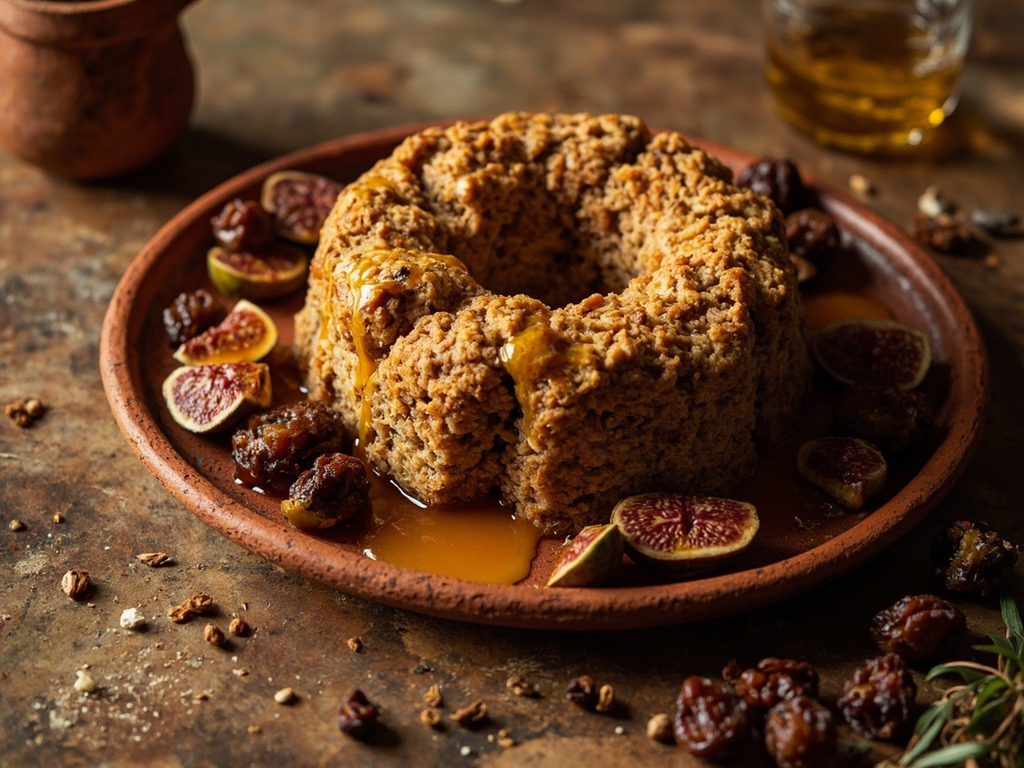
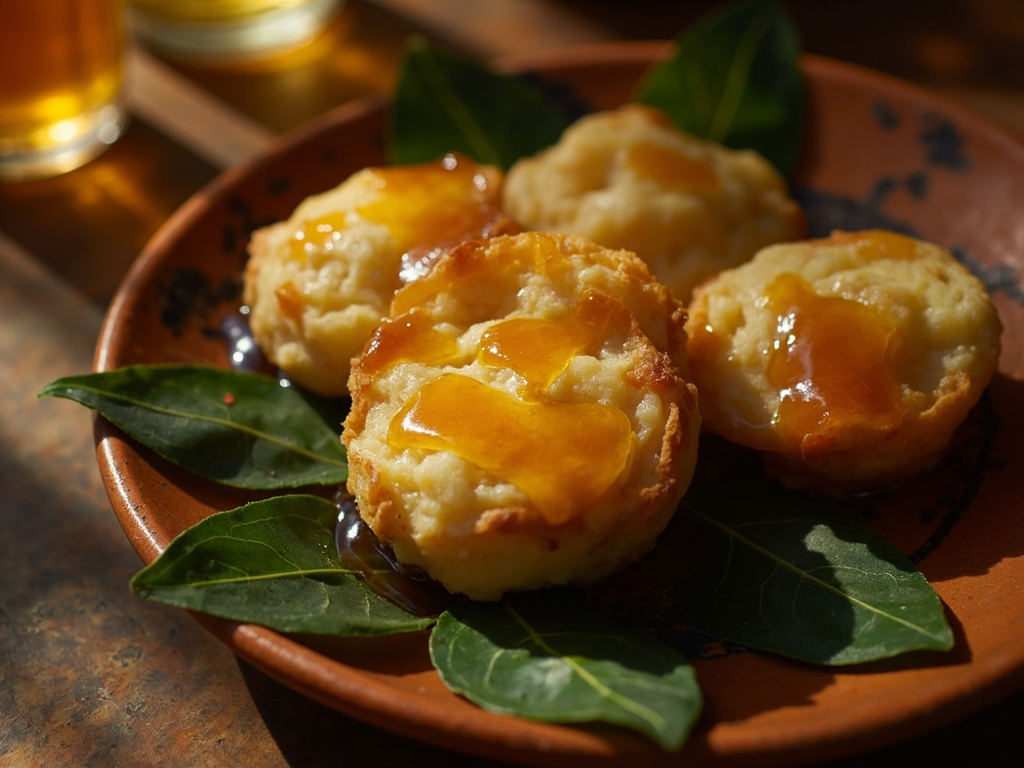
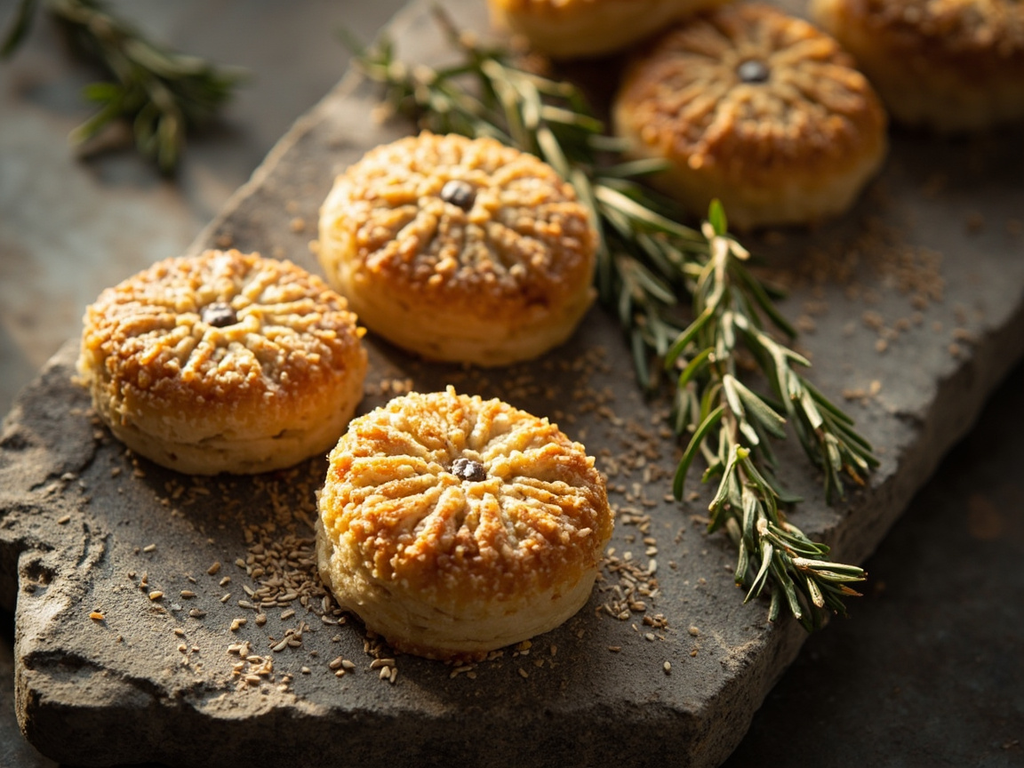
Small round cakes of barley and wheat bound with honey, sometimes marked with cross or ray incisions, baked until golden. They were offered to the god, and those that had not burned on the altar were returned to the faithful.
Mortal, do not be ashamed of your poverty. You have no heifer to sacrifice to me? Knead the barley of your fields with the honey that the bees stole from the thyme of Parnassus, and shape a round cake like my solar disc. Place it on my stone, and the smoke of its sweetness will be dearer to me than a hundred bulls offered without heart. What the flames do not take, eat: it is my share of grace that I return to you.
- •Toasted barley flour — two handfuls (cereal base (the sitos))
- •Wheat flour — one handful (gives binding and softness)
- •Mountain honey — enough to bind (sacred sweetness, binding agent)
- •Olive oil — a drizzle (softness and glazing)
- •Sesame seeds — a pinch (decoration and flavor (optional))
Popana melitoenta — small honey cakes for the altar
Small round cakes of barley and wheat bound with honey, sometimes marked with cross or ray incisions, baked until golden. They were offered to the god, and those that had not burned on the altar were returned to the faithful.
Why this dish? At Delphi, Apollo's sanctuary, pilgrims who could not sacrifice an animal placed small round cakes of flour and honey, the popana, on the altar. This was the humblest and purest homage paid to the god of the oracle.
Mortal, do not be ashamed of your poverty. You have no heifer to sacrifice to me? Knead the barley of your fields with the honey that the bees stole from the thyme of Parnassus, and shape a round cake like my solar disc. Place it on my stone, and the smoke of its sweetness will be dearer to me than a hundred bulls offered without heart. What the flames do not take, eat: it is my share of grace that I return to you.
Ingredients (period version)
- Toasted barley flour — two handfuls (cereal base (the sitos))
- Wheat flour — one handful (gives binding and softness)
- Mountain honey — enough to bind (sacred sweetness, binding agent)
- Olive oil — a drizzle (softness and glazing)
- Sesame seeds — a pinch (decoration and flavor (optional))
Ingredients
- Barley flour — 100 g (cereal base)
- Wheat flour (all-purpose) — 50 g (binder)
- Liquid honey — 4 tbsp (sweetener and binder)
- Olive oil — 2 tbsp (softness)
- Warm water — 3 to 5 tbsp (adjust the dough)
- Sesame seeds — 1 tbsp (decoration)
Method
- Mix the flours in a bowl.
- Add the honey and olive oil, then the warm water little by little until you get a soft, non-sticky dough.
- Shape flat cakes 6-7 cm in diameter, and score the top with a cross or rays.
- Sprinkle with sesame seeds, place on an oiled baking sheet.
- Bake at 180°C for 15 to 18 minutes, until the edges are golden.
- Brush with a little honey when out of the oven and let cool slightly.
How it was made : The popana (singular popanon) are attested in sacred inscriptions and by authors like Aristophanes: they are round cakes, sometimes decorated with bumps or rays (the omphaloi), reserved for offerings. Barley preceded wheat in Greek diet, and honey was the only known sweetener — sugar did not exist.
The contemporary twist : Serve warm with Greek yogurt and a drizzle of thyme honey: you get the flavors of the altar at Delphi for a snack.
Sources : Andrew Dalby, Food in the Ancient World from A to Z (Routledge, 2003) · Aristophanes, Plutus (mentions sacrificial popana)
Apollo · Charactorium