 flip
flipOinos Melikraton — the honeyed wine of the banquet
Oinos Melikraton — the honeyed wine of the banquet
Why this dish? The weaving contest between Arachne and Athena is a competition, almost a banquet of pride. Wine cut with water and sweetened with honey — the drink of the Greek *symposion* — accompanies this moment of jousting. It is the beverage one offers to one's opponent before the trial, a gesture of hospitality even between rivals.
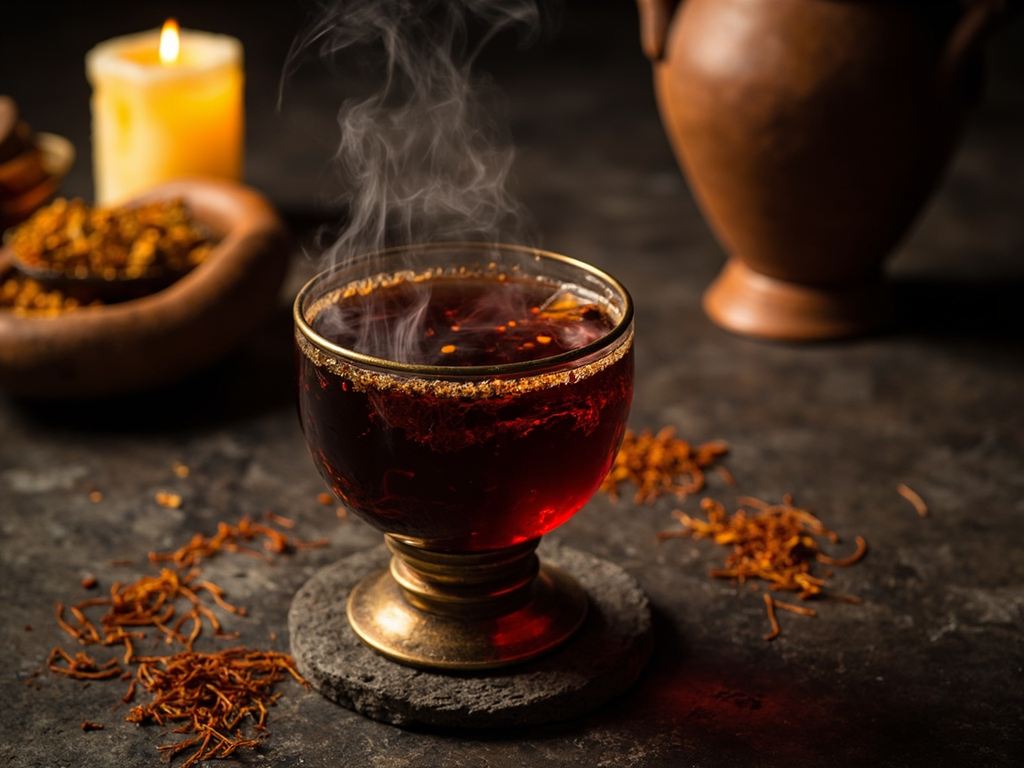
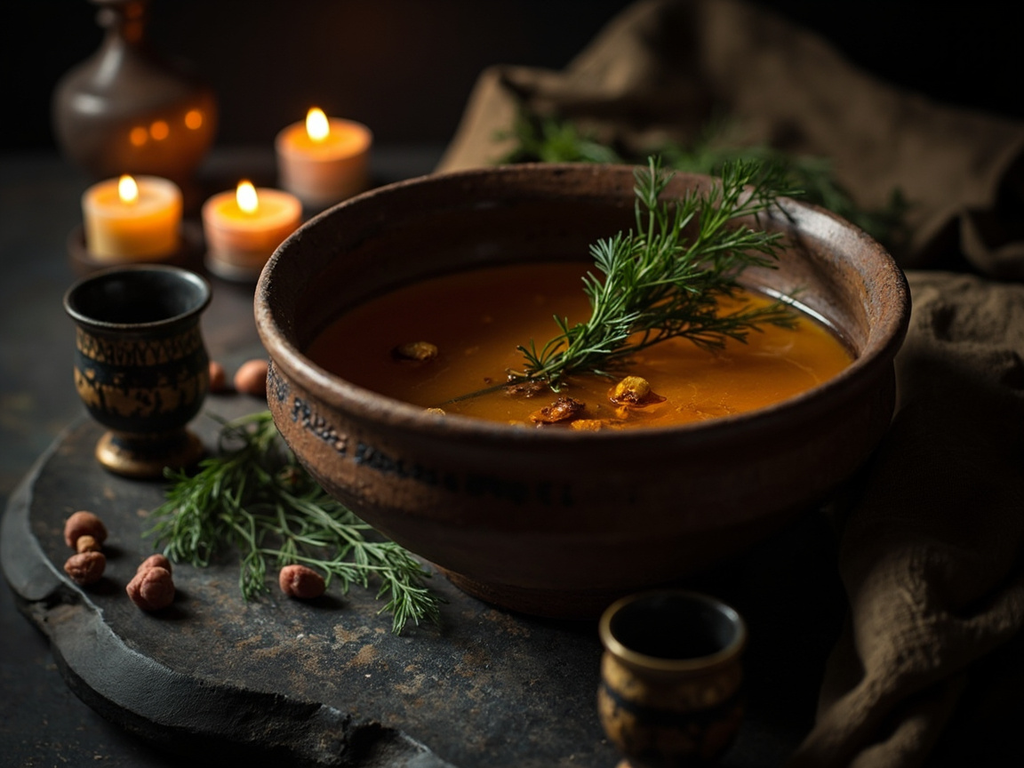
Red wine cut with water, warmed with a little honey and scented with mild spices. Never drunk pure (considered barbaric), Greek wine was shared diluted, from the common krater of the banquet.
Before the contest, one always offers the cup to one's rival — custom is custom, even when the heart defies. I cut my Lydian wine with two parts water, melted in a spoonful of honey and a pinch of thyme, and served it warm. Drink it slowly, stranger: he who drinks his wine pure drinks like a barbarian, and he who defies the gods does so, I tell you, with head held high but cup tempered.
- •Lydian red wine — one part (base)
- •Spring water — two parts (dilution (Greek custom))
- •Honey — a spoonful (sweetener)
- •Thyme or wild thyme — a sprig (flavor)
Oinos Melikraton — the honeyed wine of the banquet
Red wine cut with water, warmed with a little honey and scented with mild spices. Never drunk pure (considered barbaric), Greek wine was shared diluted, from the common krater of the banquet.
Why this dish? The weaving contest between Arachne and Athena is a competition, almost a banquet of pride. Wine cut with water and sweetened with honey — the drink of the Greek *symposion* — accompanies this moment of jousting. It is the beverage one offers to one's opponent before the trial, a gesture of hospitality even between rivals.
Before the contest, one always offers the cup to one's rival — custom is custom, even when the heart defies. I cut my Lydian wine with two parts water, melted in a spoonful of honey and a pinch of thyme, and served it warm. Drink it slowly, stranger: he who drinks his wine pure drinks like a barbarian, and he who defies the gods does so, I tell you, with head held high but cup tempered.
Ingredients (period version)
- Lydian red wine — one part (base)
- Spring water — two parts (dilution (Greek custom))
- Honey — a spoonful (sweetener)
- Thyme or wild thyme — a sprig (flavor)
Ingredients
- Dry fruity red wine — 200 ml (base)
- Water — 300 to 400 ml (dilution (Greek custom))
- Honey — 1 to 2 tbsp (sweetener)
- Fresh thyme — 1 sprig (flavor)
- A pinch of cinnamon (optional, imported from the East) — 1 pinch (mild spice)
Method
- Gently warm the wine with the thyme without boiling (to preserve aroma).
- Dissolve the honey in the warm wine.
- Cut with two to three parts water, to taste (Greeks often went up to 3 parts water).
- Remove the thyme, add a pinch of cinnamon if desired.
- Serve warm in a wide cup, to share.
- Summer version: serve chilled without warming, first diluting honey in a little warm water.
How it was made : Greeks never drank wine pure (*akratos*), a practice considered barbaric; it was mixed with water in a krater, often at a ratio of 1 part wine to 2 or 3 of water. *Melikraton* originally denoted a mixture of honey and milk or water, and wine was frequently sweetened with honey. Spices from the East, like cinnamon, circulated via the trade routes of Asia Minor where Arachne lived.
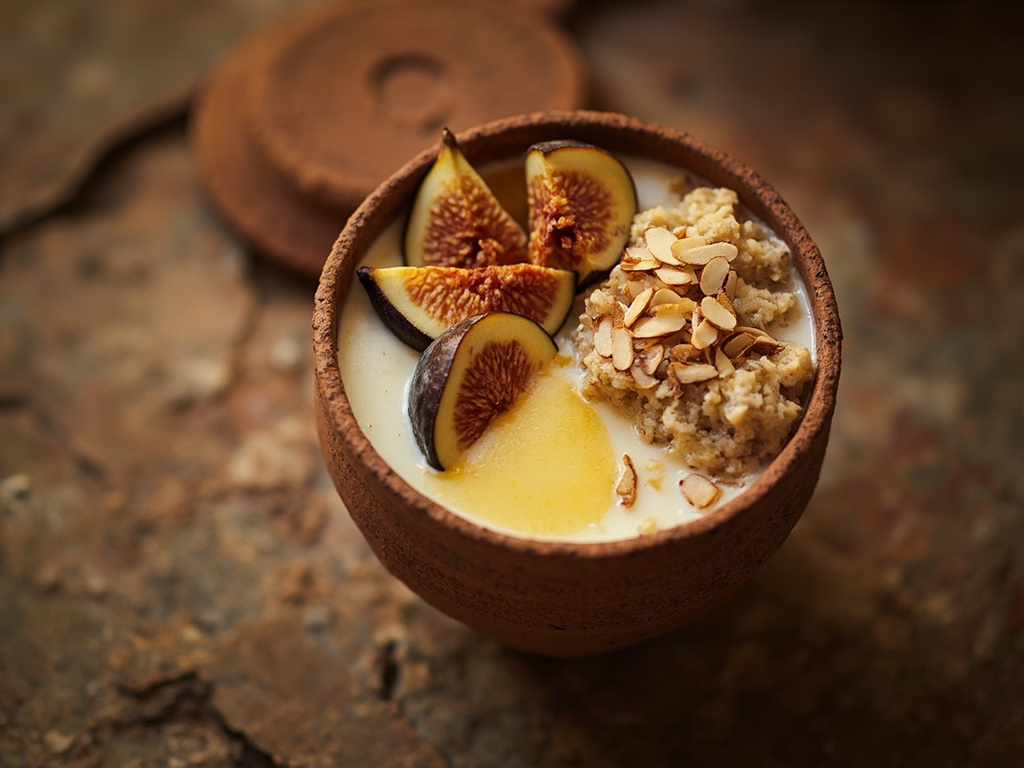
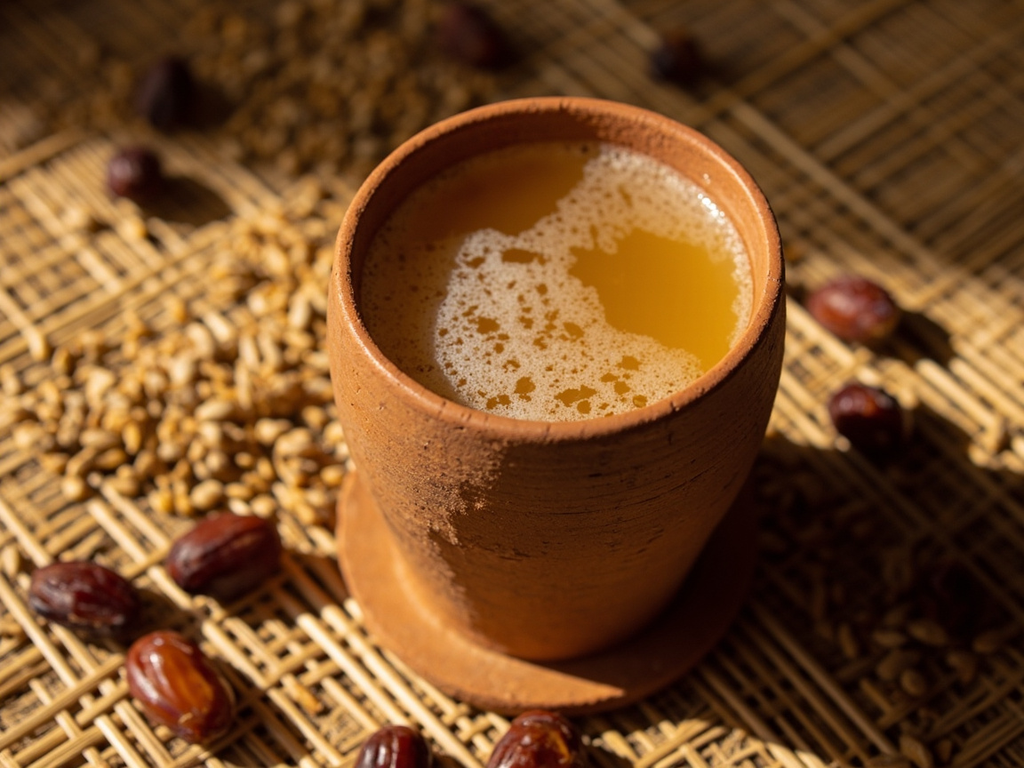
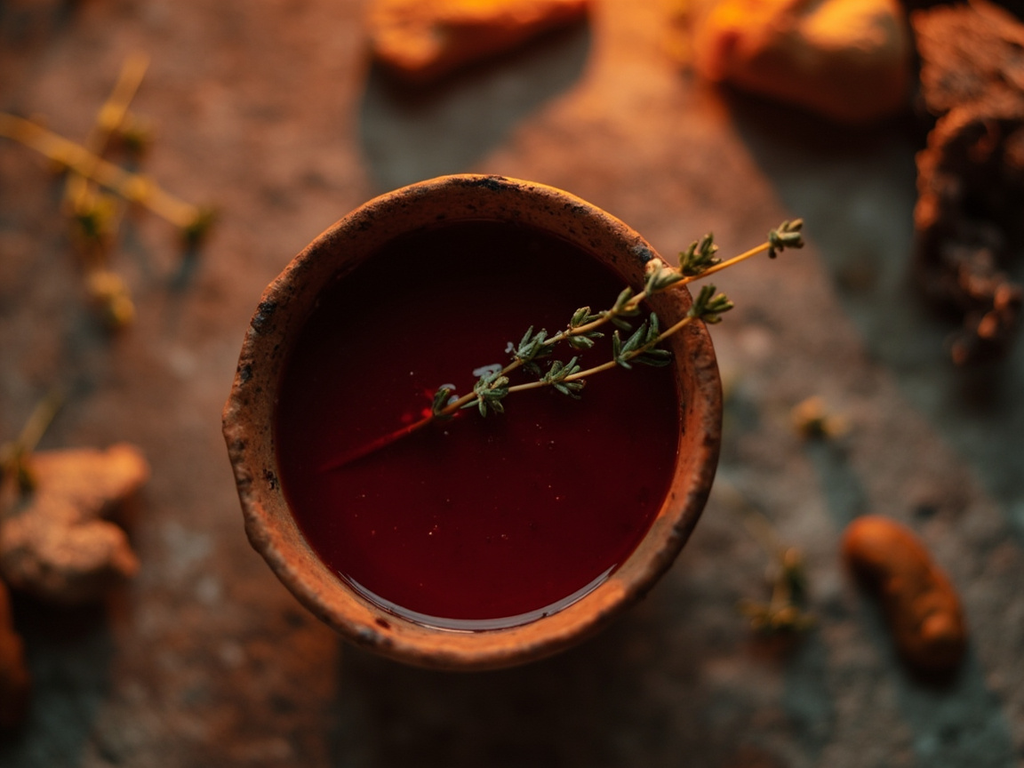
The contemporary twist : Served warm in small terracotta cups, a fine spiral of zest floating on the surface like a web.
Sources : Homer, The Odyssey (mentions of mixed wine and kykeon) · Andrew Dalby, Empire of Pleasures: Luxury and Indulgence in the Roman World, Routledge, 2000
Arachne · Charactorium