 flip
flipGrilled splanchna from the sacrifice
Grilled splanchna from the sacrifice
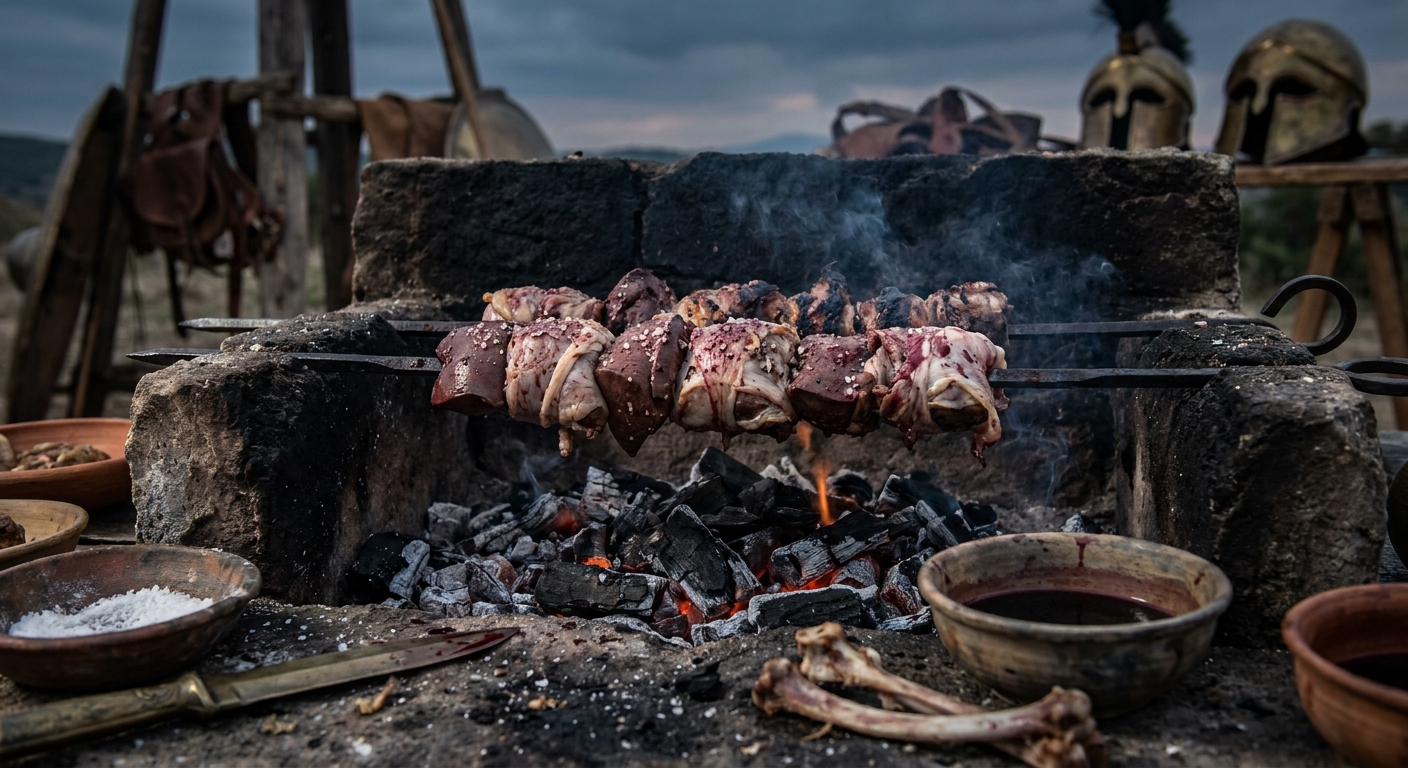
Why this dish? Ares receives bloody sacrifices: at Sparta they even immolate dogs in honor of Enyalios, elsewhere rams and boars. According to the division instituted by Prometheus, the fat and smoking bones are burned for the god, while the entrails (splanchna) are skewered and grilled on the altar embers, then devoured on the spot by the faithful. This is the very meal of war: flesh, fire, iron.
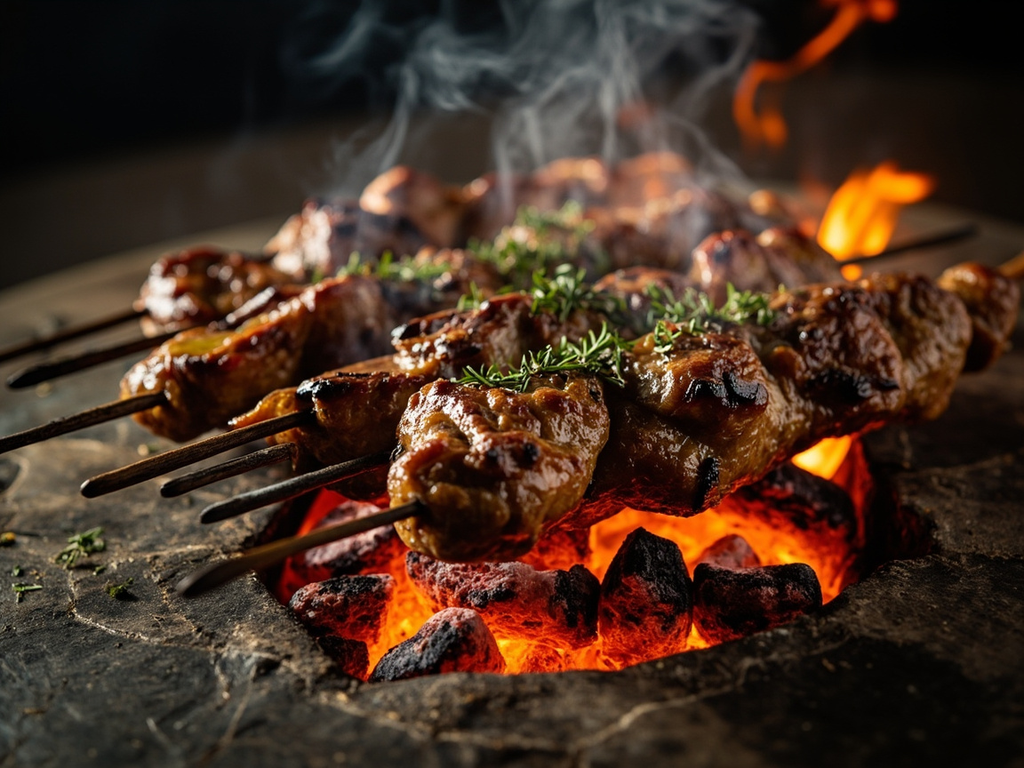
Skewers of liver and lamb wrapped in a caul of fat, seared over embers, salted and drizzled with wine. The raw dish of the sacrifice, eaten standing around the fire.
Approach, mortal, and do not tremble. On my altar, blood smokes and iron sings. They have burned for me the fat and the bones, and their smoke has risen to my throne — that is enough for me. The rest, skewer it: the liver first, wrapped in its own fat, straight onto the red ember until it sizzles. Salt it with a firm hand, pour a splash of wine onto the fire, and eat it burning hot, as one eats on the eve of battle. The flesh of the strong is not savored: it is conquered.
- •Sheep liver and offal (sacrificial ram) — as much as needed (heart of the dish)
- •Caul fat or animal fat — a few sheets (wrap and nourish the meat)
- •Sea salt — by hand (ritual seasoning)
- •Wine — a splash (libation and basting)
Grilled splanchna from the sacrifice
Skewers of liver and lamb wrapped in a caul of fat, seared over embers, salted and drizzled with wine. The raw dish of the sacrifice, eaten standing around the fire.
Why this dish? Ares receives bloody sacrifices: at Sparta they even immolate dogs in honor of Enyalios, elsewhere rams and boars. According to the division instituted by Prometheus, the fat and smoking bones are burned for the god, while the entrails (splanchna) are skewered and grilled on the altar embers, then devoured on the spot by the faithful. This is the very meal of war: flesh, fire, iron.
Approach, mortal, and do not tremble. On my altar, blood smokes and iron sings. They have burned for me the fat and the bones, and their smoke has risen to my throne — that is enough for me. The rest, skewer it: the liver first, wrapped in its own fat, straight onto the red ember until it sizzles. Salt it with a firm hand, pour a splash of wine onto the fire, and eat it burning hot, as one eats on the eve of battle. The flesh of the strong is not savored: it is conquered.
Ingredients (period version)
- Sheep liver and offal (sacrificial ram) — as much as needed (heart of the dish)
- Caul fat or animal fat — a few sheets (wrap and nourish the meat)
- Sea salt — by hand (ritual seasoning)
- Wine — a splash (libation and basting)
Ingredients
- Lamb liver — 400 g, cubed (main ingredient)
- Lamb shoulder — 300 g, cubed (grilled meat)
- Pork or lamb caul fat — 100 g (wrap the pieces)
- Sea salt and fresh thyme — 2 tsp / a few sprigs (seasoning)
- Dry red wine — 5 cl (basting at end of cooking)
Method
- Soak the caul fat in warm water for 10 minutes to soften, then spread it out.
- Wrap each cube of liver and meat in a piece of caul fat.
- Skewer, alternating liver and shoulder, pressing the pieces together.
- Grill over very red embers (or very hot griddle) for 3 to 4 minutes per side, without overcooking the liver.
- Salt, sprinkle with thyme, drizzle with a splash of wine and serve immediately, piping hot.
How it was made : During the Greek thysia, the animal was slaughtered on the altar; the femurs (mēria) were wrapped in fat and burned for the god with incense and a wine libation. The splanchna — liver, heart, lungs — were skewered and grilled first, shared among the participants near the altar, before the rest of the meat was boiled or roasted for the communal banquet.
The contemporary twist : Serve the skewers planted in a half-wheel of coarse grey salt, 'altar-style', with a small bowl of spiced mulled wine for the symbolic libation.
Sources : Homer, Iliad (descriptions of sacrifices, books I and II) · Pausanias, Description of Greece (cult of Ares) · M. Detienne & J.-P. Vernant, The Cuisine of Sacrifice among the Greeks (1979)
Ares · Charactorium