 flip
flipPanspermia of the Chytroi
Panspermia of the Chytroi
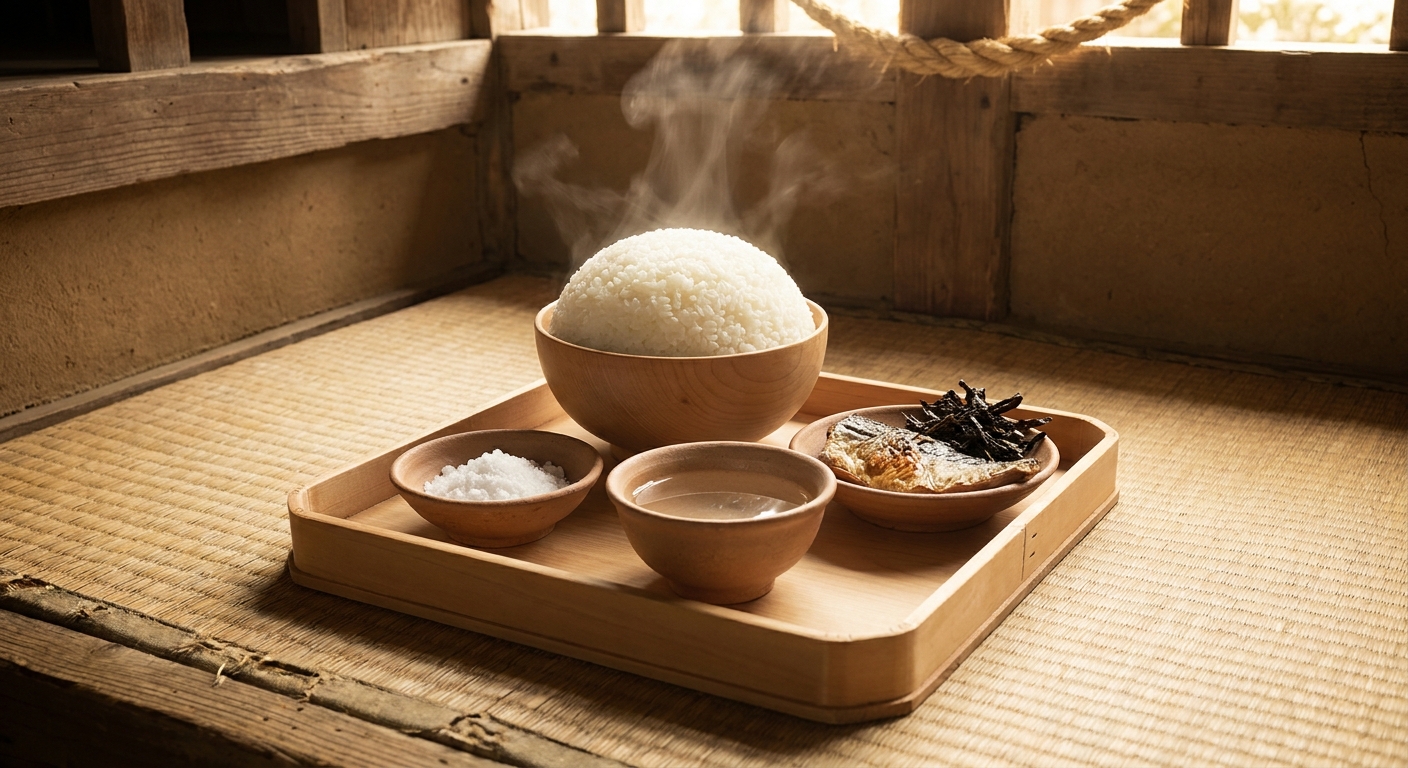
Why this dish? On the last day of the Anthesteria, the Chytroi ('the Pots'), Athenians boiled a porridge of all seeds for the dead who had returned among the living — and no one tasted it. This is the food of the powers below that Achlys embodies: not a feast, but the humble offering of seeds returned to the earth of the departed.
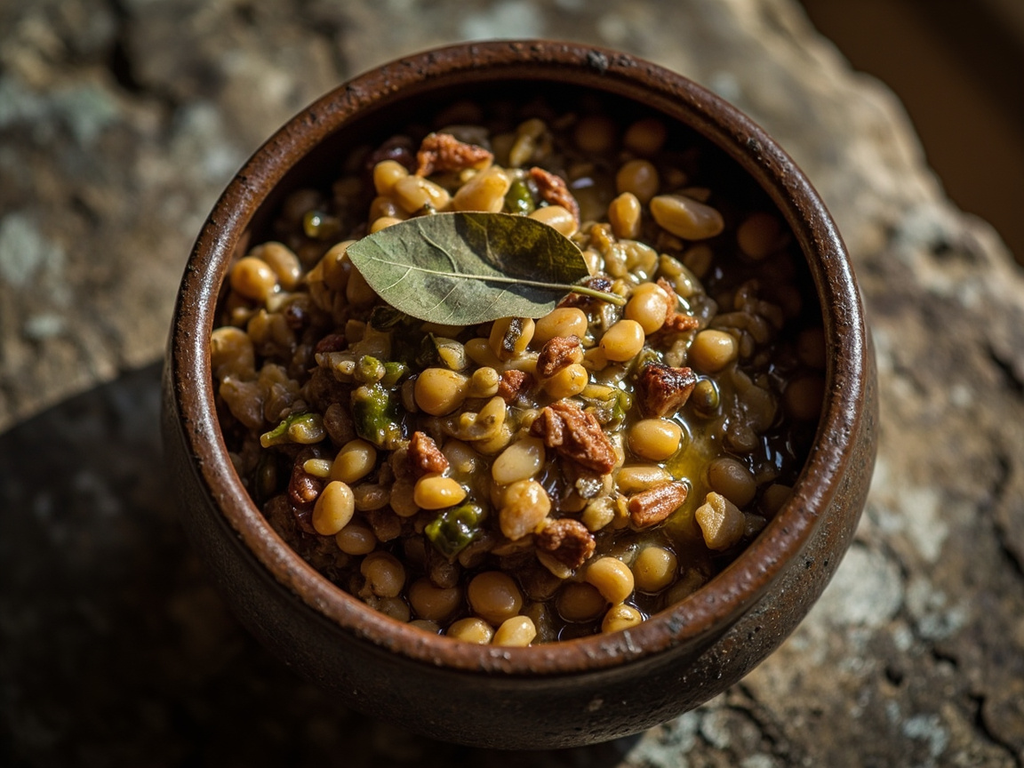
A pot of wheat, barley, fava beans, lentils and chickpeas boiled together for a long time, seasoned with salt, olive oil and bay leaves. Rustic, earthy, nourishing.
When the third day of the Flower Festival comes and the souls roam your streets, do not eat what you cook. Throw into the pot a share of every seed the earth gives you — wheat, barley, fava, lentil, chickpea — and boil them together until evening. That porridge is not for your bellies: it is for those my mist has carried off. Set it on the threshold, say 'Out, souls, the Anthesteria are over,' and close your door. Thus the dead depart satisfied, and you remain among the living.
- •Wheat grains (froment) — one part (base cereal)
- •Hulled barley — one part (cereal)
- •Dried fava beans — one part (legume, linked to the dead)
- •Lentils — one part (legume)
- •Chickpeas — one part (legume)
- •Salt — to taste (seasoning)
- •Olive oil — a drizzle (binder and richness)
Panspermia of the Chytroi
A pot of wheat, barley, fava beans, lentils and chickpeas boiled together for a long time, seasoned with salt, olive oil and bay leaves. Rustic, earthy, nourishing.
Why this dish? On the last day of the Anthesteria, the Chytroi ('the Pots'), Athenians boiled a porridge of all seeds for the dead who had returned among the living — and no one tasted it. This is the food of the powers below that Achlys embodies: not a feast, but the humble offering of seeds returned to the earth of the departed.
When the third day of the Flower Festival comes and the souls roam your streets, do not eat what you cook. Throw into the pot a share of every seed the earth gives you — wheat, barley, fava, lentil, chickpea — and boil them together until evening. That porridge is not for your bellies: it is for those my mist has carried off. Set it on the threshold, say 'Out, souls, the Anthesteria are over,' and close your door. Thus the dead depart satisfied, and you remain among the living.
Ingredients (period version)
- Wheat grains (froment) — one part (base cereal)
- Hulled barley — one part (cereal)
- Dried fava beans — one part (legume, linked to the dead)
- Lentils — one part (legume)
- Chickpeas — one part (legume)
- Salt — to taste (seasoning)
- Olive oil — a drizzle (binder and richness)
Ingredients
- Wheat berries (ebly or soaked durum wheat) — 100 g (cereal)
- Hulled barley — 60 g (cereal)
- Dried split fava beans — 60 g (legume)
- Green lentils — 60 g (legume)
- Dried chickpeas — 60 g (legume)
- Bay leaves — 2 (flavor)
- Extra virgin olive oil — 3 tbsp (binder)
- Salt — to taste (seasoning)
Method
- The night before, separately soak chickpeas, fava beans and wheat for 12 hours; drain.
- Place wheat, barley, chickpeas and fava beans in a large pot of unsalted cold water, bring to a boil, skim.
- Cook for 1 hour, then add lentils and bay leaves; continue for 30-40 minutes until everything is tender.
- Drain excess water, salt, drizzle generously with olive oil and mix. Serve warm.
How it was made : Panspermia ('all seeds') was cooked during the Chytroi, the last day of the Athenian Anthesteria, for Hermes Chthonios and the dead. It is the direct ancestor of boiled grain dishes that have survived, such as kollyva in Orthodox commemorations — proof that an offering can cross three millennia.
The contemporary twist : Served cold as a grain-and-legume salad, with lemon and fresh herbs, it becomes a complete everyday meal — the offering for the dead recycled into a bowl for the living.
Sources : Scholia to Aristophanes' Frogs (on the Chytroi) · Plutarch and testimonies on the Anthesteria · M. P. Nilsson, Greek Popular Religion
Achlys · Charactorium