 flip
flipGrilled tuna with fennel and coriander
Grilled tuna with fennel and coriander
Why this dish? The Cretan Mediterranean teemed with tuna, a prestige food of Aegean banquets. At the palace of Knossos, a large grilled fish honored guests and gods — the kind of feast where Theseus was received before facing the Minotaur.
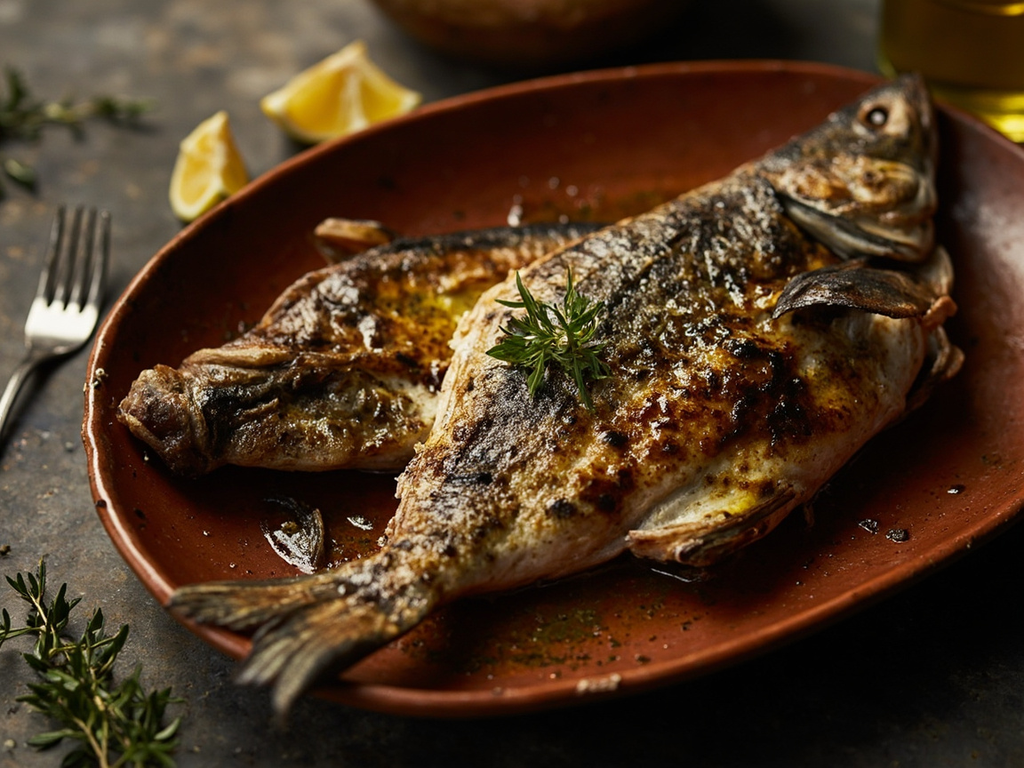
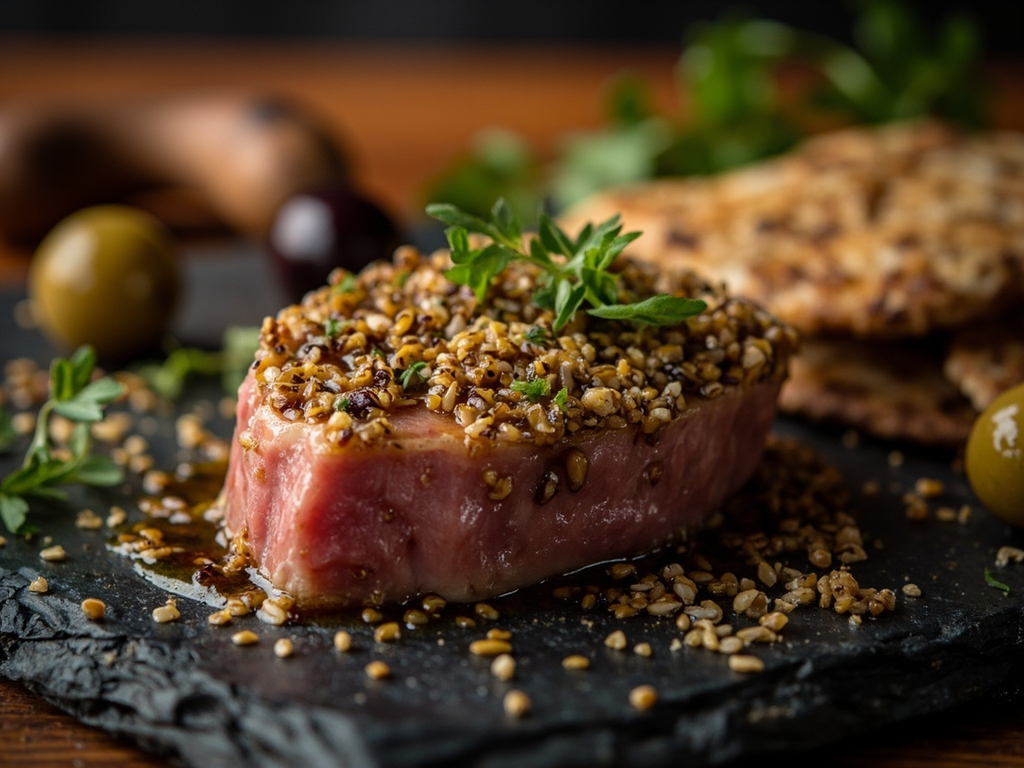
A tuna steak rubbed with oil, coriander, and fennel seeds, seared over embers, finished with a drizzle of reduced grape must. The noble dish that turns a meal into a feast.
When an honored guest crossed the painted gates of Knossos, my father had the great tuna brought to the embers — for no one could honor a stranger with mere flatbread. Rub the flesh with crushed coriander and fennel seeds, and do not leave it too long on the fire: the fish of the sea wants to be seared, not dried. A drizzle of cooked must, sweet as honey, and you offer a dish worthy of the gods. That is how I saw Theseus at our table, before my thread saved him from the darkness.
- •Tuna steak — one fine slice (centerpiece)
- •Crushed coriander seeds — a generous pinch (spice)
- •Fennel seeds — a pinch (anise spice)
- •Olive oil — for rubbing (cooking)
- •Cooked grape must (epsema) — a drizzle (sweet glaze)
- •Sea salt — to taste (seasoning)
Grilled tuna with fennel and coriander
A tuna steak rubbed with oil, coriander, and fennel seeds, seared over embers, finished with a drizzle of reduced grape must. The noble dish that turns a meal into a feast.
Why this dish? The Cretan Mediterranean teemed with tuna, a prestige food of Aegean banquets. At the palace of Knossos, a large grilled fish honored guests and gods — the kind of feast where Theseus was received before facing the Minotaur.
When an honored guest crossed the painted gates of Knossos, my father had the great tuna brought to the embers — for no one could honor a stranger with mere flatbread. Rub the flesh with crushed coriander and fennel seeds, and do not leave it too long on the fire: the fish of the sea wants to be seared, not dried. A drizzle of cooked must, sweet as honey, and you offer a dish worthy of the gods. That is how I saw Theseus at our table, before my thread saved him from the darkness.
Ingredients (period version)
- Tuna steak — one fine slice (centerpiece)
- Crushed coriander seeds — a generous pinch (spice)
- Fennel seeds — a pinch (anise spice)
- Olive oil — for rubbing (cooking)
- Cooked grape must (epsema) — a drizzle (sweet glaze)
- Sea salt — to taste (seasoning)
Ingredients
- Tuna steak (about 3 cm thick) — 2 pieces (300 g) (centerpiece)
- Coriander seeds — 1 tsp, crushed (spice)
- Fennel seeds — 1/2 tsp, crushed (anise spice)
- Extra virgin olive oil — 2 tbsp (cooking)
- Reduced grape must (vincotto / grape pekmez) — 2 tsp (sweet glaze)
- Salt and a little lemon zest (optional) — to taste (seasoning)
Method
- Crush coriander and fennel together, mix with olive oil and salt.
- Rub the tuna steaks with this mixture, let rest 15 minutes.
- Sear on a very hot grill (or embers), 2 to 3 minutes per side: the center should remain pink.
- At the last moment, brush with reduced grape must for a shiny glaze.
- Serve immediately, accompanied by barley maza and olives.
How it was made : Tuna was a prestige fish in the ancient Greek world, caught en masse during migrations and celebrated by poets. It was grilled or salted. Cooked grape must (epsema/defrutum) was used as a sweetener and glaze before the arrival of sugar, attested throughout the ancient Mediterranean.
The contemporary twist : Plated on a slate with a pinch of toasted fennel seeds and a lemon wedge: an Aegean 'tataki' that would make a contemporary chef envious.
Sources : Archestratus of Gela, Hedypatheia (fragments on fish, 4th century BC) · Andrew Dalby, Siren Feasts (1996)
Ariadne · Charactorium