 flip
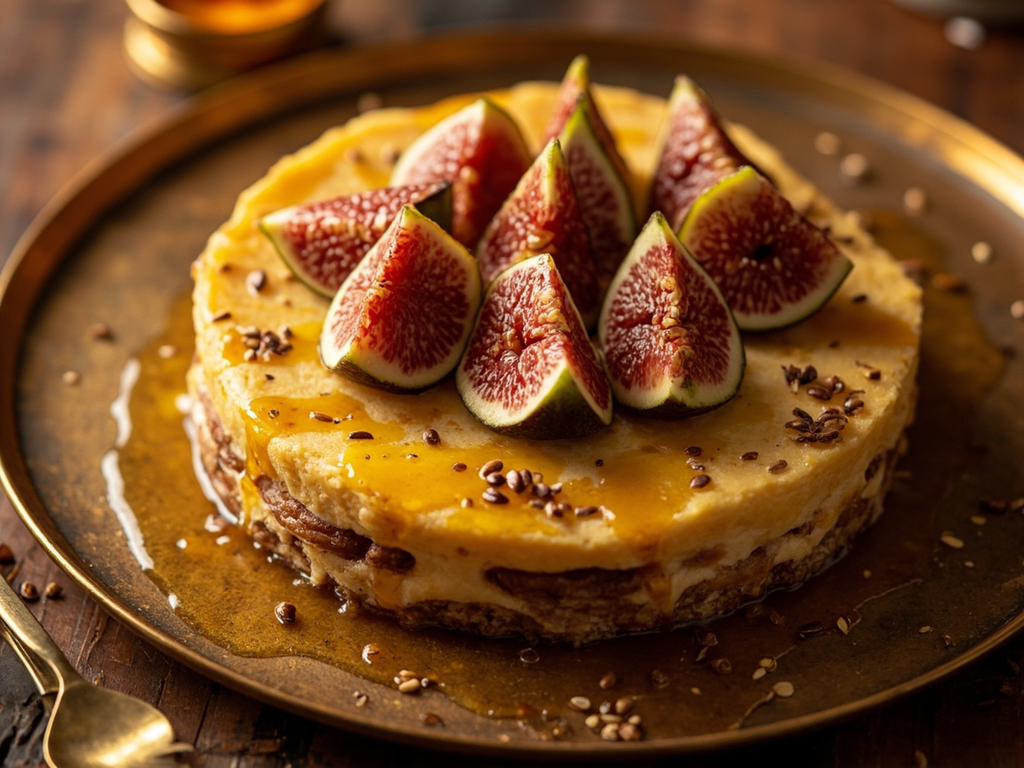
flipPlakous with honey, fresh cheese, and figs — the pastry of the symposion
Plakous with honey, fresh cheese, and figs — the pastry of the symposion
Why this dish? Deified in her lifetime, Arsinoë was associated with honey and perfumes in her cult. At the royal banquets of Alexandria, where her profile mentions 'honey pastries and fruits', plakous—ancestor of the cheesecake with honey—crowned the symposion, that moment of wine and conversation dear to the Greeks.
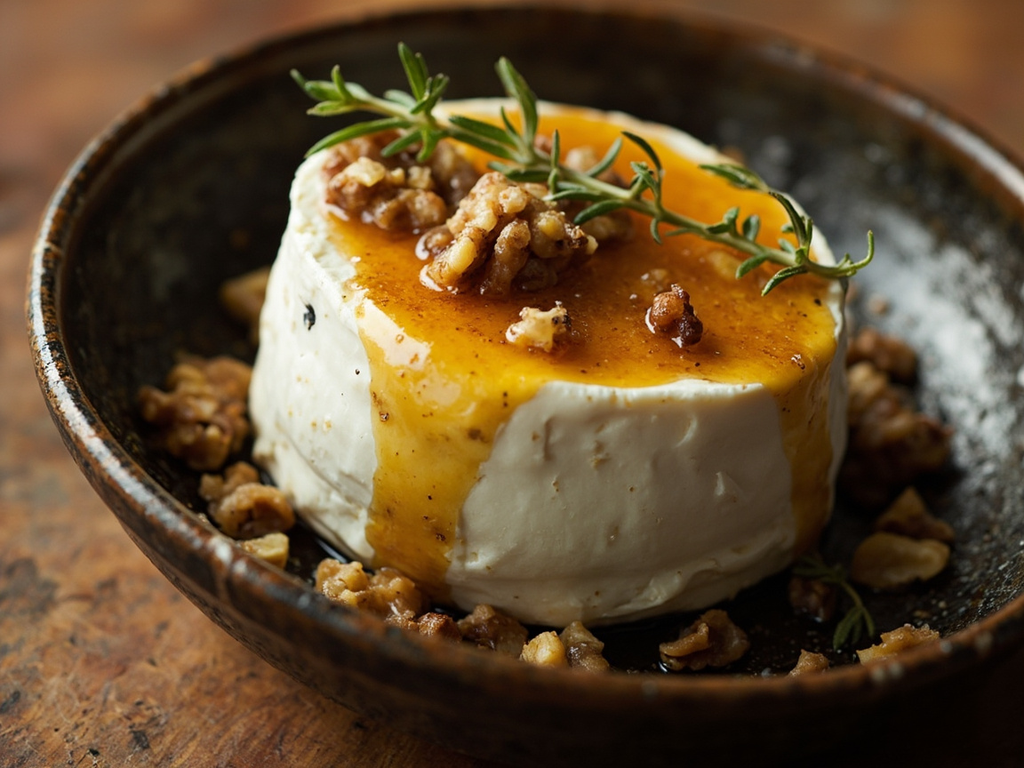
A layered cake filled with fresh cheese beaten with honey and figs, scented with sesame. The emblematic sweet of Greek banquets, distant ancestor of cheesecake.
When the deipnon ends and the hour of wine comes, I have the plakous brought in, stranger. Fresh cheese is beaten with the clearest honey, layered between sheets of dough thin as a veil, and ripe figs are slipped in. Sesame and a hint of perfume crown the work. With this sweetness, as we pour the wine of Chios, we honor the gods—and myself, whom they have placed among them.
- •Fresh sheep's cheese — a good amount (creamy filling)
- •Honey — generously (signature, sweetness)
- •Wheat flour — for the sheets (thin dough)
- •Fresh figs — a handful (fruit)
- •Sesame seeds — a pinch (aromatic decoration)
- •Olive oil — a little (layering)
Plakous with honey, fresh cheese, and figs — the pastry of the symposion
A layered cake filled with fresh cheese beaten with honey and figs, scented with sesame. The emblematic sweet of Greek banquets, distant ancestor of cheesecake.
Why this dish? Deified in her lifetime, Arsinoë was associated with honey and perfumes in her cult. At the royal banquets of Alexandria, where her profile mentions 'honey pastries and fruits', plakous—ancestor of the cheesecake with honey—crowned the symposion, that moment of wine and conversation dear to the Greeks.
When the deipnon ends and the hour of wine comes, I have the plakous brought in, stranger. Fresh cheese is beaten with the clearest honey, layered between sheets of dough thin as a veil, and ripe figs are slipped in. Sesame and a hint of perfume crown the work. With this sweetness, as we pour the wine of Chios, we honor the gods—and myself, whom they have placed among them.
Ingredients (period version)
- Fresh sheep's cheese — a good amount (creamy filling)
- Honey — generously (signature, sweetness)
- Wheat flour — for the sheets (thin dough)
- Fresh figs — a handful (fruit)
- Sesame seeds — a pinch (aromatic decoration)
- Olive oil — a little (layering)
Ingredients
- Fresh sheep's cheese (or ricotta) — 300 g (creamy filling)
- Honey — 5 tbsp (signature, sweetness)
- Filo pastry sheets — 6 sheets (thin dough)
- Fresh figs — 5-6, sliced (fruit)
- Sesame seeds — 2 tbsp (aromatic decoration)
- Mild olive oil or clarified butter — 3 tbsp (brushing sheets)
Method
- Beat the fresh cheese with 3 tablespoons of honey until smooth.
- Lightly brush each filo sheet with olive oil and layer them in a mold, letting the edges hang over.
- Spread half the cheese mixture, arrange some figs, cover with a sheet, repeat once.
- Fold over the edges, brush the top, and sprinkle with sesame.
- Bake at 180°C for 25-30 minutes until golden and crispy on top.
- Out of the oven, drizzle with remaining honey and garnish with reserved fresh figs. Serve warm.
How it was made : Plakous (πλακοῦς) was a layered Greek cake filled with cheese and honey, described by ancient authors as a prized offering and festive dish. It is akin to the ancestor of cheesecake. Honey was the only available sweetener: cane and beet sugar did not exist in ancient Mediterranean cuisine.
The contemporary twist : Cut into small squares and arrange on a golden platter, court-pastry style, and accompany with a sweet wine—or for a non-alcoholic Ptolemaic symposion, a spiced grape juice.
Arsinoe II · Charactorium